Suro Senen
The Cyberspace Administration of China (CAC), in conjunction with several high-level state departments including the Ministry of Public Security, the Ministry of Culture and Tourism, and the State Administration for Market Regulation, has officially released a comprehensive set of regulations aimed at the burgeoning Multi-Channel Network (MCN) sector. These provisions, titled the Provisions on the Management of Multi-Channel Distribution Services for Internet Information Content, establish a stringent legal framework for the production, distribution, and oversight of digital content across the nation’s vast internet ecosystem. Scheduled to take effect on September 1, 2026, the regulations represent the most significant step to date in codifying the responsibilities of MCNs, influencers, and the platforms that host them.
The new rules are grounded in the PRC Cybersecurity Law and the Measures on the Management of Internet Information Services. They seek to address long-standing issues in the digital economy, such as the manipulation of traffic data, the spread of misinformation, and the protection of minors in live-streaming and short-video environments. By defining the legal status of multi-channel distribution services—commonly known as MCNs—the state aims to transition the industry from a period of rapid, unchecked expansion to one characterized by "regular and healthy development" and a "positive online ecology."
A New Regulatory Framework for Digital Intermediaries
The provisions define multi-channel distribution services as entities that provide planning, production, distribution, marketing, and management services for internet user public accounts. In the context of China’s digital landscape, these are the agencies that manage thousands of Key Opinion Leaders (KOLs) and influencers across platforms like Douyin, WeChat, Weibo, and Bilibili.
Under the new mandate, these organizations are required to register as legal business entities. Article 6 specifically requires that their business scope explicitly includes "Internet information content multi-channel distribution services." For agencies already operating, a 30-day grace period from the date of implementation is provided to update their registration details. This move ensures that the government can maintain an accurate census of the industry and hold specific legal persons accountable for content violations.
Furthermore, the oversight is not centralized under a single office. Instead, a multi-departmental coordination mechanism has been established. While the State Internet Information Office (CAC) handles overall planning and coordination, local cyberspace offices, public security bureaus, and cultural departments are tasked with ground-level enforcement within their respective jurisdictions. This "grid-style" management approach is designed to eliminate regulatory blind spots that have previously allowed MCNs to bypass local scrutiny.
Chronology of Digital Governance in China
The release of these provisions is the culmination of a decade-long evolution in China’s approach to internet governance. To understand the significance of the 2026 provisions, it is necessary to examine the timeline of regulatory milestones:
- 2017: Implementation of the PRC Cybersecurity Law, providing the foundational legal basis for all subsequent digital regulations.
- 2019: The CAC releases the Provisions on the Ecological Governance of Network Information Content, introducing the concept of a "healthy online atmosphere."
- 2021: The "Qinglang" (Clear and Bright) campaigns begin in earnest, targeting "fan circle" culture, illegal fundraising by influencers, and the "chaos" of the MCN industry.
- 2022: Initial guidelines for MCN management are circulated for public comment, signaling the state’s intent to formalize oversight of influencer agencies.
- 2024-2025: Rapid growth in live-streaming e-commerce leads to increased consumer complaints regarding fake products and deceptive traffic data.
- 2026: Formal adoption of the Provisions on the Management of Multi-Channel Distribution Services for Internet Information Content, establishing a permanent and detailed legal code for the sector.
Supporting Industry Data and Market Context
The necessity of these regulations is highlighted by the sheer scale of the MCN industry in China. According to data from industry analysts and state-affiliated research institutes, the number of MCN organizations in China surpassed 25,000 by 2024, managing millions of active creators. The market size for live-streaming e-commerce alone—a sector dominated by MCN-managed talent—was estimated to exceed 4.9 trillion yuan (approximately $680 billion USD) by the end of 2025.
However, this economic success has been accompanied by systemic risks. Surveys conducted by consumer protection groups in 2025 indicated that nearly 40% of users had encountered "misleading or exaggerated" content produced by professional agencies. Furthermore, the phenomenon of "click farms" and automated bot traffic had become so prevalent that some estimates suggested up to 30% of engagement data on certain platforms was artificially generated. The 2026 provisions specifically target these inefficiencies to protect both the consumer and the integrity of the digital economy.
Stringent Content Standards and Social Responsibility
Article 4 and Article 15 of the provisions lay out the ideological and ethical expectations for MCNs. Agencies are mandated to uphold "Socialist Core Values" and promote "advanced socialist culture." This includes a duty to showcase the "struggle of the people" and the "highlights of China’s development."
Conversely, Article 17 provides a detailed list of prohibited behaviors. These include:
- Digital Manipulation: Fabricating clicks, followers, comments, or sales figures through manual or technical means (often referred to as "traffic forging").
- Emotional Provocation: Inciting regional discrimination, social conflict, or mass confrontation among netizens.
- Deceptive Marketing: Fabricating backgrounds or "human settings" (personas) to mislead the public for commercial gain.
- Content Infringement: Disseminating content that violates intellectual property rights or compromises national security and the image of the armed forces.
The provisions also address the "re-hashing" of old news. Article 17(1) bans the malicious collection and "flipping" of negative information or old incidents to mislead the public, a tactic often used by MCNs to generate viral "outrage" traffic.
Platform Accountability and the Contractual Bridge
A critical component of the new regulations is the shift in responsibility toward the platforms themselves (e.g., Douyin, Kuaishou, Weibo). Under Article 7, platforms are required to sign formal entry agreements with MCNs. They must verify the legal credentials of any agency operating on their site and are prohibited from providing services to those that do not comply with registration requirements.
Platforms must also implement a "tiered and classified" management system for MCNs based on their compliance history, the number of accounts they manage, and their total follower count. High-risk agencies will be subject to more frequent audits and stricter content moderation. Article 11 mandates that platforms clearly display the name of the managing MCN on an influencer’s profile page, ensuring transparency for the end-user. If an account fails to display its MCN affiliation, the platform is empowered to limit the account’s functions or suspend its profit-sharing capabilities.
Protection of Minors and Vulnerable Groups
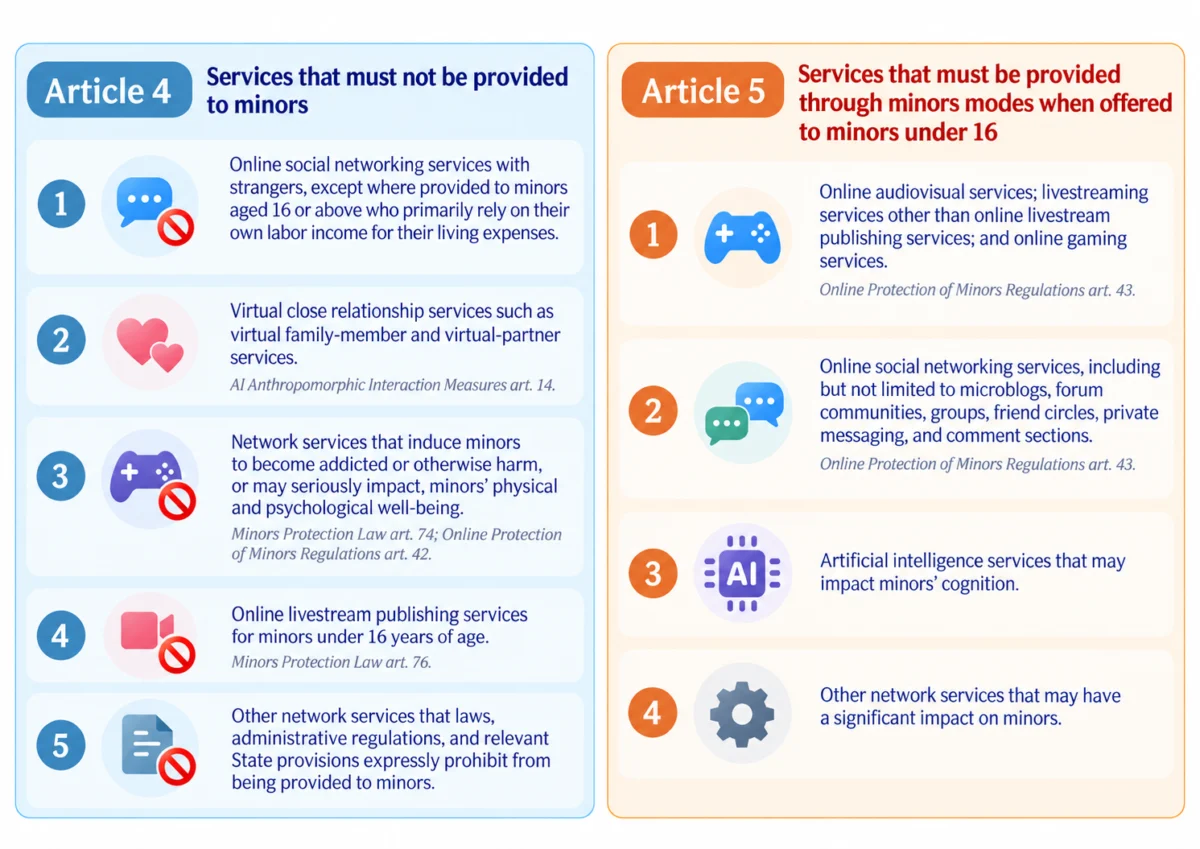
Reflecting a broader national priority, Article 18 focuses exclusively on the protection of minors. MCNs are strictly prohibited from providing live-streaming or content distribution services to children under the age of 16. For those between 16 and 18, MCNs must verify their identity and obtain explicit consent from parents or legal guardians before allowing them to engage in public distribution activities.
The regulations also prohibit the production of content that could harm the physical or mental health of minors, including content that encourages "low-brow tastes," excessive consumption, or dangerous behaviors. This clause is a direct response to the "child star" and "kid-fluencer" trends that have seen children used as props in commercial live-streams.
Enforcement, Penalties, and Industry Impact
The enforcement mechanisms outlined in Chapter IV are rigorous. Article 25 allows provincial-level cyberspace departments to conduct "interviews" (a formal regulatory warning) with the legal representatives of MCNs or platforms found to have significant security risks.
Penalties for non-compliance are tiered. Where existing laws like the Cybersecurity Law do not provide a specific fine, Article 26 authorizes authorities to issue warnings, order rectifications, and impose fines ranging from 10,000 to 100,000 yuan. In cases where the violations result in "serious consequences" or harm to public health and safety, fines can escalate to 200,000 yuan ($28,000 USD). Perhaps more significantly, Article 27 introduces a "blacklist" system. Entities found to be "seriously untrustworthy" in the internet field may be banned from engaging in internet information services for a set period.
Industry analysts suggest that these provisions will lead to a significant consolidation of the MCN market. Smaller agencies that rely on "gray area" tactics—such as buying fake followers or using inflammatory clickbait—may find the cost of compliance too high to survive. Conversely, larger, professionalized MCNs are expected to welcome the rules as they provide a clearer legal standing and a more level playing field.
Conclusion: A Mature Digital Ecosystem
The Provisions on the Management of Multi-Channel Distribution Services for Internet Information Content mark the end of the "wild west" era for China’s influencer economy. By integrating MCNs into the formal legal and administrative structure of the state, the government is signaling that digital influence is no longer merely a private commercial matter, but a public responsibility.
As the September 2026 deadline approaches, MCNs and platforms will need to undergo extensive internal audits to align with the new standards. The success of these provisions will ultimately be measured by whether they can effectively curb the "traffic at all costs" mentality that has dominated the sector, replacing it with a model that balances economic vitality with social stability and consumer protection. For global brands and domestic companies alike, the message is clear: the path to digital influence in China now runs directly through a gate of strict regulatory compliance.

 Layla Zulfa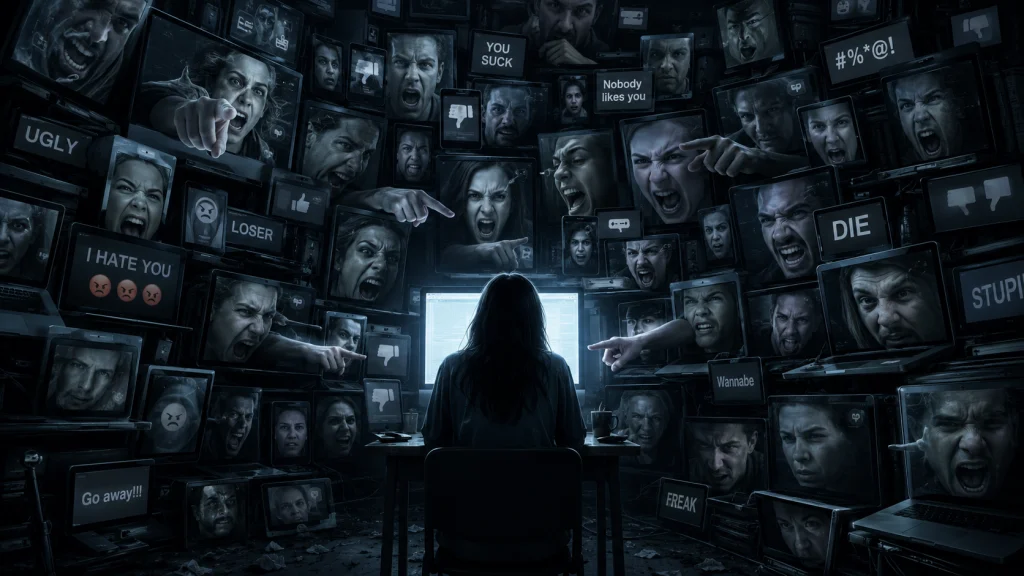
 Dwi Wanna