 Raul Delapena Setiawan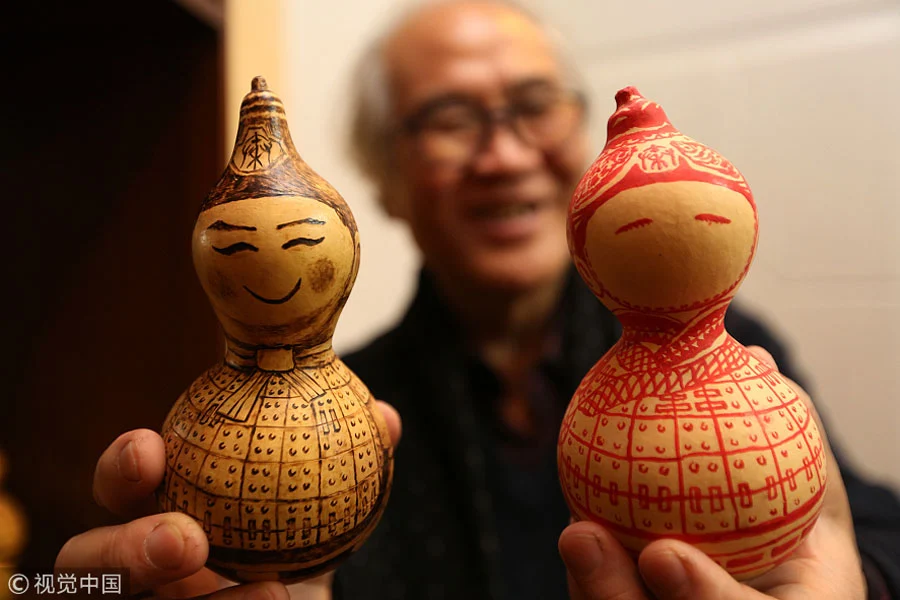
Xi’an, the venerable capital of Northwest China’s Shaanxi province, a city steeped in millennia of imperial history, is witnessing a unique artistic revival. For generations, this cradle of Chinese civilization has been synonymous with iconic landmarks like the Terracotta Warriors and the Great Wild Goose Pagoda. Now, a local artisan, Liang Ping’an, is breathing new life into these historical narratives by transforming ordinary calabashes into intricate artworks that celebrate the enduring cultural heritage of this ancient metropolis.
Liang Ping’an, a resident of Xi’an, has dedicated himself to the art of calabash carving, a craft that has roots stretching back centuries. His chosen medium, the humble gourd, becomes a canvas for depicting the grandeur and historical significance of Xi’an. From the majestic silhouette of the Great Wild Goose Pagoda to the stoic formations of the Terracotta Army, Liang meticulously etches and sculpts these cultural touchstones onto the curved surfaces of the calabashes. This artistic endeavor is more than a personal pursuit; it represents a profound connection to his city’s past and a conscious effort to foster a renewed appreciation for traditional Chinese culture among contemporary audiences.
The Historical Tapestry of Xi’an
To understand the significance of Liang Ping’an’s art, it is essential to grasp the historical weight of Xi’an. For over three millennia, Xi’an, then known as Chang’an, served as the imperial capital for numerous pivotal dynasties, shaping the course of Chinese history and culture. Its strategic location at the eastern end of the Silk Road facilitated cultural exchange and economic prosperity, making it a global hub in its heyday.
- Western Zhou Dynasty (c. 11th century – 771 BC): This early period saw the establishment of a sophisticated feudal system and the development of bronze casting, laying foundational elements for later Chinese civilization.
- Qin Dynasty (221-206 BC): Under the first emperor, Qin Shi Huang, China was unified, and the monumental project of the Terracotta Army was commissioned to guard his mausoleum in the afterlife. This era marked a significant shift in Chinese governance and military organization.
- Western Han Dynasty (206 BC – AD 24): This period witnessed the consolidation of imperial power, the expansion of the empire, and the flourishing of Confucianism. The Silk Road began to gain prominence, connecting China to the West.
- Tang Dynasty (618-907): Considered a golden age of Chinese history, the Tang Dynasty was characterized by its cosmopolitanism, artistic brilliance, and territorial expansion. Chang’an, as the capital, was one of the largest and most vibrant cities in the world, a melting pot of cultures and ideas. The Great Wild Goose Pagoda, built during this era, stands as a testament to the Tang Dynasty’s architectural prowess and its embrace of Buddhism.
These dynasties, each leaving an indelible mark on China’s historical and cultural landscape, provide a rich wellspring of inspiration for Liang Ping’an. His carvings are not merely decorative; they are miniature chronicles, condensing vast historical narratives into tangible, artistic forms.
The Art of Calabash Carving: A Timeless Tradition
Calabash carving, or húlu diāo (葫芦雕) in Mandarin, is an ancient Chinese folk art form. Calabashes, known for their hard shells and varied shapes, have been used for centuries as containers, musical instruments, and decorative objects. The practice of carving intricate designs onto their surfaces evolved as a way to imbue these utilitarian objects with artistic and symbolic meaning.
Historically, calabash carvings often depicted auspicious motifs, mythological creatures, or scenes from daily life. They were believed to possess protective qualities and were frequently used in religious ceremonies or as talismans. The skill involved in calabash carving requires patience, precision, and a deep understanding of the material. Artists must carefully select their gourds, prepare the surface, and then employ specialized tools to create delicate lines and detailed imagery without cracking or damaging the shell.
Liang Ping’an’s contemporary approach elevates this traditional craft by focusing on specific historical and cultural icons of Xi’an. His choice of subject matter is deliberate, aiming to connect modern viewers with the tangible remnants of their city’s glorious past.
Liang Ping’an’s Artistic Journey and Inspirations
Liang Ping’an’s dedication to his craft is evident in the meticulous detail and thematic depth of his work. He is not content with simply replicating existing imagery; he seeks to understand the essence of each Xi’an landmark and translate it into the unique language of calabash carving.
"Carving on calabashes is more than a personal hobby," Liang stated in a recent interview. "I hope people will return to traditional culture and find more inspirations in our city." This statement underscores his broader artistic mission: to act as a cultural ambassador, bridging the gap between the ancient and the modern. By presenting historical narratives in an accessible and aesthetically pleasing format, he hopes to spark curiosity and foster a deeper connection with Xi’an’s rich heritage.
His creative process involves extensive research and observation. He likely visits the sites he depicts, studies historical records, and consults with cultural experts to ensure the accuracy and authenticity of his representations. The challenges of carving on a curved, organic surface require a unique set of skills, demanding adaptability and creative problem-solving.
Examples of Artistic Expression
Liang’s repertoire includes a diverse range of Xi’an’s cultural symbols:
- Terracotta Warriors: His carvings of these iconic figures capture their imposing presence and intricate armor details. Each warrior, a testament to the military might and artistic achievements of the Qin Dynasty, is rendered with remarkable fidelity, showcasing the individuality of each soldier.
- Great Wild Goose Pagoda: The graceful silhouette of this Tang Dynasty Buddhist pagoda, a symbol of intellectual pursuit and spiritual enlightenment, is a recurring theme. Liang might depict its tiered structure, the intricate carvings on its facade, or even scenes of monks studying Buddhist scriptures within its vicinity.
- City Wall of Xi’an: As one of the oldest and best-preserved city walls in China, the Xi’an City Wall represents centuries of defense and urban development. Liang’s carvings could illustrate its imposing ramparts, its watchtowers, or the bustling life that unfolds within its protective embrace.
- Bell Tower and Drum Tower: These prominent landmarks in the heart of Xi’an, historically used for timekeeping and ceremonial purposes, are also potential subjects, symbolizing the city’s enduring rhythm and historical significance.
The act of transforming a simple gourd into a vessel of historical knowledge and artistic beauty is a profound act of cultural preservation. Each carving serves as a miniature museum piece, offering a tangible connection to the past for those who encounter it.
Broader Impact and Implications
Liang Ping’an’s artistic endeavors hold significant implications beyond the realm of individual artistry:
- Cultural Preservation and Promotion: By revitalizing the art of calabash carving and focusing on Xi’an’s heritage, Liang is actively contributing to the preservation and promotion of traditional Chinese culture. His work serves as a powerful reminder of the importance of safeguarding cultural legacies for future generations.
- Tourism and Economic Development: Artworks like Liang’s can become significant cultural souvenirs, attracting tourists and boosting the local economy. These unique pieces offer visitors a tangible connection to their travel experience and a deeper appreciation for the destination’s cultural offerings.
- Education and Awareness: His carvings can serve as an educational tool, particularly for younger generations who may be less familiar with the historical narratives of Xi’an. The visual appeal of the art can spark interest and encourage further learning about the city’s past.
- Inspiration for Other Artisans: Liang’s success can inspire other artists to explore traditional crafts and find innovative ways to express contemporary themes. This can lead to a broader renaissance of folk arts and a diversification of artistic expression within the region.
The act of creating art from natural materials, imbued with historical significance, taps into a universal human desire to connect with our roots and understand our place in the grand sweep of history. Liang Ping’an’s calabash carvings are not just objects of beauty; they are vessels of memory, carriers of tradition, and powerful testaments to the enduring spirit of Xi’an.
Future Prospects and Artistic Evolution
As Liang Ping’an continues his artistic journey, it is plausible that he may explore new themes and techniques. This could include:
- Depicting historical figures: Beyond landmarks, he might venture into carving portraits of influential emperors, scholars, or cultural figures associated with Xi’an.
- Narrative sequences: Larger calabashes could be used to depict sequential scenes from historical events or legendary tales.
- Integration with other crafts: He might collaborate with other artisans to incorporate elements of painting, calligraphy, or other decorative techniques into his calabash carvings.
- Digital engagement: While the art itself is traditional, Liang could leverage digital platforms to share his work, educate the public about his process, and connect with a wider audience, potentially leading to international recognition.
The enduring appeal of Xi’an’s rich history, combined with the timeless artistry of calabash carving, ensures a bright future for artists like Liang Ping’an. His dedication to transforming an ordinary gourd into a masterpiece of cultural storytelling exemplifies the vibrant and evolving artistic landscape of China, where tradition and innovation converge to celebrate the nation’s profound heritage. His work stands as a testament to the power of art to connect us to our past, enrich our present, and inspire our future.

 Asep Darmawan
 Rifan Muazin