 Layla Zulfa
Beijing Automotive Group Co (BAIC Group), one of China’s largest state-owned automakers, has declared an ambitious strategic pivot towards new energy vehicles (NEVs), announcing its commitment to cease the production and sale of conventional fuel-powered cars under its proprietary brand nationwide by 2025. This bold move underscores China’s broader national drive towards electrification and positions BAIC Group at the forefront of this transformative shift in the global automotive industry. The announcement, made by BAIC Group Chairman Xu Heyi, also included an earlier target to halt sales of self-developed conventional fuel vehicles within Beijing by 2020, signaling a concentrated effort to address environmental concerns in the capital while spearheading technological innovation across its operations.
Background and Context: China’s Automotive Evolution
China has long been recognized as the world’s largest automotive market, but in recent years, it has increasingly distinguished itself as the epicentre of the global new energy vehicle revolution. The nation’s robust commitment to NEVs stems from a confluence of factors: severe urban air pollution, a strategic desire to reduce reliance on imported oil, and an industrial policy aimed at leapfrogging traditional automotive powers to become a leader in cutting-edge automotive technology.
The Chinese government has implemented a comprehensive suite of policies to accelerate NEV adoption. These include substantial purchase subsidies, tax exemptions, preferential licensing and traffic access in congested cities, and a stringent NEV credit system (often referred to as "dual credit" policy) that mandates automakers to produce a certain quota of NEVs or purchase credits from competitors. This regulatory environment has created a powerful impetus for both domestic and international manufacturers operating in China to electrify their fleets rapidly. Furthermore, discussions around a potential future ban on the sale of internal combustion engine (ICE) vehicles, similar to proposals in several European countries, have intensified the sense of urgency for automakers to develop robust NEV strategies.
Globally, the automotive industry is in the midst of its most profound transformation in a century. Major automakers worldwide are pouring billions into electrification, driven by increasingly stringent emission regulations, evolving consumer preferences, and the promise of new business models centred around connectivity and autonomous driving. For a heavyweight like BAIC Group, embracing this transition is not merely a matter of compliance but a strategic imperative to maintain competitiveness and secure future growth.
BAIC Group itself holds a significant position within the Chinese automotive landscape. Beyond its indigenous BAIC-branded vehicles, the group operates successful joint ventures with international giants: Beijing Hyundai Motor Co. with South Korean carmaker Hyundai, and Beijing Benz Automotive Co. with Germany’s Daimler AG, the parent company of the iconic Mercedes-Benz brand. These partnerships provide BAIC with extensive manufacturing capabilities, technological insights, and market reach, even as its self-developed brand charts its independent course towards electrification.
The Ambitious Roadmap: Phasing Out ICE Vehicles
Chairman Xu Heyi’s pronouncement delineates a clear, two-tiered timeline for BAIC’s transition. The immediate goal is to cease sales of BAIC’s self-developed conventional fuel-powered cars in Beijing by 2020. This target is particularly significant given Beijing’s status as a megacity grappling with persistent air quality challenges and its pioneering role in implementing NEV incentives and restrictions on ICE vehicles. Achieving this localized phase-out first allows BAIC to test and refine its NEV production, sales, and service infrastructure in a high-stakes, high-visibility environment.
The broader, national objective is even more transformative: a complete cessation of production and sales of BAIC’s self-developed conventional fuel-powered cars across China by 2025. This aggressive timeline places BAIC among the most forward-thinking traditional automakers globally in committing to such a rapid shift. It’s crucial to note that this policy explicitly targets BAIC’s "self-developed" conventional fuel-powered cars, meaning it directly impacts its proprietary BAIC brand and its various sub-brands. While the policy does not directly mandate the phase-out for its joint venture partners—Hyundai and Daimler—it inevitably signals BAIC’s strategic direction and could influence the electrification strategies within those partnerships to align with national and partner trends.
The strategic rationale behind this aggressive timeline is multifaceted. Firstly, it positions BAIC Group as a proactive leader aligned with national industrial policy, potentially securing greater government support and market preference. Secondly, it addresses growing environmental consciousness among Chinese consumers, particularly in urban areas, where NEVs are increasingly seen as a cleaner, more sustainable choice. Thirdly, by making such a definitive commitment, BAIC can galvanize its internal research and development efforts, supply chain adjustments, and manufacturing processes, fostering a "sink or swim" mentality that drives rapid innovation. This commitment also allows the company to focus its resources, shifting investment from perfecting ICE technology to accelerating breakthroughs in battery technology, electric powertrains, and smart vehicle systems.
Pillars of the NEV Strategy: Innovation and Investment
The announcement of the phase-out timeline coincided with another pivotal development: the commemoration of the opening of a new energy car technology and innovation center in Beijing. This facility is envisioned as a cornerstone of BAIC’s NEV strategy, a hub designed to foster collaboration and accelerate technological breakthroughs.
The innovation center is not a solitary endeavour but a collaborative ecosystem bringing together 14 diverse institutions. Key partners include BJEV, BAIC’s dedicated new-energy car arm; Tsinghua University, one of China’s most prestigious research institutions, known for its engineering and technological prowess; and Contemporary Amperex Technology Co. Ltd. (CATL), a global powerhouse in battery manufacturing. The involvement of such a formidable array of partners—spanning industry, academia, and specialized technology providers—underscores BAIC’s intent to leverage collective intelligence and resources.
BJEV, as BAIC’s new-energy vehicle subsidiary, plays a central role in this collaborative effort. Its expertise in EV design, engineering, and market understanding is critical. Tsinghua University brings cutting-edge academic research, fundamental scientific insights, and a pipeline of talent. CATL, a leader in battery technology, is vital for developing next-generation power sources that offer greater range, faster charging, and improved safety—all critical factors for mass NEV adoption. This synergistic approach aims to build an open platform that can effectively mobilize global innovative resources, facilitating seamless cooperation among companies, universities, research facilities, and even end-users, whose feedback can drive product improvement and innovation.
Xu Qiang, head of the Beijing Municipal Science and Technology Commission, lauded the center as an "important and practical move to promote cooperation and improve innovative capabilities and core competitiveness" in the NEV field. This official endorsement highlights the strategic importance of the center not just for BAIC, but for Beijing and China’s broader technological ambitions.
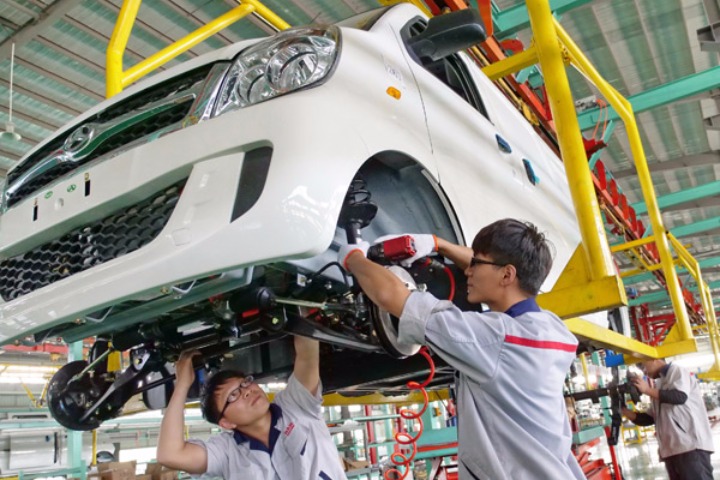
Beyond the innovation center, BAIC’s NEV strategy is backed by substantial financial commitments. BJEV Deputy General Manager Zhang Yong revealed at the Guangzhou auto show that the company plans to invest approximately 10 billion yuan ($1.5 billion) into research and development over the next three to five years. This significant R&D outlay is earmarked for developing new technologies, platforms, and, crucially, for launching two to three new NEV models annually. A consistent refresh of the product lineup is essential to meet evolving consumer demands and stay ahead in a fiercely competitive market.
Furthermore, BAIC is not only focusing on private vehicle ownership but also on expanding NEV adoption in public and shared mobility sectors. The company plans to deploy 500,000 new energy cars for taxi and ride-sharing services across 1,000 cities by 2022. This strategy serves multiple purposes: it rapidly increases the visibility and utilization of NEVs, provides real-world testing grounds for vehicle durability and performance, and helps build out charging infrastructure in urban centers, benefiting all NEV users.
A critical challenge for widespread EV adoption remains charging infrastructure and convenience. To address the issue of slow charging, BAIC announced an ambitious plan earlier in the year to invest another 10 billion yuan to construct 3,000 solar-powered battery changing stations. This investment signals BAIC’s commitment to battery swapping technology, a solution that offers a rapid alternative to traditional charging, potentially alleviating range anxiety and reducing vehicle downtime. By incorporating solar power, these stations also align with broader renewable energy goals, making the entire ecosystem more sustainable.
Market Performance and Growth Trajectory
BAIC Group’s strategic shift comes at a time when China’s NEV market is experiencing explosive growth. The nation has cemented its position as the undisputed global leader in NEV sales and production. From January to November of the reporting year, China’s NEV sales soared to 609,000 units, representing a robust 51.4 percent year-on-year growth. The China Association of Automobile Manufacturers (CAAM) estimated that overall NEV sales for the year could reach an impressive 700,000 units, a testament to the strong policy support and increasing consumer acceptance.
Within this burgeoning market, BAIC Group, primarily through its BJEV subsidiary, has emerged as a leading player. BJEV’s performance in the market reflects its strong focus and strategic investments. In November, BJEV sold 21,598 cars, an astonishing 85 percent surge from the previous month. This remarkable monthly performance propelled its year-to-date sales for the first 11 months to over 88,000 units, establishing BJEV as one of the top NEV brands in China. This consistent growth trajectory validates BAIC’s early and sustained commitment to electrification.
Several factors contribute to this rapid growth. Government incentives continue to play a crucial role, making NEVs more affordable and practical for consumers. Simultaneously, the quality and performance of NEVs are continuously improving, with longer driving ranges, faster acceleration, and enhanced smart features. Battery technology advancements are addressing previous concerns about range anxiety and battery degradation. Furthermore, the expansion of public and private charging infrastructure, coupled with innovative solutions like battery swapping, is making NEV ownership increasingly convenient.
Broader Implications and Future Outlook
BAIC Group’s declaration to phase out conventional fuel cars carries profound implications, not just for the company itself, but for China’s environmental goals, economic development, and global automotive competitiveness.
Environmental Impact: A significant reduction in conventional fuel vehicle production and sales by a major automaker like BAIC will have a tangible positive impact on air quality, particularly in densely populated urban centers like Beijing, where vehicle emissions are a major contributor to smog. This move aligns perfectly with China’s commitment to achieving carbon neutrality and reducing its ecological footprint.
Economic Impact: The shift towards NEVs necessitates massive investments in R&D, manufacturing facilities, and supply chains for electric components, batteries, and charging infrastructure. This transition promises to create new jobs in high-tech sectors, stimulate innovation, and drive economic growth in new industrial clusters. China’s proactive stance in NEVs is also a strategic play to gain global leadership in a future-defining industry, potentially shifting the balance of power in automotive technology.
Challenges and Opportunities: While the path is clear, challenges remain. Securing stable supplies of critical raw materials for batteries (like lithium, cobalt, and nickel), ensuring the robustness of the national electricity grid to handle increased charging demand, and managing the end-of-life cycle for batteries are significant hurdles. Intense competition from both established global players and agile domestic startups also demands continuous innovation and efficiency. However, for BAIC, this transition represents an unparalleled opportunity to solidify its position as a leading, technologically advanced automaker, capable of competing on the global stage not just in terms of volume, but in innovation and sustainability.
Impact on Joint Ventures: While BAIC’s policy specifically targets its self-developed brands, it sets a powerful precedent. Its joint venture partners, Hyundai and Daimler, will undoubtedly feel pressure to accelerate their own NEV strategies within their Chinese operations to align with BAIC’s overarching direction and China’s regulatory environment. This could lead to faster introduction of electric models, greater investment in local R&D for NEVs, and closer collaboration with BAIC on infrastructure solutions like charging stations.
Technological Advancement: The innovation center, with its diverse partners, is poised to be a crucible for groundbreaking technologies. Beyond just battery and powertrain improvements, this collaborative platform can drive advancements in areas like autonomous driving, smart connectivity, lightweight materials, and advanced manufacturing processes, integrating these innovations into BAIC’s next generation of NEVs.
In conclusion, BAIC Group’s decisive move to phase out conventional fuel vehicles by 2025 is a landmark decision that encapsulates the dynamic transformation sweeping through China’s automotive industry. It is a powerful statement of commitment to a sustainable future, driven by aggressive investment in innovation, strategic partnerships, and a clear vision for market leadership in the new energy era. As China continues to lead the charge towards electrification, BAIC’s ambitious roadmap will serve as a crucial benchmark for the industry, shaping not only its own destiny but also influencing the broader trajectory of global automotive development.

 Evan Lee Salim
 Suro Senen