Raul Delapena Setiawan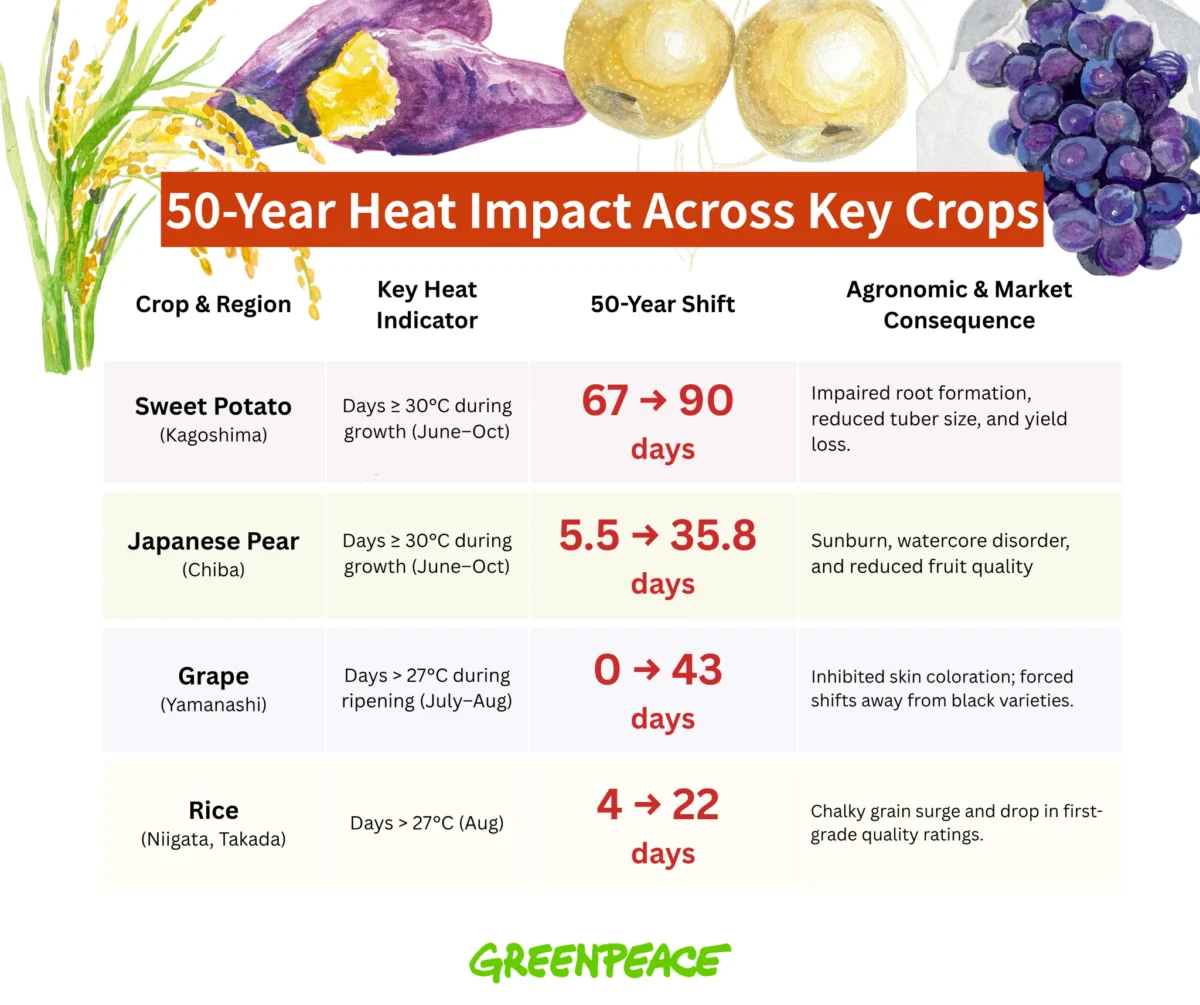
TOKYO (Sept. 17, 2026) — Days with crop-damaging temperatures across Japan’s key agricultural hubs have surged by up to 43 days over the past 50 years, posing significant and escalating risks to the growth, quality, and overall viability of four iconic autumn crops, according to a comprehensive report published today by Greenpeace Japan. The findings paint a grim picture of an agricultural sector increasingly on the front lines of climate change, with far-reaching implications for food security, farmer livelihoods, and the nation’s cherished culinary heritage.
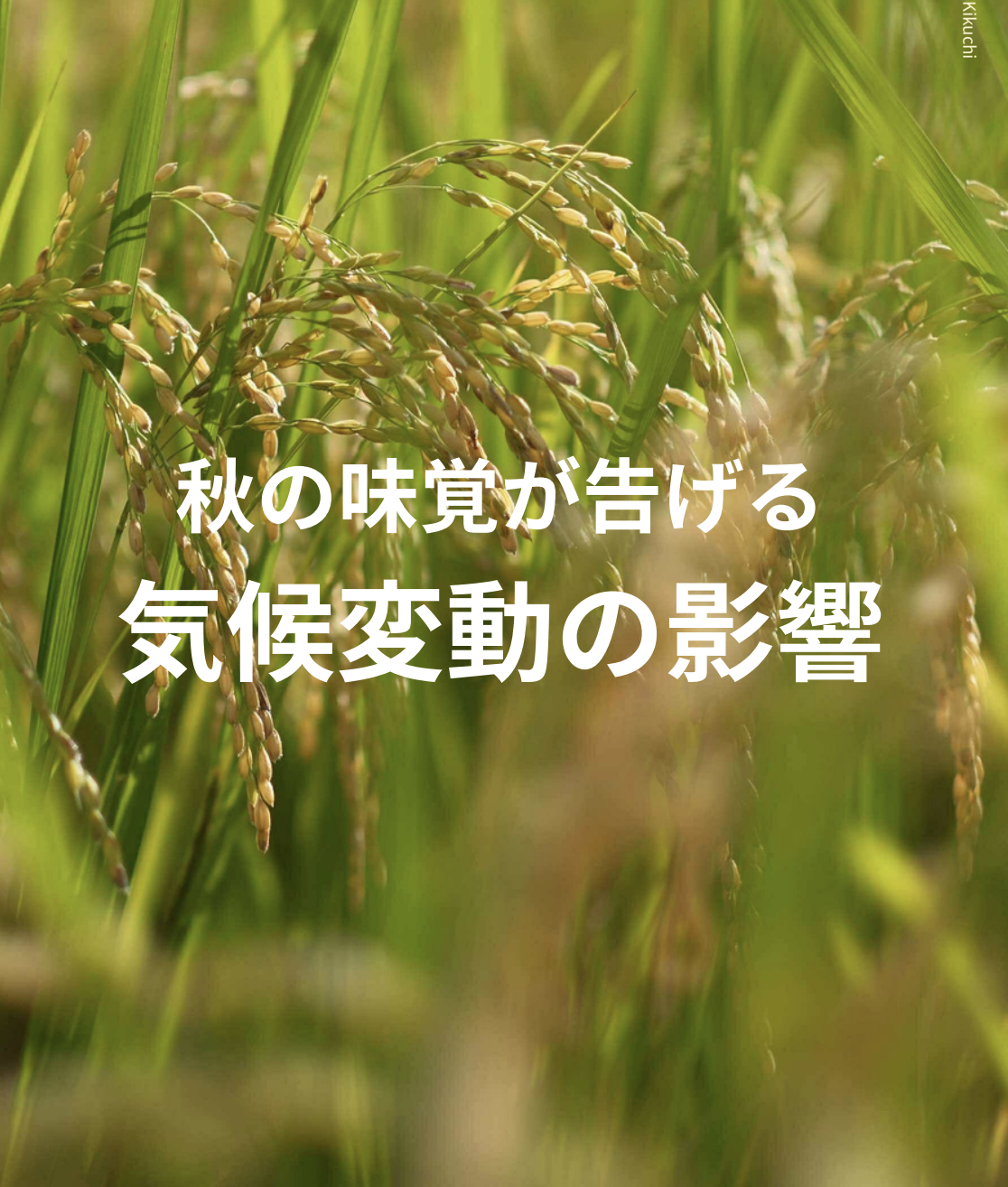
The report, titled Climate Change as Told by Autumn Flavours, meticulously analyzes 50 years of climate shifts by comparing decadal temperature averages between 1966-1975 and 2016-2025. This rigorous examination focused on four major agricultural regions, each renowned for a specific autumn staple: Kagoshima for its sweet potatoes, Chiba for its Japanese pears, Yamanashi for its grapes, and Niigata for its rice. Researchers specifically tracked days when physiological heat thresholds were breached, disrupting vital growth stages such as fruit coloration, grain filling, and overall plant development.
The report’s central thesis is that crop heat exposure during critical growth periods has surged dramatically. This increase is attributed to a confluence of factors, including hotter summers, warmer winters, and a rise in the frequency and intensity of tropical nights – periods where nighttime temperatures remain above 25°C (77°F). These persistent heat stresses are not abstract climatic phenomena; they directly translate into tangible threats to harvest stability, leading to reduced yields and diminished quality. Consequently, farm incomes are jeopardized, and the ripple effect is expected to drive up retail food prices, placing additional strain on consumers. This precarious situation is compounded by the existing structural risks within Japan’s agricultural workforce, where a significant 69.5% of core workers are aged 65 or older, as noted by the Ministry of Agriculture, Forestry and Fisheries (MAFF).
This alarming trend in crop damage coincides with intensifying nationwide heat extremes, a direct consequence of global climate change. In 2025, Japan experienced its hottest summer since record-keeping began in 1898, marking the third consecutive year of record-breaking summer temperatures. The severity of the heat was underscored by the fact that temperatures reached or exceeded 40°C (104°F) across 25 locations nationwide. The term kokushobi, translating to "intense heat days," has become a commonplace phrase in Japanese households, reflecting the pervasive nature of these extreme weather events. The Intergovernmental Panel on Climate Change (IPCC) has repeatedly warned that such escalating extremes pose a direct threat to food security and the livelihoods of farmers globally, a warning that resonates with particular urgency in Japan’s vulnerable agricultural sector.
Key Findings: A 50-Year Heat Impact Across Japan’s Iconic Autumn Crops
The Greenpeace Japan report provides a detailed breakdown of the heat impact on each of the four featured crops, highlighting the specific vulnerabilities exacerbated by rising temperatures:
-
Kagoshima (Sweet Potatoes): Sweet potatoes are particularly susceptible to heat stress, which can affect tuber formation and starch content. Increased heat days during the growing season can lead to smaller, lower-quality tubers, impacting both yield and marketability. The report suggests that the typical high temperatures experienced during the latter half of the growing season are becoming more extreme, pushing the plants beyond their optimal conditions for development.
-
Chiba (Japanese Pears): The development of sweet and crisp Japanese pears is highly sensitive to temperature fluctuations. Excessive heat during the fruit-setting and ripening stages can lead to sunburn, premature ripening, and a reduction in overall sugar content. The report indicates that the prolonged periods of high temperatures, coupled with increased heat intensity, are interfering with the delicate process of pear maturation, potentially affecting their iconic texture and flavour.
-
Yamanashi (Grapes): Yamanashi prefecture is world-renowned for its high-quality table grapes and wine. Grapevines require specific temperature ranges for optimal photosynthesis, flowering, and fruit development. Extreme heat can disrupt flowering, lead to sunburn on the grapes, and alter the sugar-acid balance, which is crucial for both table grapes and wine production. The report points to warmer nights as a particular concern, as they can hinder the vine’s ability to recover from daytime heat and can impact the development of essential flavour compounds.
-
Niigata (Rice): Rice, a staple food for Japan, is profoundly affected by temperature. High temperatures during the grain-filling stage, when the rice plant is developing its kernels, can lead to "heat-damaged grains," characterized by reduced weight, poor milling quality, and a lower taste score. Warmer winters can also affect the availability of sufficient chilling hours for certain rice varieties, and increased frequency of typhoons and heavy rainfall associated with a warming climate can cause lodging (plants falling over) and direct damage to the paddies. The report highlights that the sustained heat during crucial growth phases in Niigata is directly impacting the quality and quantity of this vital crop.
The Human Element: Farmers on the Front Lines
Beyond the statistical data and temperature charts, the Greenpeace Japan report incorporates insights gleaned from field interviews with local farmers. These narratives reveal a crisis that extends far beyond mere temperature readings. Farmers are actively battling a formidable storm of interconnected challenges: extreme heat events that stress crops and workers alike, pervasive water shortages impacting irrigation, shifting seasonal windows that disrupt traditional planting and harvesting schedules, and sudden surges in pest populations that thrive in warmer conditions.
While producers are demonstrating remarkable resilience and ingenuity, adopting adaptive strategies such as adjusting planting dates and experimenting with heat-tolerant crop varieties, the report underscores a critical limitation: farm-level adaptations are increasingly insufficient to offset the systemic shocks brought about by climate change. Individual farmers, no matter how resourceful, cannot single-handedly outrun the broad-reaching and intensifying impacts of a warming planet.
Ikumi Toyota, Climate and Energy Campaigner at Greenpeace Japan, articulated the urgency of the situation: "Over 50 years of accelerating heat waves have pushed Japan’s most iconic agricultural hubs past their thermal limits, placing both crop viability and supermarket prices on the line. While farmers are showing incredible ingenuity to adapt, single operations cannot outrun systemic climate disruption. When the people who feed us run out of options, national food security becomes everyone’s crisis."
This sentiment is echoed by broader analyses of climate change impacts. The IPCC’s Special Report on Climate Change, Land, and Food Security has consistently highlighted the vulnerability of agricultural systems to climate variability and change, emphasizing that even moderate temperature increases can lead to significant yield reductions for major crops. The report’s findings in Japan serve as a stark, localized manifestation of these global concerns.
Broader Implications for Japan’s Food System and Economy
The implications of these findings extend far beyond the agricultural fields. A sustained decline in the quality and quantity of key autumn crops could lead to significant economic repercussions. Reduced harvests translate directly into lower incomes for farmers, potentially forcing some out of business and exacerbating the aging workforce issue.
At the consumer level, a diminished supply of prized Japanese produce would inevitably lead to higher prices, impacting household budgets. Furthermore, a reliance on imported foods to fill the gap could raise concerns about food security, as global supply chains are also susceptible to climate-related disruptions. Japan, which already imports a significant portion of its food, could find itself in an even more vulnerable position.
The cultural and culinary significance of these crops also cannot be overstated. Japanese cuisine is deeply intertwined with seasonal produce, and the integrity of traditional dishes and flavours is dependent on the availability of high-quality ingredients. The erosion of these agricultural staples represents a potential loss of cultural heritage.
A Call to Action: Greenpeace Japan’s Recommendations
In light of these critical findings, Greenpeace Japan is urging the national government to take swift and decisive action on four key fronts:
-
Accelerated Climate Mitigation: The report emphasizes that the most effective long-term solution is a rapid and significant reduction in greenhouse gas emissions, aligning with the goals of the Paris Agreement and limiting global warming to 1.5°C. This includes a swift transition away from fossil fuels and a substantial investment in renewable energy sources.
-
Strengthened Agricultural Adaptation Strategies: While farmers are adapting, government support is crucial. This includes increased investment in research and development of climate-resilient crop varieties, improved irrigation infrastructure to address water scarcity, and enhanced extension services to disseminate best practices for climate-smart agriculture.
-
Support for Vulnerable Farmers: Policies should be implemented to provide financial and technical assistance to farmers most affected by climate change, including crop insurance schemes that adequately account for climate-related losses and programs to support the transition to more sustainable farming practices.
-
Enhanced Food System Resilience: The government should foster a more resilient national food system by promoting diversification of agricultural production, supporting local food economies, and investing in sustainable food distribution networks that are less vulnerable to climate shocks.
The report’s release serves as a critical juncture, urging policymakers and the public to confront the undeniable reality of climate change’s impact on Japan’s vital agricultural sector. The future of Japan’s beloved autumn flavours, and indeed its food security, hinges on immediate and comprehensive action.
Notes:
The full report in Japanese, Climate Change as Told by Autumn Flavours, is available here.
[1] Ministry of Agriculture, Forestry and Fisheries (MAFF). Statistics on Agricultural Workforce. (Accessed September 17, 2026).
[2] Japan Meteorological Agency (JMA). (March 11, 2026). Climate Change Monitoring Report. (Accessed September 17, 2026).
[3] New York Times. (July 23, 2026). It’s So Hot That Japan Needs a New Word for It. (Accessed September 17, 2026).
[4] Intergovernmental Panel on Climate Change (IPCC). Special Report on Climate Change, Land, and Food Security. (Accessed September 17, 2026).
Media Contacts:
Yujie Xue, International Communications Officer, Greenpeace East Asia, +852 5127 3416, [email protected]
Kahoko Sato, Communications Officer, Greenpeace Japan, +81 70 1228 7611, [email protected]

 Basiran
 Pevita Pearce