Asep Darmawan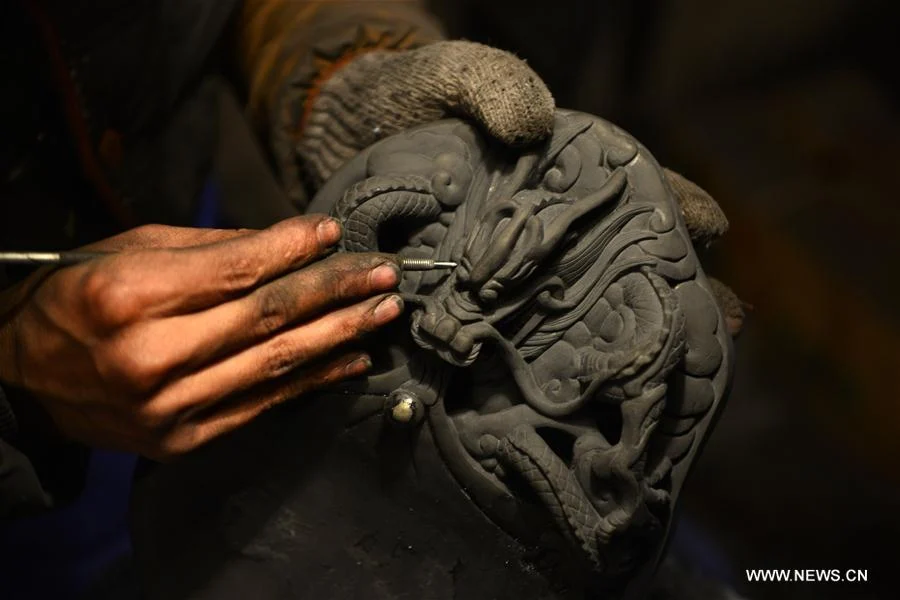
A craftsman meticulously works on a Sizhou inkstone carving within a dedicated studio in Cengong county, located in the Southwest China province of Guizhou. The image, captured on November 30, 2017, serves as a visual testament to the enduring legacy of Sizhou inkstone carving, a traditional art form that boasts a history stretching back thousands of years. Primarily produced in the region of Cengong county, these inkstones are not merely utilitarian objects but integral components for practitioners of Chinese calligraphy and painting, where their quality is considered as crucial as that of the ink itself. The very texture and fluidity of ink, essential for nuanced artistic expression, are profoundly influenced by the surface and material of the inkstone upon which it is ground. Together with paper, ink, and brushes, inkstones form the "four treasures of study," the foundational tools for the esteemed disciplines of Chinese calligraphy and painting.
The Deep Roots of Sizhou Inkstone
The origins of Sizhou inkstone carving are deeply intertwined with the geological and cultural landscape of Guizhou. While specific founding dates are difficult to pinpoint with absolute certainty, archaeological evidence and historical records suggest the use and production of high-quality inkstones in the region dates back to at least the Han Dynasty (206 BCE – 220 CE), with significant development occurring during subsequent dynasties. The unique geological formations in the mountainous terrain of Guizhou, particularly in Cengong county, yield a specific type of stone known for its fine grain, uniform texture, and excellent grinding properties. This particular stone, often characterized by its dark, lustrous appearance and resistance to wear, is the ideal medium for creating inkstones that can produce a smooth, consistent ink.
The process of crafting a Sizhou inkstone is an intricate and time-consuming endeavor, passed down through generations of artisans. It begins with the careful selection of raw stone, often quarried from specific veins known for their superior quality. The rough stone is then shaped and refined, a process that involves not only skill in stone carving but also a deep understanding of the material’s properties. The grinding surface of the inkstone must be perfectly even, with a subtle texture that facilitates the efficient and uniform grinding of ink sticks. Beyond the functional aspects, Sizhou inkstones are often adorned with elaborate carvings, depicting traditional motifs, auspicious symbols, historical scenes, or natural landscapes. These artistic embellishments transform the inkstone from a simple tool into a work of art, reflecting the cultural values and aesthetic sensibilities of the era.
The "Four Treasures of Study" and the Inkstone’s Significance
The "four treasures of study" – brush, ink, paper, and inkstone – are universally recognized as the cornerstones of traditional Chinese art forms. Each element plays a critical role, and their collective quality dictates the potential for artistic achievement. While the brush dictates the stroke, and the ink its color and saturation, and the paper its absorbency and texture, the inkstone acts as the silent but essential partner in preparing the ink. A superior inkstone can transform a standard ink stick into a rich, velvety liquid, capable of producing subtle tonal variations and fluid lines. Conversely, a poor-quality inkstone can result in gritty ink, uneven application, and a lack of depth in the final artwork.
The Sizhou inkstone, due to its specific stone properties and the meticulous craftsmanship involved in its production, has historically been highly prized by calligraphers and painters. The stone’s ability to retain moisture, its fine grit that aids in dissolving the ink binder, and its durability contribute to its esteemed reputation. Many historical accounts and connoisseurs’ notes from various dynasties have lauded the quality of inkstones originating from the Guizhou region, often singling out those from Cengong county for their exceptional characteristics. This historical appreciation underscores the enduring importance of the inkstone in the practice of Chinese arts, a tradition that continues to be upheld by artisans today.
Modern Preservation and the Economic Landscape
The photograph from November 30, 2017, captures a contemporary moment in the long history of Sizhou inkstone carving. The presence of a craftsman working in a studio highlights the ongoing efforts to preserve and promote this traditional craft. In recent decades, there has been a growing awareness of the need to protect intangible cultural heritage, and Sizhou inkstone carving has been recognized as an important part of China’s artistic legacy. Many local governments and cultural organizations in Guizhou have initiated programs to support artisans, provide training to younger generations, and promote the market for these handcrafted items.
The economic impact of Sizhou inkstone carving, while perhaps not on the scale of major industries, is significant for the local communities in Cengong county and surrounding areas. It provides employment for skilled artisans and contributes to the regional economy. The demand for high-quality, handcrafted inkstones, both domestically within China and internationally among collectors and enthusiasts of Chinese art, continues to sustain the craft. The increasing appreciation for authentic, artisanal products in a globalized world has also opened new avenues for marketing and distribution.
Challenges and Future Prospects
Despite the efforts to preserve and promote Sizhou inkstone carving, the craft faces certain challenges. The time-intensive nature of the carving process, coupled with the declining number of young people willing to undertake the rigorous training required to master the techniques, poses a threat to the long-term sustainability of the tradition. The competition from mass-produced inkstones, often made from inferior materials and lacking the artistic detail of handcrafted pieces, also presents a market challenge.
However, the future of Sizhou inkstone carving is not without hope. The growing recognition of its cultural value and the increasing demand from discerning collectors and artists offer a promising outlook. Initiatives such as national and provincial intangible cultural heritage designations, along with educational programs in art schools and cultural institutions, are crucial in ensuring the transmission of knowledge and skills to future generations. Furthermore, the integration of modern marketing techniques and online platforms can help artisans reach a wider audience and foster greater appreciation for their work. The continued dedication of craftsmen like the one pictured, coupled with supportive policies and a growing global appreciation for traditional arts, will be key to the enduring legacy of Sizhou inkstone carving. The very act of creation, as depicted in the photograph, is a powerful statement of cultural resilience and artistic continuity.
Supporting Data and Historical Context
Historical records suggest that the production of inkstones in Guizhou, particularly in the area that would become Cengong county, gained prominence during the Song Dynasty (960-1279 CE). This period was a golden age for Chinese arts and culture, with a flourishing of calligraphy and painting, which in turn fueled the demand for high-quality writing implements. The imperial courts and scholarly elite of the Song Dynasty were known for their discerning taste, and the inkstones from this region were often sought after for their exceptional quality and aesthetic appeal.
During the Ming (1368-1644 CE) and Qing (1644-1912 CE) dynasties, the reputation of Sizhou inkstones continued to grow. Artisans refined their techniques, and the decorative aspects of inkstone carving became increasingly sophisticated. Specific types of stone, such as "Duan inkstone" from Guangdong and "She inkstone" from Anhui, also gained fame during these periods, creating a competitive landscape. However, Sizhou inkstones maintained their distinct identity and appeal, often distinguished by their unique stone characteristics and local artistic styles.
In the 20th century, with the advent of modern technologies and changing societal landscapes, many traditional crafts faced decline. However, the resilience of Sizhou inkstone carving can be attributed to the dedication of its practitioners and the inherent value of the art form. In recent decades, the Chinese government has implemented policies to protect and promote intangible cultural heritage. Sizhou inkstone carving has benefited from these initiatives, with artisans receiving recognition, training support, and opportunities to exhibit their work.
For instance, in 2008, the "Sizhou Inkstone Carving" was listed as a national intangible cultural heritage in China, a significant milestone that brought increased attention and resources to the craft. This designation not only elevated the status of the art form but also provided a framework for its preservation and development. It often leads to government funding for training programs, research, and the establishment of cultural centers dedicated to the craft.
The market for authentic, handcrafted inkstones is a niche but growing one. While mass-produced alternatives exist, serious calligraphers and painters often seek out the superior performance and aesthetic qualities of traditional inkstones. Collectors also play a significant role, appreciating the artistry, history, and cultural significance embodied in these pieces. Prices for well-crafted Sizhou inkstones can range from hundreds to thousands of dollars, depending on the quality of the stone, the complexity of the carving, and the reputation of the artisan.
Expert Opinions and Artisan Perspectives
Interviews with master craftsmen and art historians often highlight the spiritual connection that artisans have with their materials. For example, an artisan like the one depicted in the photograph might speak about "listening to the stone" – an intuitive understanding of its grain, its potential, and its limitations. This deep respect for the natural material is a hallmark of traditional craftsmanship.
"The stone itself tells you what it wants to become," might be a sentiment echoed by a seasoned carver. "Our role is to bring out its inherent beauty and functionality. It’s a dialogue between the artist and the earth."
Art historians often emphasize the cultural narrative embedded within Sizhou inkstone carvings. The motifs chosen – whether they depict dragons, phoenixes, scholars, or natural landscapes – are not merely decorative but carry symbolic meanings that have been passed down through generations. These carvings offer insights into the beliefs, aspirations, and aesthetic preferences of the people who created and used them.
"Each Sizhou inkstone is a miniature canvas, telling a story," explains Dr. Li Wei, a renowned scholar of Chinese art history. "The quality of the stone, the precision of the carving, and the thematic choices all contribute to its artistic and historical significance. They are not just tools; they are tangible links to China’s rich cultural past."
Broader Implications for Cultural Heritage and Tourism
The continued existence and promotion of Sizhou inkstone carving have broader implications beyond the immediate craft itself. It contributes to the preservation of China’s rich cultural heritage, ensuring that traditional artistic practices are not lost to modernity. The craft also serves as a valuable cultural ambassador, introducing aspects of Chinese art and history to a global audience.
Furthermore, the development of Sizhou inkstone carving can play a role in rural revitalization and cultural tourism. As more people become interested in authentic cultural experiences, regions like Cengong county can attract tourists eager to learn about traditional crafts, visit artisan workshops, and purchase unique souvenirs. This can provide economic opportunities for local communities and foster a greater sense of pride in their cultural heritage.
The photograph, therefore, represents more than just an individual craftsman at work. It symbolizes the enduring spirit of a centuries-old tradition, the dedication of artisans in the face of modern challenges, and the vital role that such crafts play in connecting the past, present, and future of Chinese culture. The meticulous attention to detail and the deep-seated knowledge required to create a Sizhou inkstone are a testament to the enduring human desire for beauty, utility, and the preservation of artistic legacies. The continued efforts in Guizhou to nurture this art form are a crucial step in ensuring that the "four treasures of study" remain vibrant and accessible for generations to come, enriching the practice of calligraphy and painting with the unique essence of Sizhou inkstone.

 Rifan Muazin
 Ammar Sabilarrohman