Iffa Jayyana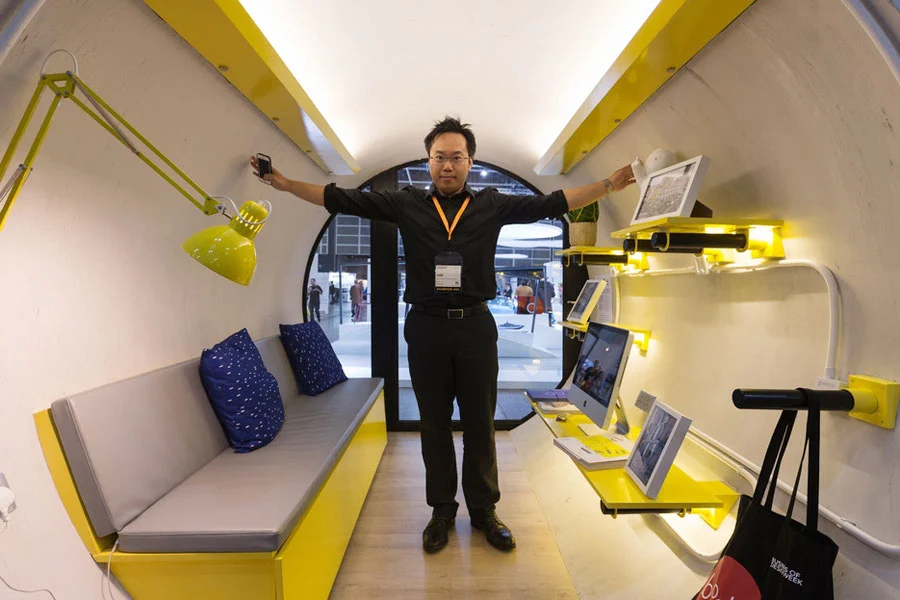
An experimental housing concept, the OPod Tube House, garnered significant attention at the Design Inspire exhibition in Hong Kong on December 8, 2017, presenting a novel approach to the city’s persistent and severe affordable housing problem. Conceived by James Law Cybertecture, a Hong Kong-based architectural firm renowned for its avant-garde designs and integration of technology, the OPod offers a compact, low-cost micro-living unit constructed from repurposed concrete water pipes, aiming to provide a rapidly deployable and adaptable residential option in one of the world’s most expensive real estate markets.
The Genesis of a Concept: James Law Cybertecture’s Vision
James Law Cybertecture, founded by architect James Law, has consistently pushed the boundaries of conventional architecture, exploring how technology and innovative design can address contemporary urban challenges. The firm’s philosophy, "Cybertecture," encapsulates the fusion of cybernetics and architecture, where buildings are designed not just as physical structures but as intelligent, responsive environments. The OPod Tube House emerged from this ethos, directly confronting Hong Kong’s housing crisis with a radical, yet pragmatic, solution. The ideation process likely began well before its public unveiling in late 2017, as the firm meticulously developed the design and engineering aspects of transforming industrial materials into habitable spaces.
A Glimpse into the OPod’s Design and Functionality
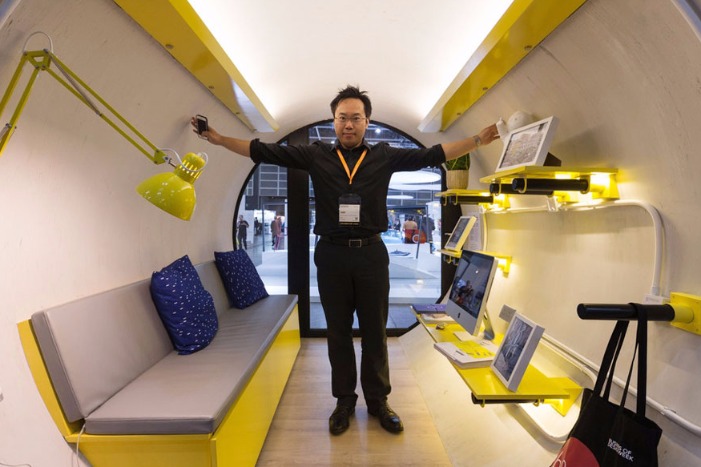
The core of the OPod Tube House is a robust concrete water pipe, measuring 2.5 meters (approximately 8.2 feet) in diameter. This cylindrical structure is ingeniously transformed into a self-contained apartment designed to accommodate one or two persons within a compact footprint of approximately 100 square feet (9.29 square meters). Despite its diminutive size, the design efficiently integrates essential living functions: a small living area, a dedicated cooking space, and a private bathroom equipped with a shower and toilet. To maximize the limited interior volume, the OPod incorporates bespoke, space-saving micro-living furniture, often multi-functional and collapsible. Advanced technology is also integrated, with units featuring smartphone-controlled locks for secure online access, reflecting a modern approach to urban living. A key feature highlighted by Jonathan Kong, a designer director at James Law Cybertecture, during the exhibition, was the surprising width available within the tube, demonstrating how cleverly designed interiors could mitigate the psychological impact of confined spaces.
Crucially, the OPod Tube Houses are designed for modularity and scalability. Their robust concrete structure allows them to be stacked vertically, creating low-rise modular communities in a remarkably short timeframe. This stackability is not just about density; it also offers flexibility. The units can be conveniently located and relocated on various sites, including narrow urban infills or underutilized plots of land that might otherwise be deemed unsuitable for conventional development. This inherent mobility and rapid deployment capability position the OPod as a potentially agile response to immediate housing needs.
Hong Kong’s Acute Housing Predicament: The Catalyst for Innovation
The context for the OPod’s emergence is critical: Hong Kong’s housing crisis is among the most severe globally, characterized by exorbitant property prices, shrinking living spaces, and a widening gap between the wealthy and the working class. The city has consistently ranked as the least affordable housing market worldwide for over a decade. In 2017, when the OPod was unveiled, the median property price in Hong Kong was approximately 19.4 times the median household income, a staggering ratio that placed homeownership far out of reach for the majority of its population.
Sky-High Rents and Dwindling Space
The consequence of such high property values is an extremely competitive and expensive rental market, forcing many residents into substandard living conditions. Thousands of Hong Kongers reside in "cage homes" or "subdivided flats" – tiny, often windowless cubicles carved out of larger apartments, offering minimal privacy and dignity. The average living space per person in Hong Kong is among the lowest in developed economies, often falling below 150 square feet. This desperate situation contributes significantly to social inequality, reflected in Hong Kong’s high Gini coefficient, a measure of income disparity. For families and individuals struggling to secure decent accommodation, the psychological and physical toll of inadequate housing is immense, impacting health, education, and overall quality of life.
The Public Housing Dilemma
While the Hong Kong government operates a substantial public housing program, the demand far outstrips supply. In 2017, the average waiting time for public rental housing for general applicants had stretched to approximately 4.7 years, with some families waiting for over six years. This protracted wait further exacerbates the crisis for low-income families, pushing them towards the private rental market’s most exploitative options. Successive government initiatives have aimed to increase land supply and expedite construction, but these efforts often face challenges related to land acquisition, environmental concerns, and complex urban planning regulations.
Unveiling at Design Inspire 2017: A Public Debut
The Design Inspire exhibition, an annual international trade fair showcasing innovative designs and creative solutions across various industries, provided an ideal platform for the OPod Tube House’s public debut. The exhibition typically draws a wide audience, including industry professionals, potential investors, and the general public, all keen to witness cutting-edge concepts. The OPod, with its distinctive form and direct address to a pressing social issue, immediately became a focal point.
Visitor Reactions and Expert Commentary
Visitors to the exhibition exhibited a range of reactions to the OPod. Many expressed curiosity and admiration for the ingenuity of transforming a mundane industrial object into a habitable space. For some, particularly younger generations and those struggling with housing costs, it represented a glimmer of hope – a tangible, albeit unconventional, alternative to the city’s grim housing realities. Others, however, expressed skepticism regarding the long-term viability and psychological implications of living in such a confined, cylindrical space. Concerns about natural light, ventilation, and the sheer novelty of the concept were voiced.
Architectural critics and urban planners present at the event offered a more nuanced perspective. They acknowledged the OPod’s innovative use of materials and its potential for rapid deployment, recognizing it as a creative response to an urgent problem. However, discussions also revolved around the challenges of integrating such units into Hong Kong’s dense urban fabric, regulatory hurdles, and the broader question of whether micro-living, even if necessary, constitutes a truly desirable or sustainable solution for human habitation in the long run. The debate underscored the complex interplay between design innovation, social need, and urban planning realities.
Statements and Perspectives: From Creator to Critic
The creators of the OPod Tube House have consistently articulated a clear vision for their innovative concept, while broader stakeholders have weighed in on its potential and challenges.
The Designer’s Intent: Affordability and Adaptability
James Law, founder of James Law Cybertecture, often emphasized the humanitarian aspect of the OPod. He posited that the project was not merely an architectural exercise but a direct attempt to provide dignity and a tangible solution to those without adequate housing. "We wanted to create a rapidly deployable, cost-effective solution that could be quickly set up in underutilized urban spaces," Law stated, highlighting the dual benefits of speed and affordability. Jonathan Kong further elaborated on the target demographic, suggesting that the OPod could appeal to young people seeking their first independent living space, or individuals working in specific urban areas who require flexible, temporary accommodation. The cost-effectiveness stems from the reuse of readily available concrete pipes, significantly reducing construction time and material expenses compared to traditional building methods. The vision extended beyond individual units, foreseeing these tubes stacked into vibrant, modular communities that could foster a sense of belonging, despite the compact personal spaces.
Navigating Regulatory and Social Acceptance
While the architectural community largely lauded the design innovation, government bodies and urban planning officials expressed a more cautious optimism. While acknowledging the severity of the housing crisis and the need for diverse solutions, officials noted the significant regulatory hurdles involved in adopting such unconventional housing. Existing building codes and zoning laws in Hong Kong are primarily designed for traditional multi-story residential buildings and would require substantial review or amendment to accommodate modular, pipe-based structures. Issues such as fire safety, structural integrity in stacked configurations, and the provision of essential services like water, sewage, and electricity connections would need careful assessment and approval. Moreover, the long-term social acceptance of living in a concrete tube, even with modern amenities, remains a subject of ongoing debate among the public and social welfare organizations, who stress the importance of adequate living space for mental well-being.
The Road Ahead: Implications and Challenges for Urban Living
The OPod Tube House, while still largely an experimental concept in 2017, sparked a vital conversation about the future of urban housing and the role of radical design in addressing societal challenges. Its implications extend beyond Hong Kong, offering a potential model for other densely populated cities grappling with similar housing crises.
Bridging the Affordability Gap
One of the most significant implications of the OPod is its potential to bridge the affordability gap. By leveraging repurposed materials and modular construction techniques, the cost of manufacturing and deploying an OPod unit is considerably lower than conventional housing. This could translate into significantly reduced rental rates or even purchase prices, making independent living accessible to a broader segment of the population, particularly young professionals and low-income workers. The rapid deployment capability also means that housing shortages could be addressed with unprecedented speed, alleviating immediate pressure on vulnerable populations.
The Human Element: Micro-Living and Quality of Life
However, the shift towards micro-living raises profound questions about the human element and the quality of life. While proponents argue that compact living fosters minimalism and reduces environmental footprint, critics highlight potential psychological impacts of prolonged confinement, lack of natural light, and limited personal space. The success of the OPod, therefore, hinges not just on its physical design but also on the creation of supportive external environments – shared communal spaces, green areas, and vibrant neighborhood amenities – that compensate for the small private footprint. The social acceptance of micro-living is a critical factor; for many, a home represents more than just shelter, embodying a sense of belonging, comfort, and aspiration. The OPod challenges traditional notions of home, potentially requiring a cultural shift in how urban dwellers perceive living spaces.
Infrastructure, Land Use, and Policy Integration
Practical implementation presents substantial challenges. Connecting water, sewage, and electricity to a modular, relocatable unit requires innovative infrastructure solutions. Land availability, even for stacking, remains a premium in Hong Kong. While the OPod can utilize small, irregular plots, scaling up to address a city-wide crisis would demand significant land allocation. Perhaps the most formidable hurdle lies in policy integration. Existing urban planning frameworks, building codes, and land lease policies are not designed for such flexible, non-traditional housing types. Governments would need to demonstrate political will to adapt regulations, create new zoning categories, and potentially offer incentives for developers to adopt such solutions. Without a supportive policy environment, even the most ingenious designs risk remaining conceptual.
A Paradigm Shift in Modular Architecture?
Despite these challenges, the OPod Tube House represents a potential paradigm shift in modular architecture. It exemplifies how industrial components can be reimagined for residential purposes, fostering sustainable practices through material reuse. Its stackable and relocatable nature points towards a future where urban housing is more agile, adaptable, and less permanent, capable of evolving with the dynamic needs of a city. This model could inspire similar innovations globally, prompting architects and urban planners to look beyond conventional building methods for creative answers to universal urban problems.
In conclusion, the OPod Tube House, unveiled at Design Inspire 2017, stands as a powerful symbol of innovative thinking in the face of Hong Kong’s daunting housing crisis. While offering a compelling vision for affordable, rapidly deployable micro-living, its journey from concept to widespread implementation is fraught with complex challenges spanning social acceptance, regulatory frameworks, and infrastructural integration. As cities worldwide continue to grapple with escalating housing costs and growing populations, the OPod serves as a potent reminder that unconventional problems often demand equally unconventional, and perhaps even cylindrical, solutions.


 Evan Lee Salim
 Suro Senen