Jia Lissa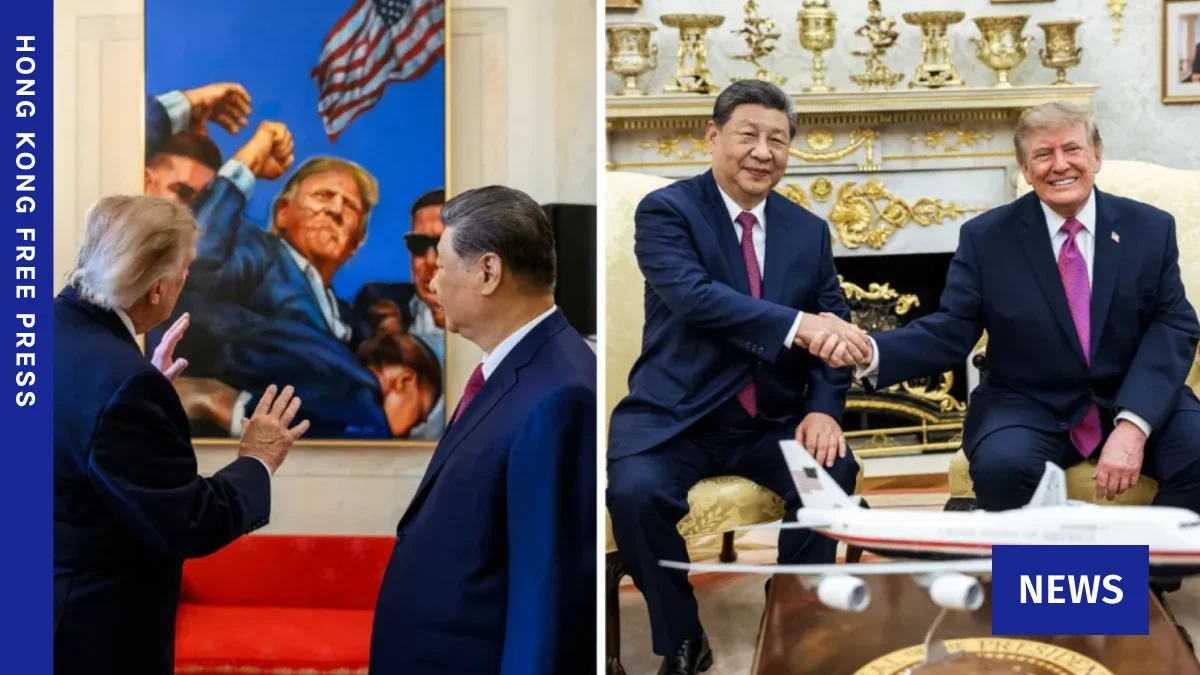
Chinese President Xi Jinping and his American counterpart, Donald Trump, convened at the White House on Thursday for a critical summit aimed at managing the burgeoning superpower rivalry between Beijing and Washington. Amidst a lavish ceremonial welcome orchestrated by the US president, Xi delivered a clear message: the world’s two largest economies must prioritize peaceful coexistence and avoid conflict. The state visit, spanning September 23 to 25, 2026, at Trump’s invitation, was characterized by sweeping pomp and circumstance, yet underscored deep divisions on pivotal global issues, including the future of artificial intelligence, the sovereignty of Taiwan, and the ongoing conflict in Iran.
President Trump, keen to project an image of robust personal diplomacy, hailed a "truly great friendship" with Xi, offering a welcome steeped in symbolic gestures, including an unprecedented invitation for the Chinese leader to board Marine One. This display of camaraderie, however, belied the intricate and often contentious agenda that dominated their discussions. Xi, for his part, used the high-profile platform to articulate China’s firm red lines, signaling Beijing’s unwavering positions on matters of national interest and global governance.

The Call for Peaceful Coexistence and Strategic Restraint
In his initial remarks alongside President Trump, Xi Jinping emphasized the imperative for the two nations to ensure "no conflict and no confrontation between us." This statement reflects a long-standing diplomatic principle articulated by Beijing, advocating for a "new model of major-country relations" that acknowledges both cooperation and competition without escalating to direct confrontation. The call for peaceful management resonates against a backdrop of increasing geopolitical tension, economic competition, and ideological divergence that has defined the relationship in recent years. Analysts suggest that while both leaders outwardly promote stability, their respective national interests often clash, making the careful navigation of this relationship paramount for global stability.
The United States, under successive administrations, has grappled with the strategic implications of China’s rapid rise as an economic and military power. Trump’s approach, characterized by a blend of transactional diplomacy and assertive trade policies, has often oscillated between engagement and confrontation. This particular visit, the first state visit by a Chinese leader to the White House in over a decade, provided a crucial opportunity for direct dialogue, even if substantive breakthroughs were not immediately expected. The primary objective, as many observers noted, was to establish a framework for managing points of friction and preventing miscalculation in a complex bilateral relationship.

The AI Frontier: Human Control vs. Unfettered Development
A standout point of divergence emerged in the discussion surrounding artificial intelligence. President Xi articulated a firm stance that the development of AI must remain "always under human control." This position reflects China’s growing focus on the ethical governance of emerging technologies, a theme increasingly prominent in Beijing’s national AI strategy. China has invested massively in AI research and development, aiming to become a global leader in the field by 2030. Its approach, while ambitious, has also drawn scrutiny regarding data privacy and surveillance implications. Xi’s emphasis on human control aligns with a global discourse among policymakers and academics who advocate for robust ethical frameworks to mitigate potential risks associated with advanced AI, including autonomous weapons systems and algorithmic bias.
In stark contrast, President Trump has repeatedly dismissed warnings about AI’s existential threats, often expressing an optimistic, albeit less cautious, view of technological advancement. He referred to artificial intelligence as "super intelligence — SI," underscoring a different perspective on the technology’s potential and perils. The US, a foundational innovator in AI, is engaged in an intense global race for AI dominance, with significant investments from both government and the private sector. The philosophical chasm between the two leaders on AI governance highlights a critical fault line in their broader technological competition, with profound implications for international standards, military applications, and the future of work and society. The global AI market is projected to reach trillions of dollars in the coming decade, making the regulatory and ethical frameworks surrounding it a major point of contention and cooperation.

Taiwan and the Iran War: China’s Red Lines
Beyond the ceremonial façade, the discussions in the Oval Office delved into more immediate and geopolitically sensitive issues. President Xi urged Trump to exercise "prudence" and oppose independence for Taiwan, the self-governing island that Beijing considers an inalienable part of its territory. Taiwan, with its democratically elected government and critical role in the global semiconductor supply chain (Taiwan Semiconductor Manufacturing Company, TSMC, alone accounts for a significant portion of the world’s advanced chip production), remains the most sensitive issue in US-China relations. The United States maintains an unofficial relationship with Taiwan under the Taiwan Relations Act, providing defensive weaponry to the island, a policy that consistently draws condemnation from Beijing. Any perceived move towards formal recognition of Taiwan’s independence by the US is considered a severe red line by China, with potential military implications. Xi’s warning underscores China’s unwavering commitment to its "One-China" principle, a cornerstone of its foreign policy.
Further highlighting global flashpoints, Xi also pressed Trump to bring an end to the "Iran war" through negotiation "as soon as possible." The article’s implied timeline places this visit in 2026, suggesting an active conflict involving Iran. The source material also notes that American military jets, including B-2 bombers – "of the type that bombed Iranian nuclear facilities last year" – staged a flyover during the White House ceremony, providing further context to the implied conflict. China has historically maintained diplomatic and economic ties with Iran, including being a major importer of Iranian oil and engaging in infrastructure projects. The article also mentions that China has "reportedly shared intelligence with Tehran," indicating a complex and potentially supportive role for Beijing in the ongoing conflict. This positions China as a significant player in any resolution efforts and highlights the divergence of US and Chinese interests in the Middle East, particularly regarding regional stability and energy security. The "Iran war" and its resolution represent a critical point of international diplomacy and a potential area where US and Chinese interests could either converge on de-escalation or further diverge, depending on their respective strategic calculations.

Chronology of a State Visit: Pomp, Substance, and Symbolic Gestures
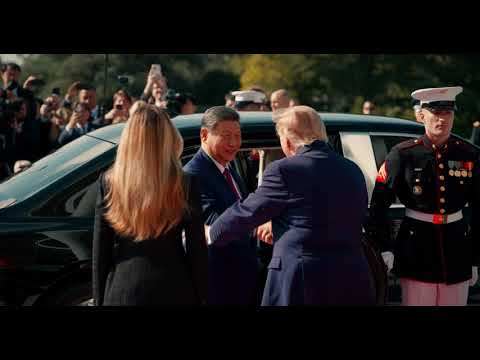
The state visit officially commenced on Wednesday, September 23, with an unusual and highly symbolic welcome by President Trump himself at Joint Base Andrews. Breaking with decades of protocol, Trump personally greeted Xi’s arrival, marking the first time in over 60 years that a US president extended such a welcome to a foreign head of state. Trump reportedly remarked that the 73-year-old Xi appeared "strong, vibrant, and fit," subtly addressing recent rumors about the Chinese leader’s health. This personal touch set a tone of ostensible warmth, seemingly designed to underscore the "great friendship" Trump often invokes.
Thursday, September 24, was packed with formal engagements. The day began with a grand welcome ceremony on the White House South Lawn, followed by a joint inspection of a military parade on the newly paved-over Rose Garden. The spectacle included a flyover by American military jets, featuring the formidable B-2 bomber, a stark reminder of US military might and its recent deployment in the implied "Iran war." US and Chinese flags flew side-by-side over the West Wing, visually symbolizing the complex duality of cooperation and competition.
Inside the Oval Office, the substantive discussions took place, covering security, technology, and economic issues. During a press availability, Trump made a lighthearted, albeit pointed, joke about the Chinese delegation having the "friendliest press corps," a remark coming just days after several US news outlets (CNN, MS Now, Politico) had been temporarily barred from White House access, only to return on Thursday following a court order. This moment highlighted underlying tensions regarding press freedom, even amidst diplomatic niceties.
Following the formal meetings, President Trump led Xi on a tour of the new helipad he had constructed at the White House, boasting of its "million-year" granite durability. In a highly unusual move, Trump then took the Chinese leader aboard Marine One, one of the most exclusive and sensitive pieces of US military equipment. This gesture, unprecedented for a visiting foreign head of state, was widely interpreted as an attempt by Trump to forge a deeper personal bond with Xi, offering a glimpse into a highly protected symbol of American power. While reporters attempted to elicit comments on critical issues like Iran, Taiwan, fentanyl trafficking, and the jailed Hong Kong pro-democracy media mogul Jimmy Lai, both leaders remained tight-lipped, with Trump merely stating, "We had a great meeting."
The day culminated in a state dinner for Xi, attended by top US tech CEOs, signifying the critical role of technology and trade in the bilateral relationship. The menu, featuring yellow squash veloute, sesame-crusted sea bass, and vanilla cremeux with White House honey ice cream, reflected a blend of American culinary tradition and sophisticated presentation.

Underlying Frictions and Limited Breakthroughs
Despite the elaborate pageantry, significant breakthroughs were not anticipated, nor were many publicly announced. The visit was primarily viewed as a mechanism to manage existing points of friction rather than resolve them. The "trade war" between the two economies, initiated by Trump’s tariffs, remains a persistent source of tension. In a small but notable sign of progress, US Treasury Secretary Scott Bessent announced a two-month extension of a trade truce that was set to expire in November, providing a temporary reprieve and space for further negotiations. This extension, however, does not fundamentally alter the structural imbalances and disputes that have characterized the trade relationship, including intellectual property theft, forced technology transfers, and market access issues.
Other unresolved issues loomed large, even if not explicitly addressed in public statements. The fentanyl crisis in the United States, fueled by precursor chemicals often originating from China, remains a major public health and diplomatic challenge. The plight of Jimmy Lai, the pro-democracy media mogul jailed in Hong Kong under the national security law, underscores broader human rights concerns and the erosion of freedoms in the city, which have been a point of contention between Washington and Beijing. These issues, while perhaps discussed behind closed doors, reflect the enduring ideological and governance differences that complicate the "superpower rivalry."

Implications and Future Outlook
The state visit of President Xi Jinping to the White House represents a pivotal moment in the ongoing narrative of US-China relations. While the lavish welcome and emphasis on personal rapport aimed to project stability and cooperation, the underlying discussions revealed persistent and profound disagreements on issues ranging from technology governance to regional security and human rights.
The explicit articulation of China’s red lines on Taiwan and AI, coupled with its call for a negotiated end to the "Iran war," signals Beijing’s growing confidence and assertiveness on the global stage. For the United States, the visit underscores the complex challenge of simultaneously competing with China on strategic fronts while seeking cooperation on global issues. The temporary trade truce extension offers a glimmer of hope for de-escalation in one key area, but the deeper structural issues in the economic relationship, as well as geopolitical flashpoints, remain.

The coming months will likely test the efficacy of this high-level dialogue. The commitment to "no conflict and no confrontation" will be measured by concrete actions and diplomatic maneuvers, particularly concerning Taiwan, the trajectory of AI development, and the path towards peace in the Middle East. The delicate balance between superpower rivalry and the imperative for peaceful management will continue to define the most consequential bilateral relationship of the 21st century, impacting global trade, technological innovation, and international security for years to come.


 Azzam Bilal Chamdy
 Laily UPN