 Asro
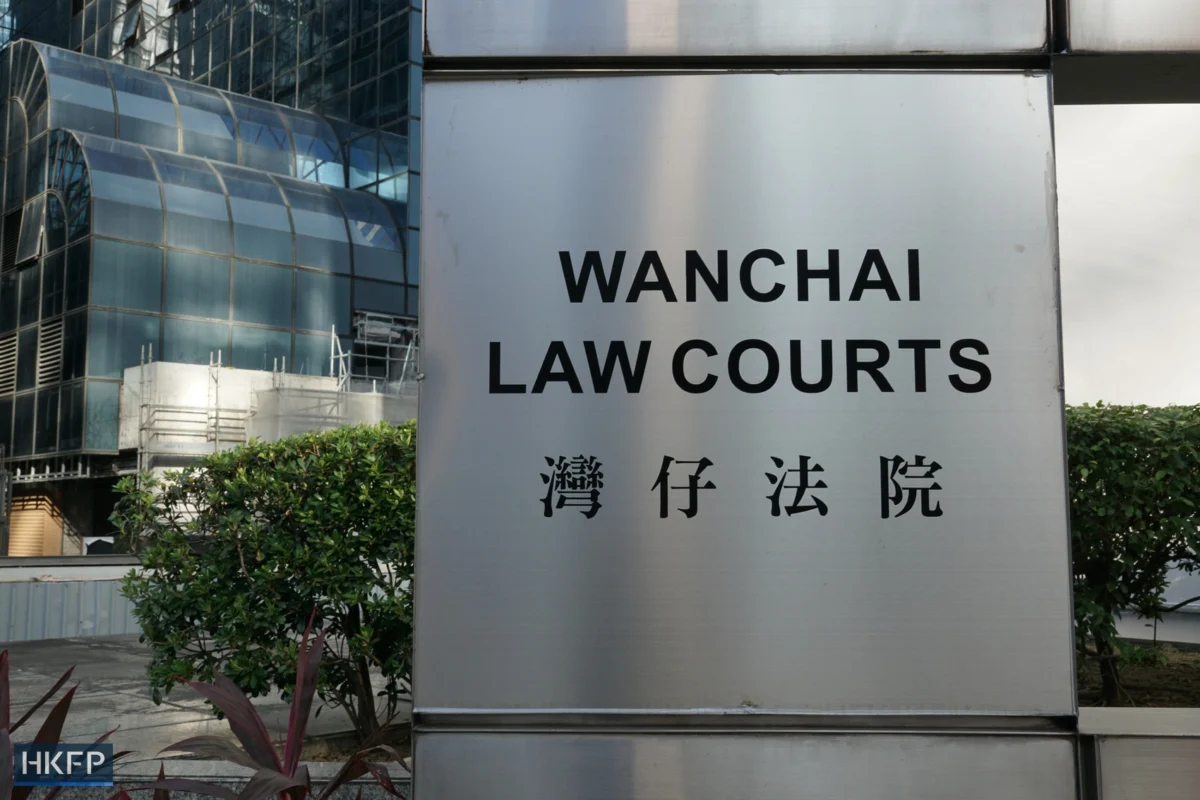
Wong Kwok-ngon, known by his online moniker Wong On-yin, has testified in the District Court that he did not believe he was part of a national security investigation when he met with police officers. The 72-year-old political commentator is currently on trial, representing himself, after being charged with revealing details of a national security probe. His testimony on Tuesday marked the 12th day of the proceedings, offering further insight into the circumstances surrounding his arrest in December of the previous year.
Wong was taken into custody following the publication of two YouTube videos in which he discussed a meeting he had with national security police the day before his arrest. The act of disclosing information pertaining to a national security investigation is a criminal offense under Hong Kong’s Safeguarding National Security Ordinance (SNSO), locally referred to as Article 23. This homegrown security law, enacted in March 2020, significantly expanded the government’s powers to combat perceived threats to national security.
The meeting in question had been initiated by national security police who brought Wong in to discuss a planned press conference. This press conference was intended to address the fatal Wang Fuk Court fire, a tragic incident that had occurred days earlier, and Wong was slated to be a speaker. The police’s intervention effectively led to the cancellation of the event.

During his testimony, Wong acknowledged to the prosecution that his YouTube videos did indeed mention his meeting with officers at the Mong Kok Police Station. He also confirmed that he had described the ages and physical appearances of the officers involved. However, Wong emphasized that he had deliberated extensively before deciding to publish the videos. His central argument is that, based on his assessment, the police were not conducting a formal investigation. Instead, he believed the sole purpose of the meeting was to dissuade him from proceeding with the press conference.
"I considered it my judgment that the police were not carrying out an investigation," Wong stated, as reported by Hong Kong Free Press. He further elaborated that he perceived the encounter as an attempt by the authorities to prevent the press conference from taking place, rather than an interrogation or inquiry into any wrongdoing.
Chronology of Events Leading to the Trial
The legal proceedings against Wong On-yin stem from a series of events that unfolded in late 2025. His arrest on December 9, 2025, followed the publication of his YouTube videos. Prior to this, on December 2, national security police had brought him in for discussions concerning the Wang Fuk Court fire and his scheduled participation in a press conference. This press conference, which was later called off, was intended to discuss the fatal blaze.

The charge of revealing details of a national security probe is a serious one under the Safeguarding National Security Ordinance. This law has been a focal point of international concern regarding Hong Kong’s diminishing freedoms. The ordinance, which came into effect in March 2020, was enacted rapidly and grants broad powers to law enforcement agencies.
Wong’s legal challenge centers on his interpretation of the police’s actions and his own intent in disseminating information about the meeting. He contends that, given the nature of the police’s inquiries—which reportedly included asking about his planned speech topics and any organizational collaborations—it was reasonable for him to believe the meeting was preemptive rather than investigatory.
The Nature of the Alleged Disclosure
When questioned by the prosecution, Wong admitted to detailing his encounter with national security police in his YouTube videos. He confirmed he mentioned the location of the meeting and provided descriptions of the officers. This disclosure is at the core of the charge against him, as the SNSO explicitly prohibits the revelation of details related to national security investigations.

Wong’s defense hinges on his assertion that he did not believe an investigation was active. He articulated that the police’s focus on the press conference, rather than any alleged offenses by him, led him to conclude that the meeting’s purpose was solely to preemptively halt the event. This distinction, in his view, meant that his subsequent video was not a disclosure of an ongoing investigation.
Furthermore, Wong testified that during the meeting, police officers presented him with a confidentiality agreement. However, he claimed that he "basically did not look at it," suggesting a lack of awareness or acceptance of any binding confidentiality terms. This statement raises questions about the clarity of communication regarding the sensitive nature of the information discussed and the expectations of the police.
Wong’s Background and Legal Standing
Wong On-yin, an established political commentator, has garnered a following through his online content, particularly on YouTube. His trial, which began earlier in the year, has drawn attention to the increasingly restrictive environment for public discourse in Hong Kong. He is representing himself in court, a decision that underscores his commitment to his defense. On the first day of his testimony, Wong informed the court that he holds both bachelor’s and master’s degrees in law, indicating a foundational understanding of the legal framework within which he is being prosecuted.

Defense Arguments: Public Knowledge and Intent
A significant aspect of Wong’s defense revolves around his assertion that the information he shared was, to some extent, already in the public domain. He argued that he did not consider it an act of disclosure when the details under discussion were already known to the public. He pointed to media reports that had already covered his interaction with national security police, suggesting that the element of secrecy, crucial for an "investigation disclosure" charge, was absent.
However, when pressed by the prosecution, Wong conceded that the information he provided in his videos, including the identities of individuals he met and the specifics of their discussions, went beyond what had been reported by the media. This admission suggests a potential gap between his interpretation of "public knowledge" and the prosecution’s definition.
In addition to the charge of revealing details of a national security probe, Wong also faces a separate sedition charge. This charge relates to 30 commentary videos he posted on his YouTube channel between January and December of the previous year. Sedition laws in Hong Kong, like those concerning national security, have been increasingly utilized to curb dissent and critical commentary.

Broader Context: Freedom of Expression and National Security Laws
The trial of Wong On-yin occurs against a backdrop of heightened scrutiny over freedom of expression in Hong Kong. The implementation of the Safeguarding National Security Ordinance and its predecessor, the National Security Law imposed by Beijing in 2020, has led to a significant chilling effect on political dissent and media freedom. Critics argue that these laws are being used to silence opposition and curtail fundamental rights previously enjoyed in the city.
The SNSO, enacted in March 2024, further consolidated national security legislation in Hong Kong. It criminalized a wider range of offenses, including treason, espionage, sedition, and collusion with foreign forces, with penalties including life imprisonment. The ordinance also introduced new powers for law enforcement, such as the ability to issue restraint orders and search warrants without judicial oversight in certain circumstances.
The prosecution’s case against Wong hinges on proving that he intentionally disclosed information about an active national security investigation, regardless of his belief about its nature. The defense, conversely, seeks to establish that his actions were not intended to compromise any investigation and that the information shared was either not considered confidential by him or was already in the public sphere.

Media Coverage and Pre-Trial Publicity
Wong’s testimony highlighted the role of media reporting in the lead-up to his trial. He mentioned that the fact he had been taken in by national security police was already public knowledge due to media coverage. This fact serves as a key point in his argument that the information he later disclosed on YouTube was not a revelation of secret information. However, the prosecution’s focus on the specifics of his account suggests they believe he went beyond general media reports.
The court has also heard evidence of four YouTube videos posted by Wong that are not part of the 30 videos cited in the sedition charge. These additional videos reportedly cover topics such as the Wang Fuk Court fire, controversies surrounding renovation projects, and the removal of investigative articles by a state-backed media outlet concerning construction at the housing estate. Wong presented these videos to provide a comprehensive view of his commentary, asserting that he has never incited the public to take any action.
The trial is scheduled to continue on Wednesday, with further testimony and evidence expected to be presented. The outcome of Wong On-yin’s case will likely have further implications for the landscape of political commentary and freedom of expression in Hong Kong, particularly concerning the interpretation and application of the city’s stringent national security laws. The legal battle highlights the delicate balance between national security imperatives and the preservation of civil liberties, a tension that continues to define the city’s contemporary political environment.

 Ammar Sabilarrohman
 Suro Senen