 Asep Darmawan
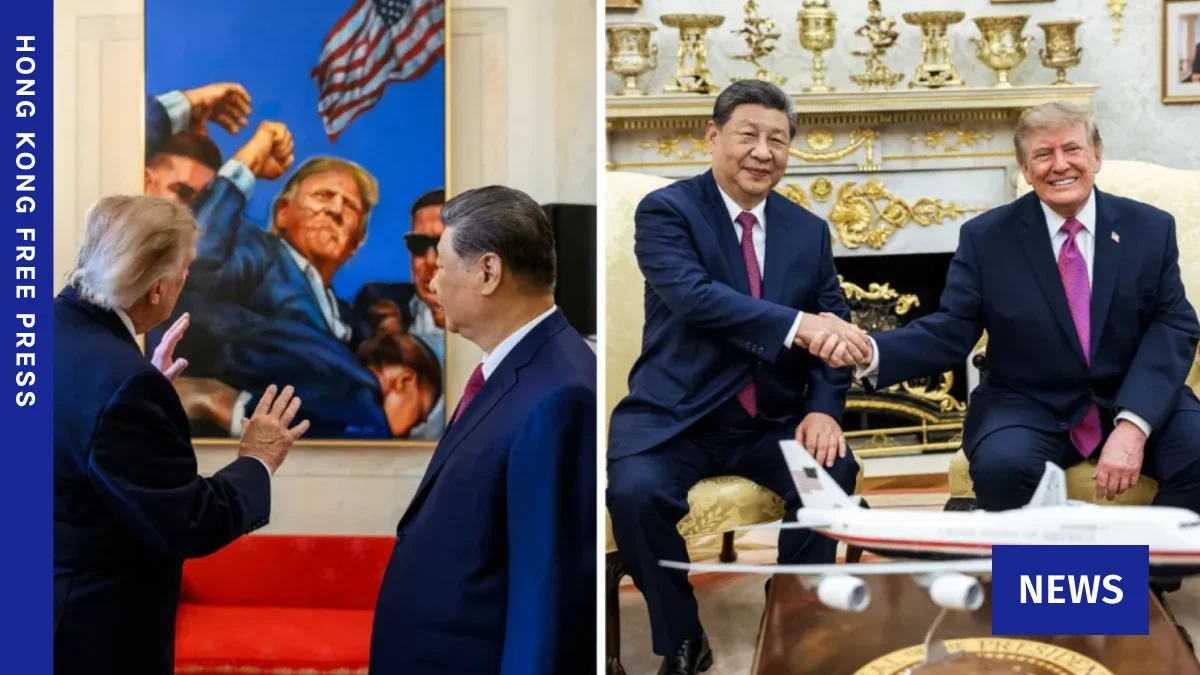
Residents in China’s capital are closely observing President Xi Jinping’s high-stakes meeting with his US counterpart, Donald Trump, in Washington, expressing widespread hope that the discussions will serve to stabilise the often-turbulent ties between the two global superpowers. Speaking to Agence France-Presse (AFP) on Thursday, Beijingers articulated a collective sentiment that the protracted trade war, which has deeply impacted their lives and the broader economy, "hurts everyone" and called for a renewed commitment to cooperation. The summit, held on September 23, 2026, commenced with a pomp-filled state visit, setting the stage for critical deliberations on a wide array of pressing issues, from the burgeoning competition in artificial intelligence and contentious trade disputes to regional stability concerns surrounding Iran and the sensitive status of Taiwan.
The Summit Unfolds: A Pomp-Filled Welcome

President Xi Jinping arrived in Washington on Wednesday evening local time, greeted by President Trump at Joint Base Andrews in Maryland. The elaborate reception, featuring military honours and a ceremonial flyover by a B1 bomber, underscored the diplomatic gravity of the occasion despite the underlying tensions that have strained bilateral relations for years. This high-profile visit was meticulously planned to allow the two leaders to engage in extensive discussions, aimed at de-escalating economic friction and finding common ground on global challenges. The agenda for the talks was exceptionally broad, reflecting the multifaceted nature of the US-China relationship, encompassing not only economic policies and technological supremacy but also geopolitical flashpoints that carry significant international implications.
Beijing’s Public Pulse: A Deep Desire for De-escalation
In the bustling streets of Beijing, the sentiment among ordinary citizens was clear: a profound desire for stability and mutual benefit. Huang, a 59-year-old resident, emphasised the "very important" nature of the visit, asserting its critical role in shaping the trajectory of relations between the world’s two largest economies. "As an ordinary citizen, I naturally hope that China-US relations can achieve long-term, stable, and mutually beneficial development," Huang told AFP in central Beijing on an overcast Thursday morning. His comments reflected a broader aspiration for an end to confrontational rhetoric and policies. He further articulated hope that "through President Xi’s visit to the US and friendly, harmonious, and goodwill communication with President Trump, we can develop bilateral relations." This longing for constructive engagement highlighted the personal impact of geopolitical tensions on daily life, where the ripple effects of international disputes are keenly felt. The public discourse, though carefully managed, often conveys an underlying anxiety about the future of a relationship so pivotal to global peace and prosperity.

The Shadow of the Trade War: Economic Reverberations
For many Beijingers, the primary concern revolved around the economic ramifications of the US-China trade war. The bruising conflict, initiated in early 2025, saw the imposition of escalating tariffs on hundreds of billions of dollars worth of goods, significantly roiling global markets and supply chains. Industries from advanced technology to agriculture bore the brunt of punitive duties, leading to notable disruptions in established trade flows and impacting corporate profitability on both sides. According to reports from the World Trade Organization (WTO) in late 2025, global trade growth had slowed by an estimated 1.5 percentage points directly attributable to the tariff imposition, underscoring the severe economic stakes. Key Chinese export sectors, including electronics and textiles, reported significant drops in orders and profit margins, while American agricultural producers faced retaliatory tariffs that severely curtailed their access to the lucrative Chinese market.
A fragile truce was eventually brokered in October 2025, temporarily easing immediate pressures but leaving underlying structural issues unresolved. While analysts largely viewed the current summit as more about symbolic spectacle than substantive breakthroughs, an early and significant development emerged on Wednesday: Washington announced a two-month extension of this trade truce, originally set to expire in November 2026. This extension, pushing the deadline to January 2027, offered a glimmer of immediate relief and a tangible sign of de-escalation.

Finance worker Lu Hao, 27, articulated the widespread distress experienced during the height of the trade war. "I really hope this visit sends out positive signals and brings more good news to global stock markets," Lu told AFP. "Because at the beginning [of the trade war], our stock market took the brunt of the impact right from the start." He underscored a common understanding: "It became clear that a trade war is a lose-lose situation." His observations were consistent with broader market analysis, which had documented significant volatility in both the Shanghai Composite and the Dow Jones Industrial Average during periods of heightened trade tensions.
Lucy Lu, a 43-year-old professional in the foreign trade services industry, echoed these sentiments, stating emphatically that it "hurts everyone" when major powers clash. "For export businesses, certain goods have become really hard to ship out as a result of higher tariffs," she explained, detailing the practical challenges faced by enterprises. "I really hope countries can maintain a friendly approach to tariffs." The experiences of individuals like Lucy Lu highlighted the direct impact on businesses and livelihoods, reinforcing the urgent need for a more predictable and cooperative international trade environment.
Beyond Tariffs: The AI Arms Race and Global Governance

Beyond trade, the burgeoning competition in artificial intelligence (AI) was expected to feature prominently in the discussions. Both the United States and China are locked in an intense race for dominance in critical technologies, including AI, robotics, and advanced computing. This technological rivalry is not merely economic but also carries profound strategic implications for national security and global influence. The summit provided a rare opportunity for leaders to address not only the competitive aspects but also the growing global fears surrounding the potential societal impact of AI, including job displacement, ethical concerns, and even existential risks to humanity.
Lucy Lu, reflecting on China’s rapid advancements in the sector, stated, "In terms of AI… China now has the strength to go toe-to-toe with the US." Indeed, reports from institutions like the World Intellectual Property Organization (WIPO) and various tech think tanks in 2026 consistently highlighted China’s significant progress in AI research, patent filings, and the deployment of AI applications across various industries. However, she cautioned that competition might still "outweigh agreements," as "whichever country gains the upper hand in the field of AI down the road" would likely emerge stronger. This perspective underscored the zero-sum thinking that often pervades high-stakes technological competition.
Huang, however, articulated a more cooperative vision for this technological race. He stressed that AI competition "should be a healthy and rational one, rather than a malicious one." This viewpoint reflected a growing chorus of international voices advocating for global cooperation on AI governance, ethical guidelines, and shared research into mitigating potential risks. The discussions between Xi and Trump were anticipated to explore frameworks for such cooperation, or at the very least, mechanisms to prevent an uncontrolled and potentially dangerous AI arms race.

Geopolitical Flashpoints: Taiwan and Iran
The summit also delved into sensitive geopolitical issues that continue to challenge the delicate balance of power. Among these, the status of Taiwan remained a particularly thorny subject. Huang anticipated that President Xi would "stand firm on hot topics like Taiwan," the self-ruled democratic island that Beijing claims as its sovereign territory and has repeatedly threatened to seize by force, if necessary. The Chinese government views Taiwan as an inalienable part of "one China," a fundamental principle of its foreign policy.
Taiwan, in response to increased military assertiveness from Beijing, has ramped up its defense spending significantly in recent years, reaching an all-time high of approximately 2.5% of its GDP in 2026. However, the island remains heavily reliant on US security support, including advanced weaponry sales and intelligence sharing, to deter potential aggression from mainland China. The United States, while acknowledging the "One China" policy, has maintained a policy of "strategic ambiguity" regarding Taiwan’s defense, yet consistently provides defensive capabilities to the island. Huang emphasized, "Our government has its bottom line. I hope the United States will respect China’s bottom line and its sense of historical identity." This statement underscored the deep historical and nationalistic sensitivities surrounding the Taiwan question, making it one of the most intractable issues in US-China relations.

Discussions were also expected to touch upon Iran, a critical player in global energy markets and a focal point of regional instability. The US and China hold divergent views on how to manage Iran’s nuclear program and its regional influence, with Beijing often advocating for a more diplomatic approach and criticising what it views as destabilising US sanctions. Finding common ground on Iran, particularly given its implications for global oil prices and Middle Eastern security, was another complex challenge on the summit agenda.
Expert Perspectives: Balancing Spectacle and Substance
Analysts from leading think tanks and academic institutions offered varied predictions for the summit’s outcome. Dr. Eleanor Vance, a senior fellow at the Global Policy Institute, suggested that "while the pomp and circumstance are undeniable, the real measure of success will be in the tangible, albeit incremental, agreements reached on trade and perhaps a framework for future dialogue on AI ethics. A grand bargain is unlikely given the deep structural divergences." Economists at the Peterson Institute for International Economics pointed to the trade truce extension as a positive, albeit minor, step. "It buys time," stated lead economist Dr. David Chen, "allowing both sides to prepare for more substantial negotiations without the immediate pressure of an expiring deadline, which is crucial for market confidence."

However, others remained skeptical. Dr. Marcus Thorne, a geopolitics expert, noted, "On issues like Taiwan, where fundamental sovereignty claims are at stake, neither leader can afford to be perceived as ceding ground. These will remain points of managed disagreement rather than areas for immediate resolution." The summit, therefore, was widely viewed as a crucial exercise in managing competition rather than eliminating it, with both leaders seeking to project strength domestically while attempting to prevent an outright rupture in relations.
Looking Ahead: The Path to Stable Relations
Ultimately, the overarching hope expressed by Beijing residents and echoed by international observers was for a more peaceful and stable global environment. "If US-China relations are good, it will benefit the entire global landscape," Lucy Lu concluded, encapsulating the profound interconnectedness of the world’s two largest powers. "I just hope the world becomes more peaceful." The summit between Xi and Trump, while not expected to resolve all outstanding issues, represented a vital opportunity for direct communication and a potential reset in a relationship that is arguably the most consequential of the 21st century. The path to long-term stability remains fraught with challenges, but the willingness of both leaders to engage at the highest level offers a degree of optimism for a future where competition is managed, and cooperation, where possible, is pursued for the benefit of all. The world watched, hopeful that these high-stakes discussions would indeed pave the way for a more predictable and less adversarial global order.

 Jia Lissa
 Azzam Bilal Chamdy