Asro
Asro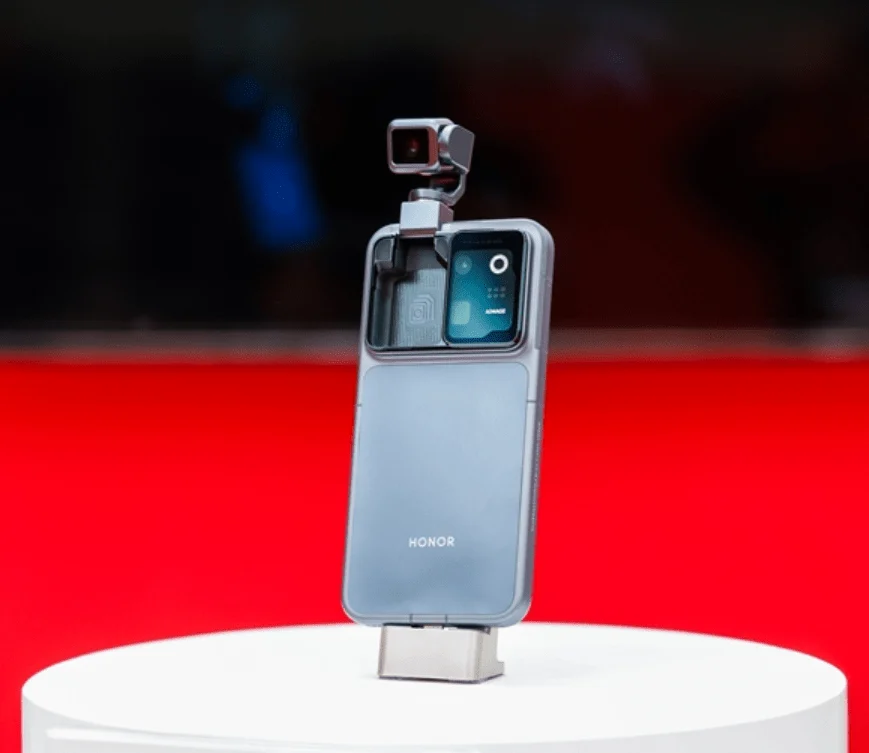
The technological landscape of smartphones is poised for a significant transformation with Honor’s official confirmation that its highly anticipated "Robot Phone" will debut in August. This innovative device promises to redefine mobile photography and user interaction by integrating a sophisticated four-degree-of-freedom mechanical gimbal directly into the smartphone’s camera system, alongside the introduction of its cutting-edge AgenticOS multimodal agent operating system powered by Qualcomm’s Snapdragon 8 Elite Gen 5 chip. The announcement, initially reported by IT Home, signals a bold stride by Honor into a new era of smartphone design and functionality, with reservations for the device already open to eager consumers.
Unpacking the Four-Degree-of-Freedom Gimbal: A Mechanical Marvel
At the heart of the "Robot Phone’s" groundbreaking design is its four-degree-of-freedom mechanical gimbal. This advanced stabilization system, integrated into the top of the smartphone, represents a substantial leap beyond conventional optical image stabilization (OIS) or electronic image stabilization (EIS) systems prevalent in today’s flagship devices. While OIS typically compensates for two or three axes of movement (pitch, yaw, and sometimes roll), a four-degree-of-freedom system offers an unparalleled level of stabilization and positional control. This means the camera module can move not only to counteract shakes and jitters but also to achieve dynamic, robotic movements independent of the main phone body, opening up a plethora of creative possibilities for photography and videography.
The engineering behind this innovation is equally impressive. Honor states that the gimbal utilizes miniature motors, which are approximately 70% smaller in volume compared to mainstream solutions. This miniaturization is critical for integrating such complex mechanics into the confined space of a smartphone without significantly increasing the device’s bulk or weight. Furthermore, the use of titanium-alloy in its construction suggests a focus on durability and lightweight design, crucial for a moving mechanical part that will be subject to constant use and potential stress. Titanium is renowned for its high strength-to-weight ratio and corrosion resistance, making it an ideal material for precision components that require both robustness and minimal mass.
The implications of such a system are profound. For videographers, it could mean buttery-smooth footage even during dynamic motion, potentially eliminating the need for external gimbals for many scenarios. For photographers, it could enable new compositional angles, automated subject tracking with greater precision, and perhaps even advanced time-lapse or motion-lapse capabilities that were previously impossible on a handheld device. The ability of the camera module to move independently suggests features such as automatic horizon leveling, enhanced low-light stability through longer exposure times with precise compensation, and potentially even sophisticated object tracking that keeps a subject perfectly framed even as the user or subject moves.
The Brains Behind the Brawn: Snapdragon 8 Elite Gen 5 and AgenticOS
Beyond its mechanical innovation, the Honor "Robot Phone" is set to be a powerhouse of computational intelligence. The device will be powered by Qualcomm’s Snapdragon 8 Elite Gen 5 chip. While the Snapdragon 8 Gen 4 has only recently been announced, the mention of a "Gen 5" variant implies Honor is either targeting a future iteration of Qualcomm’s flagship mobile platform, or it refers to a specialized, performance-enhanced version of a forthcoming chip, positioning the device at the absolute vanguard of mobile processing power. This next-generation chipset is expected to deliver significant advancements in raw processing power, graphics rendering, and, crucially, artificial intelligence capabilities, which will be essential for orchestrating the complex movements of the gimbal and running the sophisticated AgenticOS.
The introduction of Honor’s AgenticOS multimodal agent operating system is arguably as significant as the mechanical gimbal. In an era where AI is becoming increasingly central to the smartphone experience, AgenticOS aims to transcend traditional operating systems by functioning as a truly intelligent, proactive agent. A "multimodal agent" implies an AI system capable of understanding and processing information from various input modalities—such as voice commands, visual data from the camera, text inputs, and even biometric data—to provide context-aware and personalized assistance.
This could manifest in several ways:
- Proactive Assistance: The OS might anticipate user needs based on learned behavior, location, and real-time data, offering relevant information or automating tasks before being explicitly asked. For example, it could suggest optimal camera settings based on scene analysis, lighting conditions, and even the user’s historical shooting preferences, automatically adjusting the gimbal for the best possible shot.
- Contextual Awareness: AgenticOS would understand the "context" of a user’s environment and activities. If the user is at a sporting event, the OS could automatically activate a sports photography mode, utilizing the gimbal for tracking fast-moving subjects. If the user is on a video call, it could ensure the camera maintains optimal framing and stability.
- Seamless Integration with Hardware: The true power of AgenticOS will lie in its deep integration with the four-degree-of-freedom gimbal. This means the AI won’t just suggest actions but will actively control the robotic camera module. Imagine a scenario where the user initiates a video recording, and AgenticOS, leveraging the gimbal, automatically tracks a moving subject, maintains perfect framing, and ensures stable footage, all without direct manual intervention. This moves beyond computational photography into "robotic computational photography."
The synergy between the advanced Snapdragon chip, the intelligent AgenticOS, and the mechanical gimbal is what truly defines the "Robot Phone." It suggests a device where hardware and software are inextricably linked, creating an intelligent photographic and interactive experience that goes far beyond current smartphone capabilities.
A Historical Perspective: The Evolution of Smartphone Camera Technology
The journey of smartphone photography has been one of continuous innovation, laying the groundwork for Honor’s latest endeavor. Early smartphones featured rudimentary cameras, often with fixed focus and low megapixel counts. The "megapixel race" of the late 2000s and early 2010s pushed sensor resolutions higher, but true image quality remained limited by small sensors and basic optics.
The mid-2010s saw the introduction of Optical Image Stabilization (OIS) in flagship devices, a crucial step that improved low-light performance and reduced blur from handshakes. Companies like Nokia were early pioneers in this space. Following OIS, computational photography—the use of software algorithms to enhance images—became dominant. Features like HDR (High Dynamic Range), portrait mode with artificial bokeh, night mode, and later, deep fusion and semantic segmentation, transformed what tiny smartphone sensors could achieve. Google’s Pixel line, with its reliance on computational photography, set new benchmarks in this regard.
More recently, manufacturers like Vivo have experimented with integrating micro-gimbal systems into their phones (e.g., Vivo X50 Pro, X60 Pro, X70 Pro+), offering enhanced stability compared to standard OIS. These systems typically provide two-axis stabilization, physically moving the lens or sensor within a limited range. Honor’s announced four-degree-of-freedom system represents an evolution of this concept, promising greater freedom of movement and control, moving from mere stabilization to active, intelligent camera positioning.
Honor’s own history, initially as a sub-brand of Huawei and later as an independent entity, has been marked by a commitment to pushing technological boundaries. Its Magic series, for instance, has often showcased cutting-edge display technology, advanced charging solutions, and innovative camera setups. The Magic V2, Honor’s latest foldable, demonstrated significant advancements in slimness and durability, indicating the company’s engineering prowess. The "Robot Phone" can be seen as a culmination of this drive, leveraging Honor’s R&D capabilities to integrate complex mechanical systems and advanced AI into a consumer device.
Strategic Context: Honor’s Vision and Market Position
Honor’s journey since its divestment from Huawei in late 2020 has been remarkable. Freed from U.S. sanctions that severely hampered Huawei’s access to critical components and software, Honor has steadily rebuilt its global market presence, focusing on innovation and premium offerings. The company has aggressively pursued R&D in areas such as foldable screens, fast charging, and camera technology, aiming to compete directly with global giants like Samsung, Apple, and Xiaomi.
The launch of the "Robot Phone" is a clear statement of intent from Honor. It positions the company not just as a follower or fast-innovator but as a pioneer in introducing truly novel form factors and functionalities to the smartphone market. In a highly competitive industry where incremental updates often dominate, a device with a four-degree-of-freedom gimbal and an AI-centric AgenticOS could serve as a powerful differentiator, attracting tech enthusiasts, professional content creators, and early adopters seeking the next big thing. This strategy aligns with Honor’s broader ambition to capture a larger share of the high-end smartphone market and establish itself as a leading global technology brand.
Industry Reactions and Expert Analysis
The announcement has already generated significant buzz within the tech community. Industry analysts are closely watching how Honor plans to execute this ambitious vision. Questions naturally arise regarding the durability of such a complex mechanical system within a handheld device, the potential impact on battery life, and the likely premium price point.
Analysts from firms like IDC and Counterpoint Research might infer that while the engineering challenge is substantial, if Honor can deliver on its promises of reliability and a seamless user experience, the "Robot Phone" could be a significant market disruptor. The integration of advanced AI through AgenticOS is seen as critical, as it will be the software intelligence that unlocks the full potential of the mechanical gimbal, moving it beyond a mere technical feature to a genuinely useful and intuitive tool.
Competitors, including Samsung, Xiaomi, and Vivo, are likely to be evaluating this move carefully. While some have experimented with advanced camera stabilization, Honor’s approach with a four-degree-of-freedom system suggests a more ambitious integration of robotics. This could spur further R&D in mechanical and AI integration across the industry, potentially leading to a new wave of smartphone innovation focused on dynamic hardware capabilities. Consumers, particularly those in markets like China where Honor has a strong presence, are expected to show strong interest, with the early opening of reservations indicating a confident market approach by Honor.
Broader Implications: Reshaping the Smartphone Landscape
The "Robot Phone" could have far-reaching implications for the future of smartphones:
-
User Experience Transformation: For the average user, this could mean effortlessly capturing professional-grade videos and photos without specialized equipment or expertise. The AI-driven gimbal could democratize advanced videography, making cinematic shots accessible to everyone. Content creators, vloggers, and social media influencers stand to benefit immensely from the enhanced stability and creative angles, potentially leading to a new era of mobile-first content creation.
-
Manufacturing and Durability Concerns: Integrating precision mechanical parts like a four-degree-of-freedom gimbal into a slim smartphone presents considerable manufacturing challenges. Ensuring the durability, reliability, and long-term performance of moving parts within a device designed for daily rough-and-tumble use will be paramount. Honor’s choice of titanium-alloy suggests an awareness of these concerns, but real-world usage will be the ultimate test. Repairability might also become more complex, potentially affecting maintenance costs and service accessibility.
-
The Future of Phone Design: If successful, Honor’s "Robot Phone" could inspire other manufacturers to explore more complex mechanical systems within smartphones, moving beyond static designs to dynamic, adaptable hardware. This could lead to innovations in other areas, such as modular components, adaptive sensors, or even physically transforming elements. The line between a smartphone and a miniature robot could begin to blur.
-
AI’s Central Role: The emphasis on AgenticOS highlights the growing importance of advanced AI as the central orchestrator of smartphone functions. As hardware capabilities become more sophisticated, the AI that manages and leverages these capabilities becomes critical. AgenticOS could define how users interact with their devices, moving towards a more proactive, personalized, and seamless experience where the phone anticipates needs rather than merely responding to commands. This aligns with broader industry trends towards generative AI and on-device machine learning, aiming to provide more powerful and private AI experiences.
-
Economic Impact: The development and production of such advanced components could stimulate innovation within the supply chain, particularly for miniature motors, advanced materials, and precision manufacturing techniques. This could create new economic opportunities and drive further research in related fields.
Conclusion: A Bold Step into the Future
Honor’s announcement of its "Robot Phone" with a four-degree-of-freedom mechanical gimbal and AgenticOS is more than just a product launch; it is a declaration of intent to push the boundaries of what a smartphone can be. By integrating sophisticated robotics with cutting-edge AI and powerful processing, Honor is proposing a device that not only captures moments but intelligently anticipates, stabilizes, and enhances them. The August launch will undoubtedly be one of the most anticipated events in the mobile technology calendar, offering a glimpse into a future where our personal devices are not just smart, but truly intelligent and dynamically capable. As Honor opens reservations, the industry and consumers alike await the full reveal of a device that promises to usher in a new era of mobile innovation.


 Muslim
 Rifan Muazin