 Lina Hope
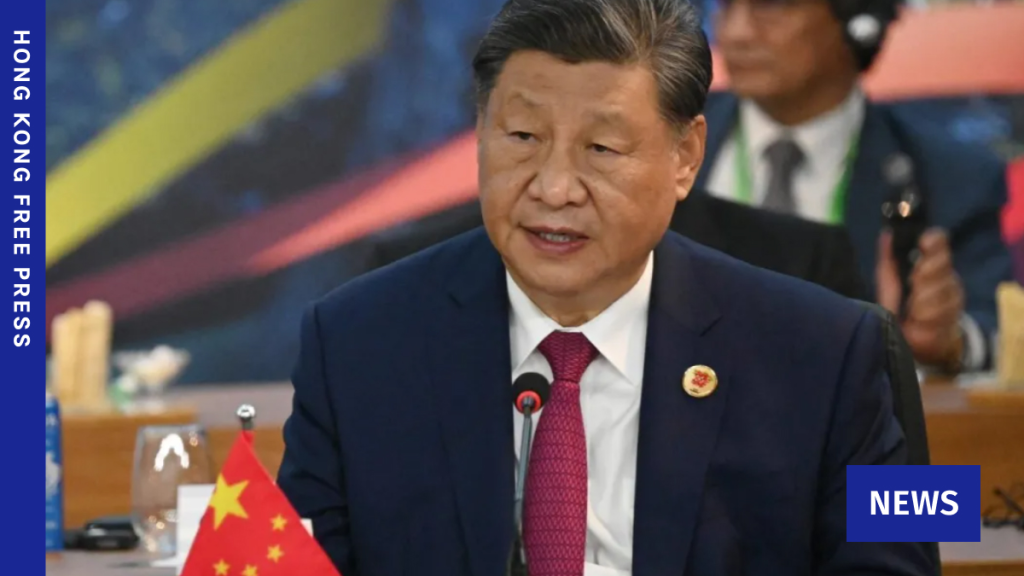
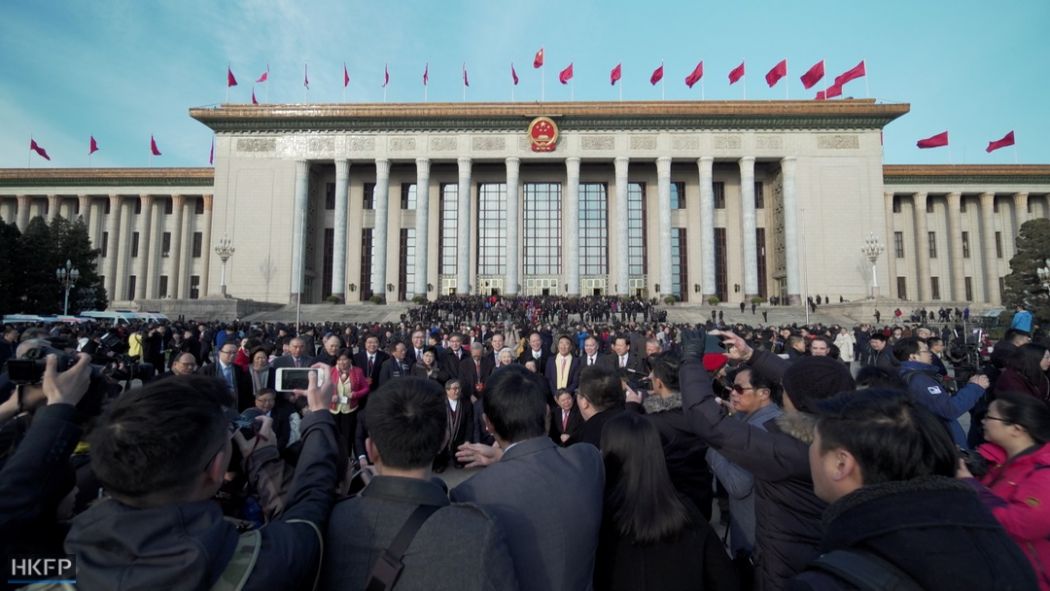
Beijing, China – The highest echelons of China’s ruling Communist Party are convening in Beijing for a pivotal fifth plenary session of the 20th Central Committee, a gathering that will dissect party governance and potentially offer subtle indications regarding the nation’s future leadership landscape. The meeting, which commenced on Monday and will conclude on Thursday, takes place against the backdrop of President Xi Jinping’s sustained efforts to solidify his authority and enforce stringent party discipline across all levels of governance.
This plenum is particularly significant as it precedes the quinquennial Party Congress scheduled for autumn 2027, an event widely anticipated to see Xi Jinping, currently 73 years old, secure an unprecedented fourth term as the party’s paramount leader. Plenary sessions, by their nature, are closed-door deliberations involving the approximately 300 members of the Central Committee, serving as the primary forum for debating and ratifying major national and party policy decisions. The agenda for this specific session is focused on enhancing party governance, a broad objective that encompasses implementing measures to foster more effective, less corrupt, and demonstrably loyal cadres within the party structure.

A History of Consolidation: Plenums as Xi’s Platform
The history of Xi Jinping’s tenure is punctuated by key plenums that have served as crucial junctures for reinforcing his leadership. In 2016, a plenum formally enshrined him with the coveted title of the Party’s "core" leader, a designation that elevated his political standing and cemented his authority. More recently, in 2021, another plenum saw the elevation of Xi’s political ideology and the adoption of a significant resolution on the Party’s history, further solidifying his narrative and legacy.
Analysts are closely observing this current plenum for any signals that Xi might seek to further bolster his position. A recurring point of speculation is the potential for Xi to assume the historical title of "party chairman," a position previously held by Mao Zedong, the founder of the People’s Republic of China. Such a move, while not guaranteed, would represent a significant symbolic elevation, drawing a direct line to the party’s founding era and underscoring Xi’s perceived indispensability.

The Imperative of Discipline: Xi’s Battle Against Cadre Inertia
A central theme of this plenum is the push for "full and rigorous party self-governance." This initiative reflects Xi Jinping’s persistent concern regarding the implementation of his directives by lower-ranking officials. Despite a comprehensive, 14-year anti-corruption campaign that has ensnared thousands of officials, including numerous Central Committee members, Xi has expressed frustration over what he perceives as cadre inertia and a lack of full compliance.
Daria Impiombato, a researcher at the Mercator Institute for China Studies, highlights the strategic importance of Xi’s anti-corruption drive. "Xi sees anti-corruption as the key to the party’s legitimacy," Impiombato stated, "so he wants to continuously purify the party’s ranks to make sure the CCP’s rule can survive what other regimes couldn’t." This drive is not merely about eradicating corruption but is intrinsically linked to the perceived survival and enduring legitimacy of the Communist Party’s rule.
State media outlets, in anticipation of the plenum, published an article referencing a January speech by Xi Jinping where he sharply criticized "two-faced" officials. These are cadres who outwardly appear to adhere to central directives but, in reality, harbor internal resistance, pursue personal interests, and engage in political opportunism. Xi also condemned "nice guy" officials who, in their pursuit of perceived unity, fail to address or report problematic situations.
Jean Christopher Mittelstaedt, a sinologist at the University of Zurich, offered an analytical perspective on Xi’s challenges. "Xi is trying to address the principal-agent problem that has plagued Chinese politics forever: how a centre that sets ever more priorities gets distant officials to carry them out as intended, when those officials control the information, face tightening budgets, and are rewarded for the appearance of compliance," he explained. Mittelstaedt added, "His answer is… more supervision and more rules – but this is exactly what helped create the problem." This observation points to a potential cyclical nature of governance reforms, where efforts to improve control can inadvertently generate new challenges.
Navigating the Succession Question: Subtle Signals in the Politburo
While Xi Jinping’s continuation in power after the 2027 Party Congress is widely assumed, attention is shifting towards the potential composition of the Politburo and its Standing Committee, the apex of power within the party. This plenum, though unlikely to formally announce new members to these elite bodies, could provide subtle clues about individuals being groomed for future leadership roles.
The Politburo has experienced significant turbulence under Xi’s leadership, with the purging of three members – a number not seen since 1980 in a single term. While positions are rarely filled during plenums, the vacancies create a dynamic environment for potential upward mobility. Currently, eight full-member vacancies exist on the Central Committee, with an additional 15 members reportedly under investigation, presenting opportunities for replacements. The sheer scale of these purges suggests that this plenum may see the lowest attendance of Central Committee members since the death of Mao Zedong in 1976, a testament to the ongoing political recalibrations.
The Military Under Scrutiny: Decapitation and Restructuring
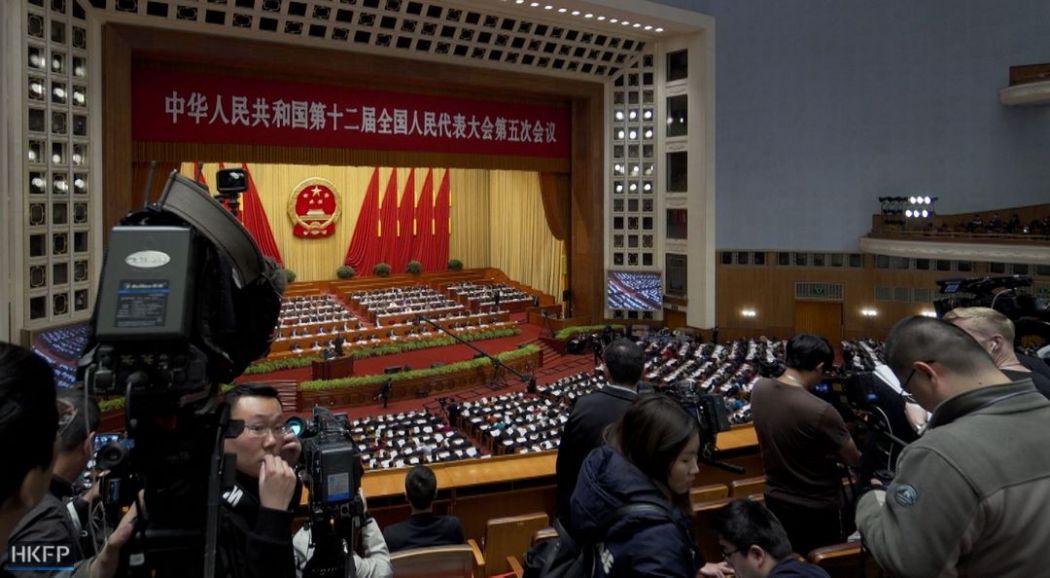
The pervasive anti-corruption campaign has extended deeply into the People’s Liberation Army (PLA), the armed forces of China. Notably, five out of the seven members of the Central Military Commission (CMC), the party’s highest military decision-making body, have been removed or have disappeared from public view. This extensive purge within the military leadership is unprecedented.
According to the Asia Society Policy Institute, out of 44 military members appointed to the Central Committee in 2022, only two have not faced investigation or disappeared. Jonathan Czin of the Brookings Institution characterized this "total decapitation" of the military leadership as an indicator of Xi’s profound frustration and distrust of the existing military establishment. "Xi is clearly culling pretty much an entire generation of the general officer corps. This is sweeping. It makes Roman decimation look quaint by comparison," Czin remarked.
The plenum presents several potential scenarios for the future of the CMC. New members could be appointed, the party might defer these appointments until the 2027 Party Congress, or Xi could initiate a broader restructuring of the party’s control mechanisms over its vast military apparatus. The extent of these changes will be closely watched by both domestic and international observers, as the stability and loyalty of the PLA are critical to the CCP’s grip on power.

The ongoing deliberations in Beijing underscore a critical period for the Communist Party of China. The focus on party governance and discipline, coupled with the subtle signals regarding future leadership, paints a picture of a party deeply invested in its own institutional strength and the enduring legacy of its current leader. The outcomes of this plenum will undoubtedly shape the trajectory of Chinese politics in the years to come.


 Suro Senen
 Muslim