Ammar Sabilarrohman
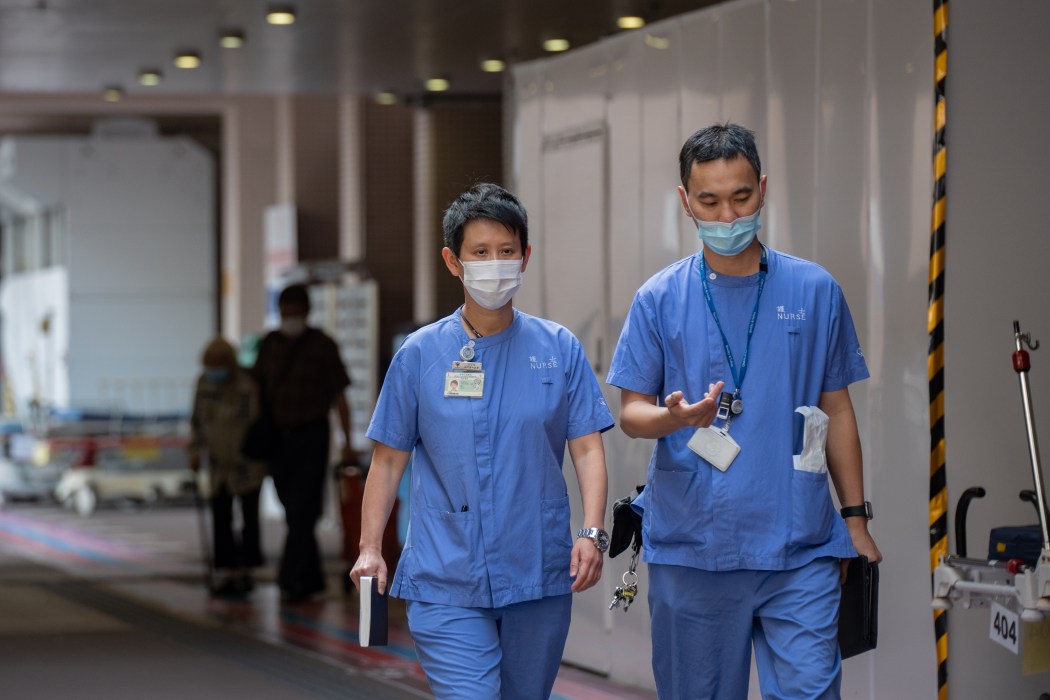
Hong Kong authorities have vigorously defended their policies regarding the hiring of non-locally trained nurses, asserting that their numbers are “very small” and do not contribute to local unemployment. The government’s statement, released on Tuesday, aims to address recent public complaints and concerns, particularly those voiced by a locally trained psychiatric nurse on a radio program. These complaints suggested that the import of non-local healthcare professionals, specifically from mainland China, was leading to job scarcity for recent nursing graduates.
The government reiterated its long-standing commitment to prioritizing the hiring of locally trained professionals in Hong Kong’s public hospitals. Data presented by the authorities indicates that as of the end of 2025, non-locally trained registered nurses constituted less than 0.5% of the total registered nursing workforce in the city. This figure, described as “very small,” underscores the government’s position that these hires are not a significant factor in the local job market. Furthermore, the statement clarified that the majority of these non-local nurses are participating in short-term exchange programs rather than securing long-term employment.

The controversy ignited following a radio phone-in program where a Hong Kong resident, identifying herself as a locally trained psychiatric nurse, shared her daughter’s struggle to find employment after graduation. She directly linked her daughter’s predicament to the Hospital Authority’s alleged preference for hiring nurses from mainland China. This personal account resonated with broader anxieties about job competition and the perceived impact of government policies on the local workforce.
In direct rebuttal, Secretary for Health Lo Chung-mau addressed these specific claims on Sunday, stating unequivocally that there were no non-locally trained psychiatric nurses employed in Hong Kong. He further provided statistics on the hiring process for registered nurses in public hospitals for the year 2025. According to Lo, approximately 2,100 registered nurses applied for positions, with an impressive 99% of these applicants securing employment. This assertion aims to demonstrate that the system is effectively absorbing local talent and that hiring is driven by demand rather than a preference for external candidates.
However, the sentiment on the ground among some nursing professionals and associations appears to differ. Tse Kin-keung, the chair of The Association of Hong Kong Nursing Staff, expressed skepticism regarding the government’s statistical interpretations. Speaking on Commercial Radio on Monday, Tse acknowledged that while he couldn’t verify the exact figures, his association had indeed received reports of an increased number of fresh nursing graduates facing difficulties in finding employment this year. Tse suggested that the introduction of non-locally trained nurses should be carefully balanced against local recruitment needs, proposing a slowdown in the hiring of overseas nurses to allow for better integration and absorption of local graduates.

Easing Entry for Overseas Nurses: A Policy Shift
The recent public discourse unfolds against a backdrop of proactive government initiatives aimed at bolstering the healthcare workforce by facilitating the entry of non-locally trained nurses. Over the past few years, a series of measures have been implemented to streamline the process for these professionals to work in Hong Kong’s hospitals and residential care homes, areas experiencing significant demand for skilled personnel.
A pivotal development occurred in July 2024 when the legislature passed an amendment to the Nurse Registration Ordinance. This amendment critically allows non-locally trained nurses to practice in Hong Kong without undergoing the previously mandatory licensing examination. This move is designed to significantly reduce the barriers to entry, making it more appealing for overseas nurses to contribute to the city’s healthcare system.
Historically, Hong Kong’s nursing profession is categorized into registered nurses, who possess higher educational qualifications, and enrolled nurses. As of the close of 2025, the city had an estimated 57,700 registered nurses and 17,440 enrolled nurses, reflecting a substantial domestic workforce.

The new policy introduced three distinct pathways for the admission of overseas nurses:
- Special Registration/Enrolment: This pathway permits nurses to register in Hong Kong without examinations after fulfilling a stipulated period of full-time employment in one or more specified organizations. This acknowledges the experience gained by nurses working in established healthcare systems.
- Limited Registration/Enrolment: This route allows nurses to work in specific institutions, such as residential care homes, but does not lead to full registration as a nurse in Hong Kong.
- Temporary Registration/Enrolment: Similar to limited registration, this pathway permits temporary employment in designated facilities without conferring full professional status.
Recruitment Figures and Discrepancies
The government’s response also provided further details on recent recruitment efforts. In April, the health minister had informed the legislature that between July 2024 and December 31, 2025, the Hospital Authority received over 3,700 applications from non-locally trained nurses for long-term service posts. Following interviews, the Authority extended 101 offers. Of these successful candidates, 30 had already registered as nurses in Hong Kong, with a significant majority, over 70%, originating from mainland China.
In parallel, during the same period, 137 non-local nurses arrived in Hong Kong under the "limited enrolment" scheme, all of whom were assigned to work in residential care homes. This data highlights the targeted deployment of overseas nurses to address specific workforce shortages.
The Greater Bay Area Exchange Programme
Beyond direct recruitment for long-term positions, Hong Kong has also fostered a collaborative healthcare talent exchange program with the Guangdong-Hong Kong-Macao Greater Bay Area (GBA). Established in September 2022, the GBA Healthcare Talents Visiting Programmes allow medical professionals, including doctors and nurses, from the GBA region to gain experience in Hong Kong’s public hospitals.
These exchange programs typically involve cohorts of GBA doctors and nurses spending approximately 10 to 12 months in local hospitals. According to government submissions to the legislature, as of March, a total of 450 GBA medical professionals have participated in these exchange programs in Hong Kong, with 310 of them being nurses. This initiative is part of a broader strategy to integrate and enhance healthcare services across the GBA, fostering mutual learning and professional development.
Implications and Future Outlook
The debate surrounding the hiring of non-locally trained nurses in Hong Kong reflects a delicate balancing act. On one hand, the healthcare system faces persistent challenges related to an aging population, increasing demand for medical services, and a potential shortage of qualified personnel. The government’s proactive measures to recruit from overseas are clearly aimed at alleviating these pressures and ensuring the continued provision of quality healthcare.

On the other hand, concerns about local employment opportunities, particularly for recent graduates, are valid and warrant careful consideration. The government’s emphasis on the minimal number of non-locally trained nurses and the high absorption rate of local applicants aims to reassure the public. However, the differing perspectives from nursing associations suggest a need for greater transparency and potentially more nuanced communication about the specific roles and numbers of overseas nurses being integrated into the workforce.
The long-term implications of these policies will depend on several factors, including the sustained demand for healthcare professionals, the effectiveness of integration programs for both local and non-local nurses, and the ongoing economic conditions within Hong Kong. As the city continues to navigate its healthcare needs, ongoing dialogue and data-driven policy adjustments will be crucial to maintaining public trust and ensuring a robust and equitable healthcare system for all. The government’s commitment to prioritizing local talent while strategically addressing workforce gaps through non-local recruitment remains a central theme in its healthcare strategy.

 Lina Irawan
 Suro Senen