Raul Delapena Setiawan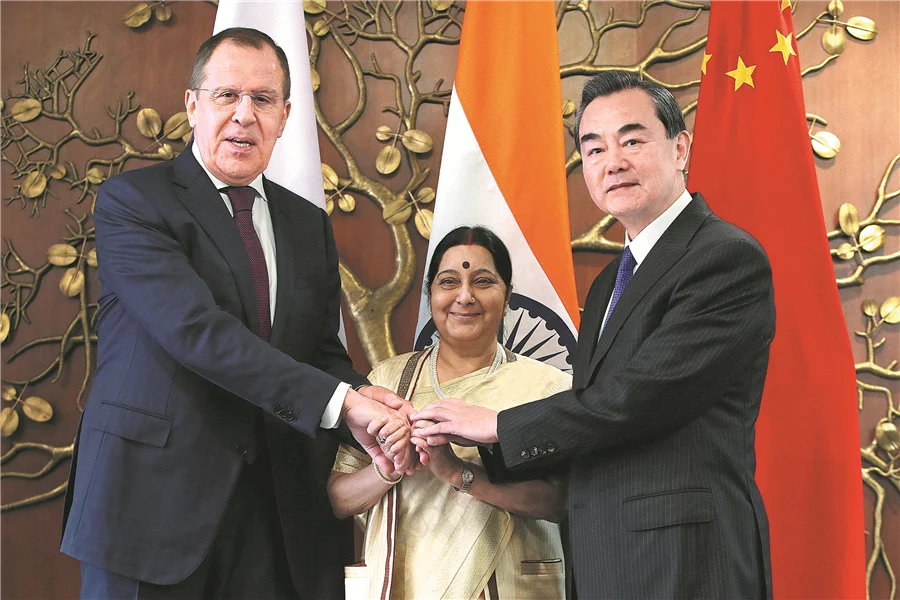
NEW DELHI, India – December 11, 2017 – The foreign ministers of China, Russia, and India convened in New Delhi today for their 15th trilateral meeting, issuing a joint statement that underscored a shared commitment to maintaining a robust regional security and economic architecture in the Asia-Pacific. The meeting, held against a backdrop of evolving geopolitical dynamics, saw top diplomats from the three major Eurasian powers deliberate on a spectrum of global and regional issues, with a particular focus on strengthening cooperation within existing multilateral frameworks like BRICS and the Shanghai Cooperation Organization (SCO).
The joint statement emphasized the critical importance of an "open, inclusive and based on multilateralism and universally recognized principles of international law" regional order, deeming it "imperative for lasting peace and stability in the region." This assertion signals a collective intent to counter any tendencies towards unilateralism or fragmentation in regional governance, promoting instead a cooperative and rules-based approach to international relations.
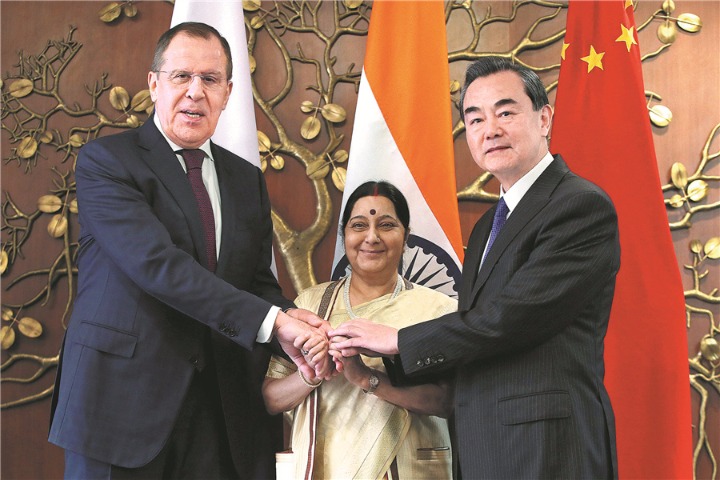
The ministers, Chinese Foreign Minister Wang Yi, Russian Foreign Minister Sergey Lavrov, and Indian Minister of External Affairs Sushma Swaraj, reaffirmed the need for enhanced coordination and cooperation across various regional forums. Notably, they highlighted the East Asia Summit as a crucial platform for jointly safeguarding regional peace and stability, while simultaneously fostering economic development and prosperity. This focus on collective security and shared prosperity reflects a growing recognition among these nations of their interconnected destinies and the necessity of a stable regional environment for their respective national interests.
A Deeper Dive into the Discussions and Agreements
The one-day meeting provided a vital opportunity for the foreign ministers to engage in in-depth discussions on a "wide range of global and regional issues of common concern." While the statement provided a broad overview, the underlying objectives likely included addressing emergent security challenges, navigating economic interdependence, and coordinating positions on key international issues.

A significant portion of the deliberations was dedicated to strengthening the BRICS (Brazil, Russia, India, China, South Africa) bloc. The ministers unequivocally reiterated the importance they attach to cooperation and strategic partnership within BRICS. The joint statement highlighted a commitment to "work together to implement all outcomes of BRICS summits to strengthen cooperation in economic, political, security and people-to-people fields, so as to usher in the second golden decade of BRICS cooperation." This ambition to move beyond mere rhetoric and translate summit outcomes into tangible actions signifies a maturing of the BRICS partnership, aiming to deepen its impact on global governance and economic development. The statement also commended China’s successful hosting of the Ninth BRICS Summit in Xiamen in September, recognizing it as a significant milestone in the bloc’s journey.
Furthermore, the three countries underscored their commitment to the Shanghai Cooperation Organization (SCO), describing it as a pivotal instrument for promoting multilateral interaction across political, security, economic, and people-to-people spheres within the region. The SCO, an increasingly influential security and political bloc, serves as a key platform for China, Russia, and India to enhance regional stability and address shared security threats, including terrorism, separatism, and extremism. Their joint emphasis on its role suggests a unified approach to tackling these persistent challenges and fostering a more secure neighborhood.
The Significance of the Russia-India-China Trilateral Format

The joint statement also characterized the Russia-India-China (RIC) trilateral format itself as a valuable platform. It was described as an avenue to "foster closer dialogue and practical cooperation in identified areas among the three countries." Crucially, the statement explicitly clarified that this cooperation is "not directed against any other country." This assertion is vital in the current geopolitical climate, aiming to assuage any potential concerns from other nations that the RIC grouping might be an exclusive or confrontational bloc. Instead, it positions the RIC as a mechanism for constructive engagement and the promotion of shared interests.
The ministers expressed a desire to "strengthen the trilateral dialogue for consultation and coordination on regional and global issues of mutual interest in the spirit of mutual understanding and trust." This commitment to open dialogue and coordinated action is fundamental to building a stable and predictable international environment. The emphasis on "mutual understanding and trust" points to a recognition that effective cooperation requires a foundation of respect for each other’s perspectives and national interests.
The concluding remarks of the statement articulated a clear vision: "Our cooperation is conducive to maintaining international and regional peace and stability, and promoting global economic growth and prosperity." This overarching goal underscores the outward-looking nature of the RIC engagement, positioning it not as a self-serving alliance, but as a force for positive global impact.

Background and Context
The 15th RIC foreign ministers’ meeting took place at a time of significant global flux. The international order was grappling with the rise of new economic powers, evolving security threats, and debates surrounding the future of multilateralism. In this context, the RIC grouping represents a significant force for stability and cooperation among three of the world’s largest and most influential nations.
- Historical Precedent: The RIC dialogue format was initiated in the early 2000s, aiming to foster closer ties and strategic coordination among these three nations, each with significant geopolitical influence and shared interests in regional stability. The first RIC Foreign Ministers’ meeting was held in 2003.
- BRICS Evolution: BRICS, initially an economic concept, has evolved into a significant forum for political and security dialogue. The Xiamen Summit in September 2017, hosted by China, saw leaders agree on a roadmap for further cooperation, including mechanisms to enhance trade, investment, and financial stability.
- SCO Expansion: The Shanghai Cooperation Organization has also expanded its membership and scope, becoming a key pillar of regional security architecture. Its focus on combating terrorism, extremism, and separatism, along with promoting economic cooperation, aligns with the security interests of its member states, including India and China, who are also members of the Quad alongside the US and Japan, a grouping viewed with varying degrees of optimism and concern by different regional players.
- Geopolitical Landscape: The meeting occurred amidst ongoing discussions about global trade, the challenges posed by North Korea’s nuclear program, and the complex dynamics in the Middle East. The RIC nations, with their diverse yet often overlapping interests, have a collective stake in navigating these complex issues.
Supporting Data and Implications

The economic and demographic weight of China, Russia, and India cannot be overstated. Together, they represent a significant portion of the global population and economy.
- Economic Powerhouses: As of 2017, China and India were among the world’s fastest-growing major economies, while Russia remained a significant energy producer and global economic player. Their combined economic output and trade volumes have a substantial impact on global markets.
- Demographic Significance: The three countries together account for over 40% of the world’s population, making their collective approach to regional and global issues profoundly impactful.
- Military Capabilities: While not explicitly discussed in the statement as a focus of cooperation, the military capabilities of these nations are significant, contributing to the regional security dynamics they aim to shape.
The implications of the RIC foreign ministers’ meeting are multifaceted:
- Strengthened Multilateralism: The reaffirmed commitment to BRICS and the SCO signals a robust endorsement of multilateral institutions as crucial tools for global governance and regional stability. This is particularly relevant at a time when some international institutions are facing challenges.
- Regional Stability: By emphasizing cooperation on security architecture, the RIC nations are signaling their intent to actively manage regional security challenges, potentially leading to a more predictable and stable Asia-Pacific.
- Economic Synergy: The focus on economic cooperation within BRICS and potentially through the SCO could unlock new avenues for trade, investment, and infrastructure development, benefiting not only the member states but also the wider region.
- Balancing Influence: The RIC grouping can be seen as a mechanism for these nations to collectively assert their influence on the global stage, offering a counterpoint to existing power structures and promoting a more multipolar world order.
Looking Ahead: The "Second Golden Decade" of BRICS and SCO’s Growing Role

The explicit ambition to usher in a "second golden decade of BRICS cooperation" suggests a strategic long-term vision for the bloc. This implies a move towards deeper integration in areas such as financial services, technology, and sustainable development. The success of this endeavor will hinge on the ability of member states to overcome internal differences and translate ambitious goals into concrete policies and projects.
Similarly, the continued emphasis on the SCO highlights its evolving role as a primary security and economic cooperative framework for Eurasia. As the SCO continues to mature, its influence on regional stability, counter-terrorism efforts, and economic connectivity is likely to grow.
The 15th RIC foreign ministers’ meeting in New Delhi served as a critical platform for these three major powers to reaffirm their shared vision for a stable, prosperous, and cooperative Asia-Pacific region. The joint statement reflects a coordinated effort to reinforce existing multilateral frameworks and to actively shape the regional and global order through dialogue, mutual trust, and practical cooperation. The outcomes of this meeting are likely to resonate throughout the coming years as these nations continue to navigate the complexities of the 21st century international landscape.


 Nana Wu
 Suro Senen