Siti Muinah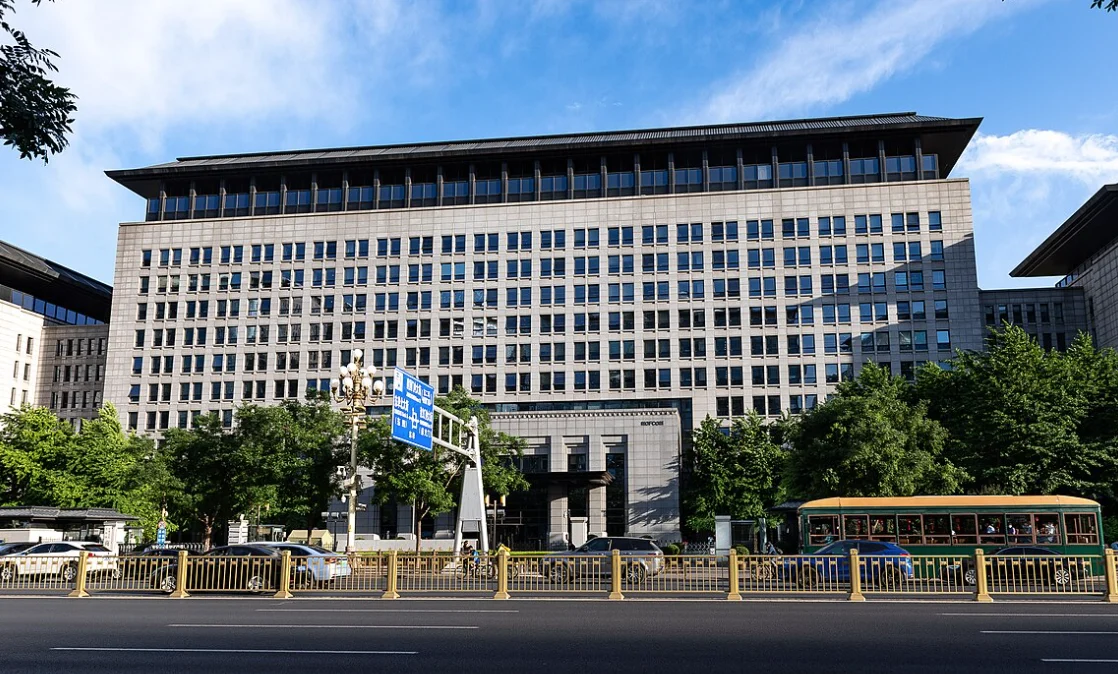
China has vehemently refuted accusations by the United States that its leading artificial intelligence laboratories are systematically stealing the capabilities of American AI models. The stern denial comes amidst a burgeoning technological arms race between the two global powers, with artificial intelligence emerging as a critical front in their competition for dominance. Beijing’s Ministry of Commerce labeled the U.S. claims as "groundless" and a tactic to achieve industrial monopoly, asserting that such allegations represent a "double standard" in international relations.
The U.S. cyber defense agency issued an advisory on Tuesday, specifically naming prominent Chinese AI firms such as DeepSeek and Moonshot AI. The advisory alleged that these companies have engaged in "industrial-scale knowledge distillation campaigns" to illicitly acquire the technological prowess of American AI systems. This development precedes an anticipated high-stakes meeting between U.S. President Donald Trump and his Chinese counterpart, Xi Jinping, at the White House this month, where the burgeoning field of AI is expected to be a significant point of discussion.

The Chinese Ministry of Commerce, in its swift rebuttal, stated, "The U.S. approach is a typical case of using the crackdown on distillation as a pretext to achieve industrial monopoly." This statement underscores Beijing’s perspective that the U.S. is leveraging accusations of unfair practices to stifle China’s technological advancement and maintain its own market advantage. The ministry further characterized the U.S. accusations as an instance of "double standards," suggesting hypocrisy in Washington’s approach to international technological competition.
Understanding AI Distillation and the U.S. Accusations
Artificial intelligence "distillation" is a widely employed technique within the industry. It involves training a smaller, more efficient AI model to mimic the outputs and capabilities of a larger, more sophisticated, and often proprietary model. This process allows for the creation of more accessible and cost-effective AI solutions without the immense computational resources and time required to train a large model from scratch.
However, the U.S. advisory claims that Chinese firms have weaponized this technique, deploying it at an unprecedented scale to systematically pilfer the intellectual property and functional capabilities of American AI systems. The advisory specifically cited alleged instances where Chinese companies, including DeepSeek, Moonshot AI, Alibaba, MiniMax, StepFun, and Z.AI, have utilized millions of exchanges and data requests to replicate the performance of leading U.S. models developed by entities like OpenAI, Anthropic, Google, and Elon Musk’s xAI.

According to the U.S. advisory, Chinese companies adopting these distillation strategies have benefited from "significantly shorter AI development timelines and reduced financial expenditures in training a frontier model." The report further suggested that these actions have been occurring "likely with Chinese government awareness" since at least late 2024, raising concerns about state-sponsored intellectual property theft.
China’s Counter-Narrative and Historical Context
In response to the U.S. allegations, China has consistently maintained that its AI advancements are the product of its own innovation and dedication to scientific and technological self-reliance. Foreign Ministry spokeswoman Mao Ning stated at a regular briefing on Wednesday, "The development of artificial intelligence in China is the result of achieving high-level self-reliance and strength in science and technology." She urged the United States to "refrain from making unfounded accusations against and smearing China."
Mao Ning also extended an olive branch, suggesting a path toward collaboration: "Both China and the United States are major countries in the field of AI. We should strengthen cooperation." This call for cooperation, however, stands in stark contrast to the escalating tensions and accusations.

This exchange is not an isolated incident. In July, dozens of technology startups in the U.S. penned an open letter to the Trump administration, urging caution against outright bans or stringent restrictions on foreign-made AI models, particularly for non-governmental use. Their concern was that such measures could hinder innovation and market competitiveness.
Interestingly, Beijing has also previously accused U.S. AI developers of employing Chinese data and examples to train their own models. This mirrors the current situation, highlighting a tit-for-tat dynamic in the AI development landscape.
Geopolitical Undercurrents and Economic Stakes
The intensifying dispute over AI capabilities is deeply intertwined with the broader geopolitical and economic rivalry between the United States and China. Both nations recognize AI as a foundational technology for future economic growth, national security, and global influence. The race for AI supremacy is not merely about technological advancement but also about setting global standards, controlling supply chains, and shaping the future of warfare and critical infrastructure.

President Trump, in particular, has been under pressure to address the growing success of Chinese AI models. Many companies, both domestically and internationally, are reportedly finding Chinese alternatives to be more cost-effective and, in some cases, equally or even more performant than their U.S. counterparts, despite the higher price tags often associated with leading American AI products from companies like Anthropic and OpenAI. This trend poses a challenge to U.S. tech dominance and raises concerns about the outflow of intellectual property and market share.
The U.S. advisory, by naming specific Chinese companies and detailing the alleged methods of intellectual property theft, signals a more aggressive stance from Washington. The implication of Chinese government awareness suggests that this is not just a matter of corporate competition but a potential national security concern for the United States.
Broader Implications and Future Trajectory
The accusations and counter-accusations surrounding AI development carry significant implications for the global technological landscape.

- Intellectual Property and Innovation: The core of the dispute revolves around the protection of intellectual property. If the U.S. claims are substantiated, it suggests a systemic challenge to the global innovation ecosystem. Conversely, if China’s claims of unfair targeting are accurate, it points to a potential trend of protectionism disguised as security concerns.
- Global AI Governance: The escalating tension could complicate efforts to establish international norms and regulations for AI development and deployment. A fractured global approach could lead to conflicting standards and hinder collaborative research that could address global challenges.
- Economic Competitiveness: The ability of Chinese firms to rapidly develop and deploy advanced AI models, even through distillation, poses a direct competitive threat to U.S. tech companies. This could impact investment, job creation, and market access for both nations.
- National Security: The strategic importance of AI in defense, intelligence, and critical infrastructure means that any perceived advantage gained through illicit means or lost due to trade restrictions could have profound national security ramifications.
The upcoming meeting between Presidents Trump and Xi Jinping will be a crucial barometer for the trajectory of U.S.-China relations in the technological sphere. While calls for cooperation have been made, the immediate future appears to be characterized by continued competition, strategic maneuvering, and heightened scrutiny of each nation’s AI development practices. The global community will be closely watching to see how this technological standoff unfolds and what impact it will have on the future of artificial intelligence and international relations.
The dispute highlights the complex interplay of innovation, competition, and national interest in the rapidly evolving field of artificial intelligence, a domain poised to redefine global power dynamics in the 21st century.


 Suro Senen
 Muslim