Basiran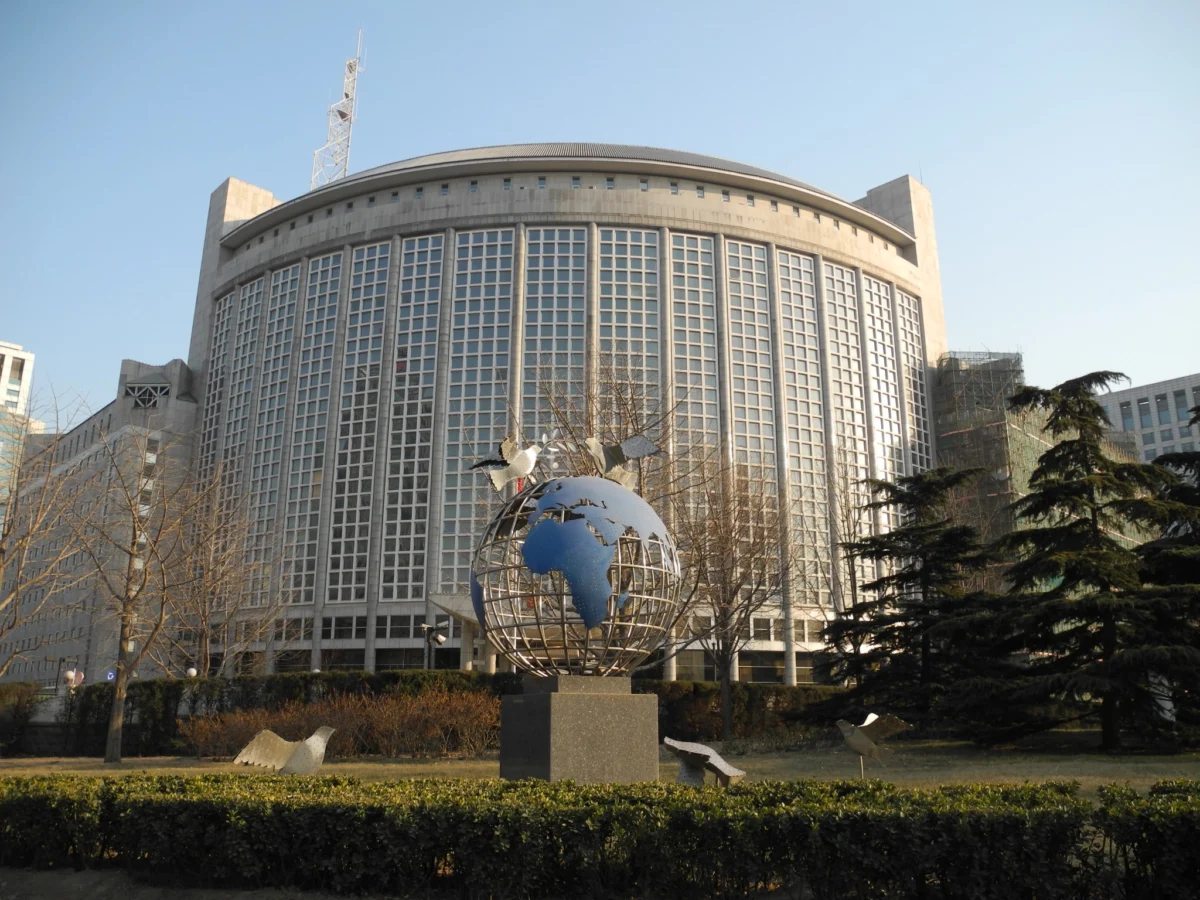
Washington has formally accused leading Chinese artificial intelligence laboratories, including DeepSeek and Moonshot AI, of systematically appropriating the capabilities of American AI models. This development intensifies the ongoing technological rivalry between the United States and China, with significant implications for global innovation and national security. The advisory, issued by a US cyber defense agency, arrives as tensions between the two superpowers remain high, and ahead of a highly anticipated meeting between President Donald Trump and Chinese President Xi Jinping, where artificial intelligence is expected to be a prominent topic of discussion.
This latest accusation builds upon a series of prior allegations from the US government and prominent American AI companies concerning the illicit acquisition of proprietary AI technology by Chinese entities. The core of these accusations centers on a practice known as "knowledge distillation," a sophisticated AI training technique that allows smaller models to learn from and replicate the performance of larger, more advanced ones. While distillation is a recognized and legitimate method within the AI development community, US officials contend that Chinese firms are leveraging it at an industrial scale to circumvent the substantial investment and research required to develop frontier AI models from scratch, effectively engaging in systematic intellectual property theft.
A Pattern of Accusations and Technological Espionage

The US cyber defense agency’s advisory explicitly stated that "China-based artificial intelligence (AI) companies are conducting systematic extraction of proprietary functionalities and capabilities of US AI companies’ models." The statement further elaborated that these activities are not mere supplementary efforts but form "the core – not merely a supplement – of their AI development strategy." This suggests a deliberate and calculated approach by Chinese companies to accelerate their AI advancements by directly benefiting from the innovations of their American counterparts.
The advisory detailed specific allegations against several prominent Chinese AI players, including DeepSeek, Moonshot AI, Alibaba, MiniMax, StepFun, and Z.AI. According to the report, these entities have allegedly employed millions of data exchanges and requests to pilfer the advanced capabilities of leading US AI models. The targeted American companies include industry giants such as OpenAI, the creator of ChatGPT; Anthropic, known for its Claude models; Google, a pioneer in AI research; and xAI, Elon Musk’s artificial intelligence venture. These allegations, reportedly ongoing since at least late 2024, are believed to be conducted "likely with Chinese government awareness," indicating a potential state-sponsored element to these technological appropriation efforts.
The Mechanism of Knowledge Distillation and its Implications
Knowledge distillation, in essence, is a process where a smaller, more efficient AI model (the "student") is trained to mimic the outputs and behaviors of a larger, more complex, and often more capable AI model (the "teacher"). This technique is widely adopted across the AI industry for various beneficial purposes, such as creating more accessible and less resource-intensive AI applications. However, the US government’s concern lies in the scale and intent behind its application by certain Chinese companies.

By systematically distilling the functionalities of cutting-edge US AI models, Chinese firms can significantly reduce their AI development timelines and associated financial expenditures. This accelerated development path allows them to bring more competitive AI products to market faster, potentially at a lower cost to consumers and enterprises. This creates a competitive disadvantage for American companies that invest heavily in original research and development, facing competition from entities that may have effectively "borrowed" their intellectual property. The advisory highlighted that Chinese companies adopting this strategy "see significantly shorter AI development timelines and reduced financial expenditures in training a frontier model."
Geopolitical Context: The AI Arms Race and Upcoming Summit
The timing of these accusations is particularly significant, occurring amidst a broader geopolitical landscape defined by intense competition between the US and China for technological dominance. Artificial intelligence is at the forefront of this race, viewed as a critical driver of economic growth, national security, and global influence. The upcoming meeting between President Trump and President Xi Jinping at the White House, anticipated for later this month, is expected to address a range of bilateral issues, and the US allegations of AI technology theft could cast a shadow over these discussions, potentially dominating the agenda on technological cooperation and competition.
This situation also follows a period of increased scrutiny and pressure on the Trump administration regarding China’s growing success in the AI sector. Many companies, both domestically and internationally, have expressed a preference for more affordable Chinese AI models over their US counterparts, which are often perceived as more powerful but also more expensive. In July, a group of startups penned a letter to the Trump administration, urging caution against outright bans or strict curbs on foreign-made AI models, suggesting that such measures should be reserved for government use only.
China’s Response: Denials and Counter-Accusations
China has consistently refuted accusations of widespread intellectual property theft and technological espionage. In response to the latest US allegations, Chinese foreign ministry spokeswoman Mao Ning stated during a regular briefing that while she had not seen the specific US report, countries should "refrain from making unfounded accusations against and smearing China." She emphasized that China’s advancements in artificial intelligence are a result of "achieving high-level self-reliance and strength in science and technology."
Mao Ning also extended an olive branch, suggesting that "Both China and the United States are major countries in the field of AI. We should strengthen cooperation." This statement reflects China’s official stance on AI development, emphasizing self-sufficiency while also signaling a willingness for international collaboration, albeit on its own terms.
This defensive posture is consistent with China’s previous reactions to similar accusations. In July, Beijing itself turned the tables by accusing US AI companies of utilizing Chinese data and examples to train their models, framing it as a form of appropriation. This tit-for-tat exchange highlights the deep-seated mistrust and competitive dynamics that characterize the US-China technological relationship.

Broader Implications and Future Outlook
The implications of these accusations extend far beyond the immediate technological sphere. They underscore the escalating nature of the US-China rivalry, which is increasingly playing out in the domain of advanced technologies. The ability of nations to innovate and control cutting-edge technologies like AI is directly linked to their economic prosperity and military capabilities.
The US government’s move to publicly identify specific Chinese companies and detail their alleged methods of intellectual property theft signals a hardening stance and a potential precursor to more assertive actions, such as sanctions or export controls. Such measures could have a significant impact on the global AI supply chain and the development of AI technologies worldwide.
For the AI industry, these developments raise critical questions about intellectual property protection, fair competition, and the ethical development of AI. The widespread adoption of knowledge distillation, while efficient, now faces increased scrutiny in the context of international allegations of misuse. Companies globally will need to navigate a complex landscape where technological innovation is intertwined with geopolitical considerations.

The upcoming summit between President Trump and President Xi Jinping will be a crucial juncture. The way these AI-related accusations are handled, and whether any common ground can be found, will offer significant insights into the future trajectory of US-China relations in the critical field of artificial intelligence. The ongoing race for tech supremacy promises to be a defining feature of international relations in the coming years, with AI at its very heart. The accusations of systematic theft by Chinese labs represent a significant escalation in this high-stakes competition, with the potential to reshape the global technological order.
The advisory from the US cyber defense agency, detailing the alleged systematic extraction of proprietary functionalities and capabilities by Chinese AI companies, marks a critical juncture in the ongoing technological competition between the United States and China. The identified entities, including DeepSeek and Moonshot AI, are accused of leveraging industrial-scale knowledge distillation campaigns to accelerate their AI development, forming the core of their strategy rather than a supplementary effort. This practice, while a recognized AI technique, is alleged to be used illicitly to bypass the substantial research and development investments made by American counterparts such as OpenAI, Anthropic, Google, and xAI.
The allegations suggest a coordinated effort, potentially with Chinese government awareness, that has been ongoing since at least late 2024. This broadens the scope of concern beyond individual corporate practices to potentially state-sponsored industrial espionage. The immediate context for these revelations is the heightened geopolitical tension and the anticipation of a high-level meeting between US President Donald Trump and Chinese President Xi Jinping. The inclusion of AI as a key discussion point underscores its growing importance in the bilateral relationship and its potential to become a significant point of contention.
The US government’s explicit identification of specific Chinese companies and the methodology employed—millions of exchanges and requests to mimic US models—provides a detailed, albeit alleged, account of the systematic appropriation of intellectual property. This tactic of knowledge distillation, when applied at such a scale and with such intent, allows Chinese firms to achieve significantly shorter development timelines and reduced financial expenditures, creating a competitive imbalance. This could lead to the faster proliferation of AI technologies developed through potentially stolen means, impacting global market dynamics and the competitive landscape for AI innovation.

China’s response, through its foreign ministry, has been to deny the accusations and characterize them as "unfounded" and an attempt to "smear China." The emphasis on "high-level self-reliance and strength in science and technology" as the basis for China’s AI development is a consistent narrative from Beijing. The call for strengthened cooperation, while seemingly conciliatory, is framed within China’s own narrative of independent innovation. The counter-accusation from Beijing that US AI models use Chinese examples to train their systems highlights the mutual suspicion and the complex interplay of accusations and defenses in this technological arms race.
The implications of these developments are far-reaching. For the United States, it signifies a commitment to protecting its technological leadership and intellectual property in a rapidly evolving field. The potential for retaliatory measures, such as sanctions or enhanced export controls, could disrupt global AI supply chains and affect international collaboration in AI research. For China, continued accusations of intellectual property theft could lead to increased international isolation and stricter technological containment efforts by the US and its allies.
The broader AI industry is also impacted. The ethical considerations surrounding knowledge distillation are brought to the forefront, prompting discussions about fair practices and the definition of intellectual property in the age of AI. Companies worldwide will need to navigate an increasingly complex geopolitical environment where technological advancement is inextricably linked to national security and economic competitiveness. The outcome of future diplomatic engagements, particularly the upcoming Trump-Xi summit, will be critical in determining the future trajectory of US-China relations in the crucial domain of artificial intelligence and its global implications.


 Suro Senen
 Muslim