Ammar Sabilarrohman
Chinese agricultural technology innovator XAG is spearheading a transformative shift in farming, moving beyond the autonomy of individual agricultural drones to fully automate the critical ground operations that traditionally require significant human intervention. This strategic evolution, highlighted by a recent demonstration at XAG’s SuperX Farm in Guangzhou on July 6, signals the company’s ambition to create a seamless, end-to-end autonomous farming ecosystem. The company unveiled its new X Series agricultural robot system, designed to automate charging, refilling, and ground support tasks, effectively closing the loop on a fully autonomous workflow for drone-based agricultural applications.
The vision of an automated farm extends far beyond a drone spraying crops without a pilot or a tractor navigating a field without a driver. It encompasses an integrated system where machines not only perform tasks autonomously but also manage their own support functions—recharging, refilling, and initiating subsequent operations with minimal human oversight. This holistic approach is gradually taking shape globally, with various players contributing to different facets of this future. In the United States, agricultural giant John Deere has made significant strides in large-scale farm automation, introducing autonomous 8R tractors and precision spraying systems like its camera-based See & Spray technology, which targets weeds with exceptional accuracy. Meanwhile, Texas-based Hylio has carved out a niche in autonomous agricultural drones, developing sophisticated software that empowers a single operator to manage a fleet of multiple aircraft simultaneously.
XAG’s strategy, however, presents a compelling synthesis and expansion of these individual approaches. While overlapping with both drone manufacturers and broader farm machinery innovators, XAG aims to connect a more comprehensive array of automation components. Its extensive portfolio already includes advanced agricultural drones, versatile ground robots, sophisticated autopilot systems for conventional farm machinery, and integrated smart-farm infrastructure solutions. The introduction of the X Series system represents a pivotal step, extending automation to the critical processes that occur when a drone returns to the ground, significantly reducing the labor bottleneck in turnaround times.
A New Era of Integrated Autonomy: The X Series System
The SuperX Farm demonstration on July 6 vividly illustrated this next generation of farm automation. XAG founder Peng Bin, using a simple mobile application, dispatched two X150 agricultural drones into the field for spraying operations. The truly remarkable innovation, however, transpired between flights. Upon returning, an XA1 drone station autonomously recharged the aircraft, while an LM1 liquid handling system meticulously mixed and refilled the necessary spraying liquid. This entire sequence—from landing to charging, refilling, and preparing for the next takeoff—was completed in approximately three minutes, a speed that dramatically enhances operational efficiency and throughput.
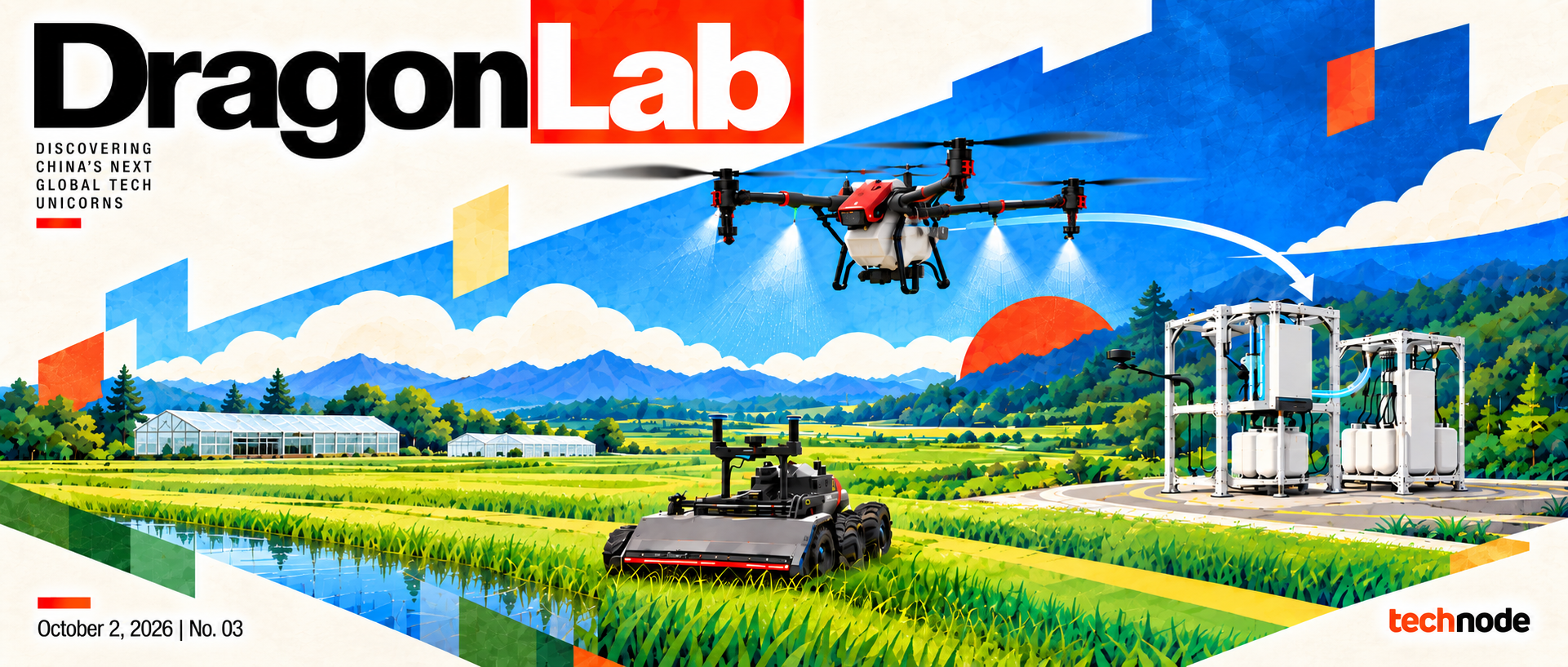
This setup forms the core of XAG’s new X Series agricultural robot system. It integrates either an X100 or X150 drone with the XA1 drone station and the LM1 automated liquid-handling equipment. The system is engineered to automate a wide spectrum of tasks, including precise route planning, targeted spraying, efficient charging, accurate refilling, and thorough cleaning. This comprehensive automation addresses what XAG identifies as "the harder part"—the labor-intensive ground operations that have historically kept human hands deeply involved in drone missions. By automating these turnaround processes, XAG aims to unlock new levels of productivity and operational continuity for modern farms.
XAG’s Strategic Evolution: From Drone Manufacturer to Agritech Ecosystem Builder
XAG’s journey to becoming a leader in agricultural automation is rooted in a strategic pivot and a decade of relentless innovation. Founded in Guangzhou in 2007 as XAircraft, the company initially explored a diverse range of drone applications, from power-line inspection and search and rescue missions to logistics. This exploratory phase provided a robust foundation in drone technology and aerial robotics.
The pivotal shift towards agriculture occurred in 2013. During an observational trip to the vast cotton fields of Xinjiang, XAG’s team, including co-founder Gong Jiaqin, recognized the immense potential for drones to revolutionize labor-intensive pesticide spraying. The traditional methods were inefficient, costly, and often posed health risks to workers. This realization sparked a new direction for the company, which began by developing its agricultural drone business in Xinjiang before expanding rapidly across China.
International expansion became a key strategic imperative around 2017 and 2018, albeit with a deliberately measured pace. Gong Jiaqin articulated in a 2022 interview with TechNode that markets like Japan became early overseas priorities. Japan’s agricultural landscape, characterized by fragmented farmlands and a rapidly aging rural population, closely mirrored some of the challenges faced in China, making it an ideal proving ground for XAG’s smaller, automated machines. This slow-by-design internationalization strategy focused heavily on product validation, adapting hardware to meet diverse certification requirements, and cultivating strong local partnerships. Farmers, understandably, needed at least one or more planting seasons to assess the tangible productivity improvements offered by new equipment, necessitating a long-term commitment to market development.
Financial Milestones and Market Resilience

The company’s ambitious expansion and technological advancements attracted significant capital investment. In 2020, XAG successfully raised RMB 1.2 billion (approximately $182 million at the time) in a funding round co-led by prominent investors Baidu Capital and SoftBank Vision Fund II. This was followed by another substantial investment of RMB 300 million from GL Ventures in 2021, underscoring investor confidence in XAG’s vision and market potential.
Despite this robust financial backing, XAG encountered headwinds in its public market aspirations. In 2022, the company withdrew its application for listing on Shanghai’s STAR Market. At the time, XAG was still operating at a loss, and the broader capital markets in China were experiencing considerable pressure. A person familiar with the company’s situation cited market conditions as the primary reason for the withdrawal, indicating a pragmatic decision to wait for more favorable circumstances.
However, XAG’s financial narrative took a dramatic turn when it later pursued a Hong Kong listing. Its subsequent Hong Kong listing application revealed a remarkable financial turnaround. Revenue surged from RMB 614.5 million in 2023 to RMB 1.07 billion in 2024, culminating in RMB 1.17 billion in 2025. More impressively, the company swung from a net loss of RMB 132.8 million to a significant net profit of RMB 123.8 million over the same period. This impressive turnaround was primarily driven by a surge in overseas drone sales, improved gross margins, and a rigorous focus on tightening expense ratios. The company later withdrew its application for Shanghai’s STAR Market, opting instead for Hong Kong, reflecting a strategic choice for its international growth trajectory.
Expanding the Autonomous Portfolio: Beyond the Skies
XAG’s 2026 product lineup clearly articulates its commitment to a comprehensive autonomous farming ecosystem that extends far beyond aerial applications. The portfolio now includes the advanced P200, P150 Ultra, and P120 agricultural drones, alongside a growing suite of agricultural rovers, precise autopilot systems for conventional farm machinery, and innovative smart irrigation products. A notable addition is the new RM80 autonomous mower, introduced at the same July event as the X Series.
The RM80 exemplifies XAG’s push for ground-based automation. This electric, four-wheel-drive machine is capable of intelligently planning its own routes, automatically returning to base, and performing demanding mowing and vegetation-clearing tasks in challenging environments such as orchards and fields. This diversification into ground robotics underscores XAG’s broader strategy to automate every facet of farm operations, not just those performed from the air.

In comparison to its global counterparts, XAG’s distinguishing characteristic lies in the sheer breadth and integration of the system it is meticulously assembling. While Hylio focuses primarily on aerial application, providing software solutions for multi-drone management, and John Deere specializes in large-scale farm machinery automation, XAG positions itself as a convergence point. It offers aerial spraying systems akin to Hylio’s, but critically, it also develops robust ground robots, tractor autopilot systems, and a comprehensive suite of farm IoT products. The X Series further solidifies this integrated approach by automating the crucial charging and chemical handling processes that support drone operations, creating a truly interconnected workflow.
Despite this impressive breadth of offerings, XAG’s revenue figures from its latest Hong Kong listing filing indicate that agricultural drones remain the dominant revenue driver. In 2025, agricultural drones generated RMB 1.02 billion, accounting for a substantial 87.6% of XAG’s total revenue. While agricultural rovers and autopilot systems each contributed approximately 1.5%, and smart-farm IoT products accounted for 3.1%, these figures highlight both the success of its core drone business and the significant opportunity for future revenue diversification across its expanding autonomous portfolio.
The Imperative of Automation in Agriculture
Agriculture presents a uniquely challenging environment for robotics. Machines must contend with unpredictable weather conditions, varied and often rugged terrain, and the omnipresent challenges of dust, water, corrosive chemicals, and physical obstacles like trees and fences. A malfunction during a critical, time-sensitive window, such as spraying or planting, can lead to substantial financial losses.
However, these very constraints simultaneously strengthen the compelling case for automation, particularly in regions facing acute agricultural labor shortages. Globally, an aging rural population and a declining interest among younger generations in manual farm labor are creating an urgent demand for technological solutions. As Gong Jiaqin articulated in 2022, agricultural technology achieves commercial significance only when it can either entirely replace human labor in a complete production step or deliver a substantial gain in efficiency. Four years later, the X Series system embodies this vision, moving beyond autonomous flight to automate critical turnaround tasks like charging, mixing, and refilling, thereby significantly reducing the residual labor requirements between missions. This shift not only addresses labor scarcity but also enhances precision, reduces human exposure to chemicals, and optimizes resource utilization.
The Global Test: Scaling Autonomous Farming Solutions

XAG’s ambitious model of comprehensive farm automation now faces its ultimate test on the global stage, requiring adaptation across vastly different farming systems and regulatory environments. According to its latest Hong Kong listing filing, XAG boasts a robust network of distributors spanning nearly 70 countries and regions. This extensive global footprint has translated into significant overseas revenue, which reached RMB 419 million in 2025, accounting for 35.9% of total revenue and marking a healthy 13% increase from the previous year.
The company is actively intensifying its push into key markets, notably the United States. In February, XAG introduced the P150 Max at the Spray Drone End User Conference in Kansas City, strategically positioning it for a wide range of applications including spraying, spreading, mapping, and on-farm logistics. The U.S. market serves as a crucial proving ground for XAG, where it directly competes with established farm-machinery incumbents like John Deere and a growing number of domestic drone manufacturers. XAG enters this competitive landscape with a distinctive portfolio that integrates drones, smaller ground robots, and comprehensive farm automation systems.
This overseas expansion represents more than just a test of XAG’s individual drone products; it is a profound validation of its broader, integrated automation model. The company has already successfully built a sizable and profitable business in aerial applications. Its next significant bet, and indeed its strategic imperative, is on how much human work can be effectively taken off the ground, transforming traditional farm operations into a highly efficient, largely autonomous ecosystem. The success of this integrated approach will not only cement XAG’s position as a global leader in agricultural technology but also accelerate the worldwide transition towards more sustainable, productive, and resilient farming practices, shaping the future of food production for generations to come.


 Nila Kartika Wati
 Reynand Wu