Jia Lissa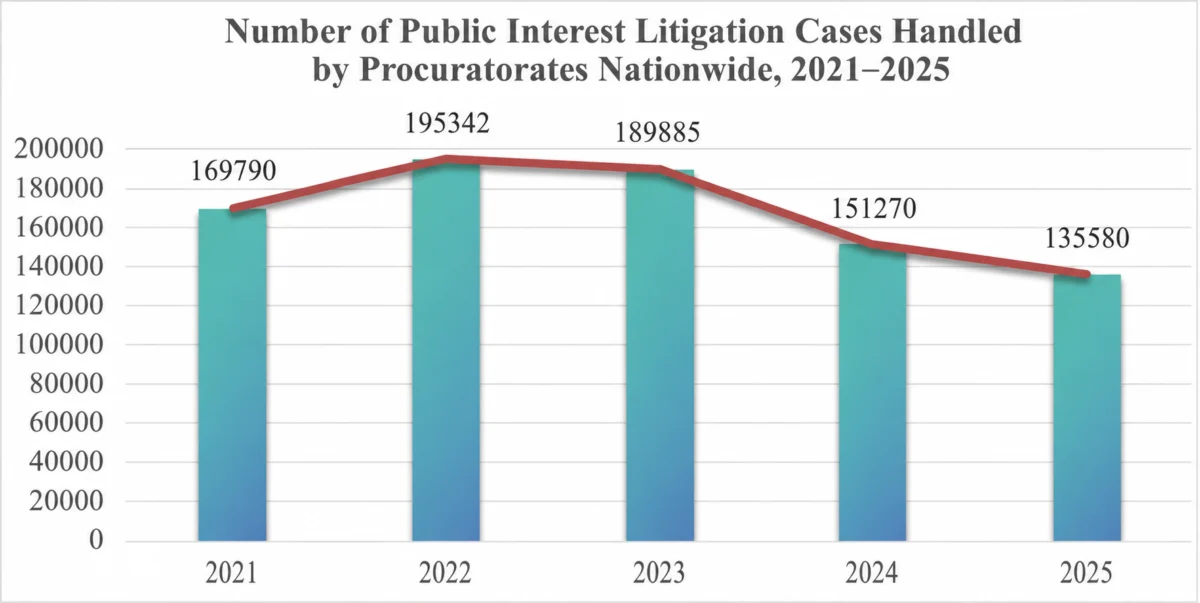
The legislative framework governing China’s unique system of public interest legal action reached a significant milestone last month with the release of the second reading draft of the Procuratorate Public Interest Litigation Law. This updated draft represents a critical step in the formalization of a legal mechanism that has evolved rapidly over the past decade, shifting from a series of pilot programs to a cornerstone of the nation’s judicial and administrative oversight. As the Supreme People’s Procuratorate (SPP) seeks to solidify its role as the "guardian of the public interest," the new draft clarifies the scope of the procuratorate’s authority, the procedures for filing suits against both government agencies and private entities, and the potential implications for foreign organizations operating within Chinese jurisdiction.
The Evolution of Procuratorate Public Interest Litigation in China
The Procuratorate Public Interest Litigation (PPIL) system was initially conceived as a solution to a growing crisis of accountability. Throughout the early 2000s, China faced a series of high-profile "mass harm" incidents, particularly in the realms of environmental degradation and food safety. While existing laws theoretically allowed for civil society organizations or individuals to file lawsuits, the practical hurdles were often insurmountable. Resource-intensive litigation, a historically underdeveloped civil society, and the political sensitivity of suing state-owned enterprises or local government departments meant that many public grievances remained unaddressed.
A chronological look at the system’s development reveals a steady expansion of power. In 2015, the National People’s Congress (NPC) authorized a two-year pilot program in 13 provinces, allowing procuratorates to file public interest lawsuits. By 2017, the Civil Procedure Law and the Administrative Procedure Law were formally amended to grant the procuratorate permanent standing in public interest cases. A pivotal shift occurred in 2018 when the newly established National Supervision Commission took over the procuratorate’s anti-corruption and bribery investigation duties. This prompted a strategic pivot within the SPP, which elevated public interest litigation to one of its "four core work areas," alongside criminal prosecution, civil supervision, and administrative supervision.

The Unique Role of the Chinese Procuratorate
To understand the significance of the new draft law, it is essential to distinguish the Chinese Procuratorate from a standard prosecutor’s office in a common law system. The Procuratorate serves a "legal supervision" function, acting as a constitutional watchdog tasked with ensuring that laws are implemented correctly by administrative agencies and the courts. This mandate provides the legal basis for the procuratorate to intervene when public interests are harmed, even if no specific individual victim is able or willing to sue.
Under the current framework, the procuratorate acts as a representative of the state and society. Its staff of trained legal professionals and its access to government data allow it to handle complex cases that would bankrupt a typical non-governmental organization (NGO). While designated civil society groups still maintain the right to file public interest suits, the procuratorate has become the primary driver of these cases, often stepping in when NGOs fail to act or when the defendant is a government body.
Statistical Analysis of Enforcement Trends
Recent data highlights the sheer scale of the PPIL system. In 2025, the procuratorate handled a total of 135,580 public interest litigation cases. However, a closer look at the figures reveals a nuanced reality: only 7,305 of these cases—roughly 5.4%—actually resulted in a formal lawsuit being filed in court. This discrepancy is a defining feature of the Chinese system, which prioritizes administrative correction over adversarial litigation.
The vast majority of cases (approximately 91%) are classified as Administrative Public Interest Litigation. In these instances, the procuratorate identifies a failure by a government agency to perform its statutory duties—such as failing to stop a factory from dumping waste or failing to pull contaminated food from shelves. Before going to court, the procuratorate is required to issue a "procuratorial suggestion," a formal notice giving the agency a set period (usually two months) to rectify the violation. Data suggests that most agencies comply with these suggestions to avoid the professional and political embarrassment of a public court appearance, where the procuratorate’s success rate is nearly 100%.

In contrast, Civil Public Interest Litigation cases, which are brought against private individuals or companies for torts that harm the public, are less frequent but far more likely to proceed to a full trial. These cases often involve seeking compensation for environmental restoration or punitive damages in food and drug safety violations.
Expanding the Scope of Public Interest
Article 3 of the second reading draft delineates the specific fields where the procuratorate may intervene. The law has moved beyond its original focus on environment and food safety to include a broad spectrum of "societal public interests." The current draft identifies several key areas of overlap where both administrative and civil suits can be pursued:
- Environmental and Resource Protection: The most mature area of PPIL, covering air, water, and soil pollution.
- Food and Drug Safety: Addressing the production and sale of counterfeit or substandard goods.
- Work Safety: Ensuring compliance with industrial and construction safety standards.
- Protection of Vulnerable Groups: Including the rights of minors, the elderly, and the disabled.
- National Defense and Military Interests: Protecting military facilities and the reputation of service members.
- Cultural Heritage and Ethnic Unity: A newer addition to the law, emphasizing the protection of historical sites and the prevention of conduct that undermines ethnic harmony.
Notably, certain categories are restricted. Suits involving the loss of state-owned assets or state-owned land-use rights are strictly administrative, aimed at holding government officials accountable for financial negligence. Conversely, cases involving monopolistic conduct, large-scale labor violations, personal information protection, and the protection of "heroes and martyrs" are primarily handled through civil litigation.
The Controversy of Extraterritorial Application
One of the most debated aspects of the second reading draft is Article 51, a supplemental provision that explicitly addresses foreign entities. The article states: "The people’s procuratorates may lawfully initiate public interest litigation against foreign organizations and individuals that carry out unlawful conduct that infringes on our nation’s lawful interests or societal public interest."

This provision has sparked concern among international legal analysts and foreign business chambers. Some observers fear that the vagueness of terms like "societal public interest" could allow the law to be used as a tool for economic retaliation or political signaling against foreign firms. A recent analysis suggested that Article 51 might serve as a "catch-all" that allows the state to bypass the specific category restrictions of Article 3 when a foreign defendant is involved.
However, legal experts within China argue that Article 51 is more likely a jurisdictional clarification rather than a expansion of substantive power. Under this view, the rest of the law’s procedural requirements and scope limitations still apply to foreigners. The article serves to confirm that being a foreign entity does not grant immunity from the procuratorate’s supervision if that entity’s actions—such as a massive data breach or a localized environmental disaster—impact the Chinese public.
Broader Implications and Future Outlook
The formalization of the PPIL Law signifies a broader trend in Chinese governance toward "rule-based" administration, albeit within a framework where the state remains the ultimate arbiter. For local governments, the law increases the pressure to comply with environmental and safety regulations, as the threat of a procuratorial suggestion is a potent deterrent. For the public, it provides a state-sponsored channel for addressing grievances that might otherwise lead to social instability.
For the international community, the law necessitates a higher level of due diligence. Multinational corporations must recognize that "public interest" in the Chinese context is an expanding concept. Conduct that might have previously resulted in a manageable administrative fine could now trigger a high-profile public interest lawsuit led by the state’s most powerful legal supervisors. Areas such as "personal information protection" and "ethnic unity" are particularly sensitive, as they intersect with China’s national security and social stability priorities.

As the draft moves toward a final reading and eventual enactment, the international legal community will be watching closely to see how the Supreme People’s Procuratorate defines the "public interest" in its guiding cases. While the system offers a robust mechanism for addressing genuine mass harms like pollution and unsafe food, its potential for broad application in more subjective areas remains a point of significant interest and concern for global stakeholders. The final version of the law will likely set the tone for Chinese judicial oversight for the next decade, balancing the need for social protection with the complexities of modern, globalized commerce.


 Nana Muazin
 Muslim