 Evan Lee Salim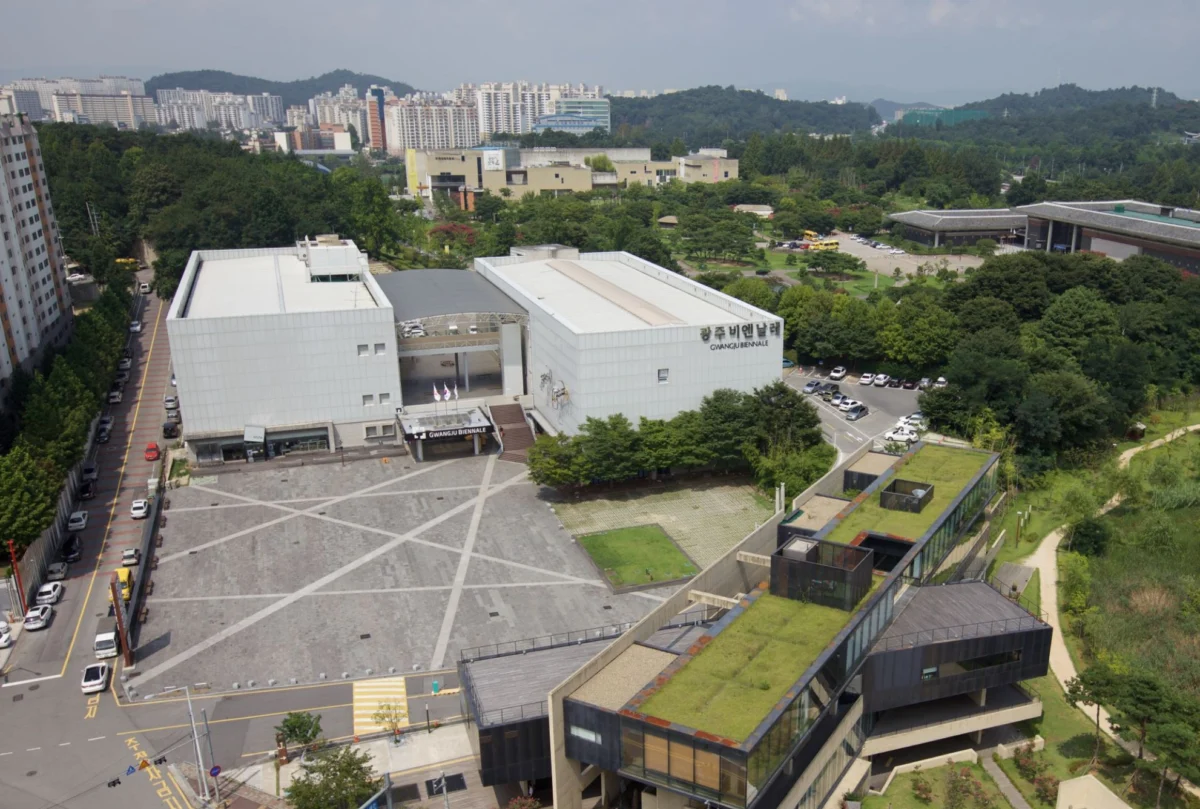
Chinese artists have formally withdrawn from the Gwangju Biennale, one of Asia’s most prominent contemporary art events, following a contentious dispute over the exhibition’s naming protocol for Taiwan. The decision, announced on Thursday, came after organizers reversed an earlier decision to remove "Taiwan" from an exhibition title, subsequently drawing a sharp rebuke from Beijing, which views the self-governed island as an integral part of its territory under the "One China" principle. This incident has thrust the South Korean art festival into a geopolitical maelstrom, highlighting the complex interplay of art, politics, and international diplomacy in East Asia.
The Gwangju Biennale, renowned for its progressive spirit and commitment to artistic exploration, was scheduled to open its doors on Saturday, showcasing a diverse array of global talent through its "Pavilion Project" across various venues in the southwestern city of Gwangju. However, the pre-opening buzz has been overshadowed by the diplomatic fallout. The core of the controversy stems from the naming of an exhibition featuring Taiwanese artists, initially agreed upon as the "Taiwan Pavilion."

Chronology of a Diplomatic Spat in the Art World
The dispute’s genesis can be traced back several months. Initially, the Gwangju Biennale foundation had reportedly agreed with Taiwanese artists to label their exhibition as the "Taiwan Pavilion." This designation is commonly used in international cultural and sporting events, often as a pragmatic solution given Taiwan’s unique political status. However, in June, without prior consultation or consent from the participating Taiwanese team, the organizers unilaterally changed the exhibition’s name to "NTMoFA," an acronym for Taiwan’s National Taiwan Museum of Fine Arts.
This abrupt alteration ignited a strong protest from the Taiwanese artists. In a joint statement issued last month, they vehemently accused the Gwangju Biennale foundation of "political censorship," asserting that the change "brutally erased Taiwan from the poster." They argued that such an act undermined artistic autonomy and capitulated to external political pressure, specifically alluding to Beijing’s stringent "One China" policy. The artists underscored the importance of cultural representation and the right to self-identification, particularly in a global platform intended to foster dialogue and diverse perspectives.

Facing mounting criticism and accusations of compromising artistic integrity, the Gwangju Biennale foundation reconsidered its position. Last week, in a significant reversal, the foundation announced its decision to restore the original name, "Taiwan Pavilion." This move was widely seen as an attempt to uphold principles of artistic freedom and to rectify what many perceived as an egregious error in judgment.
However, this resolution for the Taiwanese contingent immediately triggered a counter-reaction from Beijing. Chinese artists, who were also preparing their own pavilion for the Biennale, promptly halted their preparations in protest of the restoration of the "Taiwan Pavilion" name. This week, their withdrawal became official, fundamentally altering the lineup of one of Asia’s premier cultural events. A spokesperson for the Gwangju Biennale foundation confirmed the development to Agence France-Presse (AFP), stating, "We have confirmation the Chinese artists are withdrawing from the biennale."
Beijing’s Firm Stance and the "One China" Principle

The Chinese government wasted no time in articulating its displeasure. China’s consulate general in Gwangju issued a stern statement, criticizing the Biennale organizers for "openly allow[ing] the Taiwan region of China to participate in the exhibition using a name that is completely inconsistent with its status." The consulate unequivocally declared that this action "constitutes a serious violation of the One China principle," and urged the Gwangju Biennale organizers to "immediately rectify their wrongdoing."
The "One China" principle is a cornerstone of Beijing’s foreign policy, asserting that there is only one sovereign state under the name China, and that Taiwan is an inseparable part of it. The People’s Republic of China (PRC) views any official use of "Taiwan" as implying statehood or independence for the island, which it considers a renegade province destined for eventual reunification, by force if necessary. With a population exceeding 23 million, Taiwan, officially known as the Republic of China (ROC), has been self-governed since 1949, with its own democratically elected government, military, and currency. However, only a handful of nations officially recognize the ROC, with most international bodies and countries adhering to the PRC’s "One China" policy in their diplomatic relations. This diplomatic tightrope often leads to complexities in international forums, where Taiwan is frequently referred to as "Chinese Taipei" or by other non-state designations.
South Korea’s Diplomatic Balancing Act

The incident has placed South Korea’s foreign ministry in a delicate position, caught between its significant economic ties with China and its broader commitment to democratic values and international cultural exchange. Seoul’s foreign ministry swiftly responded to the brewing controversy, seeking to de-escalate tensions and clarify its official stance. The ministry affirmed that "the government’s basic position regarding Taiwan remains unchanged," implying continued adherence to the "One China" policy in its diplomatic relations with Beijing.
Crucially, the ministry emphasized that the decision to restore the "Taiwan Pavilion" name was "made in the cultural and artistic sphere, and is unrelated to the South Korean government’s position regarding Taiwan." This statement attempts to compartmentalize the issue, separating artistic and organizational decisions from official state foreign policy. The ministry further expressed hope that "this issue will not affect South Korea-China relations or exchanges and cooperation between the two countries," underscoring Seoul’s desire to prevent the cultural spat from spilling over into broader bilateral relations.
Broader Implications and Precedents

This episode at the Gwangju Biennale is far from an isolated incident. China has a well-documented history of exerting political and economic pressure on international organizations, corporations, and cultural institutions to enforce its "One China" policy. From airlines altering their website dropdown menus to Hollywood studios self-censoring content, the reach of Beijing’s influence is extensive. In the art world, similar controversies have erupted at various international exhibitions and film festivals, where Chinese participation or funding has been leveraged to influence the representation of Taiwan, Tibet, or other politically sensitive issues.
For the Gwangju Biennale, the withdrawal of Chinese artists represents a significant setback. While the exact number of Chinese artists or the scale of their planned contributions remains unspecified in the initial reports, any such withdrawal diminishes the international scope and diversity of the event. Beyond the immediate loss of artistic presence, the controversy could also cast a shadow over the Biennale’s reputation, raising questions about its susceptibility to political pressures and its ability to maintain an environment of unfettered artistic expression.
The incident also highlights the ongoing challenge for cultural institutions in navigating geopolitical fault lines. Biennales and art festivals often aspire to be spaces of global dialogue and creative freedom, transcending national boundaries. However, as demonstrated in Gwangju, these aspirations frequently clash with the realities of international politics, forcing organizers to make difficult choices that inevitably alienate one party or another. The foundation’s initial decision to change the name, and subsequent reversal, underscores the immense pressure cultural bodies face from various stakeholders.

For Taiwan, the incident, while resulting in a short-lived controversy, ultimately represents a partial victory in its continuous struggle for international recognition and space. The restoration of the "Taiwan Pavilion" name, even amidst Chinese withdrawal, signals a moment where artistic freedom and the right to self-identification were prioritized by the Biennale organizers. However, it also reaffirms the persistent obstacles Taiwan faces in asserting its identity on the global stage.
Looking Ahead: Art, Politics, and Soft Power
As the Gwangju Biennale proceeds with its opening, the absence of Chinese artists will serve as a stark reminder of the incident’s political undertones. This episode underscores the growing trend of soft power projection and ideological clashes playing out in cultural arenas. For South Korea, a key U.S. ally with a vital economic relationship with China, maintaining a delicate diplomatic balance will continue to be a paramount challenge. The Gwangju Biennale, conceived as a platform for global artistic exchange, has inadvertently become a microcosm of the broader geopolitical tensions simmering in the Indo-Pacific region. The fallout from this naming dispute will likely prompt other international cultural events to review their protocols for handling politically sensitive representations, ensuring that the pursuit of artistic expression can coexist, however uneasily, with the complexities of global diplomacy.

 Asep Darmawan
 Siti Muinah