Basiran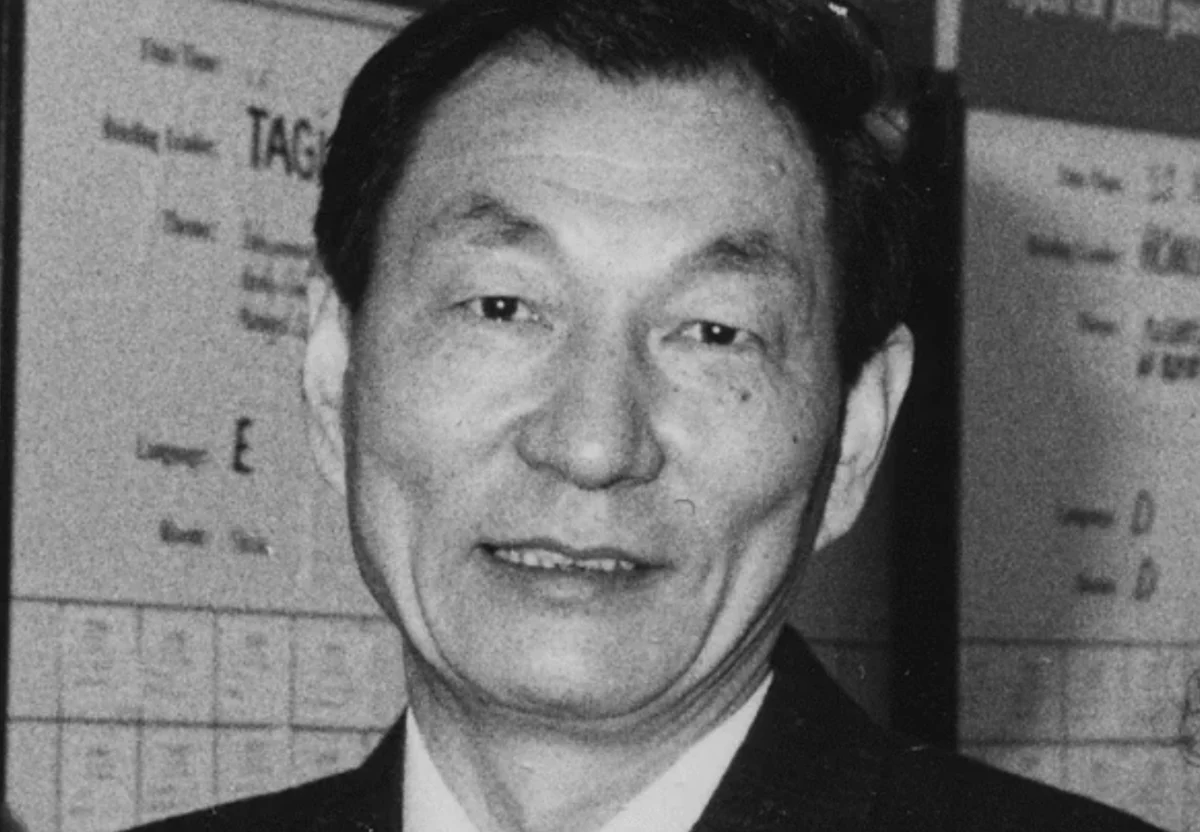
Beijing, China – China is observing a period of national mourning for its former Premier, Zhu Rongji, who passed away last week at the age of 97. Flags across the nation, including those prominently displayed at government buildings throughout Beijing and the expansive Tiananmen Square, were lowered to half-mast on Tuesday, August 18, 2026, as the country prepares for his state funeral and cremation later today. The solemn observances underscore the profound respect for a leader widely recognized as a pivotal architect of modern China’s economic transformation.
The passing of Zhu Rongji has prompted widespread commemorations, both officially and on social media platforms. State news agency Xinhua, in its eulogy, lauded him as "an outstanding proletarian revolutionist, statesman, and economist," emphasizing his significant contributions to the nation’s development. Public sentiment echoed this reverence, with online platforms like Weibo seeing a surge of tributes. The lowered flags on Tiananmen Square became a top trending topic, drawing countless messages from citizens expressing gratitude and remembrance. "Thank you for everything you have done for this land – we will always remember you," read one widely shared comment, reflecting a deep appreciation for his decisive leadership and perceived integrity. Similar scenes of lowered flags were also reported in Hong Kong, further demonstrating the breadth of the mourning.

The State Funeral and Cremation
According to official reports from Xinhua on Sunday, Zhu Rongji’s remains are scheduled for cremation in Beijing on Tuesday. This will precede a farewell gathering, a solemn affair expected to be attended by senior leaders of China’s ruling Communist Party, in accordance with established state protocol for deceased high-ranking officials. Such ceremonies are meticulously planned events, serving not only as a final tribute but also as a symbolic reaffirmation of the Party’s continuity and respect for its historical figures. The presence of the Party’s top echelon signifies Zhu’s enduring legacy and his indelible mark on the nation’s political and economic trajectory.
Zhu Rongji: A Life of Service and Economic Reform

Born in 1928 in Changsha, Hunan province, Zhu Rongji’s life spanned nearly a century of profound changes in China. An alumnus of the prestigious Tsinghua University, where he studied electrical engineering, his early career was marked by both promise and political adversity. Like many intellectuals of his generation, he experienced periods of political struggle, including being branded a "rightist" in the late 1950s. Despite these setbacks, his talent for administration and economics shone through, leading to his gradual rehabilitation and ascent within the Communist Party following the 1949 revolution led by Mao Zedong.
His political career gained significant momentum in the 1980s, culminating in his appointment as Mayor of Shanghai in 1987. During his tenure, he was instrumental in transforming Shanghai into a vibrant economic hub, attracting foreign investment and spearheading infrastructure projects that laid the groundwork for the city’s future as a global financial center. His success in Shanghai demonstrated his pragmatism and ability to implement market-oriented reforms, catching the attention of the national leadership.
The Premier’s Era: Tackling Economic Challenges (1998-2003)

Zhu Rongji’s most impactful period began in 1993 when he became Vice Premier, and especially in 1998 when he assumed the premiership. His five-year term as Premier (1998-2003) is widely regarded as one of the most critical and transformative periods in China’s modern economic history. He inherited an economy grappling with multiple challenges: widespread inefficiency in state-owned enterprises (SOEs), a fragile financial system burdened by non-performing loans, and the looming threat of the Asian Financial Crisis.
Upon taking office, Zhu famously declared that he would prepare "100 coffins" for corrupt officials and one for himself if he failed. This bold statement encapsulated his no-nonsense approach and his unwavering commitment to tackling deep-seated problems.
Key Reforms of the Zhu Rongji Era:

-
State-Owned Enterprise (SOE) Reform: This was arguably his most ambitious and, at times, most painful reform. Faced with loss-making SOEs that were a drain on state coffers and stifling economic growth, Zhu initiated a radical restructuring program. Often summarized as "grasping the big, letting go of the small" (抓大放小), the policy involved merging large state enterprises into competitive conglomerates while privatizing or shutting down smaller, inefficient ones. This led to millions of layoffs, dismantling the "iron rice bowl" system that guaranteed lifetime employment and social benefits. While causing significant social upheaval and unemployment, these reforms dramatically improved productivity, fostered a more market-driven economy, and freed up capital for new industries.
-
Financial System Overhaul: Zhu tirelessly worked to clean up China’s banking sector, which was riddled with non-performing loans, many of which were extended to ailing SOEs. He established asset management companies to absorb bad debts and pushed for greater transparency and accountability in financial institutions. These measures were crucial in stabilizing China’s financial system and preparing it for greater integration with global markets.
-
Housing System Reform: In another landmark move, Zhu ended the decades-old welfare housing system, where employers provided housing at subsidized rates. This policy created a commercial housing market, stimulating private investment and consumption, and fundamentally changing urban landscapes and household finances across China.

-
Integration into the Global Economy: WTO Accession: Zhu Rongji was a staunch advocate for China’s entry into the World Trade Organization (WTO). He personally led arduous negotiations, making significant concessions that opened China’s markets to foreign competition. China’s accession to the WTO in December 2001 was a monumental achievement, dramatically accelerating its integration into the global trading system and fueling an unprecedented export-led economic boom in the following decades. His vision was that exposure to international competition would force Chinese industries to become more efficient and innovative.
The Anti-Corruption Drive
Throughout his career, Zhu Rongji was renowned for his ardent anti-corruption stance. His public remarks frequently conveyed a fierce determination to combat graft, earning him the moniker "the Economic Tsar" and a reputation for being tough but fair. His quote, "I only hope that after I step down, people across the country will say that ‘he was an honest official, not a corrupt one’, and I’ll be very satisfied with that," encapsulates his personal ethos and the high standards he set for himself and others. While his campaigns were impactful, they operated within the political structures of his time. His efforts laid some groundwork for later, more extensive anti-corruption drives, particularly under President Xi Jinping, though the scale and methodology of those later campaigns have differed significantly.

The Jiang-Zhu Era: A Partnership in Reform
Zhu Rongji’s premiership largely coincided with the presidency of Jiang Zemin (1993-2003), creating a formidable leadership duo that steered China through a period of rapid and often challenging transformation. While Jiang Zemin, who passed away in 2022, provided political direction and maintained party unity, Zhu Rongji was the chief executor of economic policy. Their partnership was characterized by a clear division of labor and a shared commitment to market-oriented reforms while maintaining Communist Party rule. This era saw China emerge as a global economic power, laying the foundation for its current status on the world stage.
Official Eulogies and Public Perception

Xinhua’s portrayal of Zhu Rongji as a "proletarian revolutionist" and "statesman" is consistent with the Communist Party’s narrative for its deceased leaders who have made significant contributions. This terminology emphasizes his ideological alignment and his role in advancing the socialist cause through economic development.
Beyond official pronouncements, Zhu Rongji holds a unique place in the hearts of many Chinese citizens. His direct, often blunt communication style, his perceived incorruptibility, and his evident dedication to the nation’s prosperity resonated deeply with the public. Many recall his televised press conferences, where he would field questions with remarkable candor and wit, a style somewhat uncommon among Chinese officials. This personal touch, combined with his tangible achievements in improving living standards for millions, has cemented his image as a leader who truly worked for the people.
Legacy and Enduring Influence

Zhu Rongji’s legacy is multifaceted and continues to shape China today. His bold economic reforms, particularly the painful but necessary restructuring of SOEs and the opening up to global trade via the WTO, set the stage for China’s spectacular economic growth in the early 21st century. He transformed China from a largely centrally planned economy into a dynamic, market-oriented powerhouse.
However, his reforms also came with social costs, including increased income inequality and unemployment for those displaced by SOE closures. Subsequent Chinese governments have grappled with these issues, attempting to build a more equitable society while sustaining economic growth. Zhu’s emphasis on technocratic governance, economic efficiency, and the fight against corruption also left a lasting imprint on China’s administrative culture. He is remembered as a leader who dared to confront difficult problems head-on, even when faced with significant internal resistance.
As China mourns the passing of Zhu Rongji, the tributes pouring in from official channels and the public alike reflect an acknowledgment of his immense contributions. His tenure as premier was a defining chapter in China’s journey, fundamentally altering its economic landscape and setting it on a path toward global prominence. His vision, courage, and commitment to reform will undoubtedly be remembered as integral to the nation’s modern history.

 Jia Lissa
 Reynand Wu