Reynand Wu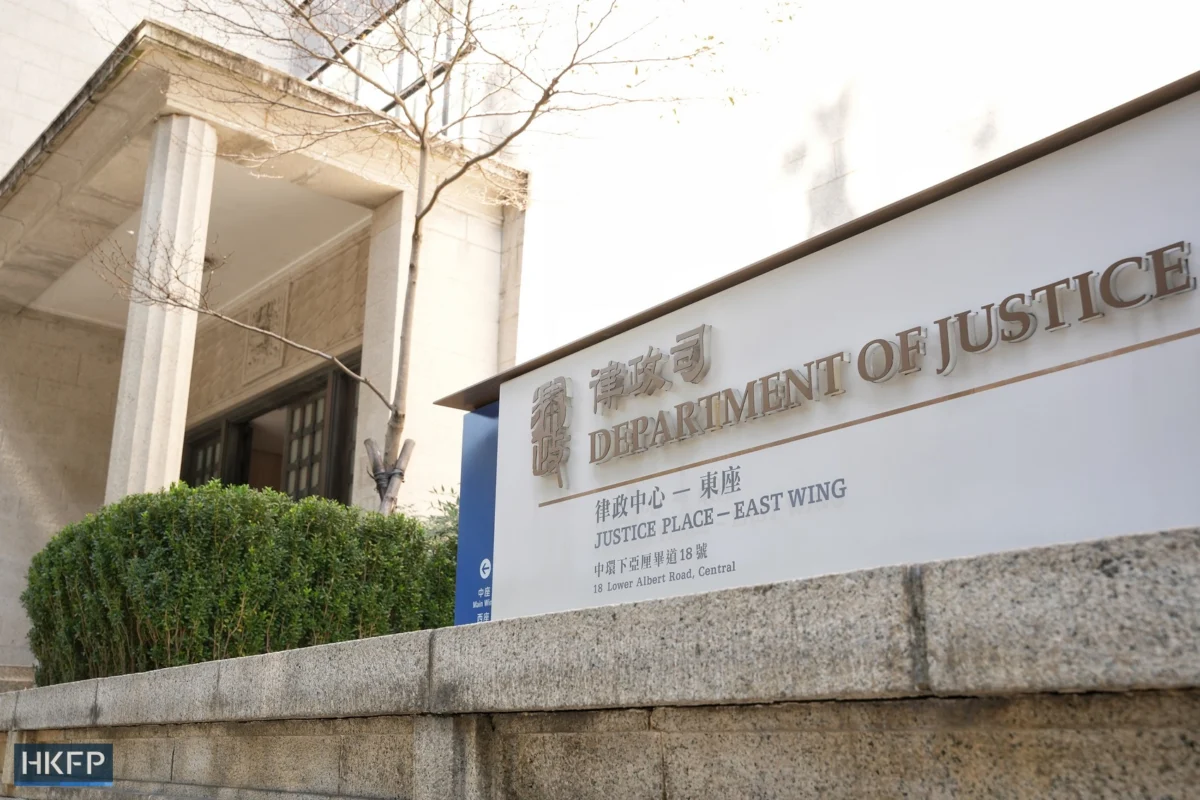
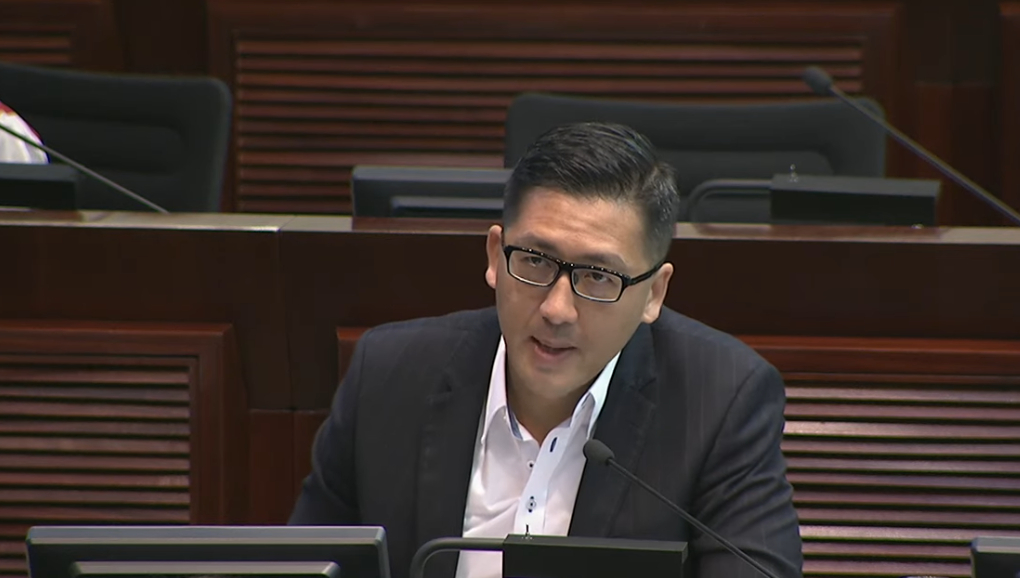
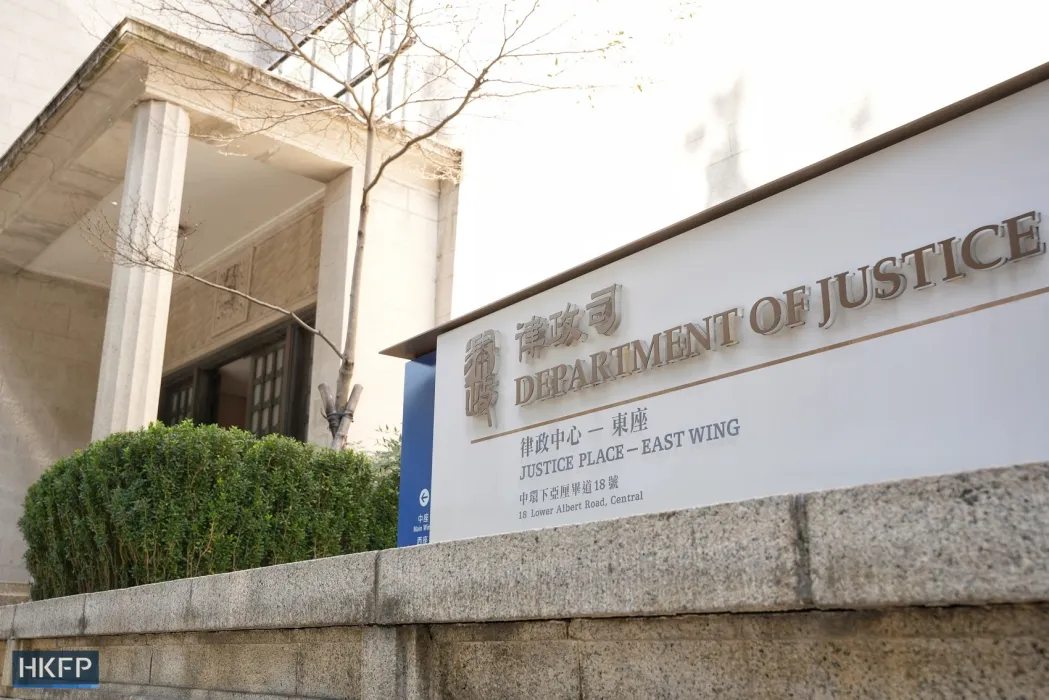
Hong Kong’s Department of Justice (DoJ) has suffered a significant setback as its appeal against the acquittal of former lawmaker Lam Cheuk-ting on charges of perverting the course of justice has been dismissed by the Court of Appeal. The ruling upholds a lower court’s decision that found Lam and two co-defendants not guilty in relation to an incident that occurred during the widespread protests and civil unrest of 2019. This outcome represents a reprieve for Lam, who is currently serving a prison sentence for his involvement in the landmark "Hong Kong 47" national security trial.
Background of the Case
The legal proceedings stemmed from a confrontation following a protest at Tuen Mun Park on July 6, 2019. This date falls within the tumultuous period that saw mass demonstrations erupt across Hong Kong, initially triggered by a proposed extradition bill but rapidly evolving into a broader movement demanding greater democratic freedoms and accountability. The incident in question involved Lam Cheuk-ting, a former member of the now-disbanded Democratic Party, alongside social worker Aggie Chung and journalist Ronnie Tsang.

The prosecution alleged that on the day in question, Lam and his co-defendants pressured an individual, referred to in court documents as "X," to delete photographs from his mobile phone. Protesters at the time harbored suspicions that "X" had been covertly taking close-up pictures of demonstrators during a protest held on July 1, 2019, outside the police headquarters in Wan Chai. The concern was that these images could potentially be used to identify individuals involved in the protests.
Lam Cheuk-ting faced the primary charge of perverting the course of justice. Aggie Chung was charged with criminal damage and accessing a computer with dishonest intent. Ronnie Tsang was accused of perverting the course of justice and participating in an unlawful assembly.
Lower Court’s Decision and Rationale
In January 2023, a District Court judge, Douglas Yau, delivered a verdict that saw the defendants acquitted of all charges, with the sole exception of Ronnie Tsang’s unlawful assembly charge. Judge Yau’s reasoning in acquitting Lam Cheuk-ting was particularly noteworthy. He stated that Lam appeared to have been acting as a peacemaker, attempting to de-escalate a tense situation. According to the judge’s findings, Lam’s request for the individual "X" to allow protesters to inspect his phone was an effort to extricate "X" from a potentially dangerous encounter, where he had been surrounded by a crowd. The judge suggested that Lam was attempting to diffuse the situation rather than obstruct justice.
The Appeal and its Outcome
The Department of Justice, dissatisfied with the District Court’s ruling, lodged an appeal, seeking to overturn the acquittals. The appeal was heard by a panel of three judges at the Court of Appeal: Derek Pang, Keith Yeung, and Judianna Barnes.
On Friday, the Court of Appeal delivered its judgment, siding with the District Court. The judges affirmed the initial ruling, finding no grounds to overturn the acquittals of Lam Cheuk-ting and his co-defendants on the charges they faced.
In their judgment, the Court of Appeal judges acknowledged that the deletion of pictures could indeed constitute an obstruction of police investigations and legal procedures. However, they emphasized a crucial point that underpinned the lower court’s decision: the prosecution had failed to definitively prove that the photographs in question actually existed on "X’s" phone in the first place. Without concrete evidence of the photographs’ existence, the charge of perverting the course of justice, which hinges on the act of obstructing a legal process that involves specific evidence, could not be sustained. This lack of conclusive proof regarding the existence of the alleged incriminating images proved to be a critical factor in the appeal’s failure.

Wider Context and Implications
The acquittal of Lam Cheuk-ting in this case, while a legal victory for him, is juxtaposed against his ongoing imprisonment for the "Hong Kong 47" proceedings. This significant national security case involved 47 former lawmakers and pro-democracy activists who were charged with subversion for their roles in an unofficial primary election held in 2020. Lam Cheuk-ting, who pleaded not guilty to the charges, was convicted in May 2024 and sentenced to six years and nine months in prison.
The Department of Justice’s decision to appeal the acquittal, even after the initial ruling, highlights the government’s persistent stance on prosecuting individuals perceived to be involved in activities that undermine public order or the rule of law, particularly in the context of the 2019 protests. However, the Court of Appeal’s decision underscores the importance of rigorous evidence and due process in the judicial system. The failure of the appeal suggests that the prosecution’s case lacked the necessary evidentiary threshold to satisfy the higher court.
This legal development also occurs against a backdrop of evolving legal and political landscapes in Hong Kong. The implementation of the National Security Law in 2020 has led to a significant shift in the city’s legal framework and has been a subject of international scrutiny. Cases involving former lawmakers and activists are often viewed through this broader political lens, with acquittals or convictions carrying symbolic weight.
Analysis of the Ruling
The Court of Appeal’s judgment in Lam Cheuk-ting’s case serves as a reminder that even in a climate where legal interpretations may be influenced by broader political concerns, the fundamental principles of evidence and proof remain paramount in the courtroom. The inability to substantiate the existence of the alleged photographs was a decisive factor that prevented the DoJ from succeeding in its appeal.
For Lam Cheuk-ting, this acquittal, though overshadowed by his current sentence, represents a vindication of his actions on that particular day, as interpreted by the judiciary. It suggests that, in this specific instance, his motives were deemed to be non-malicious and aimed at de-escalation rather than obstruction.
The ruling also has implications for how similar cases involving alleged obstruction of justice during protests might be approached. It emphasizes the burden of proof on the prosecution to demonstrate not only the act of potential obstruction but also the existence of the specific evidence or process being obstructed.

Chronology of Key Events
- July 1, 2019: A protest takes place outside the police headquarters in Wan Chai. Protesters later suspect an individual, "X," of taking covert photographs.
- July 6, 2019: A protest occurs at Tuen Mun Park. During a confrontation, Lam Cheuk-ting, Aggie Chung, and Ronnie Tsang allegedly pressure "X" to delete photos from his phone.
- Post-July 2019: Lam Cheuk-ting and his co-defendants are charged in relation to the Tuen Mun Park incident.
- January 2023: A District Court judge acquits Lam Cheuk-ting, Aggie Chung, and Ronnie Tsang of most charges, including perverting the course of justice, with the exception of Tsang’s unlawful assembly charge. The judge finds Lam acted as a peacemaker.
- May 2024: Lam Cheuk-ting is convicted in the "Hong Kong 47" national security trial and sentenced to six years and nine months in prison.
- [Date of Original Article Publication]: Hong Kong’s Department of Justice appeals the acquittal of Lam Cheuk-ting and his co-defendants.
- [Date of Appeal Judgment, implied to be shortly before the article’s original publication]: The Court of Appeal dismisses the Department of Justice’s appeal, upholding the acquittal of Lam Cheuk-ting and his co-defendants.
Supporting Data and Broader Context
The 2019 protests were characterized by their scale and intensity. Millions of people participated in various demonstrations throughout the year, with initial protests against the now-withdrawn extradition bill evolving into a wider pro-democracy movement. This period saw numerous clashes between protesters and police, as well as instances of alleged misconduct on both sides.
Legal actions following the protests have been extensive. Thousands of individuals have been arrested, and numerous court cases have been initiated, encompassing a wide range of charges from rioting and unlawful assembly to more serious offenses under the National Security Law. The "Hong Kong 47" trial represents one of the most significant legal undertakings stemming from the protest era, involving a large number of prominent figures in the city’s pro-democracy movement.
The Department of Justice’s role in these legal battles is to prosecute alleged offenders and, as seen in this case, to pursue appeals when they believe lower court rulings are incorrect. The judiciary, in turn, is tasked with impartially applying the law based on the evidence presented.

Potential Reactions and Inferences
While direct statements from all parties involved may not be immediately available, the outcome of the appeal can be inferred to be a significant relief for Lam Cheuk-ting and his legal team, reinforcing the initial judgment that he acted inappropriately. For supporters of the pro-democracy movement, the acquittal in this case, even if partial, might be seen as a glimmer of justice within a challenging legal environment.
Conversely, the Department of Justice may express disappointment with the ruling, potentially highlighting their continued commitment to upholding the law as they interpret it. Such appeals often reflect a strategic approach by the prosecution to test legal boundaries and ensure perceived justice is served.
Conclusion
The Court of Appeal’s decision to uphold the acquittal of former lawmaker Lam Cheuk-ting in the perverting the course of justice case related to the 2019 protests marks a significant legal development. The ruling underscores the critical importance of concrete evidence in criminal proceedings, specifically the prosecution’s failure to prove the existence of the alleged photographs. While this legal victory offers some respite to Lam, it stands in stark contrast to his ongoing imprisonment for the "Hong Kong 47" trial, illustrating the complex and often overlapping legal battles faced by figures associated with Hong Kong’s pro-democracy movement. The case reinforces the principle that legal outcomes are ultimately determined by the strength of evidence and adherence to judicial due process, regardless of the broader political context.

 Nana Muazin
 Asep Darmawan