Evan Lee Salim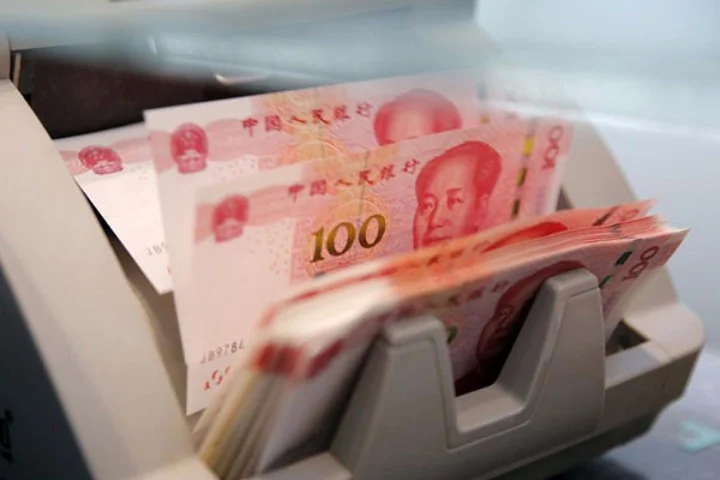
China’s financial landscape witnessed a notable acceleration in money supply growth and new yuan-denominated loans in November, signaling a concerted effort to underpin economic expansion. This surge, however, unfolded against a backdrop of the monetary authority’s unwavering commitment to risk prevention, reiterating it as the paramount policy objective. The delicate balancing act between stimulating robust economic activity and safeguarding systemic stability continues to define Beijing’s approach to financial governance.
November’s Monetary Expansion: A Closer Look
Data released by the People’s Bank of China (PBOC), the nation’s central bank, on Monday, revealed a significant uptick in key monetary indicators for November. M2, the broad measure of money supply encompassing cash, current deposits, and quasi-money (time deposits, savings deposits), expanded by 9.1 percent year-on-year. This represented an acceleration from the 8.8 percent growth recorded in October. While showing an upward trend month-on-month, it’s crucial to note that the November M2 growth was still 2.3 percentage points lower than the 11.4 percent observed a year earlier, indicating a moderated, albeit recently accelerating, growth trajectory compared to previous periods of more aggressive monetary expansion. This nuanced growth rate suggests a targeted approach rather than a broad-brush stimulus.
In parallel, banks’ new lending in yuan experienced a substantial increase, reaching 1.12 trillion yuan ($169.69 billion) in November. This figure almost doubled the 663.2 billion yuan recorded in October and significantly surpassed market expectations, which had hovered around 800 billion yuan. While strong, it remained slightly below the 1.27 trillion yuan issued in September. The robust November lending spree pushed the total outstanding yuan loans to an increase of 13.3 percent from a year earlier by the end of last month. Furthermore, the cumulative new loans for the first 11 months of the year amounted to 12.94 trillion yuan, a figure that already exceeded the full-year record of 12.65 trillion yuan set in 2016 by a margin of 290 billion yuan. This substantial year-to-date lending underscores the ongoing provision of credit support to the real economy.
Beyond traditional bank lending, China’s total social financing (TSF), a comprehensive measure of credit and liquidity in the economy that includes both on-balance sheet and off-balance sheet financing, also saw a marked increase. TSF expanded to 1.6 trillion yuan in November, up from 1.04 trillion yuan in October. TSF is a critical indicator because it captures a broader spectrum of financing channels, including bond issuance, entrusted loans, trust loans, and undiscounted bankers’ acceptances, providing a more complete picture of liquidity conditions and credit creation beyond conventional bank loans. The rise in TSF indicates that funding channels across the financial system were more active during the month.
The Underlying Context: Years of Credit Growth and Deleveraging Efforts
The central bank’s persistent emphasis on risk prevention is not an isolated policy stance but rather a direct response to a prolonged period of rapid credit expansion and accumulating financial vulnerabilities within the Chinese economy. For years, China relied heavily on credit-fueled investment to drive its impressive economic growth. This strategy, while successful in lifting millions out of poverty and building modern infrastructure, led to a significant build-up of debt, particularly in the corporate sector and among local governments.
A key concern emerged from the rapid proliferation of "shadow banking" activities. This refers to financial intermediation conducted outside the traditional banking system, often involving complex and opaque products like wealth management products (WMPs), entrusted loans, and trust products. These activities, while providing alternative financing channels, often operated with less stringent regulatory oversight, leading to higher leverage, maturity mismatches, and interconnected risks across the financial system. The lack of transparency in shadow banking made it challenging for regulators to accurately assess and mitigate potential systemic risks.
Recognizing these growing dangers, Beijing initiated a comprehensive deleveraging campaign in late 2016 and intensified it throughout 2017. The primary objective was to reduce excessive debt levels, particularly in the corporate sector and within the financial system itself, to prevent a potential financial crisis. This campaign involved several key measures:
- Tightening Interbank Market Regulations: The PBOC and other financial regulators moved to curb speculative activities and reduce leverage in the interbank market, where banks lend to each other. This included increasing the cost of short-term funding and imposing stricter capital requirements.
- Cracking Down on Wealth Management Products (WMPs): Regulators introduced new rules to standardize WMPs, which were often used to channel funds into risky investments, and to prevent banks from using WMPs to skirt loan-to-deposit ratios and other regulatory requirements. The aim was to reduce the implicit guarantees associated with WMPs and make investors bear more risk.
- Curbing Off-Balance Sheet Financing: Efforts were made to bring more off-balance sheet activities, including entrusted loans and trust products, under regulatory scrutiny. This involved pushing financial institutions to provision more for such risks and to disclose them more transparently.
- Addressing Local Government Debt: Beijing also focused on managing local government financing vehicles (LGFVs) and their debt, which had grown substantially through various off-budget channels.
This deleveraging drive had a visible impact on money supply growth. Throughout much of 2017, M2 growth rates steadily declined, falling from double-digit figures to below 9 percent, reflecting the central bank’s efforts to cool down the financial system and temper credit expansion. The November acceleration in M2, therefore, represents a slight deviation from this trend, prompting careful consideration of its implications.
Official Stance: Balancing Growth with Systemic Stability
The latest monetary data and the simultaneous reiteration of risk prevention highlight the intricate challenge facing China’s financial regulators. On one hand, maintaining adequate liquidity and credit flow is essential to meet annual economic growth targets, ensure employment stability, and facilitate ongoing structural reforms. On the other hand, uncontrolled credit growth risks reigniting the very financial vulnerabilities that the deleveraging campaign seeks to address.
PBOC Governor Zhou Xiaochuan articulated this delicate balance at an internal meeting on Monday. He stated unequivocally that "financial regulators need to prevent financial risks more proactively and effectively, to balance with economic growth." This statement underscores a policy philosophy that acknowledges the necessity of growth but prioritizes the health and stability of the financial system as a prerequisite for sustainable development. Zhou’s further comment, "The next step is to identify the key targets of financial reform, opening-up and innovative development," suggests a forward-looking strategy that links risk control with deeper structural reforms and market liberalization. This implies that risk prevention is not merely about suppressing problematic activities but also about building a more resilient, transparent, and efficient financial system capable of supporting a modern economy.
The central bank’s stance aligns with the broader national economic strategy outlined during the 19th National Congress of the Communist Party of China in October. At this pivotal event, President Xi Jinping emphasized a shift from high-speed growth to "high-quality development," highlighting the importance of sustainability, innovation, and risk control. Within this framework, preventing systemic financial risks was identified as one of the "three critical battles" that China must win in the coming years, alongside poverty alleviation and pollution control. This elevation of financial risk prevention to a national strategic priority provides strong political backing for the central bank’s ongoing efforts.
Analyst Perspectives: The Path Ahead for China’s Financial Sector
Analysts are closely watching how China’s policymakers will navigate this complex environment. Louis Kuijs, Head of Asia Economics at Oxford Economics, provided insights into the expected trajectory for China’s financial policy. He remarked, "In 2018, we expect policymakers to remain focused on reducing financial risks and deleveraging parts of the financial system deemed particularly risky, foreseeing regulatory tightening with respect to interbank market activity and shadow banking." This suggests that despite the November uptick in lending, the overarching commitment to deleveraging and regulatory scrutiny will persist. The focus will likely remain on specific high-risk areas rather than a blanket tightening across the entire financial system.
Kuijs also anticipates that policymakers will aim for a gradual slowdown of credit growth in the coming year. He projected, "After probably slightly exceeding the 13.8 percent target for 2017, we project credit growth to ease further, to around 13 percent in 2018." This forecast implies a controlled deceleration, designed to cool the economy without triggering a sharp downturn. A gradual reduction in credit growth would help to manage debt levels more effectively while still providing sufficient financing for productive investments. The 13.8 percent target for 2017 likely refers to the outstanding total social financing growth or a similar broad credit aggregate.
The nuanced nature of November’s data — increased lending juxtaposed with continued regulatory warnings — suggests that the PBOC is employing a targeted approach. Rather than a blunt instrument of across-the-board credit tightening, the strategy appears to involve maintaining adequate liquidity for the real economy and supporting key sectors, while simultaneously tightening controls on speculative and high-risk lending, particularly in the shadow banking realm. This targeted approach aims to avoid stifling legitimate economic activity while effectively ring-fencing and reducing financial contagion risks.
Broader Economic Implications and Outlook
The trajectory of China’s monetary policy and its deleveraging campaign carries significant implications for both the domestic economy and global markets. Domestically, the continued focus on risk prevention is expected to reshape the financial landscape, promoting more prudent lending practices, increasing transparency, and reining in excessive leverage. This could lead to a healthier and more sustainable growth model in the long run, even if it entails some short-term adjustments to growth rates.
The property sector, often a recipient of significant credit flows and a source of financial risk, is likely to remain under close scrutiny. Regulatory measures aimed at curbing speculative investment and controlling housing prices are expected to continue. Similarly, highly indebted state-owned enterprises (SOEs) and local government financing vehicles (LGFVs) will likely face ongoing pressure to restructure their debt and improve financial discipline.
For businesses, especially smaller and medium-sized enterprises (SMEs), access to financing could become more differentiated. While legitimate and productive enterprises might find continued support, those engaged in speculative activities or operating in oversupplied sectors could face tighter credit conditions. The emphasis on "innovative development" by Governor Zhou also suggests that sectors aligned with China’s strategic priorities, such as high-tech manufacturing, green industries, and services, may continue to receive favorable financing.
Globally, China’s deleveraging efforts and its economic rebalancing have broader repercussions. A more stable Chinese financial system reduces the risk of global contagion from a potential financial crisis. However, a moderated credit growth rate and a shift towards higher-quality development could also imply a slightly slower pace of overall economic expansion, which might affect global demand for commodities and other goods. International investors will be keenly observing how China manages this complex transition, as it will influence capital flows and market sentiment. The balance between proactive risk prevention and effective support for economic growth will define China’s financial policy in the coming year, underscoring a commitment to long-term stability over short-term expediency.



 Suro Senen