 Lina Hope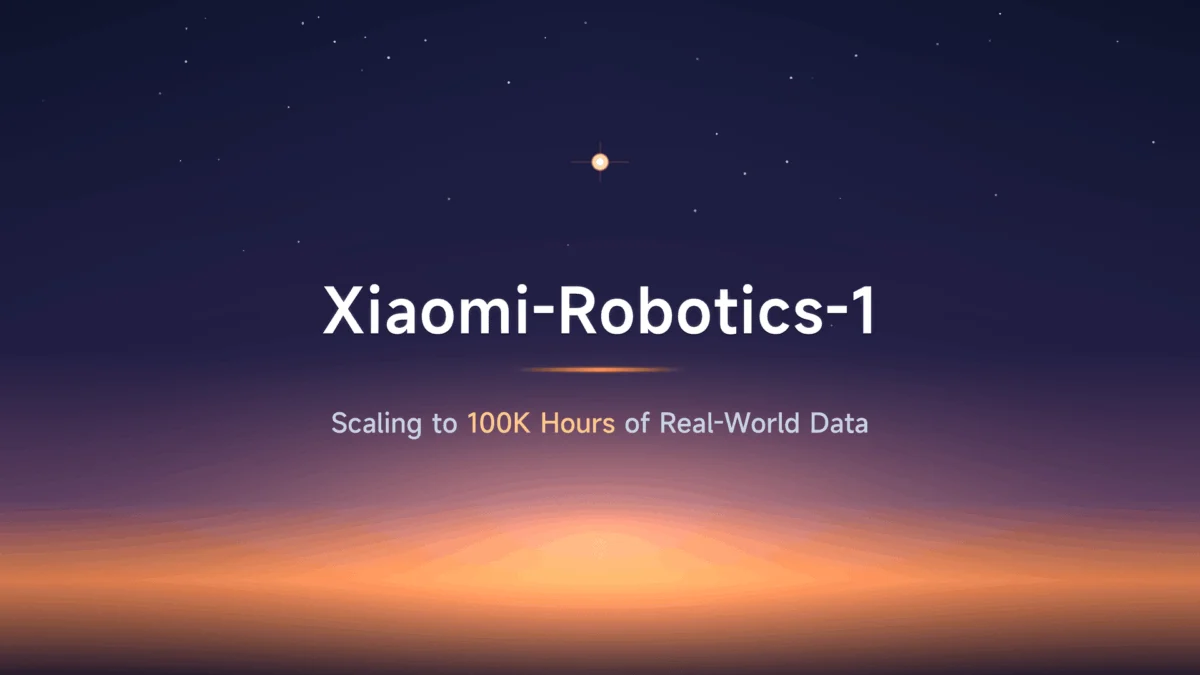
Xiaomi, the global technology giant renowned for its consumer electronics, has officially open-sourced its groundbreaking embodied artificial intelligence foundation model, Xiaomi-Robotics-1. The announcement, made by the company’s technology account on August 5, 2023, marks a significant milestone in the advancement and democratization of robotics and AI research. This comprehensive release encompasses the entire developmental pipeline, from the intricate real-robot post-training procedures to the ultimate model deployment, and crucially, includes the requisite code for related benchmark evaluations. This strategic move is poised to accelerate innovation within the embodied AI community, inviting global developers and researchers to collaborate on the next generation of intelligent robotic systems.
The Dawn of Embodied AI: Understanding Xiaomi-Robotics-1
Embodied AI represents a paradigm shift in artificial intelligence, moving beyond purely digital intelligence to systems that can perceive, understand, and interact with the physical world through a physical body, such as a robot. Unlike traditional AI, which often operates in simulated or abstract environments, embodied AI focuses on practical application in real-world scenarios, enabling robots to perform complex tasks, adapt to dynamic environments, and learn from physical interactions.
Xiaomi-Robotics-1 is positioned as an "out-of-the-box" embodied-AI foundation model, a term highlighting its readiness for immediate application and its comprehensive nature. Foundation models are large AI models trained on vast quantities of data, capable of adapting to a wide range of downstream tasks. In the context of embodied AI, this means Xiaomi-Robotics-1 is designed to provide a robust base for developing robots capable of various manipulation, navigation, and human-robot interaction tasks without requiring extensive retraining for each specific application.
The model’s impressive capabilities stem from its intensive training regimen. Xiaomi-Robotics-1 was initially pretrained on over 100,000 hours of UMI (Unstructured Multimodal Interaction) data. UMI data typically involves observations from diverse robot interactions with objects and environments, captured through various sensory modalities like vision, touch, and proprioception. This allows the model to develop a broad understanding of physical properties, object affordances, and interaction dynamics. Following this extensive pretraining, the model underwent further refinement through post-training on more than 10,000 hours of cross-embodiment data. Cross-embodiment training is critical for a foundation model, as it enables the AI to generalize learned skills across different robotic platforms or "embodiments," making the model highly versatile and reducing the need for platform-specific training from scratch. This unique approach allows Xiaomi-Robotics-1 to potentially power a diverse array of robotic systems, from humanoid robots to industrial manipulators, fostering a new era of adaptable and intelligent machines.
A Strategic Chronology: Xiaomi’s Journey into Robotics
Xiaomi’s foray into robotics is not a recent development but rather the culmination of years of strategic investment and research in advanced technologies. The company, primarily known for its smartphones and smart home devices, began signaling its serious intentions in the robotics space several years ago, aligning with its broader "AIoT" (AI + Internet of Things) strategy aimed at creating a seamlessly connected smart ecosystem.
A significant milestone in Xiaomi’s robotics journey was the introduction of the CyberDog in August 2021. This quadruped robot, reminiscent of Boston Dynamics’ Spot, showcased Xiaomi’s engineering prowess in complex robotic locomotion and control. While primarily a developer-focused platform, CyberDog demonstrated the company’s ambition to push the boundaries of robotic hardware and software.
Building on this momentum, Xiaomi unveiled CyberOne, a full-size humanoid robot, in August 2022. CyberOne was a far more ambitious project, featuring advanced bipedal locomotion, sophisticated vision systems, and the ability to detect human emotions. This project served as a public demonstration of Xiaomi’s capabilities in developing highly integrated, complex robotic systems, laying crucial groundwork for the AI models that would power such machines. The development of CyberOne likely served as a critical testbed and data generation source for the underlying AI, including the foundational principles that would eventually lead to Xiaomi-Robotics-1.
The initial introduction of Xiaomi-Robotics-1 itself occurred in July 2023, preceding the open-source announcement. At that time, Xiaomi highlighted its potential as an "out-of-the-box" solution, emphasizing its comprehensive nature and immediate utility for developers. This phased release strategy — first introducing the model’s concept and then making it publicly available — allowed Xiaomi to build anticipation and prepare the necessary infrastructure for a large-scale open-source initiative. The August 5, 2023, open-sourcing event, therefore, represents the public fulfillment of this strategic vision, making the underlying technology accessible to a global community.
Behind the Data: The Scale and Scope of Training
The effectiveness of any foundation model is intrinsically linked to the quantity and quality of its training data. Xiaomi-Robotics-1’s training regimen is particularly noteworthy for its sheer scale and the specialized nature of the data used. The more than 100,000 hours of UMI data represents an immense dataset of robot-environment interactions. To put this into perspective, 100,000 hours is equivalent to over 11 years of continuous operation. This vast repository would encompass millions of individual movements, object manipulations, sensory inputs (visual, tactile, auditory), and corresponding robot actions. Such diverse data allows the model to learn a generalized understanding of physics, object properties, and effective manipulation strategies, enabling it to perform tasks ranging from picking up delicate objects to operating tools in complex environments.
The subsequent post-training on over 10,000 hours of cross-embodiment data further refines the model’s generalizability. Cross-embodiment training is a cutting-edge technique where a model learns skills from one type of robot (e.g., a robotic arm) and applies them to another (e.g., a humanoid hand or a mobile manipulator). This is achieved by abstracting the core task and motion principles from the specific robotic hardware, allowing the AI to transfer knowledge effectively. For instance, a skill learned by a robotic arm to grasp a mug could be adapted by a humanoid robot to perform the same task, even if their kinematic structures and end-effectors are different. This capability is paramount for creating truly versatile foundation models that can drive a multitude of robotic applications without requiring extensive, redundant training for each new robot design. The combination of massive UMI data and sophisticated cross-embodiment learning positions Xiaomi-Robotics-1 as a highly adaptable and robust solution for future robotic systems.
The Rationale for Open-Sourcing: Democratizing Robotics
Xiaomi’s decision to open-source Xiaomi-Robotics-1 is a strategic move with far-reaching implications, echoing similar initiatives by other tech giants in the broader AI landscape. There are several compelling reasons why a company of Xiaomi’s stature would choose to make such a valuable asset publicly available.
Firstly, open-sourcing fosters a vibrant ecosystem around the technology. By providing access to the model, code, and evaluation benchmarks, Xiaomi invites researchers, developers, and startups worldwide to experiment with, improve upon, and build new applications on top of Xiaomi-Robotics-1. This collaborative approach can significantly accelerate the pace of innovation, leading to unforeseen advancements and applications that Xiaomi’s internal teams alone might not discover. This strategy has been proven effective in other AI domains, where open-source frameworks like TensorFlow and PyTorch have become industry standards, benefiting their creators through widespread adoption and community contributions.
Secondly, it enhances Xiaomi’s brand image as a leader in cutting-edge AI and robotics research. By democratizing access to advanced embodied AI, Xiaomi positions itself as a benevolent force driving technological progress, attracting top talent and strengthening its reputation within the global scientific and engineering communities. This can translate into recruitment advantages, as researchers are often drawn to organizations that contribute significantly to the open-source movement.
Thirdly, open-sourcing can indirectly benefit Xiaomi’s commercial interests. While the core model is open, the company can still develop proprietary applications, hardware, or services that leverage Xiaomi-Robotics-1. A thriving ecosystem built around their model means more potential customers for their robotics hardware, cloud services, or specialized AI solutions. For example, if Xiaomi’s future robotic products are designed to be optimally compatible with Xiaomi-Robotics-1, the widespread adoption of the model could drive demand for their hardware.
Finally, open-sourcing contributes to standardisation within the nascent field of embodied AI. By providing a comprehensive framework, Xiaomi-Robotics-1 could become a de facto standard for researchers and developers, much like ROS (Robot Operating System) has become a standard for robot software development. This reduces fragmentation, encourages interoperability, and simplifies the development process for everyone involved.
Industry Reactions and Expert Perspectives
While official statements from competing companies are typically guarded, industry analysts have quickly recognized the significance of Xiaomi’s move. "This open-source release from Xiaomi is a powerful statement of intent," commented Dr. Lena Chen, a lead robotics analyst at TechPulse Insights. "It positions them not just as a hardware manufacturer, but as a key player in the foundational AI research that will drive the next generation of robotics. The inclusion of full deployment processes and benchmark code is particularly valuable for accelerating practical development."
From Xiaomi’s perspective, this initiative aligns with a broader vision articulated by company executives in various forums. While direct quotes on this specific open-sourcing event are yet to be widely published, Xiaomi’s leadership, including CEO Lei Jun, has consistently emphasized the company’s commitment to technological innovation and making advanced technology accessible to a wider audience. The open-sourcing of Xiaomi-Robotics-1 is a concrete manifestation of this philosophy, aiming to "lower the barrier to entry" for advanced robotics development and foster a collaborative environment.
The developer community has also reacted positively, as evidenced by initial discussions on platforms like GitHub and Hugging Face, where the project links have been made available. Early comments highlight the excitement around having access to a pre-trained, cross-embodiment capable model, which can significantly reduce the computational and data requirements for individual researchers and smaller teams. "This is huge for anyone working on robot manipulation and generalization," remarked a developer on a popular AI forum. "Getting access to a model trained on such vast UMI and cross-embodiment data is a game-changer for pushing beyond simulated environments."
Broader Implications and Future Trajectories
The open-sourcing of Xiaomi-Robotics-1 carries profound implications for the future of robotics, AI development, and Xiaomi’s competitive standing.
For the robotics industry, this release could act as a powerful catalyst. By providing a robust, accessible foundation model, Xiaomi is effectively democratizing advanced robotic capabilities. This could lead to an explosion of new applications in diverse sectors. In manufacturing, robots equipped with such models could perform more complex assembly tasks, adapt to product variations, and operate alongside humans more intuitively. In logistics, they could revolutionize warehousing and delivery systems, handling intricate packaging and dynamic environments. The healthcare sector could see advancements in assistive robotics, with machines capable of more nuanced interaction and care. Furthermore, domestic robotics, already a growing market, could witness a leap in sophistication, enabling robots to perform a wider array of household chores and interact more naturally within home environments.
For AI development, Xiaomi-Robotics-1 contributes significantly to the trend of large, multimodal foundation models that are proving effective across various domains. Its focus on embodied intelligence pushes the boundaries of how AI interacts with the physical world, moving beyond textual or visual understanding to practical physical agency. The open-source nature means that researchers globally can scrutinize, improve, and extend the model, potentially leading to breakthroughs in areas like reinforcement learning for robotics, real-time adaptation, and even ethical AI development in physical systems.
For Xiaomi, the strategic benefits are multifaceted. Beyond brand enhancement and talent attraction, this move positions them as a thought leader in a critical emerging technology. While companies like Google (with RT-X) and OpenAI are also making strides in embodied AI, Xiaomi’s comprehensive open-source release, including full deployment and evaluation code, offers a distinct advantage in fostering community adoption. This could translate into a strong competitive edge in the long run, as the company that sets the standards and cultivates the largest ecosystem often reaps the greatest rewards. Moreover, insights gained from community contributions and usage data could feed back into Xiaomi’s proprietary research and product development, creating a virtuous cycle of innovation.
Challenges and Opportunities in Open-Source Robotics
While the opportunities presented by open-sourcing Xiaomi-Robotics-1 are immense, there are also inherent challenges. Maintaining a large open-source project requires significant ongoing resources for support, documentation, bug fixes, and community management. Ensuring the ethical and safe deployment of advanced embodied AI is paramount; unintended consequences, biases, or safety risks must be carefully managed, especially as the technology becomes more accessible. Xiaomi will likely need to establish clear guidelines and a robust governance framework for the community.
However, these challenges are outweighed by the potential. The collaborative nature of open-source development means that the responsibility for addressing these issues can be shared across a global community of experts. The transparency inherent in open-source also allows for greater scrutiny, which can ultimately lead to more robust, secure, and ethically sound AI systems.
In conclusion, Xiaomi’s open-sourcing of Xiaomi-Robotics-1 is a landmark event that underscores the accelerating pace of innovation in embodied AI and robotics. By providing the tools for advanced robotic intelligence to a global audience, Xiaomi is not only solidifying its position at the forefront of technological development but also laying the groundwork for a future where intelligent robots play an increasingly integral role in every aspect of our lives. The links to the project website, GitHub repository, and Hugging Face page provided by Xiaomi are now gateways for researchers and developers to embark on this exciting journey, promising a transformative impact on the landscape of artificial intelligence and robotics for years to come.


 Evan Lee Salim
 Nila Kartika Wati