 Jia Lissa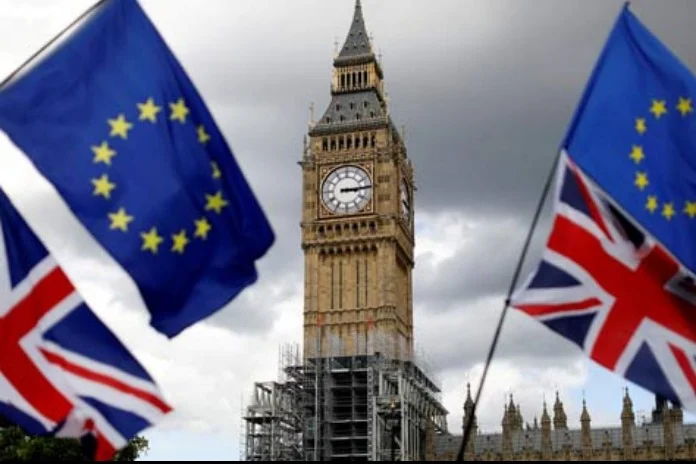
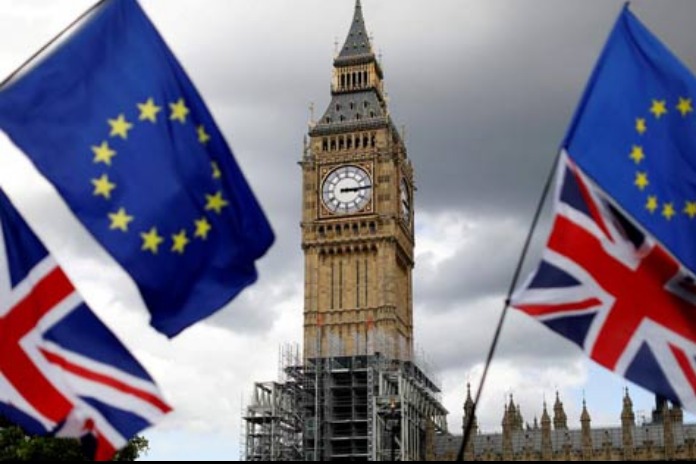
Brexit Secretary David Davis asserted on Sunday that the likelihood of the United Kingdom departing the European Union without a trade agreement has significantly diminished, following a pivotal agreement reached in Brussels on Friday. This development, according to Davis, signals a crucial step forward in the protracted Brexit negotiations, paving the way for more substantive discussions on the future relationship between the UK and the EU. The sentiment expressed by Davis suggests a growing optimism within the British government that a comprehensive trade deal could be finalized within the next twelve months.
Landmark Progress in Brussels Paves Way for Future Negotiations
The agreement hammered out in Brussels represents a critical breakthrough, enabling the European Council to formally consent to opening talks on the UK’s post-Brexit relationship. This accord, described by Prime Minister Theresa May as a statement of intent rather than a legally binding document, was essential for unlocking the next phase of negotiations. Without this progress, EU Commission President Jean-Claude Juncker would not have been in a position to recommend the advancement of discussions, a move that has been eagerly anticipated by both sides. The agreement addresses key areas such as citizens’ rights, the financial settlement for the UK’s departure, and, crucially, the border arrangements for Northern Ireland.
Ambitions for a "Canada Plus Plus Plus" Trade Deal
Central to the UK’s vision for its future economic relationship with the EU is the pursuit of a free-trade agreement that eliminates tariffs. David Davis articulated this ambition by referencing a "Canada plus plus plus" deal. This conceptual framework draws inspiration from the comprehensive free trade agreement between Canada and the EU, known as CETA. However, Davis intends for the UK’s proposed agreement to go further, crucially including financial services within the tariff-free zone. This inclusion is deemed paramount for safeguarding one of Britain’s most lucrative sectors, particularly the City of London, a global financial hub, and its associated multi-billion-dollar banking cluster. The economic significance of these sectors to the UK cannot be overstated, contributing substantially to the nation’s Gross Domestic Product (GDP) and employment.

Davis elaborated on this bespoke approach, stating, "We’ll probably start with the best of Canada, and the best of Japan and the best of South Korea and then add to that the bits that are missing which is the services." This suggests a strategy of cherry-picking the most advantageous elements from existing trade agreements and integrating them with specific UK requirements, particularly concerning the vital services sector. The aim is to create a uniquely tailored arrangement that maximizes economic benefits for Britain while respecting the complexities of its departure from the EU.
The Border Conundrum: Northern Ireland’s Unique Challenge
A particularly sensitive and complex aspect of the Brexit negotiations has been the border between Northern Ireland and the Republic of Ireland. Britain has reiterated its commitment to maintaining a frictionless and invisible border, a principle that has been a cornerstone of the Good Friday Agreement, which brought an end to decades of conflict in Northern Ireland. Davis assured that a solution would be found to achieve this objective, even in the event of a "no deal" Brexit scenario. This commitment underscores the UK’s recognition of the delicate political and economic balance in the region and its determination to avoid any measures that could jeopardize peace and stability. The potential for a hard border has been a significant concern for businesses operating across the island of Ireland, as well as for political parties on both sides of the Irish Sea.

Opposition’s Perspective: A Call for Partnership
The main opposition Labour Party, through its Brexit spokesman Keir Starmer, has also weighed in on the unfolding negotiations. Starmer expressed a desire for a partnership with the EU that would preserve the benefits of both the European single market and the customs union. This stance suggests that Labour advocates for a closer economic relationship with the EU than the current Conservative government, aiming to mitigate the economic disruption associated with a complete departure from these integrated economic structures. The differing approaches between the government and the opposition highlight the ongoing debate within the UK about the optimal future relationship with its European neighbors.
The Path Forward: Cabinet Discussions and Financial Commitments
Prime Minister Theresa May is expected to convene a formal meeting of her cabinet in the coming days to deliberate on the progress of the Brexit talks. This meeting will be crucial for consolidating the government’s position and outlining the next steps in the negotiation process. The UK has already agreed to a divorce settlement of approximately 39 billion pounds (equivalent to 52.2 billion U.S. dollars). However, this financial commitment is contingent upon the successful agreement of a future trade deal between the UK and the EU. This linkage underscores the interconnectedness of the withdrawal agreement and the future economic partnership, with both elements needing to be resolved for a definitive conclusion to the Brexit process.

Supporting Data and Context
The Brexit referendum, held on June 23, 2016, saw 51.9% of voters choose to leave the European Union. The subsequent negotiations, which commenced in March 2017, have been characterized by their complexity and the significant divergence of views on key issues. The UK’s departure from the EU, commonly referred to as Brexit, is scheduled to officially take place on March 29, 2019. The economic implications of Brexit are a subject of ongoing debate and analysis, with various forecasts predicting different impacts on trade, investment, and economic growth. For instance, the Bank of England has, at various points, projected that Brexit could lead to a reduction in UK GDP compared to remaining in the EU. The nature of the future trade deal will undoubtedly play a significant role in shaping these economic outcomes.
The UK’s trade with the EU is substantial, with the EU being the UK’s largest trading partner. In 2016, the value of goods and services traded between the UK and the EU amounted to approximately £528 billion, according to the Office for National Statistics. Disruptions to this trade, such as the introduction of tariffs or non-tariff barriers, could have considerable economic repercussions. The pursuit of a comprehensive free trade agreement aims to minimize these disruptions and preserve the economic ties that have been built over decades.

The "Canada plus plus plus" aspiration reflects a desire for a deep and comprehensive trade agreement, potentially surpassing the scope of many existing bilateral trade deals. CETA, for example, eliminated 98% of tariffs between Canada and the EU. However, it does not fully encompass financial services, which are a key component of the UK’s economy and a priority for the British government in its post-Brexit trade arrangements. The inclusion of financial services in a tariff-free framework would be a significant achievement and could help to mitigate potential negative impacts on the City of London.
Broader Impact and Implications
The successful negotiation of a trade deal within a year would provide much-needed clarity and stability for businesses operating in the UK and the EU. It would allow companies to make informed decisions about investment, supply chains, and market access. Conversely, a failure to reach an agreement, or a prolonged period of uncertainty, could lead to increased economic volatility and hinder business confidence. The implications of the UK’s future relationship with the EU extend beyond trade, encompassing areas such as security cooperation, research and development, and international diplomacy.

The statements made by David Davis on Sunday represent a positive signal in what has been a challenging and often contentious negotiation process. The progress achieved in Brussels, while not a final resolution, has undeniably shifted the dynamics of the talks and increased the possibility of a mutually beneficial trade agreement. The coming months will be crucial in determining the ultimate shape of the UK’s future relationship with the European Union and its place in the global economy. The commitment to finding solutions for the Northern Ireland border, coupled with the ambition for a robust trade deal, suggests a pragmatic approach from the UK government as it navigates this historic transition.


 Nana Wu
 Suro Senen