Iffa Jayyana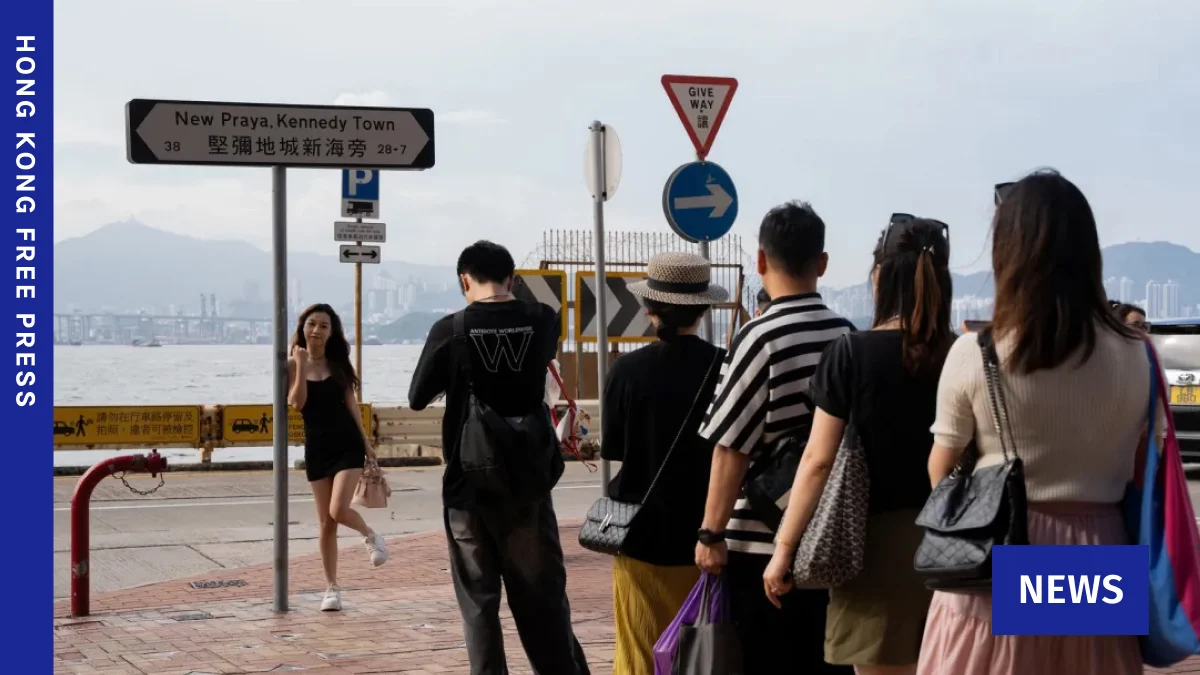
Hong Kong is contemplating granting historic Grade 2 status to a picturesque section of the Kennedy Town waterfront, a move that comes as the area has surged in popularity, particularly among mainland Chinese tourists. The designation would recognize the historical significance of the seawall along New Praya, Kennedy Town, a site that has become a focal point for social media trends and a symbol of a changing urban landscape. The Antiquities Advisory Board is scheduled to deliberate on this proposal, which underscores a growing tension between heritage preservation and the city’s drive for urban development and tourism.
A Seawall with a Century of History
The memorandum from the Antiquities and Monuments Office indicates that the seawall, though not immediately visible from the main street, possesses a history spanning over a century. This lengthy existence positions it as a potential candidate for heritage protection under Hong Kong’s established grading system. The city classifies its historic buildings into three grades: Grade 1 signifies buildings of "outstanding merit, which every effort should be made to preserve if possible"; Grade 2 denotes buildings of "special merit" where "efforts should be made to selectively preserve" them; and Grade 3 identifies buildings of "merit" that are preserved as far as possible. The proposed Grade 2 status for the Kennedy Town seawall suggests a recognition of its historical value and a commitment to its selective preservation, balancing its heritage against potential future developments.

The Antiquities and Monuments Office is expected to make its heritage appraisal of the site available for a one-month public consultation. This period is crucial for gathering diverse perspectives and ensuring that the decision-making process is inclusive, reflecting community sentiment and expert opinions on the seawall’s heritage value.
The Rise of "Check-in Culture" and Social Media Influence
Kennedy Town, once a relatively quiet residential neighborhood on the western edge of Hong Kong Island, has experienced a dramatic transformation in its public profile in recent years. This resurgence is largely attributed to its embrace by mainland Chinese social media platforms, most notably Xiaohongshu (Little Red Book). The platform, akin to a blend of Instagram and Pinterest, serves as a powerful influencer for travel destinations, fashion, and lifestyle trends, particularly among younger demographics in mainland China.
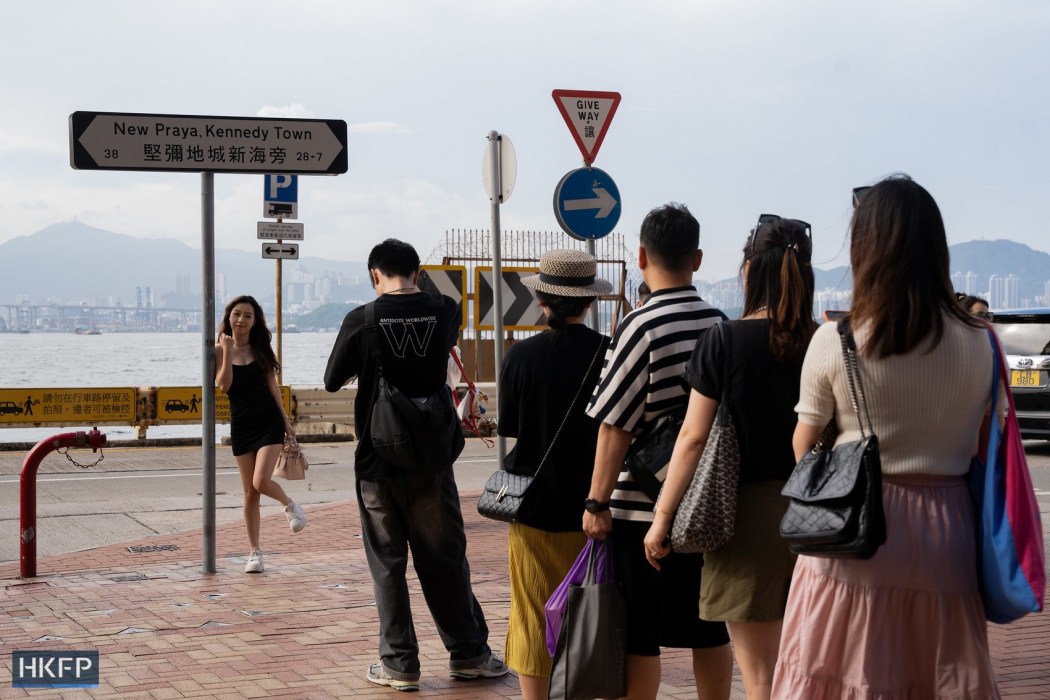
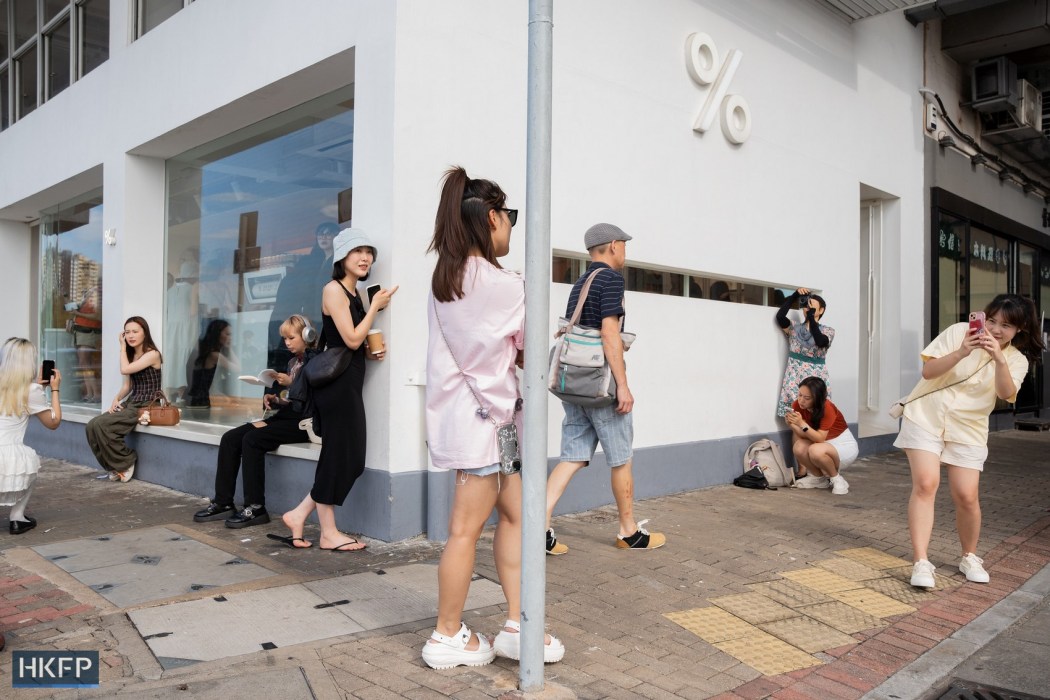
Among the "check-in spots" that have gained traction on Xiaohongshu is a distinct street sign that reads "New Praya, Kennedy Town." This seemingly simple sign, juxtaposed against the backdrop of the sea, has become an iconic photo opportunity for tourists. The practice, often referred to as "check-in culture," involves visitors documenting their experiences at popular locations by taking and sharing photos, thereby contributing to the site’s visibility and allure. This phenomenon has led to queues of tourists patiently waiting to capture their own images with the sign, often seen alongside the popular Japanese coffee chain % Arabica, whose branch is strategically located adjacent to the sign. The coffee shop itself is a significant draw, frequently featured in lifestyle content on Xiaohongshu, further amplifying the area’s appeal.
This surge in popularity, driven by social media trends, has brought a new demographic of visitors to Kennedy Town, impacting local businesses and the general atmosphere of the neighborhood. While this influx can provide economic benefits, it also raises questions about managing visitor numbers and preserving the local character of the area. The consideration of historic status for the seawall can be seen as a response to this increased attention, an attempt to protect a part of the waterfront that has unexpectedly become a cultural touchstone.
Proposed Boardwalk and Potential Reclamation Concerns
In tandem with the heritage assessment, authorities are exploring the development of a detached boardwalk along the New Praya waterfront. This proposed infrastructure aims to "enhance visitors’ experience" while purportedly preserving the scenic views that contribute to the area’s social media appeal. According to development chief Bernadette Linn, the project would necessitate "small-scale reclamation."
The prospect of reclamation, even on a small scale, is a sensitive issue in Hong Kong, particularly in light of recent legislative changes. Last year, the city’s legislature enacted a bill that significantly eased the process for the government to reclaim land in Victoria Harbour. This legislation removed a long-standing rule, established in the 1990s, which required an "overriding public need" to be demonstrated before reclamation projects could proceed. The relaxation of these regulations has sparked concerns among environmental groups and heritage advocates about the future of Hong Kong’s remaining harbor space.
The timing of these discussions is noteworthy. A month after the legislative changes, Bernadette Linn cautioned against potential "soft resistance" to reclamation projects. Shortly thereafter, the Society for the Protection of the Harbour, an organization that had spent decades advocating for the preservation of the harbor’s waters, unanimously voted to disband. This decision was widely interpreted as a consequence of the changing legal landscape and the perceived diminished power of public advocacy in the face of government development priorities. The proposed boardwalk in Kennedy Town, while seemingly a modest development, is situated within this broader context of intensified land reclamation efforts in Hong Kong.
Historical Context and Urban Development in Hong Kong
Hong Kong’s relationship with its waterfronts and its approach to urban development have evolved significantly over its history. From its origins as a colonial trading post, the city has undergone rapid industrialization and urbanization, often at the expense of its natural landscapes. Reclamation has been a consistent feature of Hong Kong’s development, driven by the need for land for housing, infrastructure, and economic expansion in a territory with limited usable land.
The Victoria Harbour, once a bustling center of maritime trade and a symbol of the city’s prosperity, has been progressively narrowed by reclamation projects. While these projects have facilitated economic growth, they have also led to the loss of iconic views and raised environmental concerns. The recent legislative changes represent a significant shift in policy, signaling a government prioritization of development, particularly land reclamation, as a means to address land scarcity and economic needs.

The Kennedy Town waterfront, with its blend of historical elements and newfound social media prominence, presents a microcosm of these larger debates. The consideration of historic status for the seawall acknowledges the past, while the proposed boardwalk and the implicit possibility of future development reflect the city’s forward-looking, albeit sometimes controversial, urban planning agenda.
Supporting Data and Potential Implications
The popularity of Kennedy Town among mainland tourists can be partially quantified by the growth of social media engagement. While specific data on visitor numbers to the "New Praya, Kennedy Town" sign are not publicly available, the sheer volume of user-generated content on platforms like Xiaohongshu serves as an indicator of its appeal. Trends observed on such platforms often precede and influence actual tourist flows. For instance, a viral trend can lead to a significant uptick in visitors within weeks.
The decision to grant historic status to the seawall will have several implications:

- Preservation Mandate: Grade 2 status imposes restrictions on alterations or demolition. Any future development in the vicinity would need to consider the protected status of the seawall, potentially influencing design and scope.
- Heritage Tourism: Formal recognition can enhance the area’s appeal as a heritage tourism destination, attracting visitors interested in Hong Kong’s history and evolving urban fabric.
- Community Engagement: The public consultation period is vital. It provides an opportunity for residents, heritage experts, and other stakeholders to voice their opinions, potentially shaping the final outcome and fostering a sense of ownership over the area’s future.
- Balancing Development and Preservation: The case highlights the ongoing challenge Hong Kong faces in balancing its relentless pursuit of development and land supply with the imperative to preserve its finite historical and natural heritage.
The proposed boardwalk project, which may involve reclamation, introduces another layer of complexity. If approved, it would represent a tangible example of how the new land reclamation policies are being applied. The visual impact of such a boardwalk on the existing seascape and its interaction with the potentially preserved seawall will be a key point of public interest and debate during the consultation phases.
Official Responses and Broader Impact
While the primary source material focuses on the Antiquities Advisory Board’s consideration and the proposed boardwalk, it’s reasonable to infer potential official responses and the broader impact of these decisions. Government bodies like the Development Bureau and the Harbourfront Commission would be central to the planning and execution of any waterfront development. Their statements often emphasize the need for enhancing public spaces and promoting tourism.
The "enhancement of visitors’ experience" cited in relation to the boardwalk suggests a strategic effort to capitalize on the growing tourism sector. This aligns with broader economic goals for Hong Kong, which has sought to diversify its economy and attract visitors post-pandemic. The popularity of Kennedy Town, driven by social media, presents an opportunity to leverage existing trends for economic benefit.

However, the broader impact extends beyond economic considerations. The decision to protect the seawall, even at Grade 2, signals a recognition, however belated, of the value of the city’s tangible history. It also occurs within a context where public discourse on heritage and urban development is increasingly polarized. The disbandment of the Society for the Protection of the Harbour suggests a growing sense of powerlessness among advocacy groups, which could lead to a more muted public response to future development proposals.
The situation in Kennedy Town is indicative of a wider urban narrative in Hong Kong: a constant negotiation between the forces of rapid development and the desire to retain elements of the city’s past. As the Antiquities Advisory Board deliberates and public consultations commence, the outcome will offer further insights into Hong Kong’s evolving approach to heritage conservation in the face of relentless urban expansion and the powerful influence of digital culture. The future of this popular waterfront will depend on how effectively the city can integrate its historical narrative with its contemporary aspirations for growth and public enjoyment.

 Reynand Wu
 Siti Muinah