
 Azzam Bilal Chamdy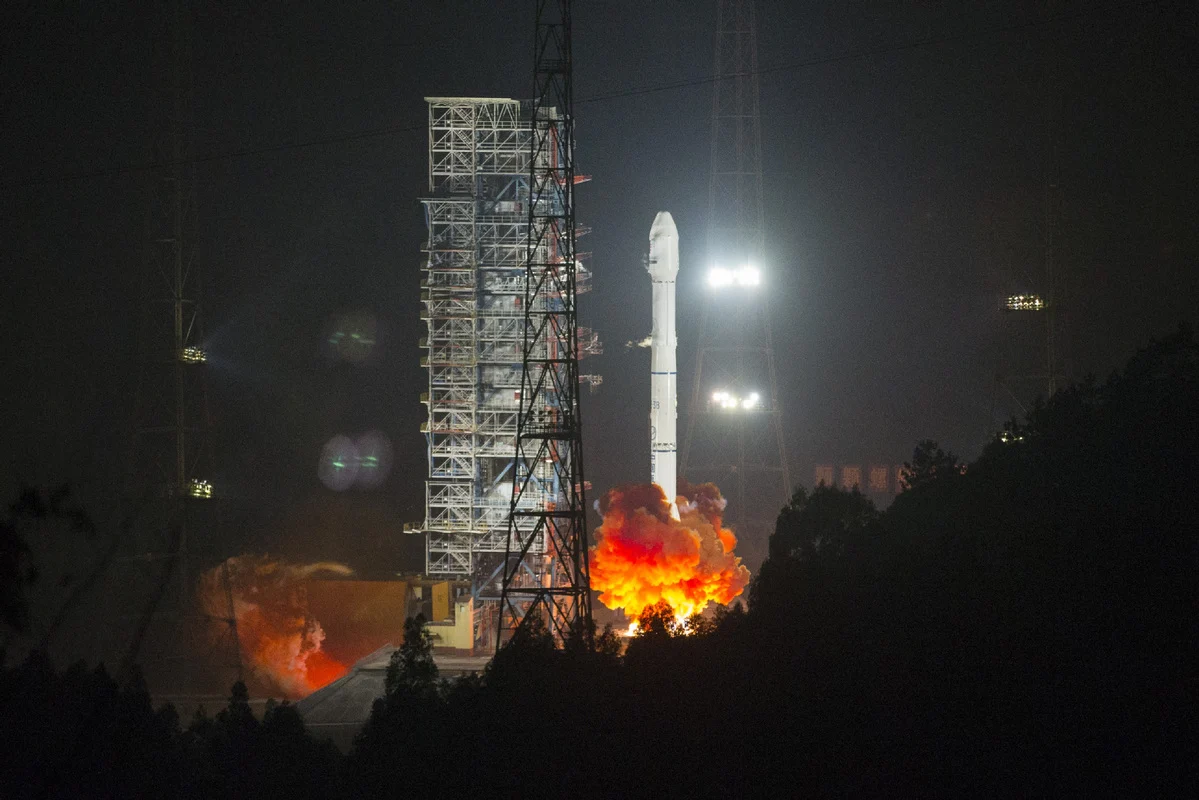
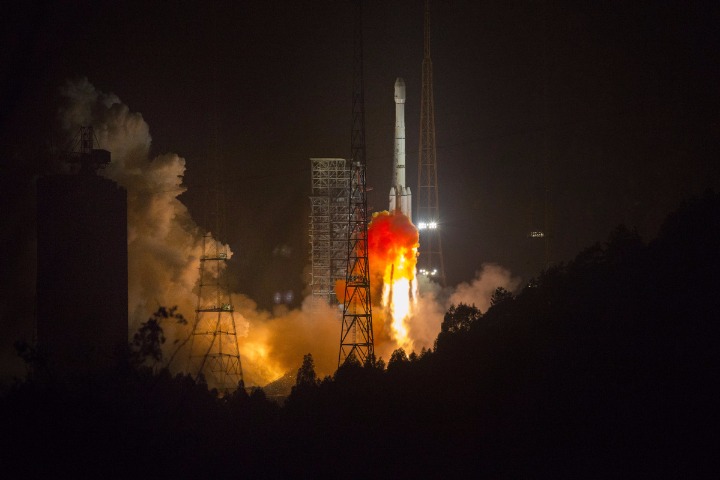
The successful launch of Algeria’s first communication satellite, Alcomsat-1, from the Xichang Satellite Launch Center in China’s southwestern Sichuan province on Monday, December 11, 2017, at 00:40 Beijing time, represents a significant advancement in space cooperation between the two nations. This mission, carried out by a Chinese Long March-3B carrier rocket, marks the 258th successful flight for the venerable Long March rocket family and underscores China’s growing capabilities in providing sophisticated satellite services to international partners. The Alcomsat-1 satellite is poised to revolutionize communication infrastructure in Algeria, impacting a wide array of sectors from broadcasting and emergency services to education and governance.
A New Era of Connectivity for Algeria
The Alcomsat-1 satellite, a state-of-the-art geostationary communication satellite, is designed to serve a multitude of critical functions for Algeria. Its deployment is expected to significantly enhance the country’s capabilities in:
- Broadcast and Television: Expanding access to high-quality television and radio services across Algeria, including remote and underserved regions. This will likely foster greater cultural exchange and information dissemination.
- Emergency Communication: Providing a reliable and robust communication network for disaster relief and emergency response efforts. In situations where terrestrial infrastructure may be compromised, satellite communication becomes indispensable for coordinating rescue operations and disseminating vital information.
- Distance Education: Facilitating the expansion of e-learning initiatives, allowing students in geographically dispersed areas to access educational resources and participate in remote learning programs. This is crucial for improving educational equity and accessibility.
- E-governance: Enabling the development and implementation of digital government services, making administrative processes more efficient and accessible to citizens. This can lead to improved public services and greater transparency.
- Enterprise Communication: Offering enhanced connectivity solutions for businesses, supporting operations, data transfer, and collaboration across the nation. This is vital for economic growth and competitiveness.
- Broadband Access: Significantly improving broadband internet penetration, bringing faster and more reliable internet services to a larger portion of the Algerian population, thereby bridging the digital divide.
- Satellite-based Navigation: While not the primary function, the satellite’s infrastructure can potentially contribute to enhanced navigation services, supporting transportation and logistics.
This comprehensive suite of applications highlights the strategic importance of Alcomsat-1 in Algeria’s national development agenda, aiming to leverage space technology for socio-economic progress.
The Genesis of a Landmark Partnership
The Alcomsat-1 project is more than just a satellite launch; it is the culmination of a sustained and deepening collaboration between China and Algeria in the aerospace sector. This initiative represents the first cooperative project in the aerospace industry between the two nations, laying a robust foundation for future endeavors. The partnership signifies a mutual trust and a shared vision for harnessing advanced technologies for national development and regional connectivity.
The development and launch process involved extensive collaboration between Algerian and Chinese aerospace entities. This included the design and manufacturing of the satellite itself, rigorous testing protocols, and the training of Algerian personnel in satellite operations and management. Such a comprehensive approach ensures that Algeria possesses the necessary expertise to fully utilize and maintain its new space asset. This knowledge transfer is a critical component of the partnership, empowering Algeria to build its indigenous capabilities in the long term.
A Chronology of Success
The journey leading to the Alcomsat-1 launch can be traced through a series of key milestones:
- Early Discussions and Agreements: The seeds of this partnership were sown during high-level diplomatic exchanges between China and Algeria, where the potential for cooperation in space technology was identified as a strategic priority.
- Contractual Agreements: Formal agreements were likely signed between the China Aerospace Science and Technology Corporation (CASC) or its subsidiaries and the Algerian Space Agency (ASAL), outlining the scope of the project, technical specifications, and delivery timelines.
- Satellite Design and Manufacturing: Chinese engineers and technicians, in close consultation with their Algerian counterparts, embarked on the complex process of designing and building the Alcomsat-1 satellite. This phase would have involved extensive simulations, component selection, and integration.
- Ground Station Development and Training: Concurrently, Algeria, with Chinese technical assistance, would have been establishing or upgrading its ground control stations to manage the satellite. Crucially, Algerian engineers and technicians would have undergone specialized training programs to operate and monitor the satellite post-launch.
- Pre-Launch Preparations: In the weeks and months leading up to December 11, 2017, the Alcomsat-1 satellite underwent final checks and integration with the Long March-3B rocket at the Xichang Satellite Launch Center. The launch vehicle itself would have undergone its own series of rigorous tests.
- Launch Day: Early on December 11, 2017, the Long March-3B rocket, carrying Alcomsat-1, ignited its engines, lifting off from Xichang. The launch was meticulously monitored, with the satellite successfully reaching its intended geostationary transfer orbit.
- Orbit Raising and Station Keeping: Following the successful launch, the Alcomsat-1 satellite would have undergone a series of orbital maneuvers to reach its final geostationary orbit position above Algeria. This phase requires precise control and continuous monitoring.
- In-Orbit Testing and Commissioning: Once in its operational orbit, the satellite would undergo extensive in-orbit testing to verify the functionality of all its payloads and systems before being declared ready for service.
This phased approach, characterized by meticulous planning and execution, is a testament to the professionalism and dedication of both the Chinese and Algerian space agencies.
Technical Prowess and Launch Vehicle Capabilities
The launch of Alcomsat-1 was entrusted to a Long March-3B carrier rocket, a testament to China’s reliable and powerful launch capabilities. The Long March-3B is a three-stage rocket specifically designed for launching heavy geostationary satellites. Its robust design and proven track record have made it a preferred choice for numerous national and international satellite deployment missions. The fact that this was the 258th mission for the Long March rocket family speaks volumes about its maturity and operational success rate.
The Xichang Satellite Launch Center, located in a remote mountainous region of Sichuan province, is one of China’s primary space launch sites. Its geographical location and advanced infrastructure are optimized for launching geostationary satellites, providing a secure and efficient platform for such critical missions. The precise timing of the launch, 40 minutes after midnight, highlights the careful scheduling and coordination involved in space operations, minimizing potential interference and optimizing launch windows.
Supporting Data and Context
The Alcomsat-1 launch is part of a broader global trend of increasing satellite deployment for communication and broadcasting purposes. According to industry reports from organizations like the Satellite Industry Association (SIA), the global satellite communications market is a significant and growing sector, driven by the demand for broadband internet, mobile connectivity, and advanced broadcasting services. Algeria, like many developing nations, recognizes the transformative potential of satellite technology to overcome geographical barriers and accelerate its socio-economic development.
China’s role in the global satellite launch market has also been steadily increasing. The nation has been actively pursuing collaborations with countries in Asia, Africa, and Latin America, offering cost-effective and reliable launch services, as well as complete satellite solutions. This approach aligns with China’s Belt and Road Initiative, which emphasizes infrastructure development and economic cooperation. The Alcomsat-1 mission exemplifies this strategy, demonstrating China’s commitment to sharing its technological advancements and fostering mutually beneficial partnerships.
Official Responses and Future Outlook
While specific official statements from Algerian and Chinese officials immediately following the launch were not detailed in the provided content, it is highly probable that both sides expressed immense satisfaction and optimism.
Algerian Perspective (Inferred): The Algerian government, through its Ministry of Post, Telecommunications, Information and Information Technologies and the Algerian Space Agency (ASAL), would have hailed the launch as a historic achievement. This would have been framed as a significant step towards achieving national digital transformation goals, enhancing national sovereignty in the telecommunications sector, and improving the quality of life for its citizens. The success would have been attributed to the strong strategic partnership between Algeria and China.
Chinese Perspective (Inferred): China Aerospace Science and Technology Corporation (CASC) and the China National Space Administration (CNSA) would have celebrated the mission as a demonstration of their advanced satellite manufacturing and launch capabilities. This success would have reinforced China’s position as a leading global provider of space solutions and underscored the effectiveness of its international cooperation model. The launch would have been presented as a tangible outcome of friendly bilateral relations.
Looking ahead, the successful deployment of Alcomsat-1 is likely to pave the way for further collaboration. Algeria might consider future satellite projects for Earth observation, scientific research, or even expanded navigation services. For China, this mission serves as a valuable reference for future international partnerships, potentially leading to more complex and ambitious space endeavors. The shared experience in developing and launching Alcomsat-1 will undoubtedly strengthen the technical and diplomatic ties between the two countries, fostering a continued trajectory of innovation and mutual growth in the realm of space exploration and application. The long-term implications of this successful collaboration extend beyond mere technological advancement; they symbolize a growing interconnectedness and a shared aspiration for progress in the 21st century.


 Nana Wu
 Suro Senen