
 Lina Irawan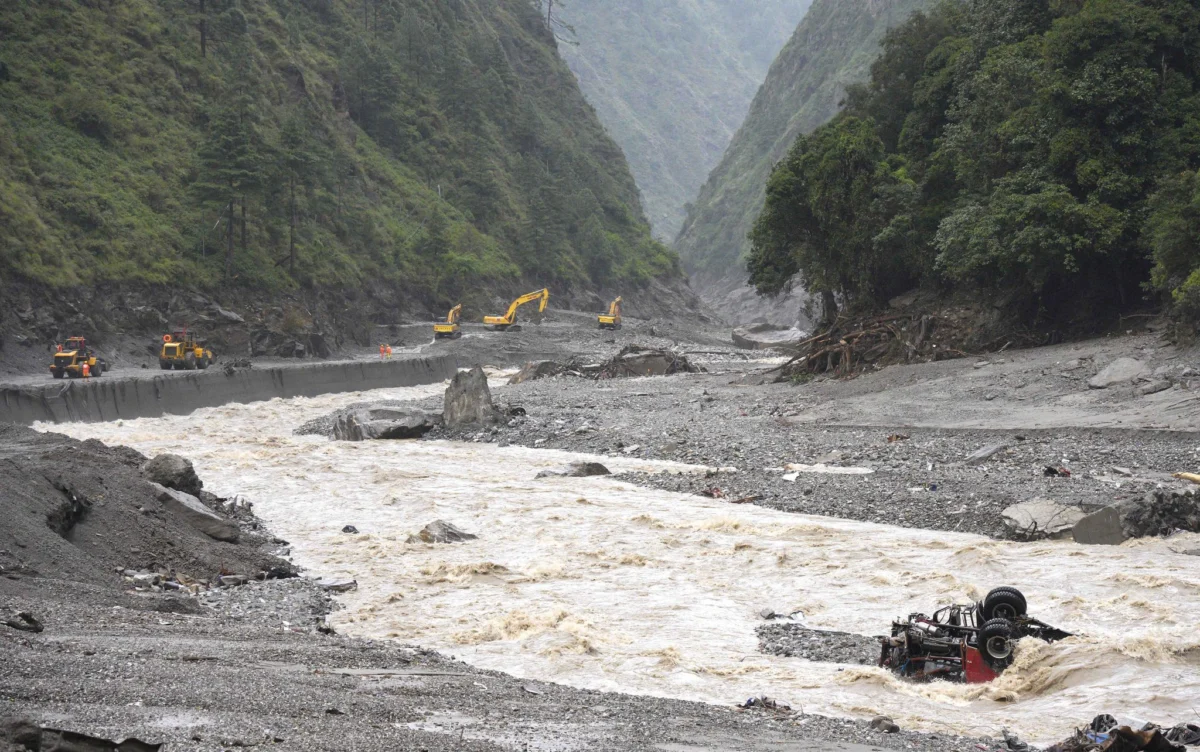
Climate change was a core factor in last month’s deadly glacial mountain collapse on the China-Nepal border that killed more than 1,400 people and left at least 6,600 missing, scientists said Thursday. The catastrophic event, which unleashed a torrent of water, ice, and debris, has underscored the escalating risks posed by a warming planet to vulnerable mountain communities and highlighted the complex interplay between environmental degradation and geological instability.
Scientists from the World Weather Attribution (WWA) group, a collaboration of leading climate researchers, have concluded that the disaster was not the result of a singular extreme weather event, but rather a devastating “compound crisis.” This crisis, they explained, was shaped by a confluence of long-term warming trends, the subsequent retreat of glaciers, the thawing of permafrost, and pre-existing geological vulnerabilities in the region. Their findings provide critical scientific backing to concerns voiced by local authorities and international observers about the direct link between global climate patterns and localized extreme events.
A Cascade of Environmental Stressors

The WWA report details how relentless global warming has fundamentally altered the high-Himalayan environment. Specifically, it has led to a significant rise in the altitude of the freezing threshold. This means that ice and permafrost, which form the very bedrock of these towering mountains, are now being exposed to higher and more prolonged thaw temperatures. This sustained thawing process progressively weakens the structural integrity of mountain slopes, making them increasingly susceptible to catastrophic failure.
The disaster itself occurred on August 26, when a massive section of rock and glacier detached from the Langtang Lirung mountain. The sheer scale of the collapse generated an immense flood of water, ice, and debris that surged downstream with devastating force. This deluge obliterated communities, swept away vital infrastructure, and tragically claimed a significant number of lives and left thousands more unaccounted for. The immediate aftermath saw extensive damage across both Chinese and Nepalese territories, necessitating large-scale rescue and recovery operations.
Irreversible Shifts in a Fragile Ecosystem
Walter Immerzeel, a mountain hydrologist at Utrecht University and a co-author of the WWA report, emphasized the profound and potentially irreversible changes occurring in the region. He described the situation as one of “fundamental, irreversible shifts,” where the continuous retreat of glaciers and the degradation of permafrost are systematically undermining the stability of the mountains.

“We conclude that this was a geologically vulnerable slope, potentially weakened by the 2015 earthquake, but it was destabilised further by glacier retreat and permafrost fall,” Immerzeel stated during a press briefing. This statement points to a complex causal chain, where natural geological susceptibility was exacerbated by human-induced climate change. The 2015 Nepal earthquake, a magnitude 7.8 event, is understood to have potentially pre-weakened the slope, creating fissures and fractures that subsequent thawing could exploit more easily. While its precise role is still being investigated, the earthquake likely acted as a critical precursor to the more recent destabilization.
Nepal’s Vulnerability and Global Responsibility
The disaster has starkly highlighted the disproportionate impact of climate change on nations like Nepal. A largely rural country with a population of approximately 30 million, Nepal contributes a minuscule fraction of global greenhouse gas emissions when compared to industrialized nations. Yet, it finds itself on the front lines of climate change impacts, facing existential threats from rising sea levels, extreme weather events, and the melting of its vital Himalayan glaciers.
The WWA study also provided specific data on recent climatic conditions preceding the collapse. July and August 2026 were recorded as the warmest months locally in the region. Furthermore, heavy snowfall in late 2025 is believed to have contributed to an increased volume of meltwater, which, when combined with the weakened slope, amplified the destructive potential of the eventual glacial detachment. This indicates a complex seasonal interaction contributing to the disaster.

Escalating Death Toll and Missing Persons
The human cost of the disaster has been immense and continues to be a source of profound grief and concern. Nepal’s disaster authority announced on Wednesday a significant upward revision of the number of people considered missing, reaching 6,150 following extensive data collection and verification efforts in the affected districts. As of the latest reports, 1,403 bodies have been retrieved, with 105 of those positively identified.
In China, the disaster also resulted in casualties, with state media reporting 43 deaths and 519 individuals still missing. The combined toll from both nations tragically stands at 1,446 people confirmed dead and at least 6,669 individuals still unaccounted for, a number that may continue to fluctuate as recovery and identification efforts proceed.
Global Implications and Adaptation Challenges

The scale of this disaster has ignited urgent discussions about the limits of adaptation strategies in the face of accelerating climate change. For countries like Nepal, which are already investing heavily in disaster preparedness and mitigation, the increasing frequency and intensity of such events pose a significant challenge to their development and survival.
The economic impact is also substantial. Nepal estimates that the reconstruction bill following the devastating floods triggered by the glacial mountain collapse will amount to a staggering $4.78 billion. This figure underscores the immense financial burden that climate-induced disasters place on developing nations, often diverting resources from essential development programs.
Calls for Action on Loss and Damage
The disaster has intensified calls for global action on the issue of “loss and damage” – the irreversible impacts of climate change that go beyond adaptation. Friederike Otto, a professor of climate science at Imperial College London and another key figure in the WWA study, articulated this sentiment forcefully. “There is no doubt that climate change is one of the drivers, and therefore obviously it needs to be discussed in the context of loss and damage,” she told reporters. Her statement directly links the event to the broader international climate justice agenda, emphasizing the moral and practical imperative for industrialized nations, which are historically responsible for the bulk of greenhouse gas emissions, to support vulnerable countries in addressing these devastating consequences.

The Prime Minister of Nepal, Balendra Shah, is set to address the United Nations General Assembly next week, making his first foreign trip as the nation’s leader. His address is expected to focus on the urgent issue of climate change and its devastating impact on his country, aiming to galvanize international support and action. This high-profile platform provides a critical opportunity for Nepal to articulate its vulnerability and advocate for more robust global climate policies and financial mechanisms to address loss and damage.
A Timeline of the Disaster and its Aftermath
- Late 2025: Heavy snowfall in the region contributes to increased snowpack and potential for greater meltwater accumulation.
- 2015: A magnitude 7.8 earthquake strikes Nepal, potentially weakening the geological structure of slopes in the Himalayas, including the area around Langtang Lirung.
- July-August 2026: These months record exceptionally high temperatures locally, leading to accelerated glacier melt and permafrost thaw in the high Himalayas.
- August 26, 2026: A massive section of rock and glacier detaches from Langtang Lirung mountain, triggering a catastrophic flood of water, ice, and debris.
- August 28, 2026: Workers are seen repairing roads damaged by mudslides in Gyirong County, China, in the aftermath of the disaster.
- September 7, 2026: A man surveys the destruction caused by flash floods in Trishuli, Nepal, a stark visual of the disaster’s reach.
- Early October 2026: Scientists from the World Weather Attribution (WWA) group release their findings, confirming climate change as a core factor in the collapse.
- Mid-October 2026 (specific date not provided in original text, but following WWA report): Nepal’s disaster authority revises upward the number of missing persons to 6,150.
- Following Weeks: Ongoing recovery, identification, and reconstruction efforts commence, with Nepal estimating reconstruction costs at $4.78 billion.
- Upcoming Week (relative to the original publication date): Nepal’s Prime Minister is scheduled to address the UN General Assembly on the issue of climate change and its impact.
Broader Implications for Mountain Regions Worldwide
The Langtang Lirung collapse serves as a chilling harbinger for other mountain regions globally. As temperatures continue to rise, similar events are likely to become more frequent and intense. This poses a direct threat to millions of people living in mountainous areas, as well as to vital water resources that originate from glaciers and snowpack. The interconnectedness of global climate systems means that actions taken—or not taken—by major emitting nations have tangible and often devastating consequences for vulnerable communities thousands of miles away. The scientific consensus linking this disaster to climate change is a clear call for accelerated global mitigation efforts and robust adaptation strategies, particularly for those most at risk. The financial and human toll of such events demands a global commitment to addressing the root causes of climate change and supporting those already bearing its brunt.


 Asep Darmawan
 Lina Hope