 Layla Zulfa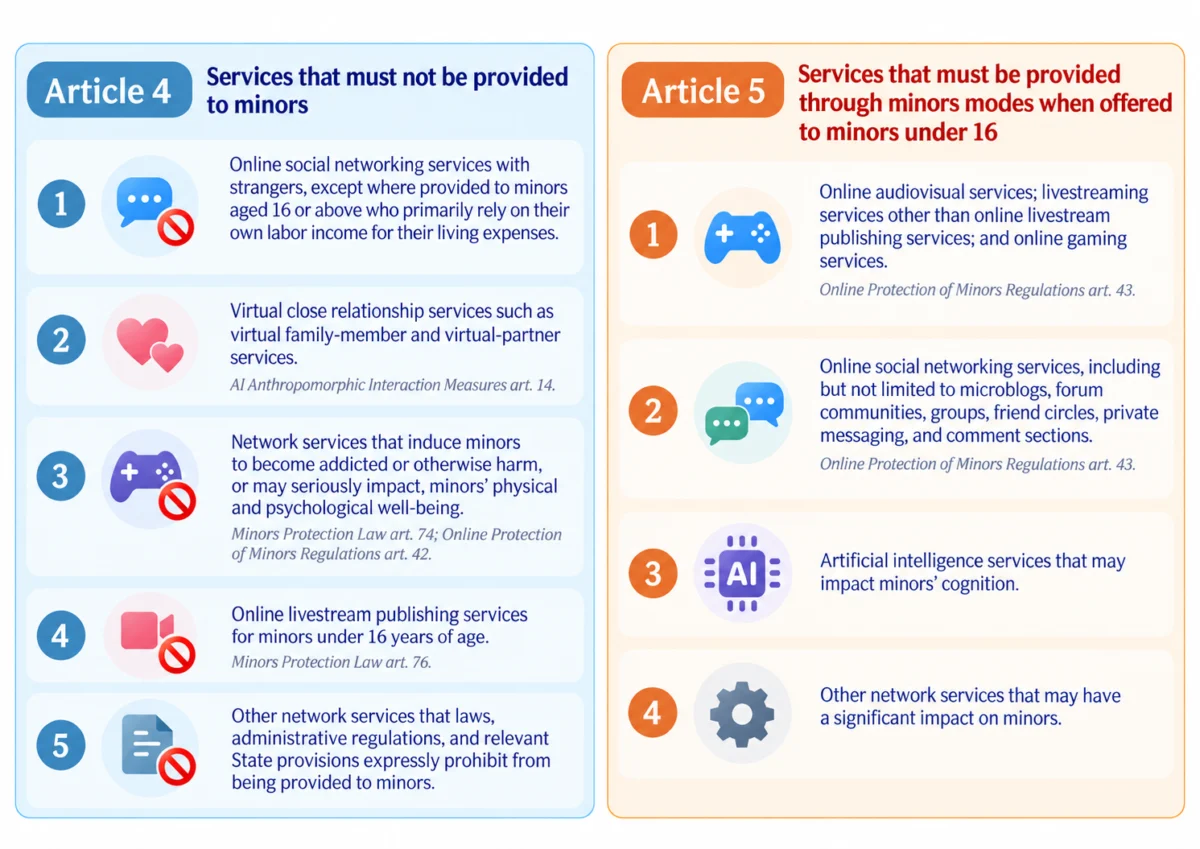
China’s State Council has unveiled a comprehensive new draft authority aimed at consolidating and expanding the nation’s regulatory framework for protecting minors in the digital sphere. This latest legislative volley represents a significant escalation in Beijing’s long-standing campaign to create a "safe and healthy" internet environment for the country’s youngest citizens. By integrating disparate rules from previous years into a unified mandate, the draft provisions signal a shift from voluntary compliance to rigorous, state-monitored enforcement across the entire technology ecosystem, including hardware manufacturers, app stores, and artificial intelligence developers.
The draft provisions arrive at a time when China’s minor internet population has reached unprecedented levels. According to data from the China Internet Network Information Center (CNNIC), as of the most recent reporting periods, the number of internet users under the age of 18 in China has surpassed 191 million, with a penetration rate exceeding 95%. This near-universal connectivity has prompted the government to move beyond simple screen-time limits toward a more sophisticated, "closed-loop" regulatory system that governs content, social interaction, and even the cognitive impact of emerging technologies like generative AI.
Strengthening the Identification of Minor Users
The foundational challenge of any minor protection scheme is the accurate identification of underage users. While many Western nations continue to debate the privacy implications of mandatory age verification, China has already established a robust real-name registration system. However, the State Council acknowledges that these measures have not been a panacea. Minors frequently circumvent restrictions by using adult logins, purchasing "guest mode" credentials on the black market, or utilizing fake identification documents.

Article 6 of the new draft seeks to close these loopholes by offering five illustrative means of identifying minors. These include leveraging national identity databases, utilizing biometric data where appropriate, and requiring platforms to cross-reference user behavior patterns that might suggest a minor is behind an "adult" account. The draft emphasizes that the burden of proof is shifting toward the service provider; if a platform fails to identify a user who is clearly a minor based on behavioral data, the platform may face significant penalties. This "behavioral identification" marks a new frontier in Chinese regulation, potentially requiring platforms to deploy sophisticated algorithms to monitor typing speeds, content preferences, and active hours to flag underage users hiding behind adult profiles.
Structural Prohibitions and the "Stranger Danger" Mandate
At the heart of the new provisions are Articles 4 and 5, which categorize online services into two distinct groups: those strictly prohibited for minors and those accessible only through a "Minors Mode." One of the most significant and debated additions is Article 4(1), which introduces a full prohibition on minors engaging in social networking with strangers.
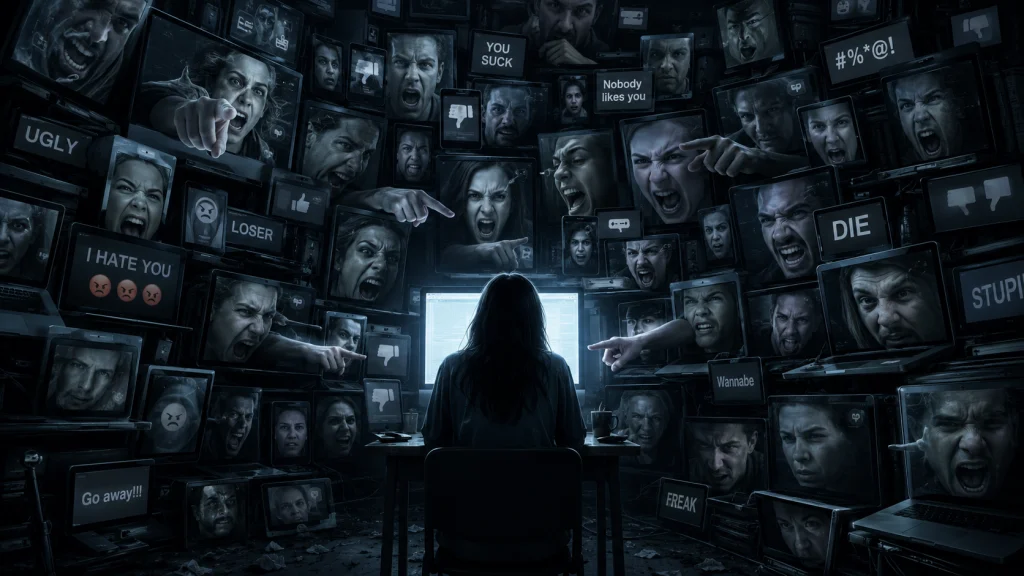
While the term "social networking with strangers" remains legally undefined in the current draft, analysts suggest it targets the growing trend of "blind box" social apps and anonymous chat functions that have become popular among Chinese teens. This rule builds upon the 2023 Regulations on the Protection of Minors Online, which required platforms to provide blocking functions. The new draft goes further by making these restrictions the default, non-negotiable state for any user identified as a minor. The intent is to create a "walled garden" where minors can only interact with verified contacts, such as family members or school peers, thereby mitigating the risks of cyberbullying, grooming, and exposure to inappropriate influence.
The Integration of Artificial Intelligence Safeguards
As generative AI becomes a staple of the digital economy, China is moving proactively to regulate its impact on youth. Article 5(3) of the draft introduces a requirement for "Minors Modes" for any AI service that may impact a minor’s "cognition." This is an expansion of the earlier "Human-like AI Measures," which applied only to chatbots capable of maintaining sustained, emotional relationships.

The inclusion of the phrase "impacting cognition" suggests that regulators are concerned not just with the content AI produces, but with how AI interaction shapes the development, worldviews, and critical thinking skills of young users. Under the new rules, if an AI service is deemed to have a significant cognitive impact, it must automatically switch to a restricted mode when a minor is detected. This mode would likely filter out ideologically sensitive topics, complex social debates, or content that the state deems unsuitable for developmental stages.
A Chronology of Digital Protection for Minors in China
The current draft is the culmination of nearly a decade of incremental regulatory tightening. To understand the significance of the State Council’s latest move, it is essential to view it within the context of China’s regulatory timeline:
- 2019: The National Press and Publication Administration (NPPA) issues the first major restrictions on online gaming for minors, limiting play time and spending.
- 2020: The Law on the Protection of Minors is revised, codifying the concept of "Minors Mode" and placing legal responsibility on internet service providers.
- 2021: The "Three-Hour Rule" is implemented, restricting minors to only one hour of online gaming on Fridays, weekends, and public holidays.
- 2023: The State Council releases the "Regulations on the Protection of Minors Online," providing a clearer legal framework for data protection and preventing cyberbullying.
- 2024: Detailed "Guidelines for the Establishment of Minors’ Modes for the Mobile Internet" are finalized, requiring mutual recognition of restricted modes across apps, operating systems, and app stores.
- Current Draft (2026): The State Council consolidates these rules, adding mandatory reporting requirements, AI-specific protections, and hardware-level compliance.
Technical Requirements and Hardware Enforcement
The draft introduces a "triple-layer" enforcement strategy that involves the device, the app store, and the individual application. Article 12 specifies that the "Minors Mode" is now a prerequisite for smart devices—including smartphones, tablets, and wearable tech—to be granted internet access permits by telecommunications departments. This move effectively turns hardware manufacturers into the first line of defense.
Furthermore, the draft introduces a mandatory recording system. Platforms with a "large number" of minor users or those that possess "significant influence" over the youth demographic must file their Minors Mode implementation plans with provincial or national internet authorities. This filing includes detailed reports on how algorithms are tuned for minors and how data is sequestered. This level of transparency is intended to prevent "super-apps" from bypassing restrictions through complex UI designs or hidden sub-menus.

Duty of Care and Emotional Crisis Intervention
In a notable expansion of the "duty of care," the draft requires service providers to monitor for signs of emotional distress or mental health crises. Under the new rules, if a minor in Minors Mode exhibits behaviors suggesting self-harm, suicidal ideation, or severe psychological distress, the platform is legally obligated to intervene and notify the minor’s guardians or emergency contacts immediately.
This requirement has sparked internal debate regarding the balance between privacy and safety. While intended to prevent tragedies, the implementation requires platforms to engage in high-level sentiment analysis and keyword monitoring of private or semi-private interactions. The draft does not yet specify the exact threshold for "intervention," leaving tech companies to navigate the technical and ethical challenges of distinguishing between typical teenage angst and a genuine psychiatric emergency.
Content Categorization: Harmful vs. PHM
The draft continues to utilize the two-tier content classification system established in earlier regulations:
- Harmful Content: Information that is illegal for all users (e.g., pornography, violence, or anti-state rhetoric) or specifically promotes self-harm among youth.
- PHM (Potentially Harmful to Minors): Content that is not inherently illegal but is deemed unsuitable for children. This includes depictions of "lavish lifestyles," "distorted aesthetics," or "unhealthy celebrity culture."
The draft mandates that PHM content must not be recommended to minors via algorithms, must be clearly labeled with age-appropriateness warnings, and cannot be placed in prominent positions on homepages or trending lists. Critics of this system argue that the definition of PHM remains "troublingly broad," potentially allowing for the censorship of any content that does not align with current social or political norms.

Broader Impact and Industry Implications
The implications of these rules for China’s domestic tech industry are profound. Companies like Tencent, NetEase, and ByteDance (the parent company of Douyin) have already invested billions of yuan into compliance infrastructure. However, the new draft increases the cost of doing business by requiring more frequent reporting and more sophisticated AI monitoring tools.
From a global perspective, China’s approach represents the world’s most aggressive experiment in state-led digital parenting. While some parents in China have welcomed the "one-click" safety of a unified Minors Mode, others express concern that the system diminishes parental agency and replaces it with state-defined standards of upbringing.
Market analysts suggest that these regulations may also impact the competitiveness of Chinese AI firms. By placing strict cognitive boundaries on AI interactions for the youth demographic, regulators may inadvertently limit the data and interaction patterns available for training the next generation of large language models. Conversely, proponents argue that these safeguards will prevent the "brain rot" associated with unregulated short-video consumption and ensure that the digital economy serves the long-term goal of producing "productive and mentally healthy" citizens.
As the draft moves through the final stages of review, the international community continues to watch closely. The success or failure of China’s "closed-loop" minor protection system will likely serve as a blueprint—or a cautionary tale—for other nations grappling with the challenges of raising a generation in an era of ubiquitous, algorithmically-driven media.

 Dwi Wanna
 Siti Muinah