Dwi Wanna
The People’s Republic of China has released a comprehensive draft of the Cyberviolence Law, marking a significant escalation in the state’s efforts to regulate the digital sphere and provide legal recourse for victims of online harassment. The proposed legislation, which spans seven chapters and 60 articles, establishes a rigorous framework for identifying, preventing, and punishing cyberviolence, while placing unprecedented responsibility on internet service providers and social media platforms. By codifying definitions of online abuse and streamlining judicial procedures, the law aims to address a growing social crisis that has, in recent years, led to high-profile tragedies and public outcry across the nation.
Defining the Scope of Digital Abuse
At the heart of the draft law is a formal definition of cyberviolence, categorized as the concentrated or sustained use of the internet to injure the reputation, honor, privacy, or personal information of individuals and organizations. Article 2 explicitly lists prohibited activities, including the publication of insults, rumor-mongering, defamation, and the incitement of hatred. Notably, the law also targets "doxxing"—the illegal publication of personal information—and continuous online intimidation or harassment.
The legislation’s reach is not limited to domestic actors. Article 3 specifies that the law applies to all cyberviolence activities within the mainland territory of the PRC, and crucially, it extends to overseas organizations or individuals who target victims within China. This extraterritorial clause reflects the global nature of digital harassment and the state’s intent to pursue accountability regardless of the perpetrator’s physical location.
A New Mandate for Platform Accountability
One of the most consequential aspects of the draft law is Chapter II, which outlines the obligations of online service providers. Under the proposed regulations, platforms are no longer passive intermediaries but are instead required to act as frontline enforcers. Key mandates include:
- Real-Name Verification: Article 12 reinforces the requirement for users to provide real identity information. Platforms are prohibited from providing information publication or instant messaging services to those who fail to comply.
- AI-Powered Monitoring: Platforms must establish "cyberviolence marker pools" and early-warning models. They are encouraged to use artificial intelligence and big data to identify risks of violence in real-time.
- The "MCN" Clause: In a move targeting the commercialization of online conflict, Article 34 holds Multi-Channel Network (MCN) agencies responsible. If an MCN’s signed influencer engages in cyberviolence, the agency must take corrective action. If the MCN itself organizes the harassment, it faces severe penalties, including being blacklisted or removed from platforms.
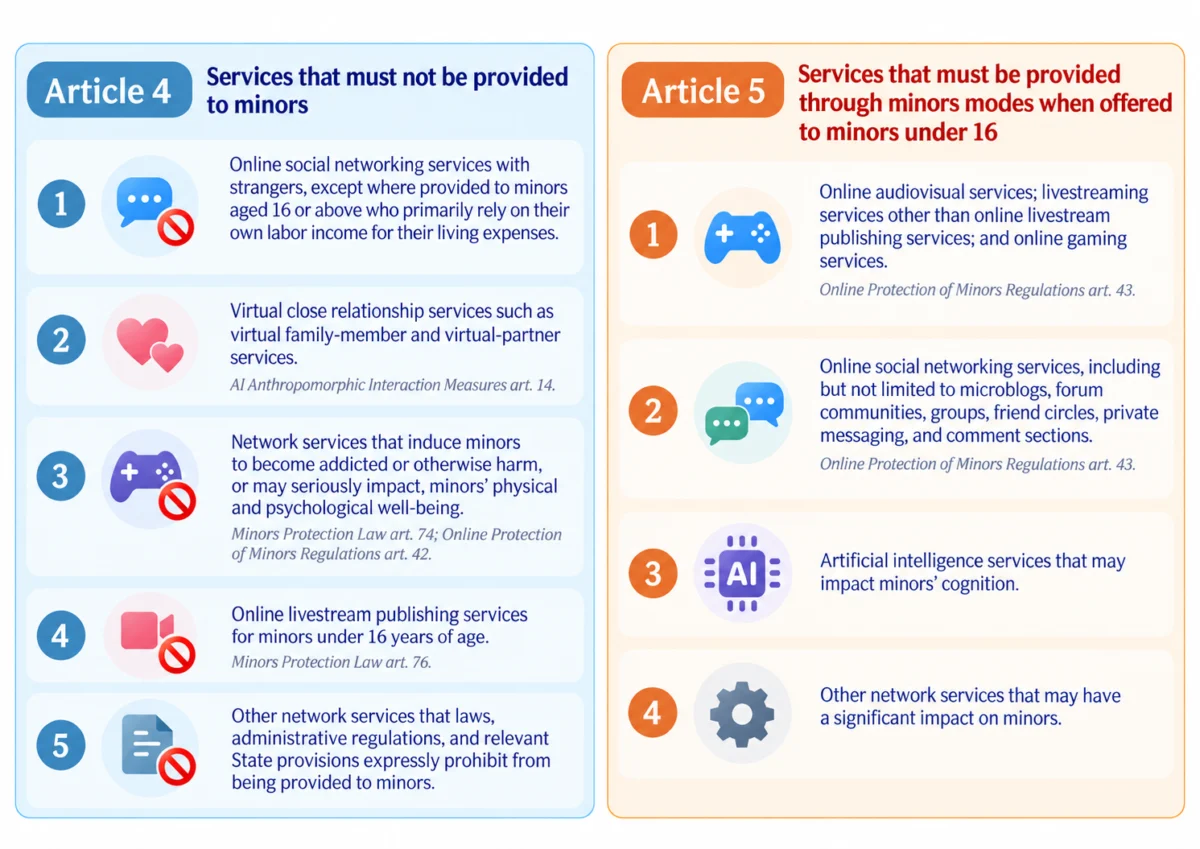
- Protective Functions: Platforms must offer users "one-click" protection tools, such as the ability to block unknown users or prohibit comments on their posts. Special protections are mandated for vulnerable groups, including minors, the elderly, and persons with disabilities.
Failure to meet these obligations carries heavy financial and operational risks. Fines for platforms can reach up to 10 million RMB (approximately $1.4 million USD), with the potential for business license revocation and personal fines for responsible managers.
Chronology of Regulatory Evolution
The introduction of this draft law is the culmination of several years of incremental regulatory steps. The following timeline illustrates the path toward this comprehensive legislation:

- January 2022: The death of 17-year-old Liu Xuezhou, who committed suicide after being subjected to intense online abuse following a reunion with his biological parents, sparks a national debate on the lack of cyberbullying protections.
- June 2023: The Supreme People’s Court, Supreme People’s Procuratorate, and the Ministry of Public Security release "Guidelines on Punishing Cyberviolence Crimes in Accordance with Law" for public comment.
- September 2023: The finalized guidelines are officially issued, providing a judicial basis for prosecuting online defamation and insults as crimes that "seriously disturb social order."
- Early 2024: National People’s Congress (NPC) delegates prioritize the creation of a standalone Cyberviolence Law to unify disparate regulations into a single, cohesive legal code.
- September 2026 (Projected): The release of the current draft for comments represents the final legislative stage before formal enactment.
Supporting Data: The Rising Tide of Online Conflict
The necessity for such a law is underscored by data from the China Internet Network Information Center (CNNIC). As of 2024, China’s internet user base has surpassed 1.09 billion people. However, this connectivity has come with a cost. Recent surveys conducted by academic institutions in Beijing suggest that nearly 40% of Chinese internet users have experienced some form of online harassment, ranging from mild verbal abuse to severe privacy invasions.
Furthermore, the emergence of "water armies" (paid trolls) and the use of AI-generated "deepfakes" to create defamatory content have complicated the digital landscape. The Ministry of Public Security reported a 25% year-on-year increase in cases involving online defamation and "picking quarrels and provoking trouble" in the digital space between 2023 and 2024.
Judicial Innovations and Victim Protection
Chapter V of the draft law introduces "Judicial Protection," which aims to lower the barrier for victims seeking justice. Historically, victims of online defamation in China faced the "difficulty of providing evidence," as the burden of proof rested on the individual in private prosecution cases.
Article 37 introduces the "Injunction against Harm to Personality Rights." This allows victims to apply for a court order to stop harassment immediately, even before a full trial commences, provided they can show that the harm would otherwise be "difficult to repair."
Additionally, Article 41 mandates that if a victim finds it difficult to gather evidence, the People’s Courts can require public security organs (police) to assist. This shift from private to state-assisted evidence gathering is a major structural change intended to balance the scales of power between individual victims and organized online mobs. In cases that "seriously impact social order," the Procuratorate is empowered to initiate public prosecutions, treating cyberviolence as a crime against the state rather than just a private dispute.
Official Responses and Social Implications
Government officials have framed the law as a necessary tool for maintaining "Core Socialist Values" and ensuring a "clean online ecology." A spokesperson for the State Cybersecurity and Informatization Department stated that the law is not intended to stifle legitimate criticism or "public opinion oversight" (Article 59), but rather to eliminate the "anarchic" elements of the internet that threaten social stability.
Legal experts have noted that while the law provides robust protections, its implementation will require a delicate balance. "The challenge lies in the definition of ‘inciting hatred’ or ‘fomenting antagonism,’" says a legal analyst based in Shanghai. "While the intent is to protect victims, the broad language ensures that the state maintains significant discretionary power over online discourse."

The tech industry’s reaction has been one of cautious compliance. Major platforms like Douyin (TikTok’s Chinese counterpart) and Weibo have already begun implementing "cyberviolence prevention modes," but the new law’s requirement for "AI-driven real-time identification" will necessitate significant capital investment in moderation technologies.
Broader Impact and Global Context
China’s Cyberviolence Law places it among a small group of nations attempting to tackle digital harassment through specific, high-stakes legislation. It mirrors elements of the UK’s Online Safety Act and the EU’s Digital Services Act but goes further in its integration of criminal law and administrative penalties.
The implications for the MCN industry are particularly profound. By holding agencies financially liable for the behavior of their influencers, the law effectively ends the era of "traffic at any cost," where controversy and conflict were often manufactured to drive engagement and advertising revenue.
As the draft moves toward its final adoption, it serves as a blueprint for how a state can reassert control over the digital "Wild West." For the millions of users who have faced the brunt of online mobs, the law offers a glimmer of hope for a safer digital future. For the platforms, it marks the end of their status as mere conduits, cementing their role as legally responsible guardians of the digital public square.
The successful enforcement of this law will likely depend on the coordination between the various departments mentioned in Article 6—ranging from education and telecommunications to public security and the judiciary. If successful, the Cyberviolence Law could fundamentally reshape the culture of the Chinese internet, prioritizing civility and legal accountability over the viral spread of vitriol.

 Layla Zulfa
 Siti Muinah