Dwi Wanna
Zhu Rongji, the former Premier of China whose bold free-market policies and far-reaching economic reforms reshaped the nation’s trajectory, passed away on Wednesday at the age of 97 in Beijing after an illness, as reported by Xinhua news agency. His five-year tenure at the helm of China’s government, from 1998 to 2003, is widely regarded as a pivotal period that laid the groundwork for China’s ascent as a global economic powerhouse, even as his reforms generated significant social upheaval and exacerbated economic disparities.
A Life Forged in Tumult: Early Years and Political Persecution
Born in Changsha, the capital of Hunan province, in 1928, Zhu Rongji entered a China fractured by civil war and profound political shifts. Intriguingly, he was rumored to be a descendant of Zhu Yuanzhang, the founding emperor of the Ming Dynasty, a lineage that perhaps imbued him with a sense of destiny and resilience. His early life was marked by intellectual prowess, leading him to Beijing’s prestigious Tsinghua University, where he specialized in electrical engineering. He joined the Communist Party of China (CPC) in 1949, the same year Mao Zedong proclaimed the establishment of the People’s Republic of China, a momentous event that promised a new era for the ancient nation.

Zhu’s initial career path as an economic planner and engineer at the State Planning Commission seemed destined for steady advancement. However, his intellectual independence and willingness to critique party policy led to severe setbacks during the tumultuous early decades of the People’s Republic. He was purged twice, a testament to his tenacity and the volatile political landscape of the time.
His first fall from grace occurred during the "Hundred Flowers Campaign" in the mid-1950s. Initially, Mao Zedong encouraged open criticism of the party, only to swiftly reverse course and launch an "Anti-Rightist Campaign." Zhu, having voiced concerns about Mao’s "irrational" economic policies, found himself branded a "rightist" in 1957. This label typically meant public humiliation, political marginalization, and often forced labor. He was stripped of his party positions and sent to work in a cadre school.
A decade later, after a period of limited rehabilitation, he was purged once more during the even more chaotic and brutal Cultural Revolution (1966-1976). This period saw widespread ideological fervor, persecution of intellectuals, and the systematic dismantling of established party structures. Zhu was again sent into exile, this time to a "May Seventh Cadre School" in rural China, a re-education camp where he performed manual labor. These experiences, though harrowing, are believed to have deeply shaped his pragmatism and understanding of the inefficiencies inherent in centrally planned economies, instilling in him a conviction for reform.
Rehabilitation and Rise: The Shanghai Years

Following Mao Zedong’s death in 1976 and the subsequent end of the Cultural Revolution, the CPC embarked on a period of "Boluan Fanzheng" (correcting wrongs and restoring order). Zhu Rongji was rehabilitated, returning to official life with roles at the Ministry of Petroleum and the State Economic Commission. His exceptional administrative talents and economic acumen quickly caught the attention of Deng Xiaoping, China’s paramount leader who initiated the country’s "reform and opening-up" policy.
Deng recognized in Zhu a rare blend of intellectual rigor, administrative competence, and a bold, decisive leadership style. In 1988, Zhu was appointed Mayor of Shanghai, China’s bustling economic powerhouse city. This period marked a significant turning point in his career and in China’s economic development. In Shanghai, he gained a formidable reputation as a staunch advocate for market reform, actively promoting foreign investment and modernizing the city’s infrastructure. It was during this time that he famously called for state-owned enterprises (SOEs) to be allowed to "swim by themselves in the markets," a clear signal of his vision for reducing state control and fostering competition. His successes in Shanghai, particularly in developing the Pudong New Area, demonstrated his ability to translate reformist ideas into tangible economic growth.
The "China’s Gorbachev" and a "Soft Landing"
Zhu’s ascent continued, and in 1991, he was appointed Vice Premier under then-Party General Secretary Jiang Zemin. His reformist zeal and direct, often blunt, communication style earned him the moniker "China’s Mikhail Gorbachev" among some international observers, referencing the Soviet leader who attempted to reform a stagnant communist system. This comparison, while highlighting his reformist credentials, also carried an implicit warning about the potential political ramifications of such radical changes.

As Vice Premier, Zhu played a crucial role in navigating China’s economy through a period of rapid growth and inflationary pressures in the early 1990s, following Deng Xiaoping’s renewed push for economic liberalization. He is widely credited with orchestrating China’s "soft landing," a challenging feat of macro-economic management that saw inflation brought under control without triggering a recession. This delicate balancing act involved tightening credit, reining in excessive investment, and stabilizing prices, showcasing his mastery of economic policy.
Premier and the Age of Radical Reform (1998-2003)
Zhu Rongji’s appointment as Premier in 1998 solidified his position as the chief architect of China’s economic transformation. His five-year term was characterized by a series of radical, often painful, reforms that dismantled vestiges of the planned economy and propelled China towards a market-oriented system. He approached his role with an almost evangelical zeal, famously declaring at his debut press conference that he was prepared to "walk through multitudinous minefields and 30,000-metre abysses" to achieve his reform agenda.
One of his most significant and socially impactful reforms was the comprehensive program to privatize or restructure hundreds of thousands of unprofitable state-owned enterprises (SOEs). These SOEs had long been the backbone of China’s urban economy, providing millions of workers with lifelong employment, housing, healthcare, and pensions – the so-called "iron rice bowl." While ensuring social stability, this system was fiscally unsustainable and economically inefficient. Zhu’s reforms were ruthless in their pursuit of efficiency, leading to the layoff of an estimated 30 million workers over five years. This unprecedented scale of job losses, while streamlining the economy and fostering private sector growth, also shattered the security of millions, dramatically increasing economic inequality and creating significant social challenges.
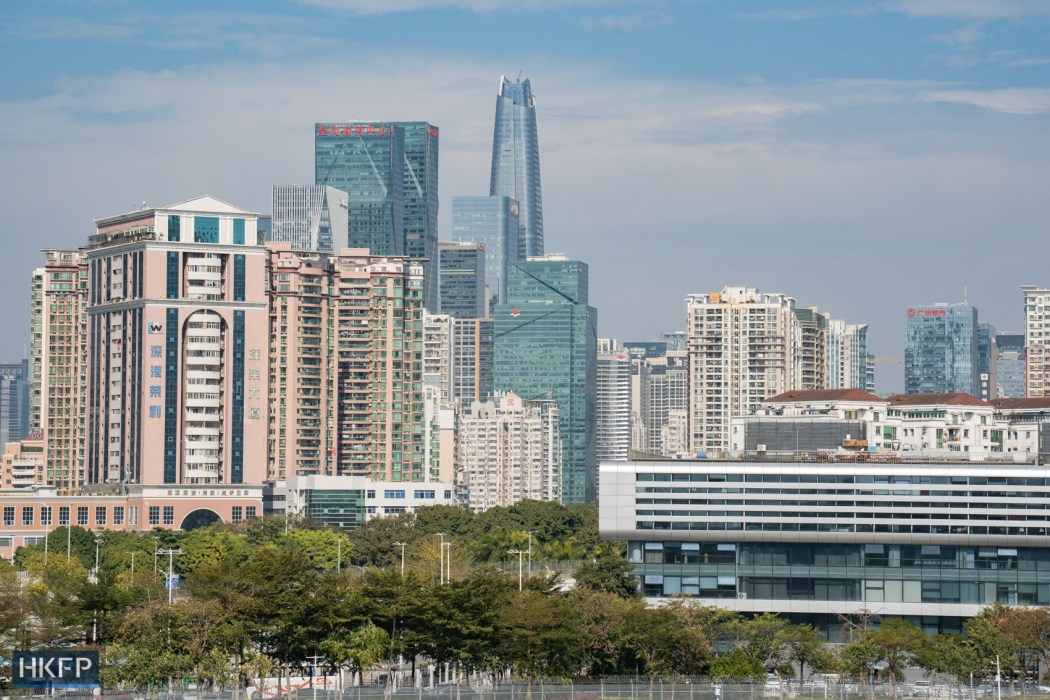
Concurrently, Zhu oversaw the privatization of urban housing. Previously, housing was allocated by work units or the state. His reforms shifted towards homeownership, allowing urban residents to purchase their homes, often at heavily subsidized rates. This policy unlocked vast amounts of household wealth, stimulated the construction sector, and created a burgeoning real estate market. However, it also marked the end of welfare housing for millions and laid the foundation for the property boom that would become a critical, and eventually crisis-prone, component of China’s economy by the 2020s.
Beyond domestic restructuring, Zhu Rongji’s leadership was instrumental in fortifying China’s position on the global stage. He is widely lauded for guiding China through the turbulent 1997 Asian financial crisis, a period during which many regional economies faced collapse. While other nations devalued their currencies, China maintained the stability of the yuan, a decision that helped avert a deeper regional contagion and demonstrated China’s growing economic resilience and responsibility.
Perhaps his most enduring international legacy was his leadership in the arduous negotiations for China’s accession to the World Trade Organization (WTO) in 2001. This landmark achievement culminated years of complex discussions and required China to commit to significant market liberalization, including reducing tariffs, opening various sectors to foreign investment, and adhering to international trade rules. WTO entry proved to be a transformative moment, consolidating China’s shift from an isolated, largely agrarian economy under Mao to "the marketplace of the world." It unleashed China’s manufacturing capacity, attracting massive foreign direct investment and integrating the country deeply into global supply chains, fueling an export-led boom that lifted hundreds of millions out of poverty.
The Anti-Corruption Crusader and Public Persona

Zhu Rongji also cultivated a formidable reputation as a hard-nosed opponent of corruption, which he openly described as one of China’s most pressing problems. He famously declared, "If there are 100 coffins, 99 should be prepared for corrupt officials, and one for myself." During his tenure, his anti-corruption drive saw several high-profile officials brought to justice, including the execution of a former vice governor of eastern Jiangxi province for taking bribes – the highest-ranking official to face such a severe penalty for corruption in five decades. His stance reflected a broader recognition within the party that widespread corruption could undermine its legitimacy.
Fluent in English, Zhu Rongji also modernized the public face of the Chinese premiership. He formalized the traditional premier’s press conference at the conclusion of the yearly "Two Sessions" political meetings (the National People’s Congress and the Chinese People’s Political Consultative Conference). During these often-tense sessions, he was known for his directness, candor, and a sardonic sense of humor, tackling questions head-on with an uncharacteristic openness for a Chinese official of his stature. This willingness to engage directly with the media, even international press, projected an image of confidence and transparency, distinguishing him from many of his predecessors and successors.
A Shifting Legacy in the Xi Jinping Era
After stepping down in 2003, "Boss Zhu," as he was sometimes affectionately known, retreated from active politics, publishing several books of his speeches on economic reform and engaging in philanthropic endeavors. However, his brand of market reformism, which prioritized economic growth and integration but undeniably fueled significant social inequality, gradually fell out of favor with the ascent of Xi Jinping in 2012.

Xi Jinping, China’s most powerful leader in generations, has steered China onto a different ideological and economic path. His administration has condemned "runaway capitalism," emphasized "common prosperity" to address wealth disparities, and launched extensive crackdowns on perceived monopolistic private firms and excessive displays of wealth. This shift represents a move towards a more state-centric development model, prioritizing social equity and national security over unbridled market liberalization. Under Xi, the emphasis on open, frank talk by officials has also largely been replaced by a more disciplined, staid, and closed-off approach, contrasting sharply with Zhu’s distinctive public persona.
Indeed, reports by outlets such as The Wall Street Journal suggested that the late former premier notably clashed with the current leadership in 2022 over Xi’s consolidation of power and statist economic approach, underscoring the ideological divergence that has emerged since Zhu’s retirement. His legacy, therefore, stands as a complex testament to a period of radical change, embodying both the triumphs of China’s economic rise and the inherent tensions between market forces and socialist ideals.
When asked by a Danish reporter what he hoped the Chinese people would remember him for, Zhu Rongji offered a remarkably humble and insightful response. "I only hope that after I step down, people across the country will say that ‘he was an honest official, not a corrupt one’ and I’ll be very satisfied with that," he stated. "If they are a bit more generous and say that ‘Zhu Rongji did accomplish some practical things’, I will thank the heavens."
His words reflect a profound understanding of the challenges he faced and the sacrifices he demanded from the Chinese people during his transformative tenure. Zhu Rongji’s life spanned nearly a century of China’s most dramatic transformations, from civil war and communist revolution to economic liberalization and global power. He leaves behind his wife, Lao An, and two children. His death marks the passing of a statesman whose intellectual courage and decisive leadership irrevocably shaped the modern economic landscape of China and, by extension, the world. The impact of his policies continues to resonate, informing debates about China’s economic future and the balance between state control and market forces.

 Sagoh
Sagoh
 Asro
Asro