Nila Kartika Wati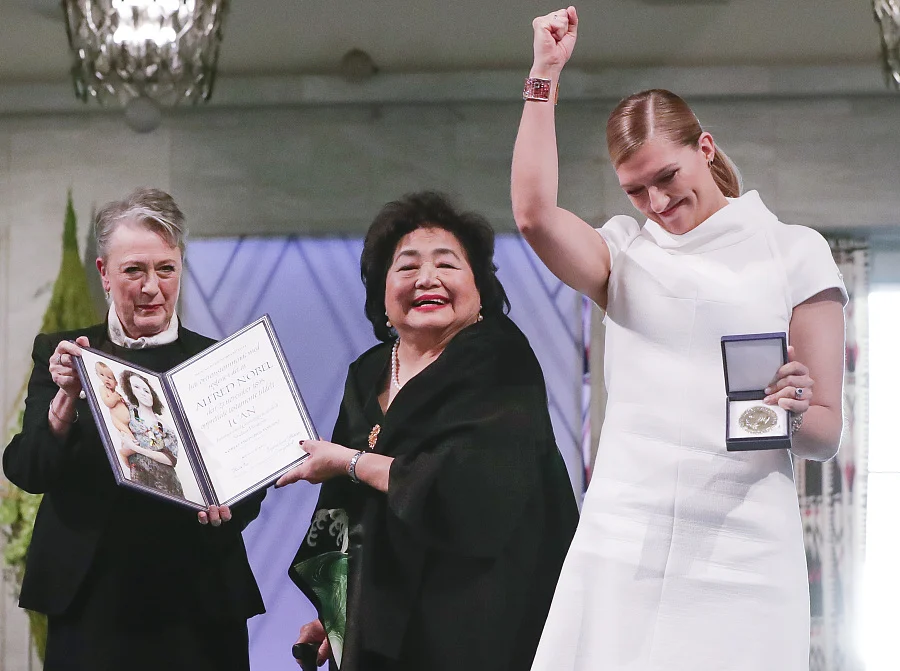
The International Campaign to Abolish Nuclear Weapons (ICAN) was honored with the prestigious 2017 Nobel Peace Prize at a solemn ceremony in Oslo, Norway, on Sunday, December 10, 2017. The award recognized ICAN’s pivotal role in revitalizing global efforts to eliminate nuclear weapons, a threat that continues to cast a long shadow over international security. Berit Reiss-Andersen, chairperson of the Norwegian Nobel Committee, presented the medal and diploma to Beatrice Fihn, the executive director of ICAN, and Setsuko Thurlow, a courageous survivor of the atomic bombing of Hiroshima.

The Nobel Committee’s citation highlighted ICAN’s "work to draw attention to the catastrophic humanitarian consequences of any use of nuclear weapons and for its ground-breaking efforts to achieve a treaty-based prohibition of such weapons." This recognition underscores a long-standing commitment by the Nobel Peace Prize to championing nuclear disarmament, a cause that has seen intermittent but crucial progress throughout the latter half of the 20th century and into the 21st.
A Treaty’s Triumph: The Treaty on the Prohibition of Nuclear Weapons
ICAN’s award is intrinsically linked to its instrumental role in the negotiation and adoption of the Treaty on the Prohibition of Nuclear Weapons (TPNW). This landmark treaty, adopted by a UN conference in July 2017 with 122 votes in favor, represents a significant diplomatic achievement and a powerful moral statement against nuclear arsenals. While the TPNW is not yet in force – requiring ratification by at least 50 states – its existence and the campaigning efforts behind it have undeniably shifted the discourse surrounding nuclear weapons.

The treaty explicitly prohibits the development, testing, production, stockpiling, stationing, transfer, use, and threat of use of nuclear weapons. It also includes provisions for victim assistance and environmental remediation related to nuclear weapon use and testing. The TPNW is envisioned as a crucial step towards a world free from the existential threat posed by these weapons of mass destruction.
The Human Cost of Nuclear Warfare: A Survivor’s Testimony
At the heart of ICAN’s advocacy lies the imperative to never forget the devastating human toll of nuclear weapons. Setsuko Thurlow, an 85-year-old survivor of the Hiroshima bombing, embodied this imperative during her address. She recounted her harrowing experience as a 13-year-old girl caught in the inferno unleashed by the United States on August 6, 1945. The bombing not only claimed the lives of eight of her family members and 351 of her schoolmates but also inflicted unimaginable suffering and long-term health consequences on countless others.

Thurlow’s powerful testimony served as a visceral reminder of the stark reality behind the abstract discussions of nuclear deterrence and strategic balance. Her plea to "forever eradicate the threat of nuclear annihilation" resonated deeply, emphasizing that the pursuit of peace must be anchored in the prevention of such catastrophic events. Her presence at the ceremony, alongside Fihn, symbolized the intergenerational imperative to learn from history and build a future where nuclear weapons are relegated to the past.
ICAN’s Journey: From Grassroots to Global Influence
The International Campaign to Abolish Nuclear Weapons was formally launched in Austria in April 2007, emerging as a coalition of non-governmental organizations from approximately 100 countries. With its main office situated in Geneva, Switzerland, ICAN has systematically worked to raise public awareness, lobby governments, and mobilize civil society in pursuit of its ultimate goal: the complete elimination of nuclear weapons.

The organization’s strategy has been multi-faceted, encompassing public education campaigns, advocacy at international forums, and the direct engagement of survivors and victims of nuclear testing and use. Their success in bringing the TPNW to fruition is a testament to their persistent and effective grassroots organizing and diplomatic engagement.
A World of Growing Nuclear Risks: Fihn’s Stark Warning
Beatrice Fihn, in her joint Nobel lecture with Thurlow, painted a sobering picture of the contemporary nuclear landscape. She warned that "The risk for nuclear weapons use is even greater today than at the end of the Cold War." This assertion, delivered in the context of receiving the Nobel Peace Prize, carries significant weight and reflects a growing concern among disarmament experts.

Fihn elaborated on the evolving nature of nuclear threats, pointing to several factors that contribute to this heightened risk:
- Proliferation to More States: Unlike the bipolar nuclear standoff of the Cold War, today’s world features a larger number of states possessing nuclear weapons, increasing the potential for regional conflicts to escalate into nuclear exchanges.
- The Specter of Terrorism: The possibility of non-state actors, such as terrorist organizations, acquiring and using nuclear materials or weapons adds a new and deeply unsettling dimension to nuclear security.
- The Rise of Cyber Warfare: Fihn also highlighted the potential for cyberattacks to disrupt command and control systems, potentially leading to accidental or unauthorized launches of nuclear weapons. The increasing reliance on digital infrastructure for managing nuclear arsenals makes them vulnerable to sophisticated cyber threats.
Her statement underscored the urgent need for renewed diplomatic efforts and a robust commitment to disarmament, particularly in light of these contemporary challenges.

Historical Context: The Nobel Peace Prize and Nuclear Disarmament
The awarding of the Nobel Peace Prize to ICAN is not an isolated event but rather a continuation of a long-standing tradition of recognizing efforts aimed at curbing the nuclear threat. Throughout the Cold War and beyond, the prize has been bestowed upon individuals and organizations that have demonstrably worked towards nuclear non-proliferation and disarmament.
- 1962: Linus Pauling received the prize for his activism against nuclear weapons testing.
- 1974: Sean MacBride and the International Peace Bureau were awarded for their efforts in promoting disarmament.
- 1985: The International Physicians for the Prevention of Nuclear War (IPPNW) were recognized for their campaign to raise awareness of the catastrophic consequences of nuclear war.
- 1995: Joseph Rotblat and the Pugwash Conferences on Science and World Affairs received the prize for their efforts to diminish the part played by nuclear weapons in world politics and, in the long run, to eliminate them.
These previous awards highlight a consistent recognition by the Nobel Committee of the profound moral and practical imperative to rid the world of nuclear weapons. ICAN’s win in 2017 signifies a powerful endorsement of the ongoing struggle for a nuclear-weapon-free future.

Global Reactions and Implications
The awarding of the Nobel Peace Prize to ICAN has generated a spectrum of reactions from governments, international organizations, and civil society. While many nations and disarmament advocates celebrated the recognition, the response from nuclear-weapon states has been, predictably, more reserved.
- Supporters of the TPNW: For proponents of the Treaty on the Prohibition of Nuclear Weapons, the Nobel Prize is a significant morale boost and a validation of their tireless advocacy. It is expected to galvanize further support for the treaty and encourage more states to sign and ratify it.
- Nuclear-Weapon States and Allies: States possessing nuclear weapons, along with some of their allies, have generally reiterated their reliance on nuclear deterrence for their security and have expressed skepticism about the TPNW’s effectiveness. They often argue that the treaty does not adequately address the complex security environments in which nuclear weapons are perceived as necessary. The United States, for instance, has consistently opposed the TPNW, emphasizing the importance of maintaining its nuclear arsenal as a deterrent.
- International Organizations: The United Nations and other international bodies have generally welcomed the award, recognizing ICAN’s contribution to the disarmament agenda. The prize is seen as an opportunity to renew focus on the UN’s own disarmament goals.
The implications of ICAN’s Nobel Peace Prize are far-reaching. It elevates the profile of the nuclear disarmament movement on the global stage, providing a powerful platform for continued advocacy. Furthermore, it serves as a stark reminder to the international community of the ongoing and potentially escalating dangers posed by nuclear weapons. The prize can be seen as a call to action, urging a renewed commitment to diplomacy, arms control, and ultimately, the complete abolition of these weapons of mass destruction. The challenge now lies in translating this recognition into tangible progress towards a world where the specter of nuclear annihilation is finally laid to rest.


 Nana Wu
 Suro Senen