Nila Kartika Wati
Shockwaves have reverberated around the globe in the month since the United States and Israel launched military actions in Iran and subsequently in Lebanon. These escalating conflicts, fueled by entrenched fossil fuel interests and complex geopolitical power dynamics, have once again placed civilian populations in the Middle East at the forefront of devastating consequences. The human cost is immeasurable, with lives lost and communities fractured.
Beyond the immediate theatres of conflict, the world is experiencing significant secondary impacts. The disruption to global supply chains, particularly in the energy and resource sectors, is palpable. This instability breeds uncertainty, exacerbating anxieties about the duration of the violence and the depth of the ensuing humanitarian and economic crises. In an era of instant information, the unfolding events are consumed through a constant stream of short-form videos and endless digital scrolling, further amplifying the sense of unease and isolation, punctuated by nervous communications with colleagues and friends.
In response to these dire developments, Greenpeace is unequivocally calling for an immediate cessation of military hostilities, a steadfast adherence to international law, and a renewed commitment to diplomatic resolutions. The organization has consistently highlighted the intrinsic link between fossil fuel dependency and geopolitical instability, advocating for a transition to cleaner energy sources as a pathway to sustainable peace.
The Ripple Effect: China’s Encounter with Global Energy Volatility
Within China, concern is mounting regarding the secondary economic repercussions of the military actions in Iran and the subsequent escalations. Imported inflation, a direct consequence of global energy market disruptions, is a growing source of anxiety for policymakers and the public alike. While China’s energy infrastructure has demonstrated a degree of resilience, largely attributed to the significant prevalence of renewable energy sources and the widespread adoption of electric vehicles (EVs), these factors do not entirely insulate the nation from global fossil fuel price shocks.
China’s energy landscape, while rapidly evolving, remains fundamentally dependent on fossil fuels, particularly coal. This current crisis starkly underscores the inherent risks associated with such reliance. As ongoing conflicts, driven by the pursuit of fossil fuel resources, continue to claim innocent lives and erode the foundational principles of global peace established in the aftermath of World War II, the volatile nature of fossil fuel interests becomes increasingly evident. These interests have historically been a catalyst for conflict, and their influence poses a continuous threat to stability in any nation.
The Shield of Renewables: How Wind, Solar, and EVs Mitigate Oil Price Shocks in China
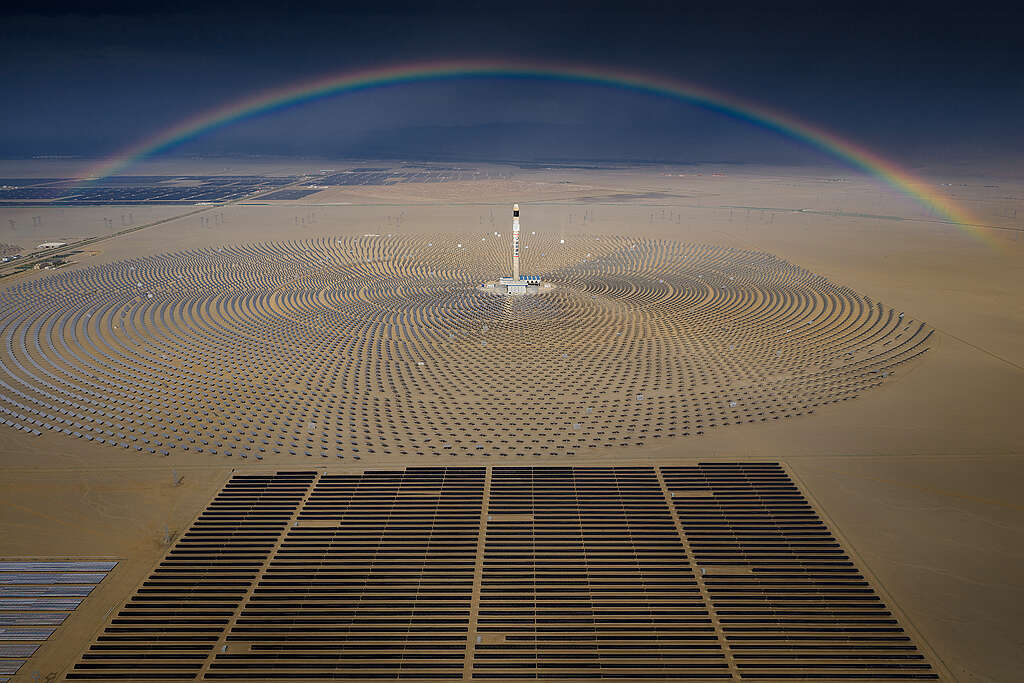
The stark contrast between the volatility of oil markets and the inherent stability of renewable energy sources has been eloquently articulated by Greenpeace’s Middle East and North Africa Programme Director, Julien Jreissati. His observation, "You can’t blow up the sun," serves as a powerful reminder of the inexhaustible and decentralized nature of solar power. This principle is increasingly relevant to China’s strategic energy planning.
The widespread electrification of China’s transportation sector has emerged as a critical buffer against global oil price fluctuations. With over 30 million electric vehicles (EVs) currently operating on Chinese roads, the nation is effectively offsetting approximately 430,000 barrels of gasoline consumption daily. This significant reduction in demand for fossil fuels directly diminishes China’s vulnerability to supply disruptions and price volatility.
Furthermore, China has made substantial investments in the development of wind and solar energy infrastructure, surpassing all other nations in its scale of deployment. Recent policy documents signal a sharpened focus on advancing a new power system, designed to accelerate the displacement of fossil fuels. This vision includes the expansion of grid-scale energy storage solutions and the implementation of smart grid technologies, crucial for integrating and managing intermittent renewable energy sources effectively. Projections indicate that, at the current pace of renewable energy growth and grid modernization, China could be generating 33% of its electricity from renewables by 2028 and achieve 40% of its total electricity needs from these sources by 2030.

However, this geopolitical crisis has placed China at a critical juncture. It intensifies the pressure for Beijing to make a definitive decision on the systematic phasing out of coal and the elevation of renewable energy to the undisputed backbone of the nation’s energy system—a transition that has been debated and delayed.
The Electric Vehicle Revolution: Driving Down Fossil Fuel Dependence
The burgeoning adoption of electric vehicles has undeniably decreased China’s reliance on fossil fuels, particularly in the transportation sector. In Beijing, where Greenpeace East Asia maintains an office, nearly one in every six vehicles observed on the streets is a new energy vehicle, illustrating the tangible impact of this shift. The explosive growth of EVs has directly contributed to a reduction in fossil fuel consumption within China’s transportation sector. Since 2018, oil consumption, encompassing both gasoline and diesel, has begun a downward trend, with EVs identified as the primary catalyst for this change. This trend is projected to accelerate significantly. The current daily offset of 430,000 barrels of gasoline by EV adoption could potentially quadruple by the year 2040, signifying a monumental shift in energy demand.
The staggering true cost associated with internal combustion engine (ICE) vehicles, encompassing not only direct fuel expenses but also broader environmental and health impacts, is becoming increasingly apparent. The recurrent oil price shocks serve as a stark and urgent reminder of the persistent risks inherent in maintaining reliance on these outdated technologies.
This confluence of factors—ranging from environmental consciousness to economic pragmatism—is reshaping consumer preferences towards EVs. The dramatic surge in oil prices should serve as a critical wake-up call for automakers, both domestically within China and on the international stage, to accelerate their transition towards sustainable mobility solutions.
The Lingering Shadow of Coal: A Systemic Barrier to Energy Security
The question of whether China’s burgeoning clean energy shield can continue to protect it from future fossil fuel price shocks is met with a qualified affirmation: yes, but with a significant caveat. The full realization of China’s renewable energy potential is still in its nascent stages, and the entrenched reliance on coal presents a formidable systemic barrier to the more robust adoption of wind and solar power.
Since 2022, a heightened emphasis on "energy security" has paradoxically coincided with an accelerated build-out of coal-fired power plants. Despite the rapid expansion of renewables, coal continues to dominate China’s energy consumption, accounting for over half of the nation’s total energy input. This disparity is evident even when examining electricity generation: while wind and solar collectively represent a mere 10% of total energy consumption, they contribute a substantial 22% of the total electricity generated.

However, the potential for renewable energy to supplant coal is immense. Notably, China achieved its coal power emission peak in 2025. Crucially, in the same year, the combined electricity generation from wind and solar was sufficient to meet 100% of China’s total increase in power demand. This milestone signifies that China no longer requires the construction of new coal power plants to meet its growing energy needs.
The continued dependence on coal represents a critical vulnerability. Fortunately, this risk is not lost on policymakers within the Chinese government, who have actively sought to reduce the nation’s reliance on imported coal, recognizing the strategic and economic implications.
The oil price shocks stemming from the current geopolitical crisis offer a clear and compelling lesson: reliance on finite, contested, and inherently corrupting fossil fuels poses an unacceptable risk, irrespective of the volume of stockpiles maintained.

In tandem, the strategic expansion of renewable energy sources and the widespread electrification of key sectors, such as transportation, collectively forge a protective shield that insulates China’s economy from the disruptive fossil fuel price shocks currently impacting numerous other nations. Conversely, a hesitant embrace of coal and the continued reliance on outdated ICE automotive manufacturing practices demonstrably undermine the effectiveness of this vital shield.
Yuan Ying is the Programme Director and Chief China Representative at Greenpeace East Asia, based in Beijing.


 Raul Delapena Setiawan