Nila Kartika Wati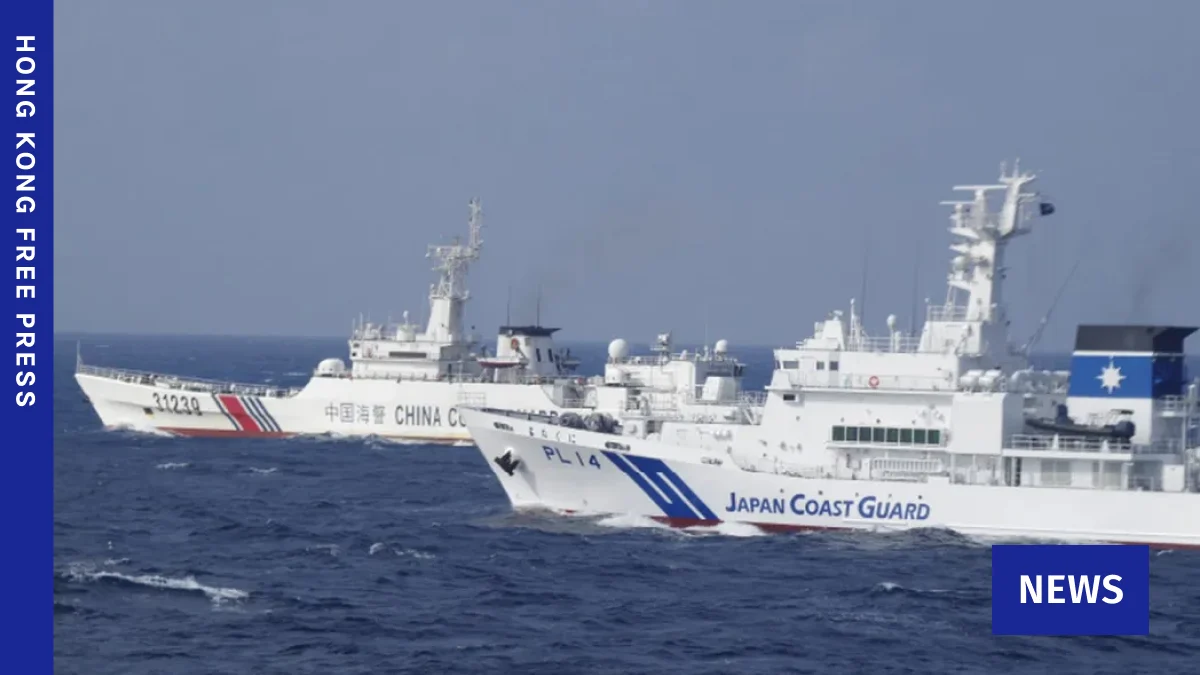
In a fresh escalation of long-standing territorial disputes, naval vessels from the Japan Coast Guard (JCG) and the China Coast Guard (CCG) engaged in a tense standoff near the contested Senkaku Islands (known as Diaoyu in China) on Tuesday, each side issuing conflicting reports of having successfully expelled the other’s vessels from their claimed territorial waters. The incident, which saw Chinese ships approaching a Japanese fishing vessel, underscores the deepening maritime friction between Asia’s two largest economies and the precarious nature of sovereignty claims in the East China Sea.
The uninhabited archipelago, located approximately 120 nautical miles northeast of Taiwan and 200 nautical miles west of Okinawa, has been a flashpoint for diplomatic and security tensions for decades. Both Tokyo and Beijing assert historical and legal claims to the islands, which are strategically significant for their potential hydrocarbon reserves, rich fishing grounds, and their critical position along vital shipping lanes. This latest confrontation serves as a stark reminder of the volatile geopolitical landscape in the region, where differing interpretations of international maritime law frequently lead to direct encounters.

Detailed Account of the Tuesday Standoff
According to statements from the Japan Coast Guard, the incident unfolded when two Chinese coast guard vessels entered what Japan considers its territorial waters early Tuesday morning. These two ships were part of a larger contingent of four Chinese vessels observed sailing in the contiguous zone around the islands. The Japanese authorities reported that the Chinese ships approached a Japanese fishing vessel, the Zuihou Maru, operating in the vicinity. Responding swiftly, the JCG deployed its own vessels to safeguard the Japanese fishing boat and issued "orders to leave" to the Chinese ships. The JCG confirmed that these persistent warnings ultimately compelled the Chinese coast guard vessels to depart Japanese territorial waters by approximately 9:20 am (0020 GMT). Japan characterized this action by the Chinese vessels as "a violation of international law" and reaffirmed its commitment to "continue to respond calmly and resolutely in accordance with international and domestic law, and will take every possible measure to ensure the security of our territorial waters."
Conversely, the China Coast Guard presented a fundamentally different narrative of the events. In its official statement, the CCG asserted that the "Japanese fishing boat Zuihou Maru intruded into the territorial waters" around the Diaoyu Islands. The CCG maintained that its vessels took "necessary measures to warn and expel it," thereby upholding China’s sovereignty. This direct contradiction in accounts highlights the entrenched positions of both nations, where each views the other’s presence in the area as an infringement on its sovereign rights. The Zuihou Maru has, in previous instances, been a focal point in such disputes, often sailing in the contested waters as a symbol of Japanese presence.

Historical Context and Escalating Tensions
The sovereignty dispute over the Senkaku/Diaoyu Islands dates back to the late 19th and early 20th centuries. Japan formally annexed the islands in 1895 following the First Sino-Japanese War. China, however, disputes this, arguing that the islands were historically Chinese territory and were seized by Japan as a result of an unequal treaty. The dispute lay dormant for much of the 20th century but re-emerged with vigor in the 1970s following reports of potential oil and gas reserves in the East China Sea. Since then, both nations have actively asserted their claims, leading to a steady increase in maritime patrols, aerial surveillance, and diplomatic protests.
The current incident takes place against a backdrop of significantly worsening bilateral relations between Tokyo and Beijing. A key catalyst for the recent downturn was a series of comments made by Japanese Prime Minister Sanae Takaichi in November of the previous year concerning Taiwan. Takaichi’s remarks, which suggested that Tokyo could intervene militarily in the event of an attack on self-ruled Taiwan—a territory China views as its own and has not ruled out taking by force—sparked fury from Beijing. China condemned her statements as a grave interference in its internal affairs, leading to a strong diplomatic backlash. Beijing subsequently urged its citizens against traveling to Japan and implemented tightened trade restrictions on certain Japanese firms, signaling a broader strategy of economic and political pressure.

Chronology of Recent Maritime Incidents
While Tuesday’s confrontation involving a fishing vessel marks a rare direct approach, Chinese coast guard vessels routinely operate in the contiguous zone around the Senkaku/Diaoyu Islands, and incursions into what Japan considers its territorial waters are not uncommon.
- November (Previous Year): Japanese Prime Minister Sanae Takaichi’s controversial comments on Taiwan spark outrage in Beijing, leading to a diplomatic rift and economic countermeasures from China.
- June 10 (Current Year): Chinese ships last entered waters claimed by Japan as its territory, though these incursions did not involve direct interaction with Japanese fishing boats. Such entries into the 12-nautical-mile territorial sea are closely monitored and protested by Japan.
- Tuesday (Current Incident): The direct confrontation between Japanese and Chinese coast guard vessels near the Zuihou Maru, with each side claiming expulsion of the other, signifies a heightened level of engagement and risk.
Over the past decade, the frequency and duration of Chinese coast guard patrols in the vicinity of the islands have dramatically increased. Japan’s Coast Guard annual reports consistently detail hundreds of days each year where Chinese vessels are present in the contiguous zone, with dozens of instances of Chinese vessels entering Japanese territorial waters. These "grey zone" tactics, which involve non-military assets performing quasi-military functions, are designed to assert sovereignty without crossing the threshold of armed conflict, yet they carry inherent risks of miscalculation.

Broader Implications for Regional Security and International Law
This latest standoff carries significant implications for regional stability and the intricate web of international relations in the Indo-Pacific.
- Escalation Risk: The conflicting claims and direct engagement between coast guard vessels raise concerns about the potential for accidental collisions or misinterpretations that could rapidly escalate into a more serious confrontation. The presence of a fishing vessel further complicates the situation, as civilian assets can become unwitting triggers for state-level responses.
- Sino-Japanese Relations: The incident further strains already fraught relations between Japan and China. Given the deep economic interdependence between the two nations, continued political and maritime friction could have adverse effects on trade, investment, and regional cooperation on issues such as climate change and public health.
- International Law of the Sea (UNCLOS): Both Japan and China are signatories to the United Nations Convention on the Law of the Sea (UNCLOS), but their interpretations of territorial waters, exclusive economic zones (EEZs), and the rights of passage often diverge significantly. China’s assertion of "historical rights" in the South and East China Seas, for instance, is often viewed by other nations, including Japan, as inconsistent with UNCLOS. This incident underscores the challenges in applying international legal frameworks to long-standing sovereignty disputes.
- "Grey Zone" Tactics: China’s strategy of using its vast coast guard fleet, often referred to as the "second navy," to assert its claims without employing overt military force, is a classic example of "grey zone" operations. While these actions fall below the threshold of armed conflict, they systematically challenge the status quo and incrementally advance China’s territorial claims, forcing other nations to expend resources on constant surveillance and response.
- Taiwan and Broader Geopolitics: The connection between the Senkaku/Diaoyu dispute and the Taiwan issue is not coincidental. Both are integral to China’s broader claims of sovereignty and its ambition to reshape the regional order. Japan’s growing concern over Taiwan’s security is directly linked to its own national security interests, given Taiwan’s proximity to Okinawa and the Senkaku Islands. Any major conflict around Taiwan would inevitably draw in the surrounding maritime areas, including the East China Sea.
- Energy Security: The East China Sea is believed to harbor significant untapped oil and natural gas reserves. The ongoing disputes over sovereignty and maritime boundaries directly impact the ability of either nation to explore and exploit these resources, adding an economic dimension to the strategic competition. China’s unilateral drilling activities in areas disputed by Japan have been a consistent source of diplomatic protests.
The international community watches these developments closely. While no direct statements from other nations have been reported regarding this specific incident, countries like the United States, a key ally of Japan, have consistently affirmed that the Senkaku Islands fall under the scope of the U.S.-Japan Security Treaty, meaning any armed attack on them would obligate the U.S. to come to Japan’s defense. This adds another layer of complexity and potential for broader international involvement should tensions escalate further. The call for peaceful resolution through dialogue and adherence to international law remains a recurring theme from external observers, yet the frequency of these standoffs suggests a challenging path forward for de-escalation in the East China Sea.

 Sagoh
Sagoh
 Asro
Asro