Nila Kartika Wati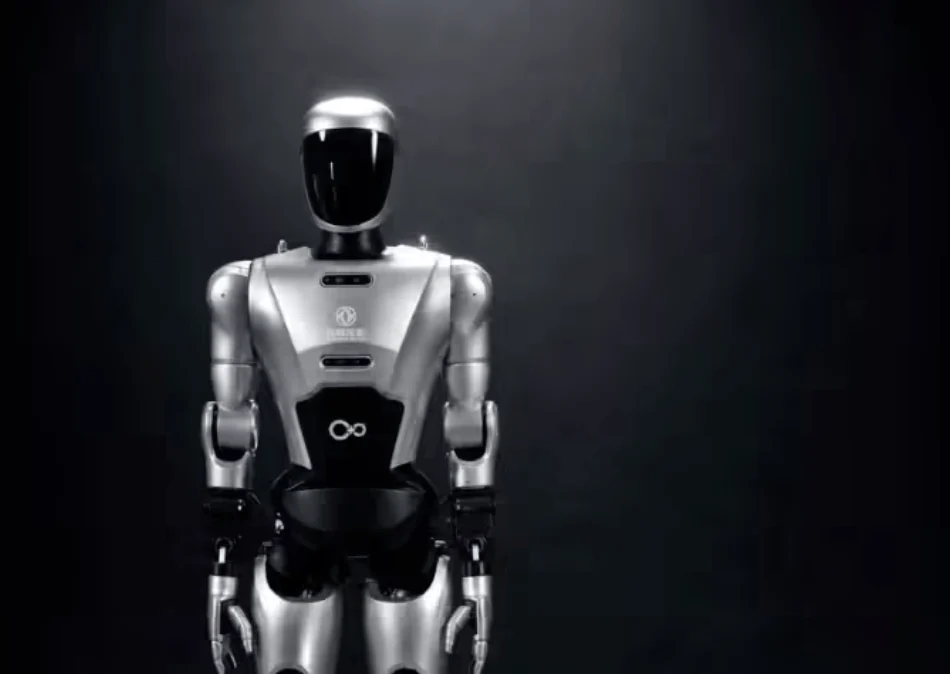
Dongfeng Motor Corporation, a prominent Chinese automaker, is poised to make a significant leap in manufacturing automation with its humanoid robot, Xiaodong. The advanced robotic system is scheduled to commence factory training by the end of October, marking a pivotal step towards its integration into the company’s production processes. Following this initial training phase, Xiaodong is slated to participate in trial production by the close of the current year, with ambitions for small-batch production to begin in the subsequent year. This ambitious timeline underscores Dongfeng’s strategic commitment to leveraging cutting-edge robotics and artificial intelligence to enhance operational efficiency and quality within its extensive manufacturing footprint.
The announcement was made by Zhang Zhenlin, Dongfeng’s chief engineer for intelligent technology, highlighting the company’s proactive stance in the global race for advanced manufacturing capabilities. Xiaodong is specifically being developed to undertake a range of critical manufacturing tasks, including intricate sorting operations, efficient material handling, and rigorous quality inspections. These tasks, often repetitive or requiring precision in complex environments, are prime candidates for automation through humanoid robotics, promising to revolutionize traditional assembly line paradigms. Dongfeng has explicitly stated its current focus on validating Xiaodong’s capabilities in sorting automotive materials, simultaneously working towards enabling the robot to execute a broader spectrum of flexible production tasks autonomously. This dual approach emphasizes both immediate practical application and long-term adaptability.
The Strategic Imperative: Integrating AI and Robotics in Automotive Manufacturing
The automotive industry has historically been at the forefront of automation, employing industrial robots for tasks such as welding, painting, and assembly. However, the emergence of humanoid robots like Xiaodong represents a new frontier, capable of performing more dexterous, adaptable, and human-like tasks in environments not specifically designed for traditional, fixed-arm robots. This evolution is driven by several factors, including persistent global labor shortages, the increasing demand for customization and flexible production lines, and the relentless pursuit of higher quality standards and cost efficiencies.
Dongfeng Motor Corporation, one of China’s "Big Four" state-owned automakers, has a substantial history of innovation and manufacturing prowess. Founded in 1969, the company has grown into a diversified enterprise with a wide range of products, including passenger cars, commercial vehicles, and auto parts. Its strategic shift towards intelligent manufacturing aligns with China’s national agenda, particularly the "Made in China 2025" initiative, which aims to transform the country into a global leader in high-tech manufacturing, with robotics and artificial intelligence being core components. For Dongfeng, investing in humanoid robotics is not merely about incremental improvements but about securing a competitive edge in a rapidly evolving global automotive landscape.
Zhang Zhenlin further emphasized a key synergistic advantage within Dongfeng’s ecosystem: the ability to reuse capabilities derived from its extensive development in vehicle platforms, intelligent cockpit systems, and general robotics. This cross-pollination of technological expertise is expected to significantly accelerate the commercialization of advanced solutions like Xiaodong. For instance, sensor fusion techniques developed for autonomous driving, AI algorithms for real-time decision-making in intelligent cockpits, and sophisticated motion planning from existing robotics projects can all contribute to enhancing Xiaodong’s perception, navigation, and manipulation capabilities. This integrated development strategy minimizes redundant efforts and maximizes returns on research and development investments.
A Detailed Timeline for Xiaodong’s Deployment
The announced timeline for Xiaodong’s integration into Dongfeng’s operations is ambitious yet indicative of a well-defined development roadmap:
-
End of October (Current Year): Factory Training Commences
The immediate focus is on deploying Xiaodong within a controlled factory environment for intensive training. This phase is crucial for bridging the gap between laboratory development and real-world application. Training for humanoid robots typically involves a combination of simulation, reinforcement learning, and human-in-the-loop guidance. In a factory setting, Xiaodong will likely learn to recognize specific automotive components, practice precise gripping and placement, navigate factory layouts, and interact safely with human workers and existing machinery. This hands-on training will generate vast amounts of data, which will be fed back into its AI models to refine its performance, improve its adaptability to varying conditions, and enhance its operational robustness. The initial tasks, such as sorting automotive materials, provide a structured environment for validation, allowing developers to fine-tune the robot’s perception, manipulation, and decision-making algorithms under controlled, repetitive conditions. -
End of This Year: Trial Production Begins
Moving beyond isolated training, the transition to trial production signifies a critical step towards practical deployment. During this phase, Xiaodong will be integrated into a segment of the actual production line, albeit on a limited scale. The objective of trial production is to assess the robot’s performance under live manufacturing conditions, identify potential bottlenecks, evaluate its seamless integration with existing automated systems and human workflows, and measure its efficiency against established benchmarks. This stage will also be vital for optimizing its operational parameters, ensuring consistency, and validating its ability to maintain required quality standards over extended periods. Successful trial production is a prerequisite for any broader deployment, confirming the robot’s readiness for more significant manufacturing roles. -
Next Year: Small-Batch Production Planned
The ultimate goal for the near future is the commencement of small-batch production utilizing Xiaodong. This move from trial to small-batch production represents a significant commercial milestone, indicating that the robot has met critical performance, reliability, and safety criteria. Small-batch production allows Dongfeng to scale up the robot’s involvement in manufacturing tasks, demonstrating its economic viability and operational benefits on a larger, yet still manageable, scale. This phase will provide further opportunities to gather long-term performance data, assess total cost of ownership, and prepare for potential wider deployment across multiple production lines or facilities. It also signals Dongfeng’s confidence in Xiaodong’s maturity and its potential to deliver tangible value.
Technological Foundations and Broader Implications
The successful development and deployment of Xiaodong hinge on a confluence of advanced technologies. These include sophisticated sensor arrays for perception (e.g., LiDAR, cameras, force sensors), advanced artificial intelligence and machine learning algorithms for object recognition, path planning, and task execution, and highly dexterous manipulators capable of fine motor control. The ability to achieve "autonomous execution across more flexible production tasks" implies significant progress in areas like generative AI for task planning, real-time environmental understanding, and adaptive manipulation, allowing the robot to handle variations and unforeseen circumstances without constant human intervention.
From a broader perspective, Dongfeng’s investment in humanoid robotics reflects a growing trend in global manufacturing. Companies like Tesla with its Optimus bot, Figure AI, and Boston Dynamics with its Atlas are all pushing the boundaries of what humanoid robots can achieve in diverse environments. The automotive sector, with its high volume, precision requirements, and increasingly complex supply chains, stands to gain immensely from such advancements. Humanoid robots, unlike their traditional industrial counterparts, offer the promise of greater versatility, capable of operating in human-centric workspaces without extensive retooling, and performing a wider range of tasks that require human-like dexterity and cognitive abilities.
Impact on Dongfeng, the Workforce, and the Industry
The implications of Xiaodong’s deployment are far-reaching for Dongfeng, its workforce, and the broader manufacturing industry:
- Enhanced Efficiency and Productivity: Humanoid robots can operate tirelessly, 24/7, without breaks, dramatically increasing throughput and operational efficiency. Their precision can reduce errors and waste, leading to higher quality products.
- Improved Quality Control: In tasks like quality inspection, AI-powered vision systems and precise manipulation can identify defects with greater consistency and accuracy than human eyes, leading to superior product quality and reduced recall risks.
- Cost Reduction: While initial investment in advanced robotics is substantial, long-term operational costs can be significantly reduced through lower labor expenses, optimized material usage, and decreased manufacturing errors.
- Workforce Transformation: The introduction of humanoid robots does not necessarily mean widespread job displacement. Instead, it is more likely to lead to a transformation of roles. Human workers may transition from repetitive, physically demanding tasks to roles involving robot supervision, programming, maintenance, and higher-level problem-solving. This shift necessitates investment in reskilling and upskilling programs for the existing workforce.
- Competitive Advantage: By pioneering the use of humanoid robots in its factories, Dongfeng can establish itself as a leader in intelligent manufacturing, attracting top talent, fostering innovation, and enhancing its brand reputation both domestically and internationally. This proactive stance could provide a significant competitive edge against rivals still reliant on more traditional automation methods.
- Contribution to National Goals: Dongfeng’s success with Xiaodong will serve as a testament to China’s capabilities in advanced robotics and AI, directly contributing to the nation’s strategic goals of industrial upgrading and technological self-reliance. It demonstrates the tangible progress being made in transforming China into a global manufacturing powerhouse driven by innovation.
Challenges and the Path Forward
Despite the immense potential, the journey to full-scale deployment of humanoid robots like Xiaodong is not without challenges. Technical hurdles include ensuring robustness and reliability in diverse and sometimes unpredictable factory conditions, achieving truly autonomous decision-making in complex scenarios, and ensuring seamless and safe human-robot collaboration. The cost of development and deployment remains high, requiring significant capital investment. Furthermore, ethical considerations regarding job displacement and the future of human labor in an increasingly automated world will continue to be a subject of ongoing discussion and policy development.
As Xiaodong moves through its training and trial production phases, the world will be watching closely. Its success will not only validate Dongfeng’s strategic vision but also provide valuable insights into the practicalities and transformative potential of humanoid robotics in reshaping the future of manufacturing globally. The progression from factory training to small-batch production represents a concrete step towards a future where intelligent machines and humans collaborate to build the next generation of industrial products, heralding a new era of efficiency, precision, and innovation in the automotive industry and beyond.


 Evan Lee Salim
 Asro
Asro