 Asro
Asro
Toyota City, Aichi Prefecture – Shareholders of Toyota Motor Corporation have overwhelmingly re-elected Akio Toyoda as Chairman and endorsed the appointment of new President and CEO Kenta Kon to the company’s board. The decisive vote at the automaker’s Annual Ordinary General Shareholders’ Meeting held today in Toyota City, Aichi Prefecture, signals continued investor confidence in Toyota’s long-standing "multi-pathway" strategy. However, this strategic direction, which emphasizes a diverse range of powertrains including hybrids and hydrogen alongside battery electric vehicles (BEVs), continues to draw sharp criticism from climate advocates and environmental groups who argue it significantly slows the global transition to zero-emission transportation.
The outcome of the shareholder meeting underscores a fundamental divergence between Toyota’s established approach and the accelerating global demand for fully electric vehicles, a trend amplified by recent geopolitical instabilities and fluctuating fossil fuel prices. While the company maintains its position as the world’s largest automotive manufacturer by volume, its commitment to a gradual electrification rollout is increasingly being challenged by a rapidly evolving market landscape and mounting environmental concerns.
A Continued Commitment to the "Multi-Pathway"
Following the shareholder gathering, Toyota President and CEO Kenta Kon addressed reporters, reaffirming the company’s unwavering dedication to its multi-pathway strategy. Kon explicitly stated that Toyota intends to continue investing in and utilizing a variety of powertrains, emphatically stating that the company would not be "hitting the brakes suddenly" on its current trajectory. This statement directly addresses the perception that Toyota is resisting a full-scale pivot to BEVs, a move that many competitors have embraced with greater urgency.
Kon’s remarks highlight Toyota’s long-held belief that a diverse approach to decarbonization is essential, particularly considering varying regional infrastructure, consumer needs, and the availability of different energy sources. The company’s strategy encompasses not only battery electric vehicles but also hybrids, plug-in hybrids, fuel cell electric vehicles (FCEVs), and even continued development of internal combustion engines (ICE) running on carbon-neutral fuels. This broad portfolio is seen by Toyota’s leadership as the most pragmatic way to achieve substantial emissions reductions across its global operations and vehicle fleet.
Environmental Groups Intensify Scrutiny
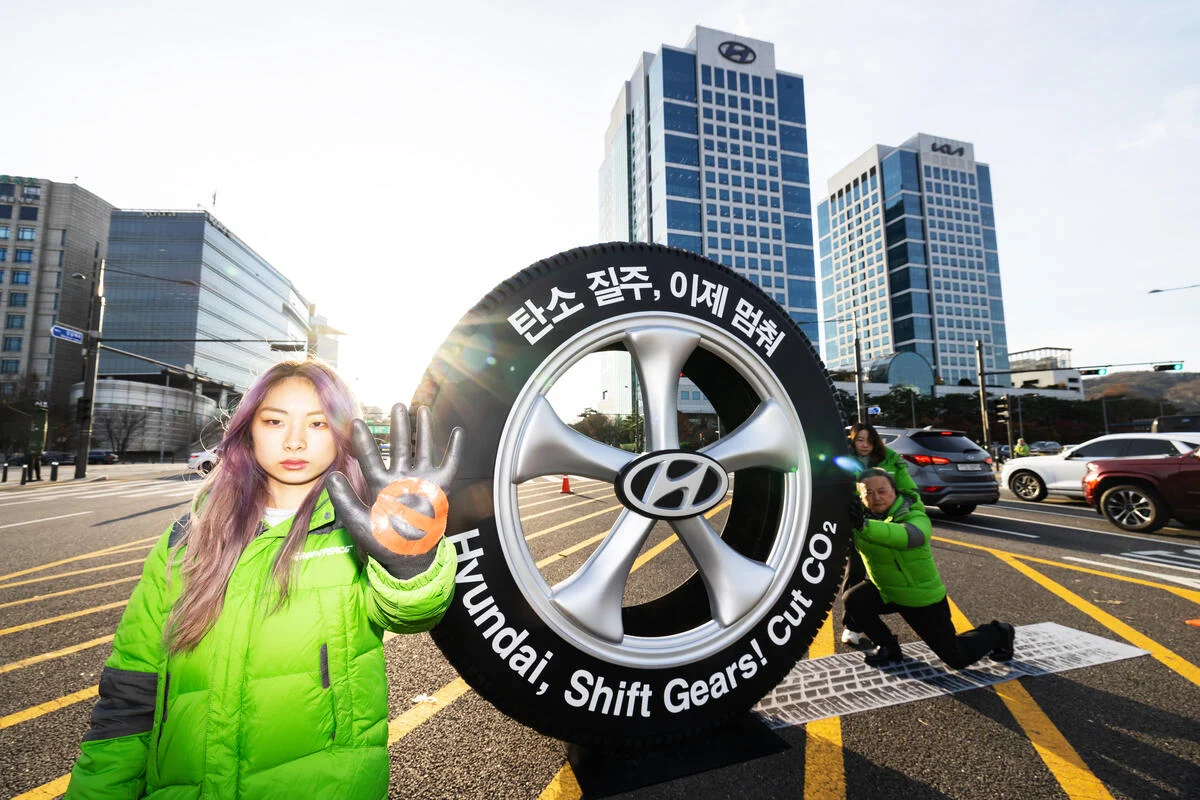
The shareholder vote and Kon’s subsequent remarks have been met with immediate and pointed criticism from environmental organizations. Erin Eunseo Choi, Climate and Energy Campaigner at Greenpeace East Asia, voiced significant concerns, stating, "Geopolitical volatility and soaring oil prices have exposed the vulnerability of our fossil fuel-dependent industries, accelerating EV demand while Toyota slows to adapt."
Choi further elaborated on the perceived disconnect between Toyota’s stated commitments and its actions. "In a reply to Greenpeace, Toyota said it supports the Paris Agreement, yet concrete steps remain invisible. Its executives speak of a ‘multi-pathway strategy,’ but there is no time for corporate complacency. An ambulance carrying a critically ill patient needs a clear destination and speed. The climate crisis is that patient, and the hospital is not getting any closer." This analogy powerfully conveys the urgency that environmental advocates believe is absent from Toyota’s current electrification roadmap.
Toyota’s Global Standing and Performance Metrics
Despite the criticisms, Toyota’s sheer scale of production remains unparalleled. In 2025, the company retained its title as the world’s largest automotive manufacturer by volume. However, its environmental footprint is substantial. According to Toyota’s own 2024 Sustainability Data Book, the company reported total lifecycle greenhouse gas emissions equivalent to 589.57 million tonnes of CO2. For comparative context, Japan’s total national annual emissions for the same period were 961.87 million tonnes, meaning Toyota’s lifecycle emissions represent a significant portion—over half—of the nation’s total.
The "2026 Lead the Charge" ranking, a comprehensive assessment of global automakers’ transition to zero-emission vehicles, paints a stark picture of Toyota’s relative standing. The company has fallen to 16th place out of 18 major automakers, marking its second consecutive annual decline. This downward trend is attributed to ongoing criticism regarding slow supply-chain decarbonization efforts and what is perceived as weaker human-rights tracking within its operations.
Furthermore, the data reveals a significant gap in BEV adoption. Battery electric vehicles constituted a mere 2% of Toyota’s total sales in 2025. This figure substantially lags behind many global competitors who have made BEVs a central pillar of their sales strategies. Adding to the concern is the absence of a clear, definitive internal combustion engine phase-out target from Toyota, a benchmark that many environmental watchdogs and policy makers are increasingly demanding.
Lobbying and Regulatory Influence
Beyond its product strategy, Toyota, along with the Japan Automobile Manufacturers Association ( JAMA), has faced scrutiny for its lobbying activities. Reports from organizations like InfluenceMap highlight efforts by Toyota and JAMA to influence governments in emerging markets such as Indonesia, Brazil, and Colombia. The focus of this lobbying, according to critics, has been to advocate for policies that favor biofuels and transitional powertrains. Environmental groups argue that these efforts, while potentially framed as pragmatic emission reduction steps, ultimately serve to delay the widespread adoption of fully electric vehicles, thereby hindering global decarbonization goals.
Economic Headwinds and Shifting Market Dynamics
Toyota’s adherence to its multi-pathway strategy is occurring against a backdrop of significant economic challenges and a rapidly shifting automotive market. Recent macroeconomic headwinds have reportedly cost the company an estimated US$4.3 billion due to surging material costs and lost sales. Despite these financial pressures, the global market for electric vehicles has continued to accelerate sharply.
This acceleration is particularly evident in regions crucial to Toyota’s business. In Southeast Asia, a primary market for the company’s combustion engine vehicles, and in Japan, the market is undergoing a rapid transformation. In Japan, for instance, March EV sales doubled year-on-year, signaling a growing consumer appetite for electric alternatives. These trends suggest that Toyota’s traditional markets are not immune to the global EV surge.
Akio Toyoda’s "Loneliness" and the Competitive Landscape
Interestingly, Akio Toyoda, the re-elected Chairman, has himself acknowledged a sense of isolation regarding his strong conviction in the internal combustion engine. In a past statement, he admitted to feeling "alone" as his views increasingly represented a minority opinion within the industry’s broader shift towards electrification. This personal sentiment, however, is now being directly linked by critics to the company’s strategic stasis.
"Loneliness is not a strategy, and it’s costing Toyota its market dominance," stated Choi. "To stay competitive against Chinese rivals—who now lead in pricing and technology and are already displacing Japanese automakers in Southeast Asia—Toyota needs an immediate, long-term electrification target." The rise of Chinese EV manufacturers, characterized by aggressive pricing, advanced technology, and rapid market penetration, presents a formidable competitive challenge to established players like Toyota, particularly in key Asian markets.
The Cost of Hesitation and a Call for Ambition
The implications of Toyota’s cautious approach extend beyond market share. As climate-driven extreme weather events intensify globally, the environmental and societal costs of delayed decarbonization are becoming increasingly apparent. Choi emphasized this point, stating, "Toyota’s customers and communities will bear the cost of this hesitation."
While acknowledging Toyota’s recent US$800 million investment in Kentucky, which includes provisions for EV production, Choi noted that it represents "a start, but Toyota has the scale to lead this transition globally." The call from Greenpeace and other environmental groups is for Akio Toyoda and the company’s leadership to align their substantial resources with genuine ambition for full electrification. The message is clear: the time for gradualism is passing, and a more decisive commitment to a zero-emission future is imperative.
Chronology of Key Events and Developments
- Past Years: Toyota establishes and consistently promotes its "multi-pathway" strategy, emphasizing a diverse range of powertrains including hybrids, hydrogen, and ICE vehicles alongside BEVs.
- Recent Years: Global demand for BEVs accelerates significantly, driven by environmental concerns, government incentives, and technological advancements. Competitors, particularly in China, rapidly expand their BEV offerings and market share.
- 2025: Toyota remains the world’s largest automaker by volume. BEVs account for only 2% of its total sales.
- 2026: Toyota falls to 16th place in the "Lead the Charge" ranking for the second consecutive year. The company faces continued criticism for slow supply-chain decarbonization and weaker human-rights tracking.
- Early 2026: Toyota reports significant financial impact from macroeconomic headwinds, including rising material costs.
- March 2026: EV sales in Japan double year-on-year, indicating a significant market shift.
- June 2026: At the Annual Ordinary General Shareholders’ Meeting, Akio Toyoda is re-elected Chairman, and Kenta Kon is approved as a board member, signaling continued investor support for the multi-pathway strategy. Kon reaffirms the company’s commitment to this approach.
- Post-Meeting: Environmental groups, including Greenpeace East Asia, issue strong rebukes of Toyota’s strategy, citing urgency in addressing the climate crisis and competitive pressures from other automakers.
Analysis of Implications
The shareholder vote and continued commitment to the multi-pathway strategy have several significant implications. Firstly, it suggests that a substantial portion of Toyota’s investor base prioritizes the company’s current financial stability and perceived market resilience over an immediate, aggressive pivot to BEVs. This could be influenced by a belief in the long-term viability of hybrid technology or a concern about the capital investment and potential market risks associated with a full BEV transition.
Secondly, the ongoing criticism from environmental organizations and the declining ranking in the "Lead the Charge" report highlight a growing disconnect between Toyota’s corporate strategy and global sustainability expectations. This could lead to increased regulatory pressure, reputational damage, and potential loss of market share to more aggressive BEV competitors, especially in markets where emission regulations are stringent or consumer preferences are rapidly shifting.
Thirdly, the success of Chinese automakers in both pricing and technological innovation in the EV sector presents a direct and escalating threat. If Toyota continues to lag in BEV development and market penetration, it risks ceding significant ground in crucial global markets, particularly in Asia.
Finally, the company’s approach to lobbying in emerging markets, while potentially aimed at managing a complex energy transition, could be perceived as actively obstructing global climate goals. This perception can further damage its international standing and lead to increased scrutiny from governments and advocacy groups worldwide.
Toyota’s leadership faces a critical juncture. While the shareholder vote provides a mandate to continue its current course, the evolving global landscape, competitive pressures, and mounting environmental urgency demand a re-evaluation of whether the "multi-pathway" is sufficiently agile and ambitious to navigate the future of mobility and effectively address the climate crisis. The company’s ability to adapt its strategy, accelerate its BEV development, and clearly communicate its long-term electrification targets will be crucial in determining its future success and its role in the global transition to sustainable transportation.

 Asep Darmawan
 Iffa Jayyana