Nila Kartika Wati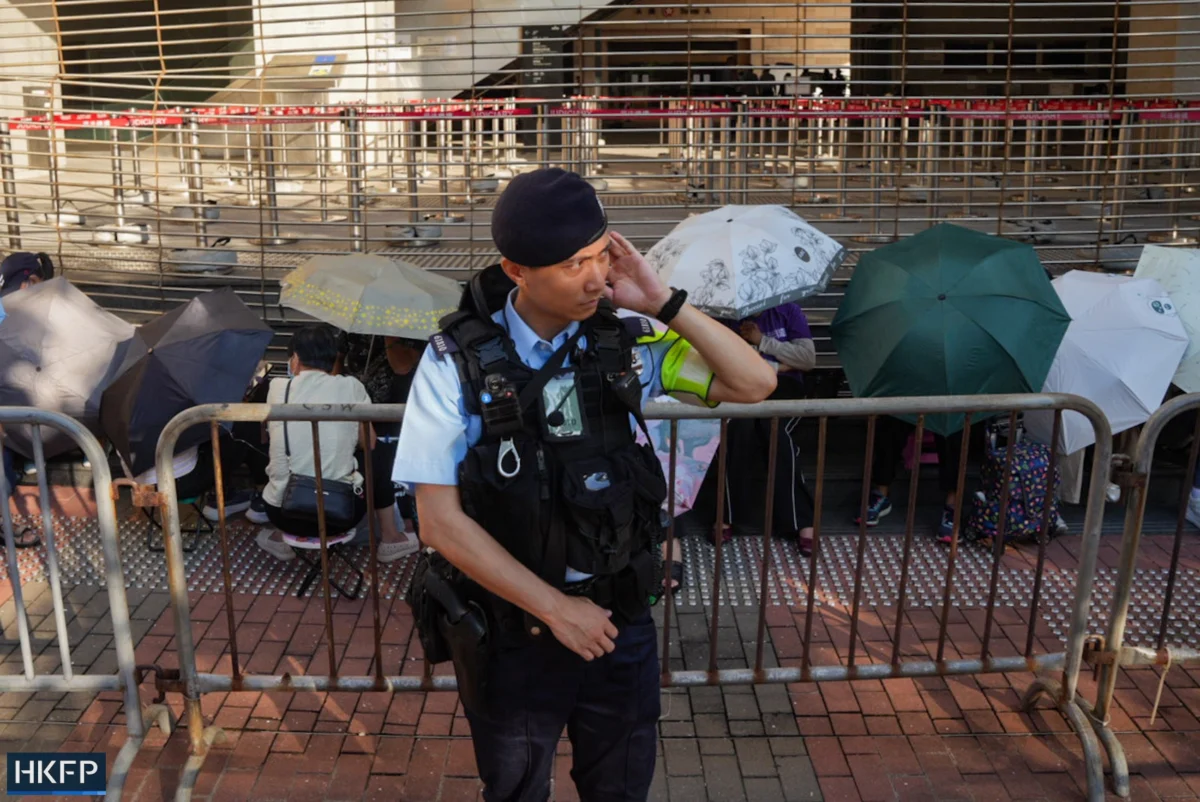
Three prominent activists, instrumental in organizing annual vigils commemorating the 1989 Tiananmen crackdown, have been handed substantial prison sentences, ranging up to seven years and three months, under Hong Kong’s Beijing-imposed national security law. The verdicts, delivered on Friday at the West Kowloon Law Courts Building, mark a significant escalation in the suppression of dissent and historical remembrance in the city. Chow Hang-tung received the longest sentence of seven years and three months, while Lee Cheuk-yan was sentenced to seven years. Albert Ho, who pleaded guilty, received a sentence of five years and two months.

These sentences underscore the stringent application of the National Security Law (NSL), enacted in June 2020, which has fundamentally altered Hong Kong’s legal and political landscape. The law criminalizes acts of secession, subversion, terrorism, and collusion with foreign forces, carrying severe penalties. The convictions of Chow, Lee, and Ho for "inciting subversion" reflect the authorities’ broad interpretation of this offense, extending it to activities that challenge one-party rule and commemorate events deemed sensitive by Beijing.
The Hong Kong Alliance in Support of Patriotic Democratic Movements of China, the now-defunct organization that led these annual vigils, was also fined HK$1.5 million. The group had been a powerful symbol of Hong Kong’s unique status as a space where the Tiananmen massacre could be openly remembered, a stark contrast to the mainland where such commemorations are strictly forbidden. The disbandment of the Alliance and the subsequent sentencing of its leaders signal the effective dismantling of organizations dedicated to democratic causes in Hong Kong.

A Legacy of Remembrance and the Crackdown
The 1989 Tiananmen crackdown remains a deeply sensitive and officially censored event within mainland China. On June 4, 1989, the People’s Liberation Army violently suppressed months of student-led pro-democracy protests in Beijing’s Tiananmen Square and surrounding areas. Estimates of the death toll vary widely, with reports suggesting hundreds, and possibly thousands, of civilians were killed. For over three decades, Hong Kong served as the primary site for public remembrance of this event, with the annual candlelight vigil in Victoria Park drawing tens of thousands of participants.
The Hong Kong Alliance was at the forefront of these commemorations. Founded in 1989, the organization’s core mission was to support democratic movements in China and to ensure the memory of the Tiananmen crackdown was preserved. The annual vigils organized by the Alliance were not merely memorial events; they were powerful demonstrations of freedom of assembly and expression, and a symbolic act of defiance against authoritarianism.

Chronology of the Case
The legal proceedings against Chow Hang-tung, Lee Cheuk-yan, and Albert Ho have been unfolding over a significant period, reflecting the complexity and sensitivity of the charges.
- June 4, 1989: The Tiananmen Square crackdown occurs in Beijing.
- 1989 – 2019: The Hong Kong Alliance organizes annual candlelight vigils in Victoria Park to commemorate the crackdown, becoming a globally recognized symbol of remembrance and freedom of expression.
- 2020: The vigil is banned for the first time, with authorities citing COVID-19 pandemic restrictions.
- 2021: The vigil is again banned. In September 2021, the Hong Kong Alliance votes to disband under mounting pressure and legal scrutiny.
- August 2026: Chow Hang-tung, Lee Cheuk-yan, and Albert Ho are found guilty of inciting subversion under the National Security Law. The court notes their long-standing "hostility towards the [Chinese Communist Party] and the Central Government."
- September 2026: The trio are sentenced. Chow Hang-tung receives seven years and three months; Lee Cheuk-yan receives seven years; and Albert Ho receives five years and two months. The Hong Kong Alliance is fined HK$1.5 million.
The ruling stated that the offense was considered "of a serious nature," placing the defendants within the higher sentencing band stipulated by the NSL. While the court acknowledged that the case did not involve violence or the threat of violence, and that the defendants had not presented a specific timetable or means to overthrow one-party rule, the court cited the broader social context, the prolonged duration of the Alliance’s activities (up to 14 months of the alleged subversion), and the defendants’ "mobilising power and influence" as factors in determining the severity of the sentences. The judges emphasized that the defendants "recalcitrantly pursued their course of conduct which was premeditated," despite understanding their actions might breach the constitution and the NSL.

Judicial Reasoning and Broader Context
The court’s judgment highlighted that while the NSL does not have retrospective effect, the broader context of the defendants’ actions and the Alliance’s agenda, including its public pronouncements and the duration of its activities, were considered relevant. The ruling noted that the Alliance had "publicised its agenda across activities, including the annual Tiananmen remembrance vigils, as well as on various social platforms." The court also took into account the defendants’ "certain degree of mobilising power and influence in Hong Kong" and the "citywide reach" of their activities.
Chow Hang-tung, in particular, maintained her innocence throughout the proceedings. During her mitigation hearing, she argued that her conviction under the NSL equated to declaring "pursuing democracy is a crime." She stated that her actions stemmed from democratic convictions, aimed at pursuing ideals and benefiting Hong Kong, without ill motives. She expressed no regret and affirmed her steadfast adherence to her beliefs, indicating she could not analyze the case from an "offender’s perspective" regarding its severity.

Reactions and Implications
The verdicts and sentences have drawn sharp criticism from international human rights organizations and the United Nations, who have condemned the crackdown on dissent and the erosion of freedoms in Hong Kong. These groups view the convictions as a direct assault on freedom of expression and assembly, core tenets of Hong Kong’s autonomy.
Conversely, the local government has lauded the convictions, framing them as necessary for maintaining law and order and safeguarding national security. This divergence in perspectives underscores the profound political chasm that has opened in Hong Kong since the implementation of the NSL.

The sentencing of these prominent activists has far-reaching implications for Hong Kong. It signals a clear intent by the authorities to silence any form of organized dissent, particularly concerning issues that are politically sensitive to Beijing. The effective end of the annual Tiananmen vigils and the dismantling of organizations like the Hong Kong Alliance represent a symbolic severing of Hong Kong’s historical connection to the pro-democracy movement in mainland China.
The NSL’s broad application, as seen in this case, raises concerns about the future of civil society in Hong Kong. Activists, journalists, academics, and ordinary citizens may increasingly self-censor for fear of crossing undefined legal boundaries. The sentences served by Chow, Lee, and Ho, who have already spent years in detention, are a stark reminder of the personal cost of challenging the established order in the current political climate.

The conviction of the Hong Kong Alliance itself, as an organization, and the substantial fine imposed, further weaken the space for independent civil society. The group’s historical role in documenting and commemorating the Tiananmen crackdown means its dissolution and the sentencing of its leaders will undoubtedly be viewed globally as a significant blow to democratic values and historical memory. The legal framework established by the NSL appears to prioritize loyalty to the state over fundamental freedoms, fundamentally altering the character of Hong Kong as a global city.


 Sagoh
Sagoh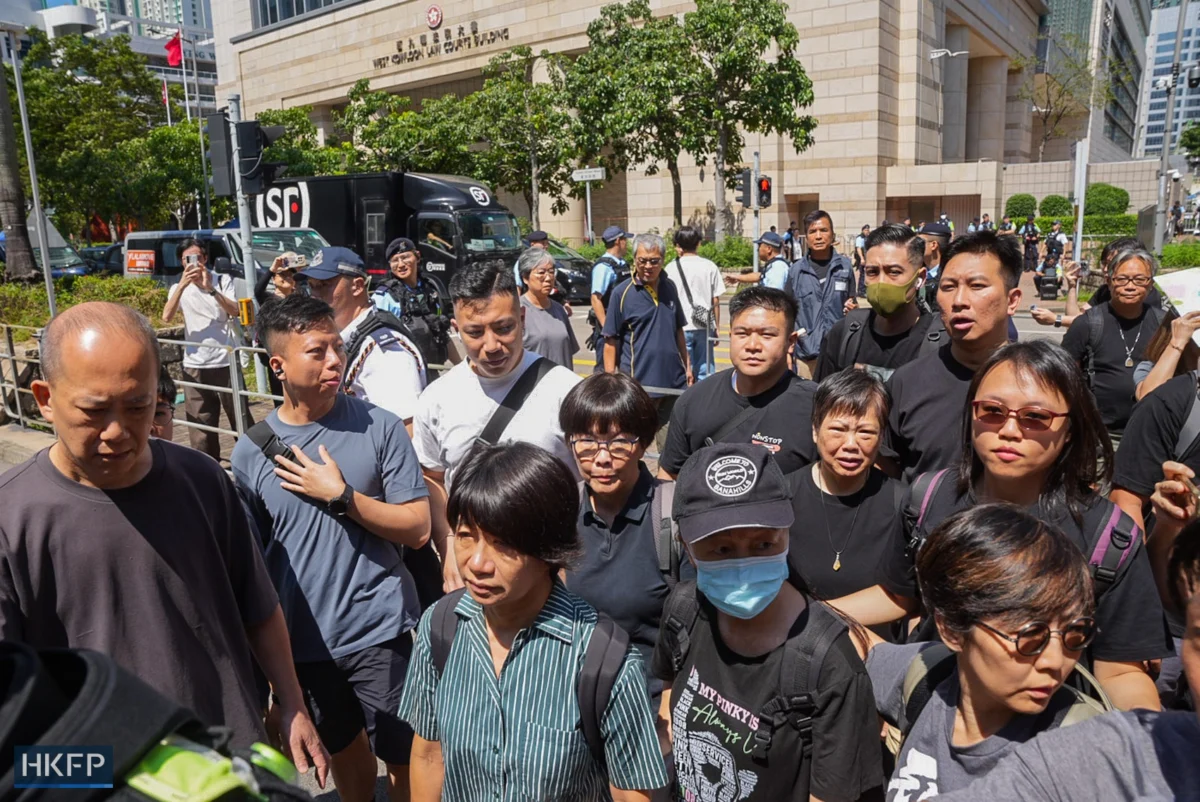
 Lina Irawan