Sagoh
Sagoh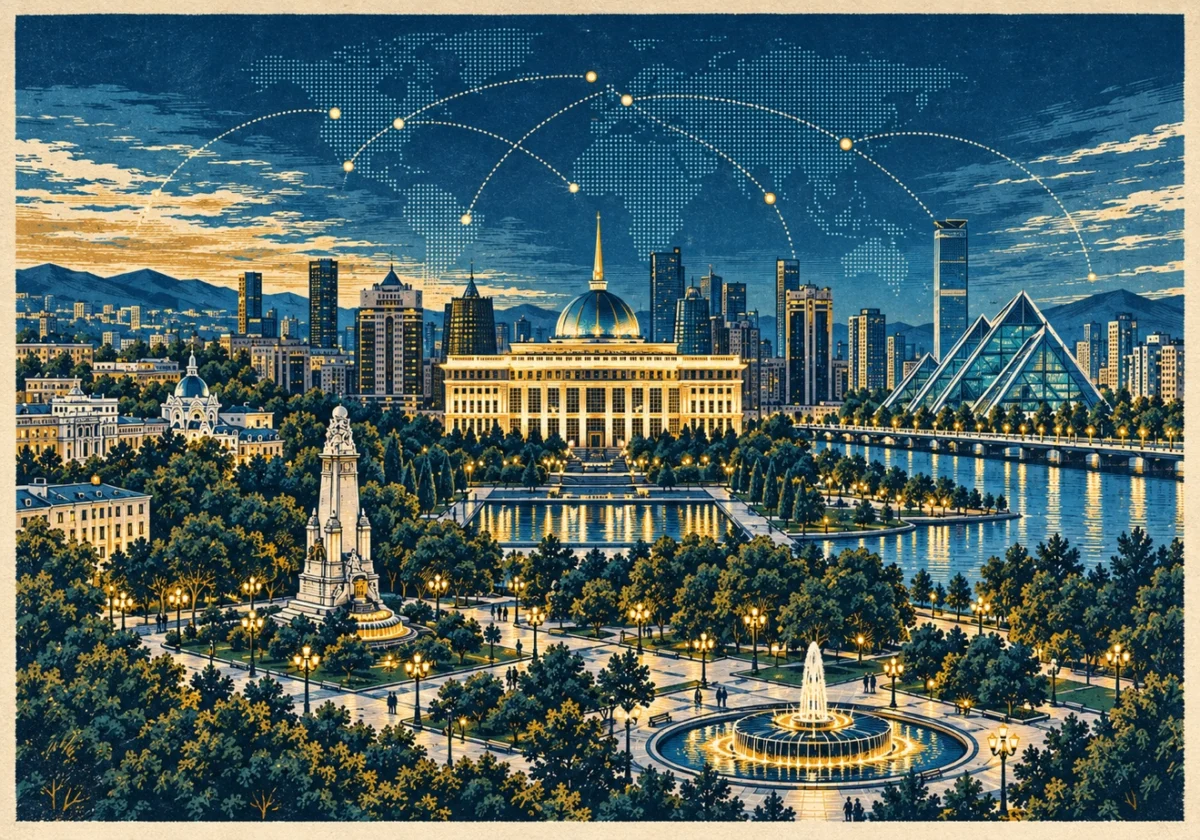
For many Chinese investors, Kazakhstan and the broader Central Asian region have long been primarily associated with vast natural resources – a perception anchored in the abundant reserves of oil, gas, and various mining commodities. However, this established view is undergoing a significant transformation, driven by ambitious initiatives to diversify the Kazakh economy and position it as a pivotal financial and technological gateway between East and West. Zhanbolat Kakishev, Chief Product Officer of the Astana International Financial Centre (AIFC), is at the forefront of this shift, articulating a vision where Kazakhstan offers far more than just raw materials.
Historically, Chinese investment patterns gravitated towards advanced economies in Europe, America, Australia, and Canada, driven by the desire to access international customers and integrate into global supply chains. Central Asia, Kakishev noted in an interview with TechNode in Astana, was often "skipped and overlooked," relegated to a mere "natural-resources type play." This perception, while rooted in decades of economic interaction, belied Kazakhstan’s strategic geographical position and its burgeoning efforts to build a modern, diversified economy. Today, Kazakhstan leverages its unique access to vast Eurasian markets, attractive investment incentives, and special economic zones, with the AIFC emerging as a crucial platform for Chinese companies seeking international expansion beyond traditional resource extraction.
The Genesis of AIFC: A Common-Law Oasis in Central Asia
The Astana International Financial Centre was established in 2018 under a constitutional law, marking a bold step by Kazakhstan to create an independent financial jurisdiction within its borders. This unique entity operates with its own distinct legal and regulatory framework, designed to align with international best practices and foster investor confidence. Kakishev emphasized that the AIFC is structured as a "common law jurisdiction," a significant departure from Kazakhstan’s continental civil law system. This adoption of common law, familiar to global financial centers like London, New York, Hong Kong, and Singapore, is intended to provide legal certainty and predictability for international investors, including those from China and other advanced economies.
The AIFC boasts its own independent regulator, the Astana Financial Services Authority (AFSA), responsible for licensing, regulating, and supervising financial services and market activities within the center. Complementing this regulatory body is an independent judicial system, comprising the AIFC Court and an International Arbitration Centre. The AIFC Court is particularly notable for integrating English common law principles and being staffed by experienced English judges, including a former Chief Justice of England and Wales who serves as its chairman. This institutional setup provides a robust legal infrastructure for dispute resolution, further enhancing its appeal to international businesses accustomed to common law environments.
Beyond its regulatory and judicial pillars, the AIFC also operates the Astana International Exchange (AIX). While Kazakhstan’s national stock exchange in Almaty primarily handles tenge-denominated securities, the AIX focuses on international currencies and securities within the common-law framework. This dual-exchange system allows for specialized market access and caters to different investor needs. As Kakishev highlighted, the AIFC offers a comprehensive range of corporate structures, including partnerships, private and public companies, foundations, and trusts, mirroring options available in leading global financial centers. Its business-oriented approach allows for faster adaptation of regulations compared to national legislative processes, offering agility and responsiveness to market demands. At the time of the interview, the AIFC had surpassed 6,200 registered companies, demonstrating its rapid growth and appeal. To facilitate international business, the AIFC provides an "Expat Centre," a "one-stop shop" offering approximately 120 services, including crucial visa support for foreign professionals.

Diversifying the Portfolio: From Aviation to AI Infrastructure
As Chief Product Officer, Kakishev is instrumental in spearheading the development of new financial products and investment initiatives that extend beyond traditional finance. One significant area of focus is aviation finance. The Central Asian region, particularly Kazakhstan, Azerbaijan, and Uzbekistan, is projected to lease around 300 new aircraft over the next four years to meet growing demand for air travel. The AIFC is actively developing a specialized framework to attract international aviation leasing companies, aiming to capitalize on this regional growth. Furthermore, the center is exploring avenues in sustainable aviation fuel (SAF), aligning with global efforts to decarbonize the aviation sector.
Green finance represents another cornerstone of AIFC’s diversification strategy. Leveraging Kazakhstan’s vast land area and abundant renewable energy potential, the center is actively developing markets for renewable energy certificates and carbon trading. Kakishev noted that the country’s extensive landscapes create unique opportunities for nature-based solutions and projects aimed at carbon sequestration and biodiversity conservation. This aligns with Kazakhstan’s national commitment to reduce carbon emissions and transition to a greener economy, attracting environmentally conscious investors seeking impact alongside returns.
Islamic finance is also a rapidly expanding sector within the AIFC. Recognizing the growing global market for Sharia-compliant financial products, the AIFC has cultivated expertise by incorporating both Malaysian and Arabic scholars within its organization. This diverse intellectual foundation has enabled the development of a robust Islamic finance framework that, according to Kakishev, "reconciles both" major schools of Islamic financial thought, making it accessible and attractive to a broad spectrum of investors from the Muslim world.
Beyond finance, the AIFC is strategically examining Kazakhstan’s potential role in the rapidly evolving field of artificial intelligence. While acknowledging that Kazakhstan might be "too late" to compete directly in the development of large language models (LLMs) against global giants, Kakishev believes the country holds significant opportunities in AI infrastructure. "We see a lot of potential for Kazakhstan to play in the infrastructure space, building data centers," he stated. Kazakhstan’s central location, relatively stable energy supply, and developing digital infrastructure position it as an attractive hub for data storage and processing, critical components for the global AI ecosystem.
Translating Resources and Ideas into Investable Opportunities
While the focus is on diversification, mining remains a vital sector for Kazakhstan’s economy. The AIFC is not abandoning this traditional strength but rather working to address financing gaps and enhance its appeal to international investors. Kakishev cited the dual IPO of Jiaxin International Resources Investment Limited with Hong Kong as a successful example, expressing a desire for "more Jiaxins." This indicates a strategic approach to leveraging international capital markets to support the growth and modernization of Kazakhstan’s resource sector.

To further professionalize and attract investment into the mining sector, the AIFC is developing a "junior mining platform." This initiative aims to serve as a centralized depository where exploration companies can present their projects to potential investors after preliminary assessments. By streamlining the investment process and providing a structured environment for project evaluation, the AIFC seeks to bridge the gap between early-stage mining ventures and capital providers, fostering growth in a crucial industry.
The AIFC’s innovative financial structures are not limited to traditional sectors. The center is applying similar models to foster growth in creative industries, enabling filmmakers, musicians, and other creative professionals to establish investment vehicles through the AIFC. This approach allows for the structured financing of cultural projects, making it easier for international players to invest in Kazakhstan’s burgeoning creative sector through familiar common-law General Partner-Limited Partner (GP-LP) structures. This move reflects a broader global trend of recognizing the economic potential of cultural and creative industries.
China, Hong Kong, and Kazakhstan’s Next Phase of Partnership
For Kakishev, China and Hong Kong are indispensable partners in Kazakhstan’s ongoing development trajectory. "I think China, including Hong Kong, is a natural fit with the opportunities which exist in Kazakhstan," he affirmed. This partnership is envisioned as multi-faceted, with Hong Kong serving as a crucial source of capital and financial expertise, while mainland China contributes unparalleled manufacturing capabilities and technological prowess.
Kakishev particularly emphasized the "technology transfer" dimension of this collaboration. "We don’t want only investments; we want capabilities," he stated, underscoring Kazakhstan’s ambition to absorb and integrate advanced technologies. Key areas highlighted for this knowledge and technology transfer include automobile manufacturing, advanced manufacturing techniques, composites, and critical minerals processing. This strategic focus aims to move Kazakhstan up the value chain, creating a "win-win situation" where Chinese expertise and capital facilitate Kazakhstan’s industrial and technological advancement, while offering Chinese companies new markets and production bases.
The context of China’s Belt and Road Initiative (BRI) is crucial here. Kazakhstan, as a vital transit hub along the BRI’s land corridors, has already seen significant Chinese investment in infrastructure, logistics, and transportation. The AIFC’s efforts represent a natural evolution of this relationship, moving beyond physical connectivity to encompass financial services, technological collaboration, and broader economic integration. This deeper engagement aligns with China’s stated goal of fostering closer economic ties with its Central Asian neighbors, and Kazakhstan’s own aspiration to become a regional economic powerhouse.
Kazakhstan as a Launchpad for Startups and Global Expansion

Beyond large-scale industrial and financial collaborations, Kakishev also envisions Kazakhstan as a strategic launchpad for Chinese technology companies seeking international expansion. "Technology companies usually want to scale," he observed. Instead of immediately entering highly competitive Western markets, which often involve navigating complex regulatory landscapes and intense competition, startups could leverage Kazakhstan and the wider Eurasian market as a "good piloting stage."
Kazakhstan’s unique geographical and cultural position makes it an ideal testing ground. "Kazakhstan was always at the crossroads, uniting Europe, China, north Russia, and some of the Arabic culture as well, because of the historical heritage," Kakishev explained. This inherent multiculturalism and diverse consumer base provide a fertile environment for startups to test their hypotheses, refine their products, and adapt their business models before venturing into larger, more disparate global markets. "People here understand different cultures, and it’s a good place to test your hypotheses and pivot your startup into a new geographic location," he added.
This dual track of cooperation – encompassing government digitalization and startup ecosystem development – forms the bedrock of Kakishev’s vision for China-Kazakhstan partnership. He firmly believes in "both big partnerships, win-win, both in the government sector as well as the private sector." Government digitalization initiatives can leverage China’s extensive experience in e-governance and smart city solutions, while private sector collaborations can foster a vibrant startup ecosystem, attracting venture capital and entrepreneurial talent.
In conclusion, for Chinese companies looking beyond their traditional investment horizons, Kazakhstan is actively redefining its proposition. Through the Astana International Financial Centre, it aims to be seen not merely as a reservoir of natural resources, but as a sophisticated financial hub, a proactive technology partner, and an invaluable testing ground for global expansion. This strategic pivot, underpinned by a robust common-law framework, diverse financial products, and a keen eye on technological advancement, positions Kazakhstan as a compelling and increasingly diversified destination for international investment and collaboration in the heart of Eurasia.


 Iffa Jayyana
 Suro Senen