 Evan Lee Salim
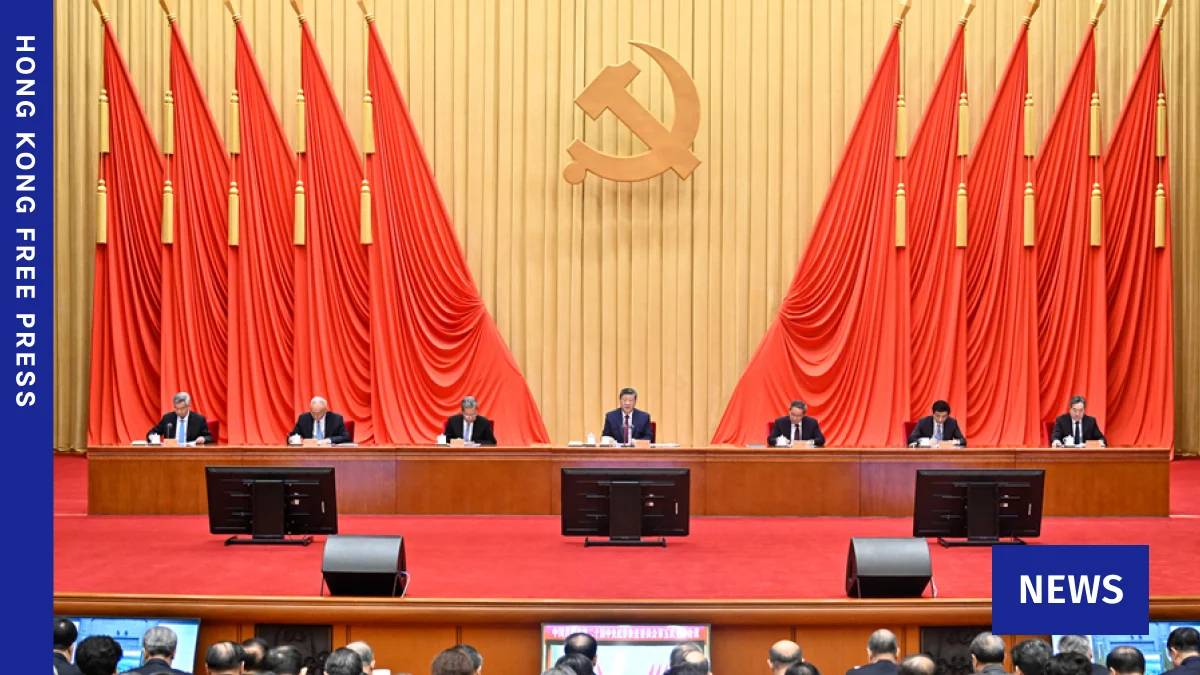
The Chinese Communist Party (CCP) has announced a significant tightening of oversight mechanisms for its vast cadre of officials, extending scrutiny to their personal assets, family business dealings, and online activities. This far-reaching directive, detailed in a party document released on Sunday by the official Xinhua state news agency, signals a new phase in President Xi Jinping’s enduring anti-corruption campaign, emphasizing "all-around management and regular oversight" throughout an official’s career. The resolution emerged from this week’s annual plenary session in Beijing, which centered on enhancing party governance and intensifying efforts to clamp down on graft.
The Latest Directives: Expanding the Net of Oversight
The newly published resolution, emanating from the CCP’s powerful Central Committee, outlines a robust framework designed to ensure the absolute loyalty and integrity of party members. A core tenet of the new policy is the stringent examination of officials’ financial health. "Starting with high-ranking officials, we will tighten all-around management and regular oversight of officials, imposing strict requirements throughout their career," the document stated. This includes a direct mandate to investigate any discrepancies between an official’s reported income and their lifestyle. "Those with family property and spending far exceeding their normal incomes will be examined, and relevant verifications will be carried out," the resolution specified, broadening the scope of inquiry to include the business ventures undertaken by officials’ spouses and children – a common channel for illicit enrichment in China.

Beyond financial probity, the party is now explicitly extending its supervisory gaze into the digital realm. The resolution declares, "We will better regulate the online behavior of Party members." This move underscores the CCP’s increasing concern over how officials interact with and are perceived in the digital space, where information can spread rapidly and potentially undermine party authority or expose indiscretions. Furthermore, the document addresses emerging challenges in financial malfeasance, stating that the party "would also combat corruption carried out through virtual currencies and blockchain." This acknowledges the growing sophistication of corrupt practices and the need for the party’s disciplinary apparatus to adapt to technological advancements that can facilitate illicit financial flows.
A Decade of Anti-Graft: Xi Jinping’s Signature Campaign
The latest measures are not an isolated initiative but rather a significant escalation of President Xi Jinping’s signature anti-corruption campaign, often dubbed the "Tigers and Flies" campaign, launched shortly after he assumed power in late 2012. Over the past decade, this sweeping purge has become a defining characteristic of his leadership, targeting both high-ranking "tigers" and lower-level "flies" across all sectors of government, state-owned enterprises, and the military.
The campaign has ensnared an unprecedented number of officials, estimated to be in the millions, ranging from village heads to politburo members. Prominent figures caught in the dragnet include former Politburo Standing Committee member Zhou Yongkang, once China’s powerful security chief; former Politburo member Bo Xilai, a charismatic and ambitious politician; and former Central Military Commission vice chairmen Xu Caihou and Guo Boxiong, both high-ranking generals. The scale of these purges has been immense, with thousands of officials being investigated, dismissed, or imprisoned. The Central Commission for Discipline Inspection (CCDI), the party’s top anti-graft watchdog, has been instrumental in executing these investigations, wielding immense power and operating largely outside the conventional legal system.

The official narrative consistently frames the campaign as a necessary effort to restore public trust in the party, ensure its long-term survival, and maintain clean governance. However, many analysts outside China have also viewed it as a potent tool for consolidating Xi Jinping’s personal power, eliminating political rivals, and enforcing absolute loyalty within the party ranks, thereby strengthening his authority and paving the way for his unprecedented third term and potentially beyond.
Chronology of Key Anti-Graft Developments Under Xi Jinping:
- November 2012: Xi Jinping assumes power, immediately vowing to fight corruption at all levels, targeting "tigers and flies."
- December 2012: Li Chuncheng, a provincial deputy party chief, becomes the first high-ranking official to be investigated under Xi’s campaign, signaling its serious intent.
- 2013-2014: The campaign gains significant momentum, with major figures like Xu Caihou (former CMC Vice Chairman) and Zhou Yongkang (former Politburo Standing Committee member) coming under investigation, shattering the unwritten rule that senior leaders were immune from prosecution.
- 2015: Guo Boxiong, another former CMC Vice Chairman, is purged, further consolidating Xi’s control over the military.
- 2016-2017: Focus shifts to enforcing "political discipline" and ideological purity, ensuring adherence to Xi Jinping Thought. New supervisory commissions are established to extend oversight beyond party members to all public servants.
- 2018: The National Supervisory Commission (NSC) is established, integrating various anti-graft bodies and expanding the reach of supervision to cover all state employees, not just party members.
- 2019-2020: The campaign continues, targeting officials in financial institutions, state-owned enterprises, and the judiciary, highlighting systemic issues.
- 2021-2023: Renewed emphasis on rooting out "political gangs" and "disloyal elements," especially within the security apparatus and military.
- January 2026 (referencing the article’s date): Fifth Plenary Session of the 20th CCP Central Commission for Discipline Inspection reinforces the commitment to "full and rigorous governance."
- This Week (referencing the article’s date): Annual plenary session in Beijing focuses on governance and anti-corruption, culminating in the new resolution.
- Sunday (referencing the article’s date): Release of the Central Committee document outlining tightened oversight on assets, online activities, and digital corruption.
Recent Purges and Political Realignment
The recent plenary session provided further evidence of the ongoing purges within the party. State media confirmed that 33 more dignitaries had been ejected, including Zhang Youxia, a former Politburo member and once China’s highest-ranking general. The removal of such a senior military figure underscores the party’s unwavering determination to maintain absolute control over its armed forces and eliminate any perceived threats to internal cohesion or leadership. While the specific reasons for each individual’s removal are often shrouded in secrecy, such announcements typically follow internal investigations by disciplinary bodies and serve as a stark warning to others within the party. These recent dismissals come as the party prepares for its Party Congress, expected in the second half of 2027, an event where leadership changes and policy directions are solidified.

The Party’s Rationale: Ensuring Purity and Discipline
The CCP consistently frames these intensified measures as crucial for "advancing full and rigorous governance of the party." According to Xinhua, the plenum adopted a decision to this effect, emphasizing the reduction of corruption among cadres. The party’s public statements stress that these efforts are aimed at maintaining the integrity and efficacy of the party, ensuring its ability to lead the nation.
Interestingly, the Sunday resolution also touched upon "improving the efficacy of intraparty democracy" by advocating for more avenues for members to express their opinions and encouraging them to "speak their minds." It stated, "We must uphold and improve the systems for exercising intraparty democracy, respect the principal position of Party members, and safeguard their democratic rights." This seemingly contradictory stance – tightening oversight while promoting internal democracy – highlights the party’s careful balancing act: seeking to foster internal cohesion and feedback while ensuring strict adherence to central leadership and disciplinary norms. The "democracy" described is typically within the confines of party ideology and loyalty, not a challenge to the one-party system itself.
Analysts Weigh In: Power Consolidation and Governance

Analysts largely concur that while the anti-graft campaign does address genuine issues of corruption, its primary function under Xi Jinping has evolved to include significant political dimensions. The elimination of perceived rivals and the cultivation of a loyal cadre are seen as key outcomes. The expansion of oversight to personal assets and online behavior reflects a further consolidation of power, allowing the party leadership unprecedented insight into the lives of its members.
The move to scrutinize family wealth and business dealings is particularly significant. Historically, many corrupt officials have used family members to hide illicit gains or conduct business that directly benefits from their official positions. By targeting these avenues, the party aims to close loopholes and make it more difficult for officials to enrich themselves indirectly. However, critics argue that such intrusive measures could also be used selectively to target individuals based on political expediency rather than solely on genuine corruption.
The regulation of online behavior is seen as an extension of China’s broader internet censorship and surveillance regime into the party’s internal discipline. It reflects concerns about the potential for dissent, unauthorized information sharing, or "negative" publicity emanating from party members online. This could stifle internal discussion and critical feedback, even if framed as maintaining party discipline.
The explicit mention of virtual currencies and blockchain technology signifies the party’s recognition of new frontiers for illicit financial activities. As digital assets become more prevalent, their anonymity and cross-border nature present challenges for traditional financial oversight. The CCP’s proactive stance in this area indicates a determination to prevent these technologies from becoming safe havens for corrupt funds.

Looking Ahead: Implications for China’s Political Landscape
The intensified oversight signals a continued trajectory towards a more disciplined, centralized, and ideologically aligned CCP under Xi Jinping. For party officials, these measures will likely instill a greater sense of caution and self-censorship, particularly in financial dealings and public commentary. While it may lead to a reduction in overt corruption in some areas, it also risks fostering a culture of fear and paralysis, where officials become overly risk-averse, potentially hindering innovation and efficient governance.
Economically, the campaign’s impact is complex. While reducing corruption can improve the business environment by fostering fair competition, the climate of intense scrutiny could also deter investment if officials become hesitant to approve projects or engage with private enterprises, fearing accusations of impropriety.
Socially, the party’s sustained anti-graft drive could bolster its legitimacy among ordinary citizens who are often frustrated by official corruption. However, the extent to which these measures genuinely address systemic issues versus serving as tools for political control will remain a subject of debate.

As China approaches its 2027 Party Congress, these new directives underscore the leadership’s commitment to consolidating power and ensuring the long-term stability and ideological purity of the CCP. The message is clear: loyalty, discipline, and adherence to party norms will be paramount, and the net of oversight will continue to expand, leaving fewer avenues for impropriety or dissent within the party’s ranks. The era of robust internal scrutiny is firmly entrenched, shaping the conduct and careers of China’s vast officialdom for the foreseeable future.

 Sagoh
 Asro