Lina Hope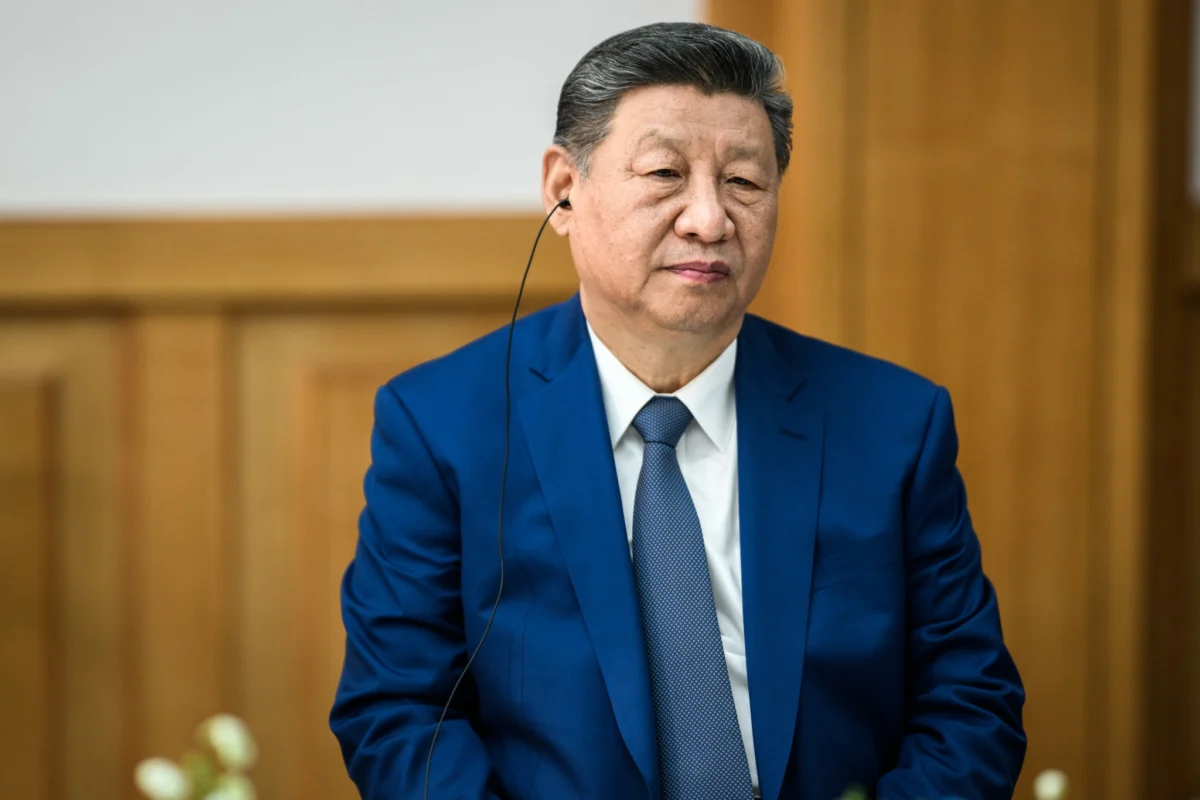
Chinese President Xi Jinping delivered a powerful address at the World Artificial Intelligence Conference (WAIC) in Shanghai on Friday, asserting that artificial intelligence development must not be monopolized by any single nation. His remarks, made at the opening of the prestigious four-day event, underscored a strong call for enhanced international cooperation, urging a collective approach to governing the rapidly advancing sector amidst escalating geopolitical tensions and concerns over AI’s transformative, yet potentially perilous, capabilities.
The Geopolitical Chessboard of AI Dominance

Xi Jinping’s pronouncement comes at a critical juncture in the global technological landscape, where the race for AI supremacy has become a central battleground for economic power, national security, and ideological influence. The United States and China are widely acknowledged as the two leading contenders in this high-stakes competition, with both nations pouring immense resources into research, development, and deployment of AI technologies. While American offerings, particularly in advanced chips and frontier computing infrastructure, have historically held a significant lead, Chinese AI models are rapidly closing the gap. These Chinese innovations are not only demonstrating comparable performance but are also attracting a growing user base globally, often due to lower costs and flexible, open-source approaches.
The backdrop to Xi’s statements includes a concerted effort by the United States and the European Union to impose restrictions on Chinese tech imports. These measures, frequently justified under the umbrella of national security concerns, aim to curb China’s access to critical components and advanced intellectual property, particularly in semiconductor technology. This policy of "decoupling" or "de-risking" has fueled a narrative in Beijing that Western powers are attempting to stifle China’s technological ascent. Xi directly addressed this, stating, "We should jointly oppose overstretching the national security concept in the field of AI or placing one country’s security over that of others." This highlights China’s perception that these restrictions are not solely about legitimate security interests but are also strategic moves to maintain technological hegemony. The recent internal debates within Washington regarding who controls access to cutting-edge AI labs further illustrate the intense struggle for technological leadership and the inherent complexities of regulating such a pivotal domain.
WAIC: A Showcase for China’s AI Ambitions

The World Artificial Intelligence Conference (WAIC) serves as China’s premier annual platform for showcasing its technological prowess and articulating its vision for the future of AI. Described by Poe Zhao of analysis publication Hello China Tech as "the most important annual event for understanding the direction of China’s AI industry," WAIC brings together over 1,000 of China’s leading tech firms, alongside government officials, researchers, and prominent industry figures. This year’s event is particularly significant, with approximately 3,000 products on display, ranging from powerful semiconductor systems designed for advanced AI computing to groundbreaking consumer applications, such as a smartphone capable of autonomously operating various applications.
The conference’s agenda goes beyond mere exhibition; it acts as a strategic forum for shaping global discourse on AI governance. This year, particular emphasis has been placed on the transition from theoretical AI models to scalable systems that can be widely deployed in everyday life. A key highlight is the focus on AI agents – intelligent tools capable of engaging in sophisticated conversations with users, managing complex software environments, and executing multi-step tasks. This shift signifies a maturation of China’s AI industry, moving beyond foundational research to practical, integrated solutions that promise to reshape various sectors.
Among the notable innovations unveiled at WAIC are Moonshot AI’s Kimi K3, a powerful new flagship model from the Beijing-based startup, whose performance is reportedly challenging, if not surpassing, some of the best offerings from US developers. MiniMax’s M3 model is another prominent feature, alongside the demonstration of the first mass-produced phone equipped with an autonomous AI agent, signaling a new era of human-computer interaction. Huawei, a company at the forefront of the US-China tech rivalry, also presented its Atlas 950 "supernode," an advanced AI architecture designed for intensive learning and reasoning tasks, further cementing its position in the high-performance computing segment.

Xi’s Vision for "Human Control" and Global Governance
President Xi’s address extended beyond a critique of unilateral tech restrictions to outline a comprehensive vision for responsible AI development. He unequivocally called for AI development to be a "symphony of international cooperation," rather than a "solo performance by a single country." This metaphor underscores China’s advocacy for a multilateral approach, positioning itself as a champion of inclusive global governance in the face of what it perceives as protectionist tendencies from Western nations.
A central theme of Xi’s message was the imperative to ensure that AI "is always under human control." To achieve this, he proposed the establishment of robust legal frameworks, stringent regulations, sophisticated technological monitoring systems, effective early warning mechanisms, and comprehensive emergency response protocols. This "people-centric" approach, as he termed it, aims to mitigate the growing concerns surrounding AI’s potential misuse. These concerns are multifaceted, encompassing the deployment of AI in military combat, which raises profound ethical questions and the specter of autonomous weapons; its exploitation by malicious actors such as hackers and terrorists for cyber warfare or social disruption; and its broader societal impact on employment landscapes, economic structures, and democratic processes. By emphasizing human oversight and a cautious, regulated approach, Xi sought to reassure both domestic and international audiences about China’s commitment to responsible AI development.
Forging New Alliances: The World Artificial Intelligence Cooperation Organization
In a tangible step towards fostering international collaboration, China initiated the establishment of the World Artificial Intelligence Cooperation Organization (WAICO) during the WAIC event. On Thursday, prior to Xi’s opening address, Foreign Minister Wang Yi presided over the signing of an agreement to create this intergovernmental body, joined by representatives from 29 countries, including significant partners such as Russia, Pakistan, and Indonesia. Headquartered in Shanghai, WAICO’s stated mission is to promote consultation and collaboration among its members, thereby ensuring the "healthy and orderly" development of AI globally.
The formation of WAICO can be seen as China’s strategic move to create an alternative, non-Western-centric platform for AI governance. In an environment where existing international bodies and Western-led initiatives (such as the UK’s AI Safety Summits or G7 discussions on AI) often reflect the norms and interests of developed Western economies, WAICO offers a forum for countries that may feel underrepresented or marginalized in these dialogues. The participation of UN Chief Antonio Guterres, alongside leaders like Cambodia’s Hun Manet and Thailand’s Anutin Charnvirakul, signals the broad international interest in China’s approach and its efforts to build a coalition around its vision for AI. This initiative directly challenges the notion of a singular, universally accepted framework for AI governance, instead promoting a multi-polar approach where different regional and national perspectives can coalesce.

The Economic Engine of China’s AI Ecosystem
Beyond political rhetoric and governance initiatives, China’s AI ecosystem is driven by substantial state investment and a burgeoning domestic market. AI has been designated a strategic pillar of China’s industrial policy, with extensive government support aimed at cultivating a self-sufficient and globally competitive ecosystem, spanning everything from cutting-edge chip production to widespread consumer applications.
The scale of this growth is remarkable. Official data indicates that the Chinese AI market was valued at a staggering 1.2 trillion yuan (approximately US$177 billion) in 2025, with projections anticipating a further growth of over 30 percent this year. This expansion is fueled by an exponential increase in AI usage; state media reports, citing officials, that the daily consumption of "tokens" – the industry unit measuring AI usage – has surged a thousandfold over the past two years. This metric underscores the rapid integration of AI into various sectors of the Chinese economy and society.

China’s commitment to AI is also evident in its intellectual property output. According to the World Intellectual Property Organization (WIPO), China leads the world in patent filings for generative AI, with more than 43,000 such filings recorded between 2024 and 2025. This prolific innovation demonstrates not only the sheer volume of research and development but also the strategic intent to secure a dominant position in foundational AI technologies.
Furthermore, China’s approach to AI development, particularly its emphasis on open-source models, is gaining traction internationally. A growing number of foreign companies, including industrial giants like Siemens, are reportedly adopting Chinese open-source AI models. This trend is attributed to several factors: their competitive performance, significantly lower costs compared to proprietary Western offerings, and the flexibility they provide for customization. This stands in contrast to the often closed and tightly controlled systems offered by US giants such as OpenAI and Anthropic, presenting a viable alternative for businesses seeking more adaptable and cost-effective AI solutions.
Implications and the Road Ahead

President Xi Jinping’s address at WAIC and the initiatives launched during the conference carry significant implications for the future of AI and global technological governance.
- Geopolitical Rebalancing: Xi’s call for international cooperation and his strong stance against "overstretching the national security concept" are direct responses to US-led tech restrictions. China is actively positioning itself as a proponent of multilateralism and open collaboration, contrasting this with what it portrays as unilateral protectionism. This narrative seeks to win over developing nations and those wary of a tech future dominated by a few Western powers.
- Shaping Global Norms: The establishment of WAICO signifies China’s ambition to create and influence global AI norms and standards. By building a coalition of like-minded nations, China aims to develop governance frameworks that align with its own technological philosophy and geopolitical interests, potentially leading to a fragmentation of global AI governance efforts into competing blocs.
- Economic Competition and Open Source: China’s rapid advancements, coupled with its focus on lower-cost, customizable open-source models, represent a formidable challenge to the current dominance of Western tech giants. This approach could foster alternative AI ecosystems and supply chains, offering greater choice and potentially lower barriers to entry for countries and businesses globally. The adoption of Chinese models by companies like Siemens underscores this growing competitive edge.
- Ethical and Safety Frameworks: While Xi’s emphasis on "human control" and a "people-centric" approach resonates with universal ethical concerns about AI, the practical implementation of such principles within China’s political system will be closely watched. The development of robust laws, regulations, and monitoring systems is crucial, and transparency regarding their application will be key to building international trust.
- Technological Momentum: The innovations showcased at WAIC, from advanced chips to sophisticated AI agents, confirm China’s sustained and rapid technological progress. The narrative is no longer merely one of "catching up" but of genuine, head-to-head competition, pushing the boundaries of AI capabilities.
In conclusion, the World Artificial Intelligence Conference in Shanghai served as a powerful platform for China to articulate its vision for an AI-powered future – one characterized by inclusive international cooperation, human oversight, and a rejection of technological hegemony. As the global AI race intensifies, China is not only striving for technological leadership but also actively seeking to shape the rules of engagement, presenting itself as a leader in multilateral AI governance and a provider of accessible, cutting-edge AI solutions to the world. The coming years will reveal whether this vision can bridge the growing divides in global technology or if it will further solidify the emergence of distinct, competing AI ecosystems.

 Sagoh
Sagoh
 Asro
Asro