Azzam Bilal Chamdy
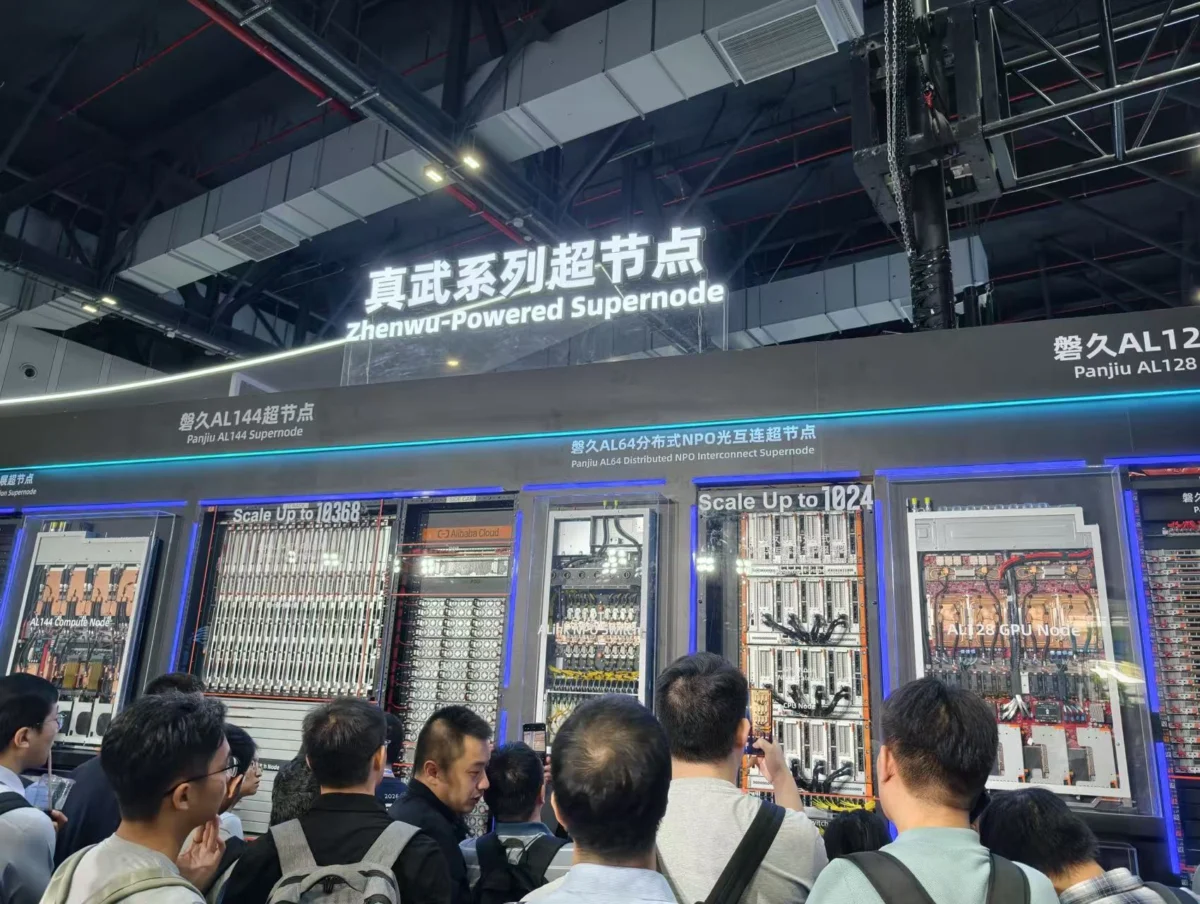
Alibaba Group Holding Limited’s dedicated semiconductor unit, T-Head (Pingtouge), has announced the launch of its latest artificial intelligence (AI) chip, the Zhenwu V900, at the annual Yunqi Conference. This new chip reportedly boasts a computing performance three times that of its predecessor, the Zhenwu M890, marking a significant advancement in Alibaba’s in-house chip development capabilities. The unveiling underscores Alibaba’s comprehensive AI strategy, which, according to CEO Wu Yongming, rests on three foundational pillars: sophisticated AI models, cutting-edge chips, and expansive cloud infrastructure. This strategic alignment aims to solidify Alibaba Cloud’s position in the global AI landscape, supported by an ambitious plan to operate more than 20 gigawatts (GW) of data-center capacity worldwide by 2032, reflecting a substantial commitment to AI infrastructure investment. T-Head further anticipates a considerable increase in its annual AI-chip shipments in the coming years, signaling a proactive approach to meet the burgeoning demand for AI processing power. The development was initially reported by Yicai, citing insights from Securities Times, highlighting the domestic industry’s close observation of Alibaba’s technological progress.
Alibaba’s Strategic AI Imperative
The introduction of the Zhenwu V900 is not an isolated technical achievement but a critical component within Alibaba’s overarching corporate strategy, deeply intertwined with its core e-commerce operations, logistics networks, and burgeoning cloud computing division. As a technology conglomerate, Alibaba has increasingly prioritized AI as a transformative force capable of enhancing user experience, optimizing operational efficiencies, and driving new business models across its vast ecosystem. From personalized recommendations on Taobao and Tmall to intelligent logistics routing for Cainiao, and advanced analytics on Alibaba Cloud, AI is the underlying technology that powers much of the company’s innovation.
CEO Wu Yongming’s articulation of the "models, chips, and cloud infrastructure" trifecta at the Yunqi Conference provides a clear roadmap for Alibaba’s AI ambitions. High-performance AI models, whether large language models (LLMs) or specialized deep learning networks, demand immense computational resources. These resources are delivered by powerful chips, which in turn require a robust, scalable, and energy-efficient cloud infrastructure to operate effectively. By developing proprietary chips like the Zhenwu V900, Alibaba seeks to optimize the synergy between these three elements, gain greater control over its technology stack, and potentially reduce reliance on external suppliers, particularly in a geopolitical climate that increasingly emphasizes technological self-sufficiency.
The Yunqi Conference: A Platform for Innovation
The Yunqi Conference, held annually in Hangzhou, China, serves as Alibaba Group’s premier technology showcase and thought leadership event. It is a critical platform where the company unveils its latest technological breakthroughs, strategic initiatives, and vision for the future of cloud computing, AI, and digital transformation. The conference typically attracts a global audience of developers, industry leaders, policymakers, and academics, making it an opportune moment for significant announcements such as the Zhenwu V900. The choice of Yunqi for this unveiling underscores the chip’s strategic importance to Alibaba’s long-term technology roadmap and its positioning within the broader industry narrative. Previous Yunqi conferences have seen the launch of other significant Alibaba technologies, solidifying its reputation as a nexus of innovation for the company.
T-Head’s Evolution and the Zhenwu Series
T-Head Semiconductor, known as Pingtouge in Chinese, was established in 2018 as a strategic merger of Alibaba’s existing chip development division within DAMO Academy – the company’s global research institute – and C-SKY Microsystems, a Chinese embedded CPU core provider. The formation of T-Head was a clear signal of Alibaba’s serious commitment to designing its own semiconductor solutions, moving beyond merely being a consumer of chips to becoming a producer. Its mandate encompasses the development of specialized chips for cloud computing, AI, and the Internet of Things (IoT), aiming to create a comprehensive portfolio of silicon to power Alibaba’s diverse businesses and cloud offerings.
A Legacy of Domestic Chip Development
Since its inception, T-Head has steadily built a reputation for developing innovative and competitive chips. Its portfolio includes several notable designs:
- Hanguang 800 (2019): This was T-Head’s first major AI inference chip, designed specifically for tasks like image recognition and natural language processing. It demonstrated impressive performance in real-world scenarios, significantly accelerating AI inference tasks within Alibaba’s cloud and various applications. The Hanguang 800 positioned Alibaba as a serious player in the AI chip arena.
- Yitian 710 (2021): A high-performance server CPU based on the ARM architecture, the Yitian 710 was developed to power Alibaba Cloud’s next-generation data centers. Its introduction marked Alibaba’s entry into the CPU market, aiming to provide a more optimized and efficient computing platform for its cloud services and reduce dependence on traditional x86 architectures.
- XuanTie Series: T-Head also develops the XuanTie series of RISC-V based processors, targeting IoT and embedded applications. These processors exemplify the company’s strategy to cover a wide spectrum of computational needs, from high-end cloud AI to low-power edge devices.
The Zhenwu V900 now joins this distinguished lineage, specifically targeting the demanding requirements of AI training and inference in a cloud environment. While specific details of the Zhenwu M890 are less widely publicized, its designation as the predecessor implies it was an earlier iteration or a different segment of AI accelerators, with the V900 representing a significant leap in architectural design, processing capabilities, and efficiency. The reported threefold performance increase is a substantial jump, indicating advancements in transistor density, core architecture, memory bandwidth, or specialized AI accelerators within the chip. Such improvements are critical for handling larger, more complex AI models and processing vast datasets with greater speed and efficiency.
Powering the Cloud: Alibaba’s Infrastructure Vision
The Zhenwu V900’s role extends directly to Alibaba Cloud’s ambitious infrastructure expansion. The announcement that Alibaba Cloud aims to operate more than 20 gigawatts (GW) of data-center capacity worldwide by 2032 is a monumental undertaking, reflecting the escalating energy and computational demands of the AI era. To put this into perspective, 20 GW is roughly equivalent to the generating capacity of 20 large nuclear power plants or a significant portion of a medium-sized country’s total electricity generation.
This aggressive expansion plan is a direct response to the explosion of data and the increasing computational intensity required by advanced AI models. Training large language models, running complex simulations, and processing real-time data streams all consume enormous amounts of energy and require vast arrays of powerful chips. By building out this infrastructure, Alibaba Cloud seeks to provide its enterprise clients and internal businesses with unparalleled access to computing resources, low-latency services, and a resilient global network. The integration of proprietary chips like the Zhenwu V900 into this infrastructure is expected to provide a competitive edge, offering optimized performance and potentially better cost-efficiency compared to relying solely on commercially available general-purpose GPUs.
The Global Data Center Race
Alibaba Cloud’s target of 20 GW by 2032 positions it as a major player in the global data center arms race. Hyperscale cloud providers like Amazon Web Services (AWS), Microsoft Azure, and Google Cloud are all investing heavily in expanding their global footprint and upgrading their infrastructure to meet AI demands. The pursuit of such massive capacity highlights several key trends:
- Energy Consumption: Data centers are massive energy consumers. Achieving 20 GW will necessitate significant investments in renewable energy sources and advanced cooling technologies to manage operational costs and environmental impact. Alibaba has already committed to achieving carbon neutrality in its own operations by 2030 and reducing carbon emissions across its value chain by 50% by 2030. The data center expansion will likely be tied to these sustainability goals.
- Geographical Distribution: A global capacity of this magnitude implies a strategically distributed network of data centers across various regions, catering to data residency requirements, disaster recovery, and proximity to end-users for reduced latency.
- Technological Advancement: The data centers of 2032 will likely feature next-generation cooling systems, advanced power management, and increasingly specialized hardware, with AI chips playing a central role in their computational capabilities.
Alibaba Cloud currently holds a significant market share in the Asia-Pacific region and is among the top four global cloud providers. This infrastructure expansion is critical for maintaining and growing its competitive standing against global giants and emerging regional players.
The Broader Landscape of AI Chip Development
The global AI chip market is one of the fastest-growing segments in the semiconductor industry, driven by the pervasive adoption of AI across virtually every sector. Market research firms project the global AI chip market to grow from tens of billions of dollars today to several hundred billion dollars by the end of the decade, with a compound annual growth rate (CAGR) often cited in the range of 30-40%. This growth is fueled by advancements in deep learning, the proliferation of AI applications, and the increasing demand for specialized hardware that can efficiently handle AI workloads.
Nvidia currently dominates the high-end AI chip market, particularly for AI training, with its powerful GPUs and robust CUDA software ecosystem. However, a growing number of companies, including Intel, AMD, Google (with its Tensor Processing Units or TPUs), and various startups, are fiercely competing for market share. There is also a strong trend towards custom AI ASICs (Application-Specific Integrated Circuits), which are designed for specific AI tasks and can offer superior performance and energy efficiency compared to general-purpose GPUs for those particular workloads. Alibaba’s Zhenwu V900 falls into this category of custom AI accelerators.
China’s Ambition for Semiconductor Self-Reliance
The development of advanced domestic chips like the Zhenwu V900 is profoundly significant within the context of China’s national strategy for technological self-sufficiency. Faced with escalating geopolitical tensions and export controls imposed by countries like the United States – particularly concerning advanced semiconductor manufacturing equipment and high-end AI chips – China has accelerated its efforts to build an indigenous semiconductor industry. This national imperative is backed by substantial government investment, policy support, and strategic initiatives aimed at fostering local innovation across the entire semiconductor value chain, from design to manufacturing.
Alibaba, as one of China’s leading technology giants, plays a crucial role in this national effort. T-Head’s success in developing competitive AI chips contributes directly to reducing China’s reliance on foreign technology, enhancing its digital sovereignty, and ensuring the continued growth of its domestic AI ecosystem. Other prominent Chinese companies, such as Huawei (with its Ascend series of AI processors), Cambricon, and Biren Technology, are also actively developing their own AI chips, creating a vibrant, albeit challenging, domestic competitive landscape. The collective progress of these companies is essential for China to achieve its long-term technological goals and navigate the complexities of global supply chain disruptions.
Implications and Future Outlook
The launch of the Zhenwu V900 and Alibaba’s broader AI strategy carry significant implications for the company, the Chinese semiconductor industry, and the global technology landscape.
For Alibaba, the Zhenwu V900 strengthens its internal capabilities, providing it with custom-designed hardware optimized for its specific AI workloads and cloud infrastructure. This vertical integration can lead to several advantages:
- Enhanced Performance and Efficiency: Tailored chips can deliver superior performance-per-watt for Alibaba’s proprietary AI models and cloud services, leading to cost savings and faster processing.
- Competitive Differentiation: Proprietary chips can give Alibaba Cloud a unique selling proposition, attracting clients seeking highly optimized AI computing environments.
- Greater Control and Security: In-house chip design provides more control over the entire technology stack, potentially enhancing security and allowing for rapid iteration and customization.
- Cost Optimization: Over the long term, developing and deploying its own chips can reduce procurement costs associated with third-party hardware.
For the Chinese semiconductor industry, the Zhenwu V900 serves as another proof point of domestic engineering prowess in advanced chip design. It demonstrates that Chinese companies are capable of creating sophisticated AI accelerators that can compete on performance metrics with global counterparts. This fosters a sense of confidence and encourages further investment and talent development within the sector, contributing to the broader goal of technological independence.
Globally, the emergence of powerful new AI chips from Chinese companies like Alibaba intensifies competition in the AI hardware market. It underscores the global race for AI supremacy and the increasing fragmentation of the semiconductor supply chain. While manufacturing advanced chips remains a challenge for China due to export controls on leading-edge equipment, the design capabilities showcased by T-Head are undeniable.
Challenges and Opportunities
Despite the promising advancements, Alibaba and T-Head face several challenges. The most significant challenge lies in manufacturing these advanced chips, as access to the latest fabrication technologies (e.g., extreme ultraviolet lithography or EUV) is heavily restricted. This might necessitate reliance on older process nodes or innovative packaging solutions to achieve competitive performance. Furthermore, building a robust software ecosystem around new hardware is crucial. Nvidia’s CUDA platform, for instance, has a decades-long head start and a vast developer community, making it difficult for new entrants to compete solely on hardware specifications. Alibaba will need to invest heavily in software tools, libraries, and developer support to maximize the adoption and utility of its Zhenwu chips.
However, the opportunities are substantial. The demand for AI compute continues to outstrip supply, creating a vast market for innovative chip designs. Alibaba’s deep integration of its chips with its cloud services and massive internal applications provides a direct avenue for deployment and optimization. The commitment to a 20 GW data center capacity by 2032 signals a long-term strategic vision where these custom chips will play a central, indispensable role.
In conclusion, the Zhenwu V900 represents a pivotal moment for Alibaba’s AI ambitions, demonstrating its commitment to owning the core technological building blocks of its future. By integrating advanced chip design with expansive cloud infrastructure and cutting-edge AI models, Alibaba is positioning itself to be a formidable force in the global AI landscape, while simultaneously contributing significantly to China’s strategic drive for technological self-reliance. The coming years will reveal the full impact of these investments as the race for AI dominance continues to accelerate.

 Lina Hope
 Lina Irawan