Muslim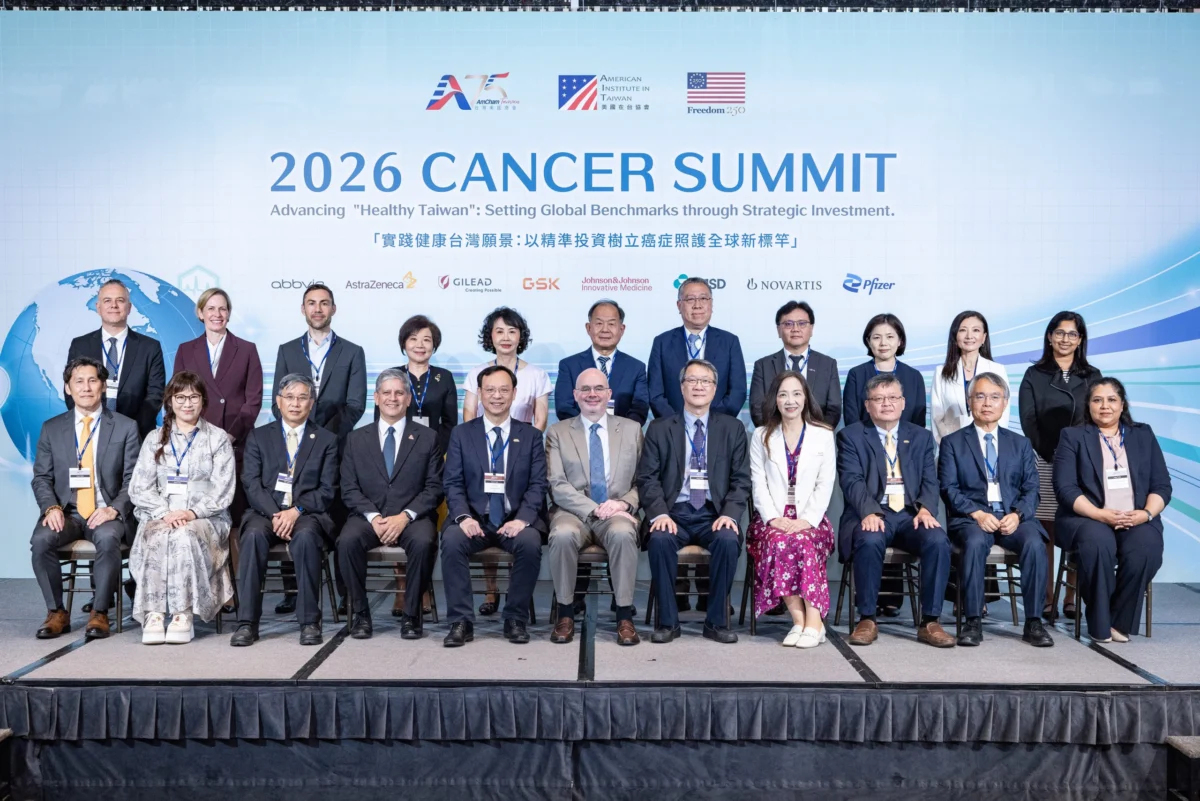
The American Chamber of Commerce in Taiwan (AmCham Taiwan), in a high-level partnership with the American Institute in Taiwan (AIT), convened the 2026 AmCham Taiwan Cancer Summit at the Regent Taipei on July 28, marking a pivotal moment in the region’s healthcare policy landscape. This year’s summit, titled “Advancing ‘Healthy Taiwan’: Setting Global Benchmarks through Strategic Investment,” served as a critical platform for multisectoral dialogue, bringing together an elite assembly of government officials, industry pioneers, academic researchers, and patient advocacy representatives. The primary objective of the gathering was to delineate a sustainable path forward for Taiwan’s cancer care infrastructure, focusing on the optimization of the Cancer Drugs Fund (CDF), the integration of breakthrough medical innovations, and the synchronization of local treatment protocols with international benchmarks.
As cancer continues to represent the leading cause of mortality in Taiwan, the 2026 summit addressed the urgent need for a more resilient and responsive healthcare ecosystem. The event underscored the alignment between the private sector’s innovative capabilities and the public sector’s policy goals, particularly the "Healthy Taiwan" vision championed by President Lai Ching-te. This vision sets an ambitious national target: reducing the standardized cancer mortality rate in Taiwan by one-third by the year 2030. Achieving this goal requires more than just clinical excellence; it necessitates a fundamental shift in how healthcare resources are allocated, how new therapies are reimbursed, and how data is utilized to improve patient outcomes.
Strategic Vision: The Healthy Taiwan Initiative
AmCham Taiwan President Carl Wegner opened the summit by emphasizing the multifaceted nature of the oncological challenge. He noted that combating cancer in the modern era requires a departure from traditional, siloed approaches. Wegner highlighted that scientific breakthroughs, while essential, remain ineffective if they cannot be accessed by the patients who need them most. He advocated for a robust public-private partnership (PPP) model, asserting that such collaborations are the bedrock of a future-ready healthcare system. By translating global innovation into localized clinical practice, Taiwan can not only improve individual patient lives but also solidify its position as a leader in the global healthcare arena.
Minister of Health and Welfare Shih Chung-liang provided the government’s perspective during the Grand Keynote Dialogue. Minister Shih detailed the structural transformations currently underway within the Ministry of Health and Welfare (MOHW), specifically the work of the Healthy Taiwan Promotion Committee. This committee is tasked with overseeing the comprehensive overhaul of the nation’s health strategies, ensuring that policy milestones are met with transparency and efficiency. The Minister’s remarks highlighted a shift toward proactive, preventative care supported by significant fiscal commitments.
Financial Sustainability and the Cancer Drugs Fund
A central pillar of the summit’s discussions was the long-term viability of the Cancer Drugs Fund (CDF). Established in 2025, the CDF was designed to bridge the gap between the approval of innovative therapies and their eventual inclusion in the National Health Insurance (NHI) reimbursement list. In a significant disclosure, Minister Shih confirmed that the government has dramatically scaled its investment in early detection, increasing the cancer screening budget from NT$2.8 billion to NT$6.8 billion. This nearly 150% increase in funding reflects a strategic move to catch malignancies in their earliest, most treatable stages, thereby reducing the long-term financial burden on the NHI system.
However, the challenge of funding expensive, next-generation treatments—such as cell therapies and personalized gene medicines—remains a complex issue. The first panel of the day explored the strategic investment required to maintain the CDF’s solvency while accelerating patient access. Panelists, including economists and pharmaceutical executives, discussed the necessity of "value-based" healthcare. This approach suggests that reimbursement should be tied to the actual clinical efficacy and patient outcomes recorded in real-world settings. By implementing such models, Taiwan can ensure that its limited healthcare budget is utilized for treatments that provide the highest therapeutic value.
Digital Transformation and Data-Driven Oncology
Beyond financial mechanisms, the summit delved into the role of technology in streamlining cancer care. Minister Shih emphasized that the digital transformation of the healthcare system is no longer optional. The government is currently advancing initiatives to digitize prior authorization processes and other administrative hurdles that often delay treatment. By utilizing a "connected" care ecosystem, medical providers can reduce the time between diagnosis and the commencement of therapy.

Furthermore, the integration of Big Data is expected to revolutionize follow-up evaluations. The data collected through the NHI system and the CDF will be used to conduct rigorous post-market surveillance and outcome assessments. This data-driven approach allows policymakers to identify treatment gaps across different cancer types and demographics. By directing resources with surgical precision to the areas with the highest mortality burden, the government aims to maximize the impact of every dollar spent, ultimately accelerating the reduction in cancer deaths.
Aligning with International Standards of Care
The second major theme of the summit focused on the clinical alignment of Taiwan’s oncology practices with global standards. Medical experts from various specialties, including breast cancer, gynecologic cancers, and hematologic malignancies, shared insights into the rapidly evolving landscape of cancer treatment. A significant portion of the discussion was dedicated to the National Comprehensive Cancer Network (NCCN) guidelines, which are recognized globally as the gold standard for clinical policy in oncology.
Panelists argued that for Taiwan to maintain its status as a premier destination for medical tourism and clinical trials, its local guidelines must remain in lockstep with the latest NCCN updates. This alignment ensures that Taiwanese patients receive care that is equivalent to that found in the world’s leading medical institutions. Moreover, the experts highlighted the importance of "comprehensive care pathways." This concept moves beyond the surgical or chemical intervention itself, encompassing the entire patient journey from early screening and genetic counseling to palliative care and long-term survivorship support.
The Evolution of U.S.-Taiwan Healthcare Collaboration
The 2026 Cancer Summit is part of a broader, multi-year trajectory of cooperation between the United States and Taiwan. Since 2021, AmCham Taiwan and AIT have co-organized healthcare innovation forums to foster a high-level policy exchange. In 2023, the focus sharpened significantly on oncology, leading to the birth of the Cancer Summit as the primary platform for this bilateral dialogue.
This collaboration is deeply rooted in the spirit of the U.S. "Cancer Moonshot" initiative, which aims to accelerate the rate of progress against cancer through international cooperation and data sharing. As both the U.S. and Taiwan face aging populations and rising cancer incidence rates, the partnership has evolved into a strategic necessity. By sharing best practices in drug regulation, clinical trial design, and reimbursement policy, both nations can improve health outcomes while fostering a vibrant biotechnology sector.
Broader Implications and Future Outlook
The implications of the 2026 Cancer Summit extend beyond the walls of the Regent Taipei. For the pharmaceutical and biotech industries, the summit signaled a clear government commitment to creating a more predictable and transparent environment for innovation. For patients, it offered a roadmap toward faster access to life-saving medications. For the international community, it demonstrated Taiwan’s resolve to serve as a laboratory for healthcare excellence.
The consensus among stakeholders was clear: the goal of reducing cancer mortality by one-third by 2030 is achievable, but it requires unwavering political will and continued investment. The AmCham Taiwan Cancer Summit has solidified its role as the preeminent venue for making these high-stakes decisions. By fostering a "Connected Cancer Care Ecosystem," Taiwan is not only addressing a public health crisis but is also building a sustainable model for the future of global medicine.
AmCham Taiwan reaffirmed its dedication to this cause, pledging to continue its close work with government agencies and healthcare professionals. Through ongoing policy dialogue and the strengthening of U.S.-Taiwan healthcare ties, the vision of a "Healthy Taiwan" is moving from a policy aspiration to a tangible reality for millions of citizens. As the summit concluded, the message was one of cautious optimism—a recognition of the immense challenges ahead, paired with a sophisticated strategy to overcome them.


 Suro Senen
 Laily UPN