Layla Zulfa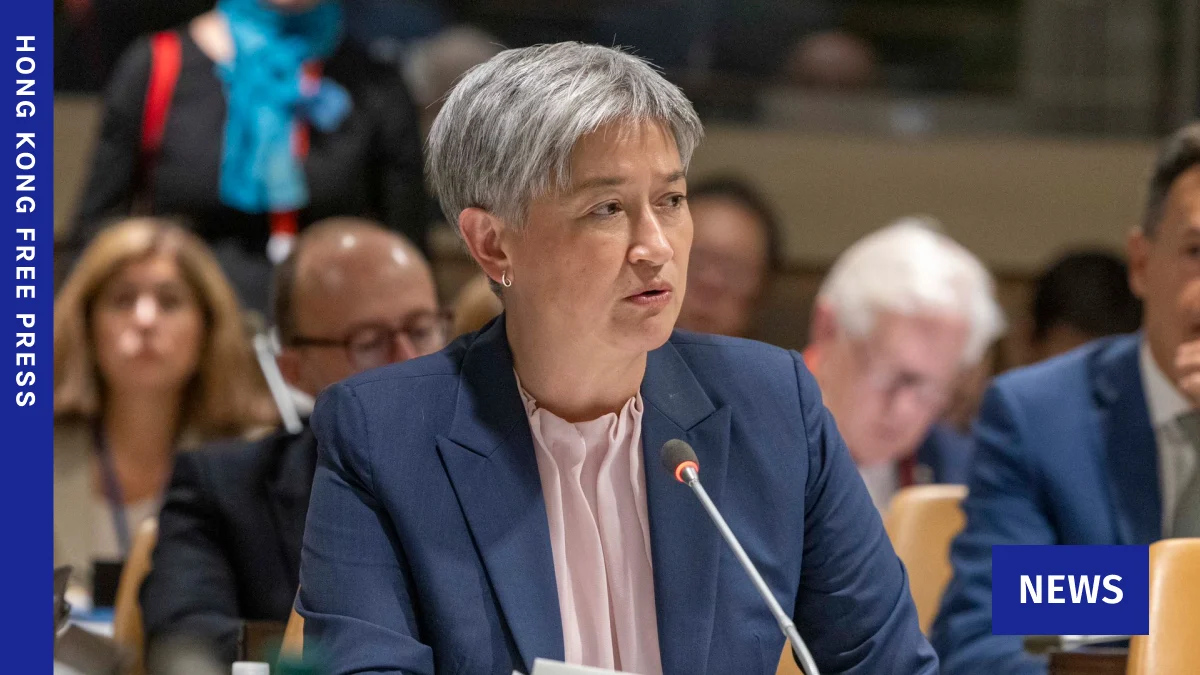
Australian Foreign Minister Penny Wong on Wednesday publicly articulated Australia’s profound concerns regarding China’s recent test of a nuclear-capable missile in the South Pacific, characterising the launch as "destabilising" during a high-stakes meeting with her Chinese counterpart, Wang Yi, in Manila. This direct diplomatic confrontation unfolded on the sidelines of a gathering of Southeast Asian ministers, highlighting escalating regional anxieties over Beijing’s military assertiveness and its implications for international law and stability. Wong’s remarks came hot on the heels of Australia’s strong condemnation of what it termed "dangerous conduct" by China following a recent violent clash between Philippine and Chinese vessels at a disputed shoal in the South China Sea, underscoring a period of heightened tensions in the Indo-Pacific.
Direct Diplomatic Confrontation in Manila
The core of the diplomatic exchange on Wednesday revolved around a Chinese submarine-launched ballistic missile (SLBM) test conducted earlier this month. The missile, fitted with a dummy warhead, traversed a significant distance into the Pacific Ocean. Speaking to reporters in Manila, Foreign Minister Wong stated unequivocally, "We have made clear publicly and directly to China that we regard the missile test as destabilising and we put that directly to Foreign Minister Wang Yi in my discussions (with him) yesterday." Her statement emphasised the direct and firm nature of Australia’s diplomatic protest, seeking to convey the seriousness with which Canberra views Beijing’s actions.

Wong reiterated Australia’s core foreign policy objectives for the region, asserting, "We want a region which is peaceful, stable and prosperous. We want a region where countries, all powers, including great powers, observe international law and, in particular, the law of the sea." This statement serves as a clear invocation of the rules-based international order, a principle consistently championed by Australia and its allies in response to perceived challenges from China’s expanding military and maritime presence. The meeting in Manila provided a critical platform for such direct communication, albeit against a backdrop of complex and often fraught bilateral relations between Australia and China.
Unpacking the "Destabilising" Missile Test
The specifics of the Chinese missile test, while not fully disclosed by Beijing, have raised considerable alarm among regional states and international observers. The launch of a nuclear-capable ballistic missile from a submarine signifies a significant advancement in China’s strategic deterrence capabilities and its capacity to project power far beyond its immediate shores. Such tests are often viewed through the lens of strategic competition, contributing to an arms race dynamic and increasing the risk of miscalculation.
Australia had previously voiced its dissatisfaction, stating it did not receive sufficient notification of the missile test. This lack of transparency is a recurring point of contention in military exercises conducted by major powers, as it can heighten regional tensions and preclude necessary safety measures for civilian air and maritime traffic. Furthermore, the test drew collective condemnation from a dozen Pacific Island countries, who denounced it as a violation of the region’s long-standing aspiration to remain free of nuclear weapons testing. This sentiment is enshrined in the Treaty of Rarotonga, which established the South Pacific Nuclear Free Zone in 1985, prohibiting the testing, manufacture, acquisition, and stationing of nuclear explosive devices in the region. The missile’s apparent landing zone—somewhere in the vast expanse of ocean between the Solomon Islands, Nauru, and Tuvalu—placed the test uncomfortably close to these sovereign nations, directly impinging on their security concerns and environmental sensitivities.

The deployment of a submarine-launched ballistic missile, even with a dummy warhead, is particularly significant. Submarines offer stealth and mobility, making them a potent second-strike capability in nuclear deterrence. The test demonstrated China’s growing prowess in this domain, adding another layer of complexity to the already intricate security architecture of the Indo-Pacific. For Australia and its allies, such a demonstration underscores the need for enhanced surveillance, intelligence sharing, and defensive capabilities to maintain regional equilibrium.
Escalating Tensions in the South China Sea
The missile test was not the only point of contention raised by Minister Wong. Just a day prior to her public statements in Manila, Australia had vociferously condemned China’s actions in the South China Sea, specifically an incident that occurred at Second Thomas Shoal (known as Ayungin Shoal in the Philippines) on Monday. During this clash, a Philippine sailor was allegedly struck on the head with a baton, highlighting the increasing physical aggression employed by Chinese vessels in disputed waters.
Second Thomas Shoal is a flashpoint in the broader South China Sea dispute, claimed by both the Philippines and China. The Philippines maintains a small contingent of marines aboard the BRP Sierra Madre, a dilapidated naval vessel intentionally grounded on the shoal in 1999 to assert its sovereign claims. Regular resupply missions to these marines have frequently been met with aggressive tactics from Chinese Coast Guard and maritime militia vessels, including water cannon attacks, ramming, and dangerous manoeuvres. These actions are consistently decried by the Philippines and its allies, including Australia, as violations of international law, particularly the United Nations Convention on the Law of the Sea (UNCLOS), which defines maritime rights and responsibilities.
Wong reiterated Australia’s "real concerns about behaviour that is destabilising and risky" when asked about the Second Thomas Shoal incident. This stance aligns with a growing international consensus that China’s assertive actions in the South China Sea, which ignore a 2016 international arbitral ruling that invalidated Beijing’s expansive claims, pose a significant threat to freedom of navigation and regional peace. The incident served as a stark reminder of the volatile nature of these disputes and the potential for rapid escalation.
Australia’s Strategic Response and Regional Engagement
In response to these escalating challenges, Australia has been actively strengthening its regional partnerships and capabilities. On Tuesday, during her visit to a Philippine Coast Guard vessel, Foreign Minister Wong announced a substantial donation of 413 million pesos (approximately US$6.7 million) worth of cutting-edge drone technology and operator training to the Philippine Coast Guard. This significant aid package underscores Australia’s commitment to enhancing the maritime security capabilities of its regional partners, particularly those directly affected by China’s assertive actions.
The drone technology is expected to provide the Philippine Coast Guard with improved situational awareness and surveillance capabilities in its vast maritime domain, including the contested areas of the South China Sea. This initiative is part of Australia’s broader strategy to support a rules-based order in the Indo-Pacific, where nations can exercise their sovereign rights without coercion. Such security assistance also signals a deepening of the strategic partnership between Australia and the Philippines, two nations that share concerns about regional stability and adherence to international law.

Australia’s foreign policy under the current government has seen a renewed emphasis on engaging with Southeast Asian and Pacific Island nations, seeking to be a preferred partner in security, economic development, and climate action. This approach is partly a counter-balance to China’s growing influence and an effort to reinforce a multilateral, inclusive regional architecture. By providing tangible support and voicing strong diplomatic positions, Australia aims to demonstrate its commitment to these principles and to its allies.
Broader Geopolitical Implications
The events of the past week, encompassing both the missile test and the South China Sea clash, carry significant geopolitical implications for the Indo-Pacific. For Australia-China relations, these incidents represent persistent friction points despite recent efforts to stabilise the bilateral relationship after years of diplomatic chill. While both sides have engaged in high-level dialogues to resume cooperation in certain areas, fundamental disagreements over security, human rights, and regional influence continue to simmer beneath the surface. Australia’s direct challenge to China’s actions signals that while dialogue is pursued, core national interests and regional stability concerns will not be compromised.
China’s assertive posture, exemplified by the missile test and its conduct in the South China Sea, reflects a broader strategy to establish itself as the dominant power in the Indo-Pacific. This strategy often involves pushing the boundaries of international law and norms, testing the resolve of other nations. The deployment of advanced military capabilities and the persistent harassment of claimant states in disputed territories are key components of this approach.

The international community, particularly nations committed to freedom of navigation and the peaceful resolution of disputes, views these developments with increasing apprehension. The potential for miscalculation or accidental escalation in crowded and contested waters remains a serious concern. The ongoing adherence to and enforcement of UNCLOS are critical for maintaining maritime order, yet China’s interpretation and actions often diverge sharply from those of many other nations.
The growing alignment between Australia, the Philippines, and other regional democracies in countering perceived Chinese assertiveness is a significant trend. These partnerships, often bolstered by support from the United States, aim to create a collective deterrent and strengthen regional resilience. The donation of drone technology to the Philippines is a tangible example of this collaborative effort to build capacity and enhance shared security.
Calls for De-escalation and Dialogue
Despite the firm stance taken by Foreign Minister Wong, the overarching message from Australia and its partners remains a call for de-escalation and adherence to international norms. Wong’s emphasis on a "peaceful, stable and prosperous" region underscores the desire to manage these tensions through diplomatic channels rather than allowing them to spiral into wider conflict. Dialogue, even when difficult, is seen as essential for preventing misunderstandings and finding pathways for peaceful coexistence.

However, for dialogue to be effective, it requires a commitment from all parties to respect international law and to engage in good faith. The repeated incidents of aggressive behaviour and the lack of transparency surrounding military activities erode trust and make constructive engagement more challenging.
The events in Manila and the broader Indo-Pacific illustrate the delicate balance between asserting national interests and maintaining regional stability. Australia’s actions reflect a strategic calculus that seeks to uphold a rules-based order while managing a complex relationship with its largest trading partner. The coming months will likely see continued diplomatic manoeuvring and security enhancements as nations in the region navigate China’s evolving role and its implications for the future of the Indo-Pacific.

 Sagoh
Sagoh
 Asro
Asro