Azzam Bilal Chamdy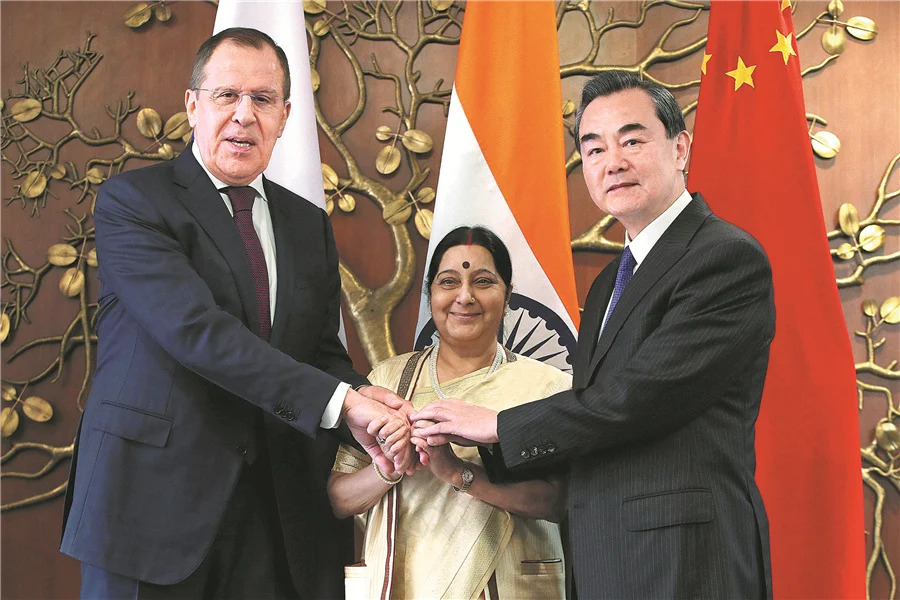
China, Russia and India have reaffirmed their commitment to a stable and inclusive regional security and economic architecture in the Asia-Pacific, a cornerstone of lasting peace and prosperity, following their 15th trilateral meeting of foreign ministers in New Delhi on Monday, December 11, 2017. The joint statement issued after the high-level talks underscored the imperative of multilateralism and adherence to universally recognized principles of international law in shaping the regional order.
Strategic Convergence on Regional Stability and Development
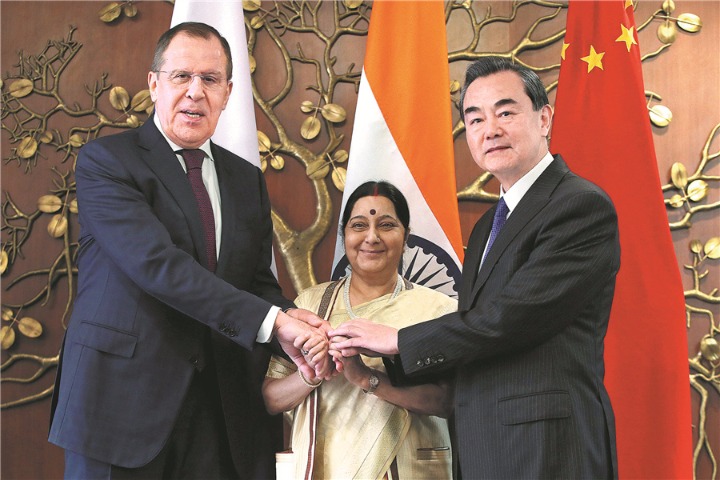
The foreign ministers of the three nations – Wang Yi of China, Sergey Lavrov of Russia, and Sushma Swaraj of India – engaged in comprehensive discussions covering a spectrum of global and regional issues of mutual interest. A central theme of their deliberations was the critical role of regional forums and organizations, such as the East Asia Summit, in fostering peace, stability, and economic development across the Asia-Pacific. The ministers emphasized the need for enhanced coordination and cooperation within these platforms to collectively address emerging challenges and capitalize on shared opportunities.
The joint statement highlighted the shared vision of an "open, inclusive and based on multilateralism and universally recognized principles of international law" regional framework. This vision directly contrasts with any attempts to unilaterally impose geopolitical agendas or create exclusionary blocs, signaling a preference for a cooperative and rules-based international order. The ministers’ commitment to this framework is particularly significant given the evolving geopolitical landscape, where the rise of new powers and shifting alliances necessitate robust mechanisms for dialogue and cooperation.
Deepening BRICS and SCO Cooperation
A significant portion of the discussions revolved around the strategic importance of BRICS and the Shanghai Cooperation Organization (SCO) as key pillars of cooperation among the three nations. The ministers reiterated their unwavering commitment to strengthening their strategic partnership within BRICS, a bloc that has grown in economic and political influence since its inception.
They pledged to work collaboratively to implement all outcomes of BRICS summits, aiming to usher in what they termed the "second golden decade of BRICS cooperation." This commitment encompasses a broad range of areas, including economic collaboration, political coordination, security initiatives, and people-to-people exchanges. The statement also commended China’s successful hosting of the Ninth BRICS Summit in Xiamen in September 2017, which had set an agenda for enhanced cooperation in various domains.
The BRICS bloc, comprising Brazil, Russia, India, China, and South Africa, has become a crucial platform for coordinating economic policies, promoting trade and investment, and advocating for reforms in global governance. The shared commitment to deepening this partnership signals an intent to leverage the collective strengths of these emerging economies to address global economic challenges and promote sustainable development. The Xiamen Summit, for instance, had focused on themes of "BRICS Plus" cooperation and greater connectivity, underscoring the bloc’s outward-looking approach.

Furthermore, the foreign ministers attached considerable importance to joint work within the Shanghai Cooperation Organization (SCO). They recognized the SCO as a vital instrument for promoting multilateral political, security, economic, and people-to-people interactions within the Eurasian region. The SCO, originally formed to enhance cooperation among China, Russia, and Central Asian states, has expanded its membership and scope, becoming a significant force in regional security and economic integration.
The Russia-India-China Trilateral Format: A Platform for Dialogue and Cooperation
The 15th Russia-India-China (RIC) trilateral meeting itself was characterized as a valuable platform for fostering closer dialogue and practical cooperation among the three countries in identified areas. The joint statement explicitly clarified that this cooperation is not directed against any other country, emphasizing its constructive and inclusive nature. This assurance is crucial in a region where security concerns and strategic competition can often lead to misinterpretations and heightened tensions.
The ministers expressed their desire to strengthen the trilateral dialogue for consultation and coordination on regional and global issues of mutual interest, operating in a spirit of mutual understanding and trust. This commitment to open and candid communication is vital for navigating complex geopolitical challenges and for building a more predictable and stable international environment.

The RIC format, established in 2001, has evolved into a significant mechanism for strategic coordination among these three major global powers. Its significance lies in its ability to foster consensus on key issues and to present a united front on matters of shared concern, thereby enhancing their collective influence on the global stage. The ongoing dialogues within this framework have contributed to greater understanding and cooperation on issues ranging from counter-terrorism to economic development and regional security.
Historical Context and the Evolution of RIC Cooperation
The 15th RIC ministerial meeting in New Delhi built upon decades of evolving engagement between these three nations. Russia and India have historically maintained a "special and privileged strategic partnership," characterized by strong defense ties and broad economic cooperation. China, while a relatively newer strategic partner for India, has also developed significant economic ties with both Russia and India.
The formalization of the RIC trilateral dialogue in the early 2000s was a response to the changing global order and the increasing interconnectedness of regional and international affairs. The initial focus was on enhancing political and economic cooperation, but over time, the agenda has expanded to include security, counter-terrorism, and regional stability. The growing influence of BRICS and the SCO has further cemented the importance of the RIC framework as a mechanism for coordinating their approaches within these broader multilateral structures.

The meeting in 2017 took place against a backdrop of several significant global and regional developments. The global economy was showing signs of recovery, but trade protectionism was also on the rise. In Asia, the geopolitical landscape was marked by ongoing tensions in the South China Sea, the nuclear ambitions of North Korea, and the broader strategic competition between major powers. Within this context, the RIC ministers’ emphasis on multilateralism and inclusive regional architecture carried particular weight.
Supporting Data and Analysis
The collective economic might of China, Russia, and India is substantial. As of 2017, China was the world’s second-largest economy, Russia was among the top ten, and India was rapidly ascending. Their combined GDP represented a significant portion of global output, giving their cooperation considerable weight in international economic discussions. Their role in global trade and investment flows further amplified their influence.
Their strategic importance also stems from their geographical proximity and their roles in key regional security architectures. China and Russia are both permanent members of the UN Security Council, wielding significant influence on global peace and security issues. India’s growing role in the Indo-Pacific region and its strategic partnerships with various global powers further underscore its importance.

The joint statement’s emphasis on multilateralism and international law is particularly relevant in the context of current global trends. The rise of populist nationalisms in some parts of the world had led to questioning of established international norms and institutions. The RIC countries’ reaffirmation of these principles signals a commitment to upholding a rules-based international order, which is seen as crucial for maintaining global stability and preventing unilateral actions.
Broader Impact and Implications
The outcomes of the 15th RIC foreign ministers’ meeting have several key implications for regional and global affairs. Firstly, their consensus on regional security and economic architecture reinforces the principles of multilateralism and inclusivity, offering a counter-narrative to any attempts at unilateralism or exclusionary geopolitical alignments. This can contribute to a more stable and predictable regional environment, fostering greater trust and cooperation among nations.
Secondly, the renewed commitment to deepening BRICS and SCO cooperation signals a continued effort to strengthen these emerging multilateral platforms. This can lead to enhanced economic integration, greater coordination on security issues, and a more unified voice for these nations on the global stage. The emphasis on implementing BRICS summit outcomes suggests a move towards more concrete actions and tangible results in areas such as trade facilitation, investment promotion, and infrastructure development.

Thirdly, the RIC trilateral format’s role as a platform for dialogue and coordination highlights the importance of diplomatic engagement among major powers. By fostering mutual understanding and trust, these dialogues can help mitigate potential misunderstandings and de-escalate tensions, contributing to a more peaceful and cooperative international environment. The statement that their cooperation is not directed against any other country is a significant signal of their intent to pursue collaborative agendas that benefit the broader international community.
In essence, the meeting in New Delhi underscored the shared commitment of China, Russia, and India to a stable, prosperous, and multipolar world, built on the foundations of multilateralism, international law, and inclusive cooperation. Their continued engagement through the RIC, BRICS, and SCO frameworks is likely to play a significant role in shaping the future of regional and global governance.


 Nana Wu
 Suro Senen