Laily UPN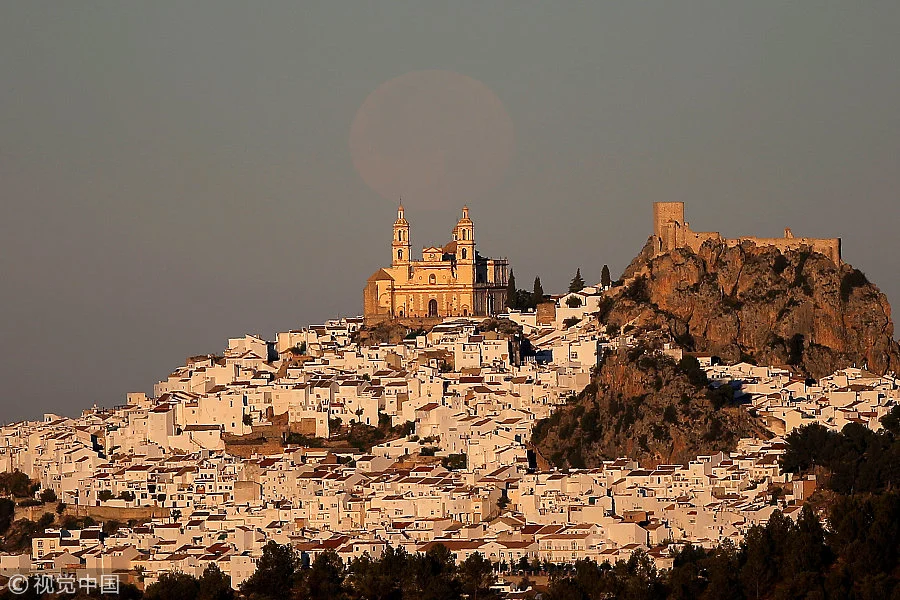
This past week, the Earth’s celestial companion, the Moon, put on a breathtaking display, captivating observers across the globe with a particularly striking supermoon event. The phenomenon, which occurred on December 4, 2017, saw the full moon coincide with its closest approach to Earth in its elliptical orbit, resulting in a larger and brighter appearance in the night sky. This article delves into the specifics of this astronomical event, its historical and cultural significance, and the scientific explanations behind its grandeur, drawing upon the visual evidence captured from various vantage points around the world.
The Supermoon Phenomenon: A Closer Look
A supermoon, by definition, occurs when a full moon or a new moon coincides with the perigee, the point in the Moon’s orbit where it is closest to Earth. During these instances, the Moon can appear up to 14% larger and 30% brighter than when it is at its farthest point (apogee). The supermoon of December 4, 2017, was particularly noteworthy, bathing landscapes in an ethereal glow and providing a spectacular backdrop for iconic landmarks.
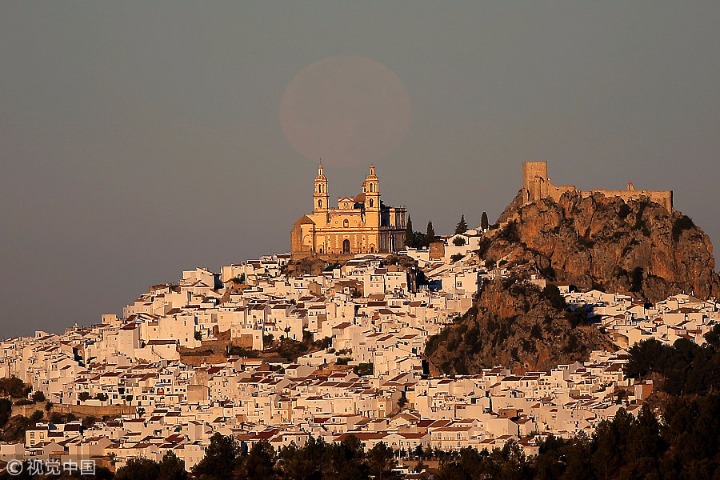
One of the most striking images captured during this event was of the supermoon shining over the church of Nuestra Senora de la Encarnacion in Olvera, near Cadiz, southern Spain. As the celestial body began to set on the morning of December 4th, its immense size and luminous presence created a silhouette against the historic architecture, highlighting the interplay between nature’s grandeur and human endeavors. This particular image served as a powerful visual testament to the supermoon’s impact, demonstrating how this astronomical event can transform familiar vistas into something extraordinary.
Scientific Underpinnings and Orbital Mechanics
The Moon’s orbit around the Earth is not a perfect circle but rather an ellipse. This means that at certain points in its orbit, it is closer to our planet than at others. The distance between the Earth and the Moon varies, averaging approximately 384,400 kilometers (238,900 miles). During perigee, this distance can decrease to around 363,300 kilometers (225,700 miles). When a full moon occurs at or near this closest point, we witness a supermoon.
The precise timing of the December 4th supermoon was a result of the complex gravitational interactions between the Earth, Moon, and Sun. Astronomical calculations predict these orbital positions with remarkable accuracy, allowing scientists and skywatchers alike to anticipate such events. The full moon on December 4th occurred just hours after the Moon reached its perigee, making it a prime example of this celestial alignment.
The "Cold Moon": Cultural and Historical Significance
The full moon of December is traditionally known as the "Cold Moon" in many cultures. This moniker is attributed to its occurrence during the winter months in the Northern Hemisphere, a period characterized by colder temperatures and longer nights. The Cold Moon is also significant as it is the first full moon of the winter season. Historically, indigenous peoples and early settlers would observe the moon cycles to track seasons, plan agricultural activities, and for spiritual or ceremonial purposes. The appearance of the Cold Moon often signaled the onset of harsh weather, the need for preparation for winter, and a time for reflection as the year drew to a close.
The supermoon’s enhanced brightness and size during this period would have amplified its presence, potentially making it a more prominent feature in the night sky and reinforcing its cultural significance. For ancient civilizations, such a dramatic celestial event might have been interpreted in various ways, from omens to divine manifestations. Today, while scientific understanding has demystified the mechanics, the awe and wonder inspired by a supermoon remain a powerful connection to our ancestral past.
Global Perspectives: A Shared Celestial Experience
The supermoon was not confined to Spain; its luminous embrace was felt across continents. Images from various locations would have depicted the Moon over diverse landscapes, from urban skylines to natural wonders. While the specific image highlighted focuses on Spain, it is crucial to acknowledge the global nature of this astronomical event.
Imagine the supermoon rising over the ancient pyramids of Egypt, casting long shadows across the desert sands. Picture it illuminating the majestic peaks of the Himalayas or reflecting on the calm surface of the Pacific Ocean. Each location would have offered a unique perspective, a different canvas for the Moon’s radiant artistry. This shared experience underscores our planet’s interconnectedness under the same celestial canopy.
Supporting Data and Astronomical Observations
To quantify the visual impact of a supermoon, astronomers often refer to the apparent diameter and magnitude of the Moon. During perigee, the apparent diameter can increase by over 10%, and the brightness can be noticeably enhanced. While specific measurements for the December 4, 2017 supermoon are readily available through astronomical databases, the visual evidence, as exemplified by the image from Spain, speaks volumes about its perceived magnitude.
The phenomenon of a supermoon is a recurring event, with several occurring each year. However, the exact timing and the degree of closeness at perigee vary, making some supermoons more pronounced than others. Astronomical calendars and websites dedicated to celestial events provide detailed information on upcoming supermoons, allowing enthusiasts to plan their observations. For instance, while the December 2017 supermoon was a significant event, subsequent supermoons in other years may have been even closer to Earth, leading to a more dramatic visual effect.
Analysis of Implications and Public Engagement
The public fascination with supermoons is undeniable. These events often generate significant media attention and encourage widespread public engagement with astronomy. Amateur astronomers and casual observers alike are drawn to the opportunity to witness a visually enhanced Moon. This increased interest can foster a greater appreciation for science and encourage individuals to learn more about the universe.
Beyond the aesthetic appeal, supermoons serve as a reminder of the dynamic nature of our solar system. They highlight the predictable yet ever-changing dance of celestial bodies. While supermoons do not typically have significant direct impacts on Earth, such as causing natural disasters, their gravitational influence, albeit minor, contributes to tidal forces. The increased gravitational pull during perigee can slightly amplify tidal ranges, but this effect is generally well within normal fluctuations and does not pose any threat.
The photographic documentation of supermoons, like the one from Spain, plays a crucial role in capturing the essence of these events. These images serve as valuable historical records and educational tools, allowing people worldwide to share in the experience and appreciate the beauty of the cosmos. They also demonstrate the technical capabilities of modern photography in capturing such celestial wonders.
Broader Impact and Future Observations
The consistent occurrence of supermoons offers an ongoing opportunity for scientific research and public education. Each supermoon provides a chance for astronomers to conduct studies on the Moon’s surface, its geological features, and its interaction with Earth’s atmosphere. Furthermore, these events serve as excellent opportunities to inspire the next generation of scientists and engineers.
The supermoon of December 4, 2017, was a beautiful reminder of the wonders that exist beyond our everyday lives. It was a moment when the ordinary became extraordinary, a celestial spectacle that united people across the globe in shared awe. As technology advances and our understanding of the universe deepens, such astronomical events will continue to captivate our imaginations and fuel our curiosity about the cosmos. Future supermoons, each with its unique characteristics and timing, will undoubtedly offer further opportunities for observation, learning, and appreciation of our place within the vast expanse of space. The continued documentation and sharing of these events, through powerful imagery and informative reporting, will ensure that their impact resonates far beyond the fleeting moments they grace our skies.


 Nana Wu
 Suro Senen