Raul Delapena Setiawan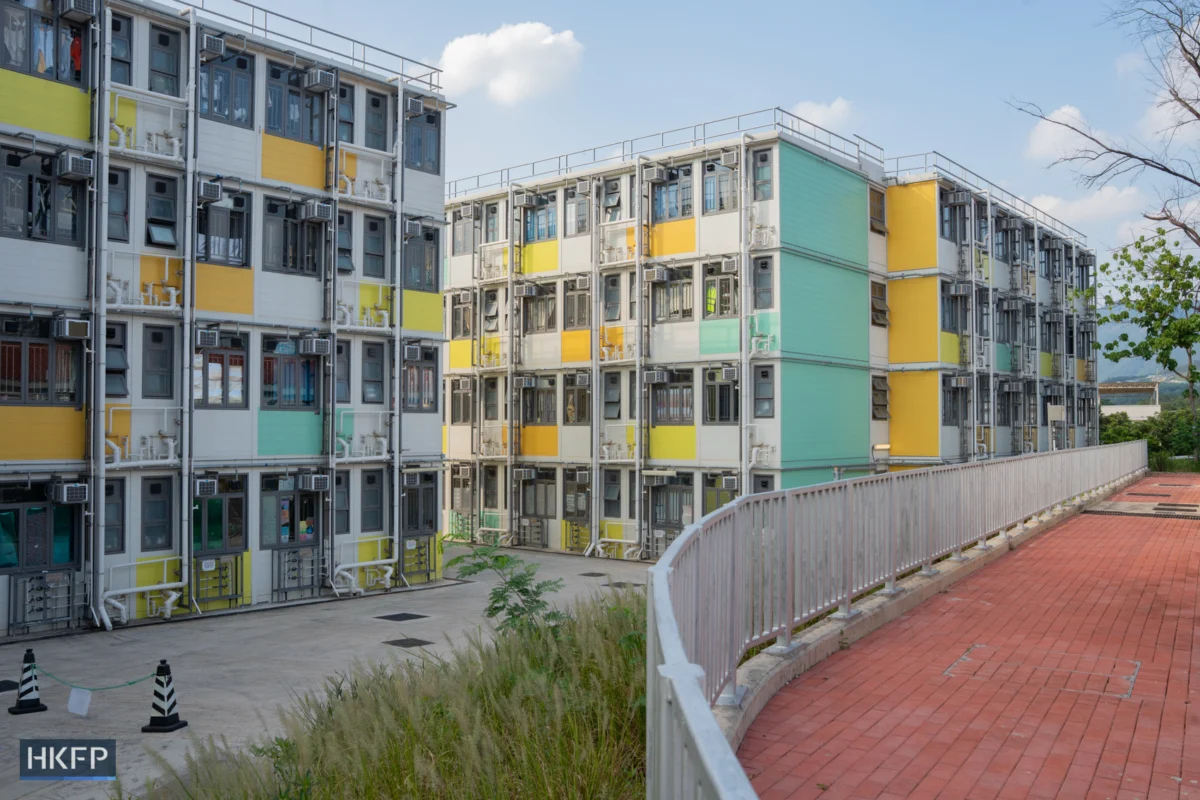
Nine months after a devastating fire claimed 168 lives and displaced thousands in Tai Po, a crucial deadline is approaching for residents of the Wang Fuk Court housing estate. Monday afternoon marks the expiration of the government’s buyout scheme, an offer that a small but resolute group of homeowners, including Betty Ho, are refusing to accept. While the vast majority of affected households have agreed to the terms, these holdouts are demanding on-site redevelopment, a proposition the authorities have firmly rejected due to the projected decade-long timeline for rebuilding.

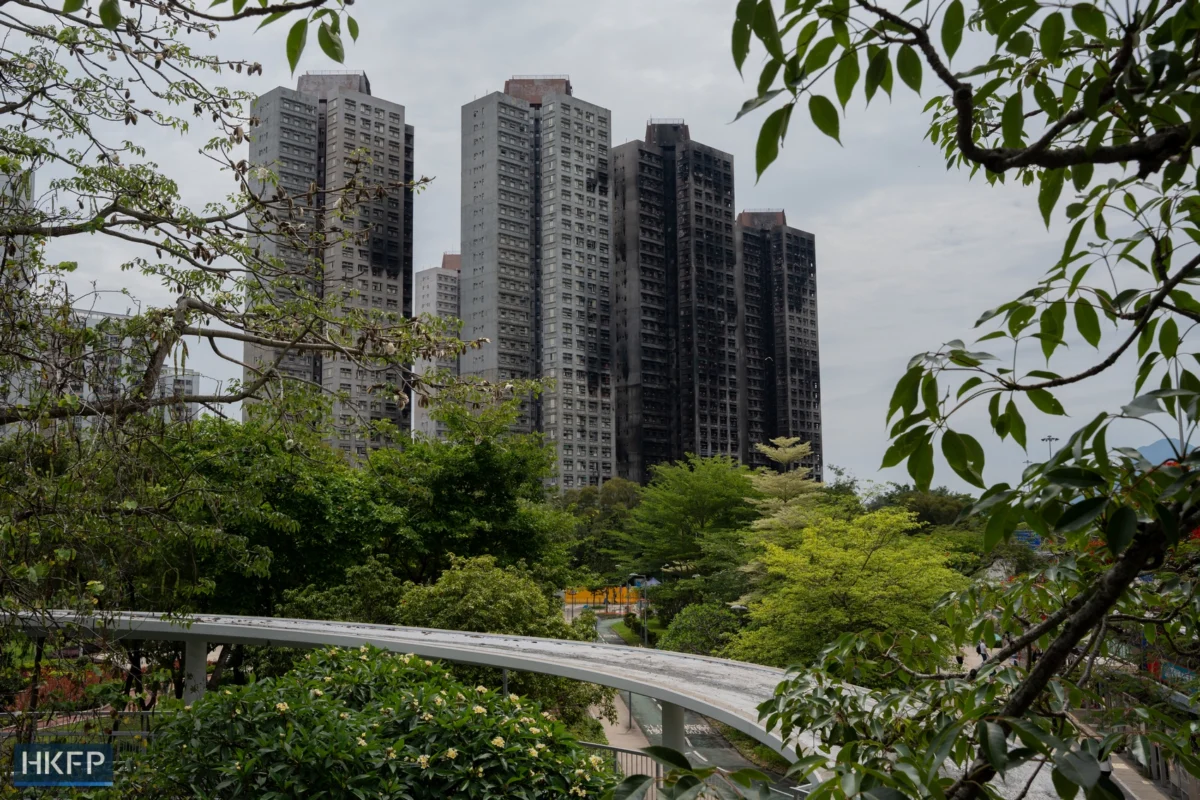
The blaze, which ripped through the estate, exposed systemic failures in building safety and emergency response, prompting the establishment of an independent committee to investigate the causes and recommend preventative measures. The committee’s final report is still pending, but the government has moved forward with its plan to acquire and clear the site, intending to repurpose the land for a park or community facilities.
As of last Thursday, a staggering 96.5 percent of homeowners had indicated their willingness to sell, either for a cash payout or in exchange for a new unit in a government-subsidised development. More than three-quarters of these have proceeded to sign formal sales agreements. However, for individuals like Betty Ho, who purchased her flat in Wang Shing House in 1991, the offer represents an unacceptable compromise. Ho, who lived in Wang Fuk Court for 35 years before the tragedy, views her home as a symbol of her hard-earned life and is unwilling to relinquish it without a commitment to rebuild on the original site.

"We have always demanded on-site redevelopment, but we also know they won’t do it," Ho stated, expressing a sentiment shared by a minority of her neighbours. The government has made it clear that the August 31 deadline will not be extended and has not ruled out the possibility of using legislative means to acquire any remaining unsold properties. This stance has fostered a sense of helplessness among some residents, who fear legal compulsion if they refuse to sell.
Woo, a resident of Wang Yan House who requested anonymity, conveyed this anxiety. "I feel helpless. I know that many of us don’t want to sign [the agreement]," she told HKFP. "We don’t know what we can do." The prospect of becoming "nail houses" – holdouts who resist development and face isolation and potential legal battles – looms for those who remain unconvinced by the government’s offer.

The Government’s Acquisition Strategy and Resident Concerns
The government’s buyout scheme, announced in February, offers HK$10,500 per square foot for homeowners who have paid land premiums, and HK$8,000 for those who have not. This acquisition is expected to cost the government approximately HK$7.8 billion, a sum drawn from taxpayer funds and a relief fund comprised largely of public donations. Initially, the scheme did not include Wang Chi House, the only block unscathed by the fire. However, it was later extended to this building after over 75 percent of its homeowners expressed interest in the offer.
The government has maintained that the seven fire-damaged buildings at Wang Fuk Court have sustained "irreversible" internal damage, necessitating demolition rather than reconstruction. This position has been reinforced by Deputy Financial Secretary Michael Wong, who heads the government task force responsible for resident resettlement. Wong indicated that if legislative action becomes necessary to acquire unsold properties, compensation would be based on the post-fire market value, which would be "substantially lower" than the current buyout offer.

This approach, however, has been met with skepticism and resistance from some residents who question the government’s motives and methods. Betty Ho, a retired accountant, views the government’s insistence on demolition as a betrayal of her property rights. "If the government tried to acquire unsold titles by law, it would be ‘robbing’ residents of their private property," she asserted. "I am interested to see how [the government] could make such a law. It would completely ruin Hong Kong."
A History of Home and Heartbreak
Betty Ho’s connection to Wang Fuk Court runs deep. She lived there for 35 years, raising her family and building a life before the devastating fire. Returning from a trip to the United States on the very day of the inferno, she narrowly escaped the tragedy, alerted by a friend. The fire, which began in the afternoon, spread rapidly through the complex, exacerbated by what are believed to be systemic fire safety breaches.

For Ho, the offer to buy her out is not just a financial transaction; it is an attempt to erase her history and the memories tied to her home. She finds the idea of living in a new location unsettling, especially given the comfort and familiarity of her pre-fire apartment. "I was unlikely to find a home elsewhere that was as large or comfortable as my now burnt-out flat," she explained.
Similarly, Xiong, a resident of Wang Chi House, expressed profound emotional distress at the prospect of selling her home. Having purchased the flat in 2003, she and her husband raised their two children there and envisioned spending their retirement in the familiar surroundings. The fire, while not directly damaging her unit, cast a long shadow, forcing residents to flee and live in temporary accommodations. "Selling ‘is like carving out a piece of my body, like stabbing a blade in my heart,’" Xiong confided, her voice heavy with emotion. She admitted to being "too naive" in believing she could return to her undamaged home. Ultimately, the need to secure her family’s future housing led her to sign the letter of acceptance, though not without deep reluctance.

The Unheeded Call for On-Site Redevelopment
The demand for on-site redevelopment has been a persistent theme among a segment of the Wang Fuk Court residents. Violet Tang and her husband Chan, along with their extended family, lived in Wang Yan House for over four decades. Their flat was severely damaged by the fire, but they still hold onto the hope of returning. In May, the family, using an electric stair climber, made a difficult journey up 26 flights of stairs to retrieve personal belongings from their charred apartment.
During this permitted access, Tang led her family in a poignant farewell, declaring, "We will come back. Rebuild on-site." She emphasized that her actions were not intended to be confrontational but rather a plea for the government to handle the situation with humanity. "We had this dream that the government would hear our voice," Tang shared.

Woo, who has lived in Wang Fuk Court since childhood, also voiced her desire to return, displaying banners that read "I love Wang Fuk" and "I want to move back" from her windows. These pleas, however, have thus far gone unanswered, with the government remaining resolute in its decision to demolish the estate and build a park.
Legal and Administrative Hurdles
The government’s position is that rebuilding Wang Fuk Court is impractical due to the extensive damage and the decade-long timeline it would entail. Anthony Cheung, a public administration scholar and former secretary for transport and housing, acknowledged the complexity of the situation. He noted that while Hong Kong has a history of redeveloping public housing estates, such as the Choi Hung Estate, the unique ownership structures of Home Ownership Scheme (HOS) estates like Wang Fuk Court, where residents may not fully own their flats without paying land premiums, present additional challenges.

Cheung also pointed out that any compulsory acquisition by the government would need to withstand legal scrutiny. "The Basic Law protects private property," he stated. "That doesn’t mean [the government] cannot take a private property, but there has to be reasonable compensation and a public purpose. It cannot be arbitrary." He stressed that the government would need to rigorously demonstrate a public purpose that reasonably overrides private property rights, ensuring the legal framework is "watertight."
The government has cited the buildings’ structural integrity, weakened by the fire and requiring ongoing monitoring, as a reason for not releasing detailed inspection reports. However, Cheung anticipates that such information would be disclosed in court if legal challenges arise from compulsory acquisition.

Looking Ahead: A Divided Future
As the Monday deadline approaches, the divide between those who have accepted the government’s offer and those who refuse to budge becomes starker. The government’s strategy, as observed by Tang, appears to be working, with the majority opting for the offered compensation. Yet, for individuals like Betty Ho, the implications extend beyond immediate financial gain. If forced to sell her property through legal means, she vowed never to purchase property in Hong Kong again. "You don’t even protect private property anymore. How can you tell people to buy flats?" she questioned, highlighting a deep-seated concern about the sanctity of property rights in the city.
The future of Wang Fuk Court remains uncertain for the few who continue to resist the buyout. While the government has indicated a potential legislative process for compulsory acquisition as early as next year, the legal battles and their implications for property rights in Hong Kong are likely to be protracted and closely watched. The unwavering stance of residents like Betty Ho underscores a profound attachment to their homes and a deep-seated skepticism towards government policies that they perceive as eroding fundamental rights, even in the face of immense tragedy.

 Siti Muinah
 Lina Irawan