 Sagoh
Sagoh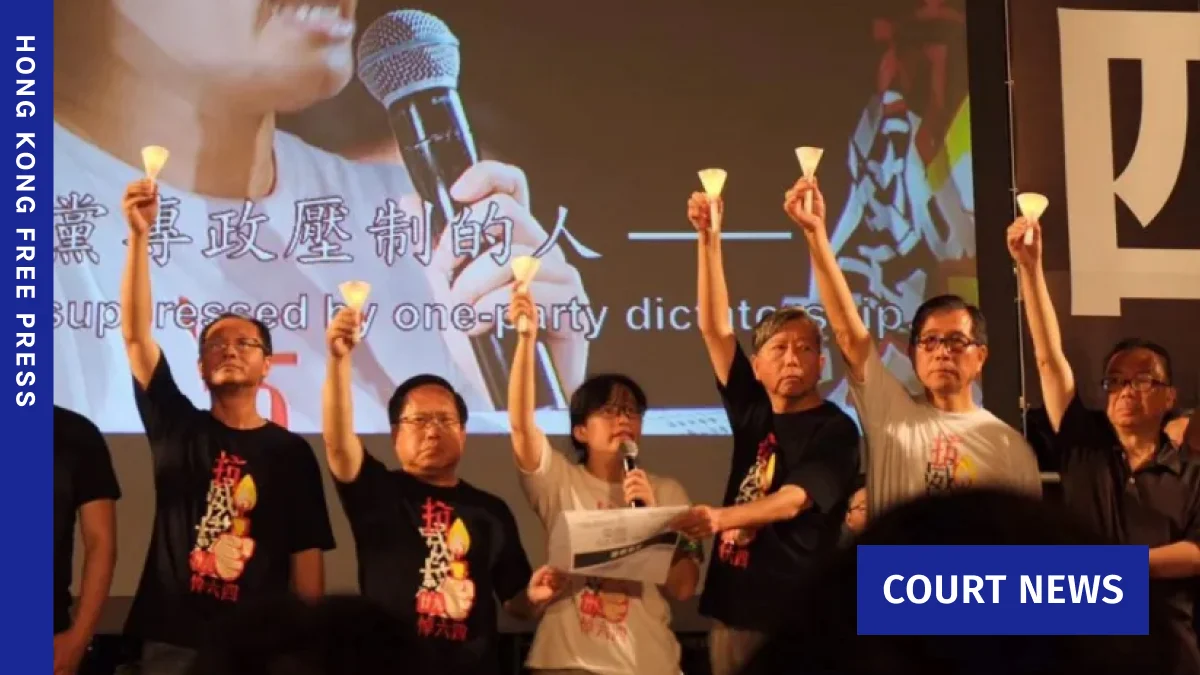
Hong Kong – An activist who for years organized annual vigils to commemorate the Tiananmen Square crackdown has declared that her conviction under Hong Kong’s draconian national security legislation effectively criminalizes the pursuit of democracy itself. Chow Hang-tung, a prominent figure in the city’s pro-democracy movement, was found guilty last week alongside fellow activists Lee Cheuk-yan and Albert Ho of inciting subversion, a charge stemming from their involvement with the now-disbanded Hong Kong Alliance in Support of Patriotic Democratic Movements of China. The verdict, delivered by a panel of Beijing-appointed judges, has drawn sharp condemnation from international human rights organizations and the United Nations, while being lauded by the Hong Kong government as a necessary step to restore order.
The three activists appeared before the West Kowloon Law Courts Building on Friday for a mitigation hearing, where they presented arguments in a bid to reduce their impending sentences. The judges indicated that sentencing would occur within the next two weeks. Chow, a barrister representing herself, attempted to deliver a mitigation statement that was largely curtailed by the court, leading to a defiant assertion of her beliefs.

A Principled Stand Against Judicial Restraint
Chow Hang-tung, a former leader of the Hong Kong Alliance, a group historically dedicated to remembering the victims of the 1989 crackdown and advocating for democratic reforms in mainland China, found her mitigation statement significantly restricted. As she began to articulate her defense, High Court judge Alex Lee interrupted, stating that she could present such remarks on another occasion. Undeterred, Chow conveyed her core message: "The 206-page judgment, after all, boils down to saying that pursuing democracy is a crime."
Her statement continued, "I find it entirely unpalatable that any political party can barter away a nation’s sovereignty, claim to represent the will of the people, appoint itself as the sole authority, and then insist that citizens are legally bound to uphold its self-fashioned throne." Despite the interruptions, Chow pressed on, asserting that anyone who believes in ending one-party rule in mainland China – a cornerstone of the Alliance’s activism and a key element in the prosecution’s case – now "has nowhere left to stand." She characterized this stance as an "original sin" in the eyes of the current legal framework. Judge Lee then inquired if Chow intended to persist in her stance, to which she affirmed. The court acknowledged that her response would be considered during sentencing. In a moment that drew muted chuckles from the public gallery, Judge Lee jested that Chow should thank the court, as the national security case had inadvertently amplified the Alliance’s message globally.
Arguments for Leniency and Sentencing Context
The defense team for Lee Cheuk-yan and Albert Ho put forward arguments for leniency. Barrister Erik Shum, representing the two veteran activists, urged the court to consider the lower sentencing bracket for the offense, emphasizing that their conviction stemmed from an "inchoate offence" with no demonstrable premeditation, a clear roadmap, or a defined timeline for achieving its alleged objectives. This sentencing bracket typically involves prison terms of less than five years.

Shum drew a distinction between the Hong Kong Alliance’s case and that of the "47 democrats," another high-profile national security trial. He highlighted that the latter involved a more concrete plan to secure a legislative majority with the explicit intent of indiscriminately vetoing government budgets, suggesting a greater degree of concrete planning and potential for disruption. Albert Ho had pleaded guilty at the commencement of the trial in January, a factor that could influence his individual sentence. Shum also requested a sentencing discount of 20 to 25 percent for Ho, acknowledging his early plea. He stressed that "whether the incitement led to substantial destruction is a very important sentencing factor," implying that the Alliance’s actions, while deemed illegal, did not result in widespread societal breakdown.
Chow and Lee have been held in pre-trial detention for nearly four years, while Albert Ho has been remanded for three years and six months. The prolonged periods of detention are a significant factor that courts often consider during sentencing.
The Shifting Landscape of Dissent in Hong Kong
The convictions of Chow Hang-tung, Lee Cheuk-yan, and Albert Ho represent a significant escalation in the suppression of dissent in Hong Kong, particularly concerning the commemoration of the Tiananmen Square massacre. For decades, the annual candlelight vigil in Victoria Park was a potent symbol of Hong Kong’s unique freedoms and its role as a bastion of remembrance in Chinese territory. The vigil, which often drew tens of thousands, was a stark contrast to the silence imposed in mainland China.
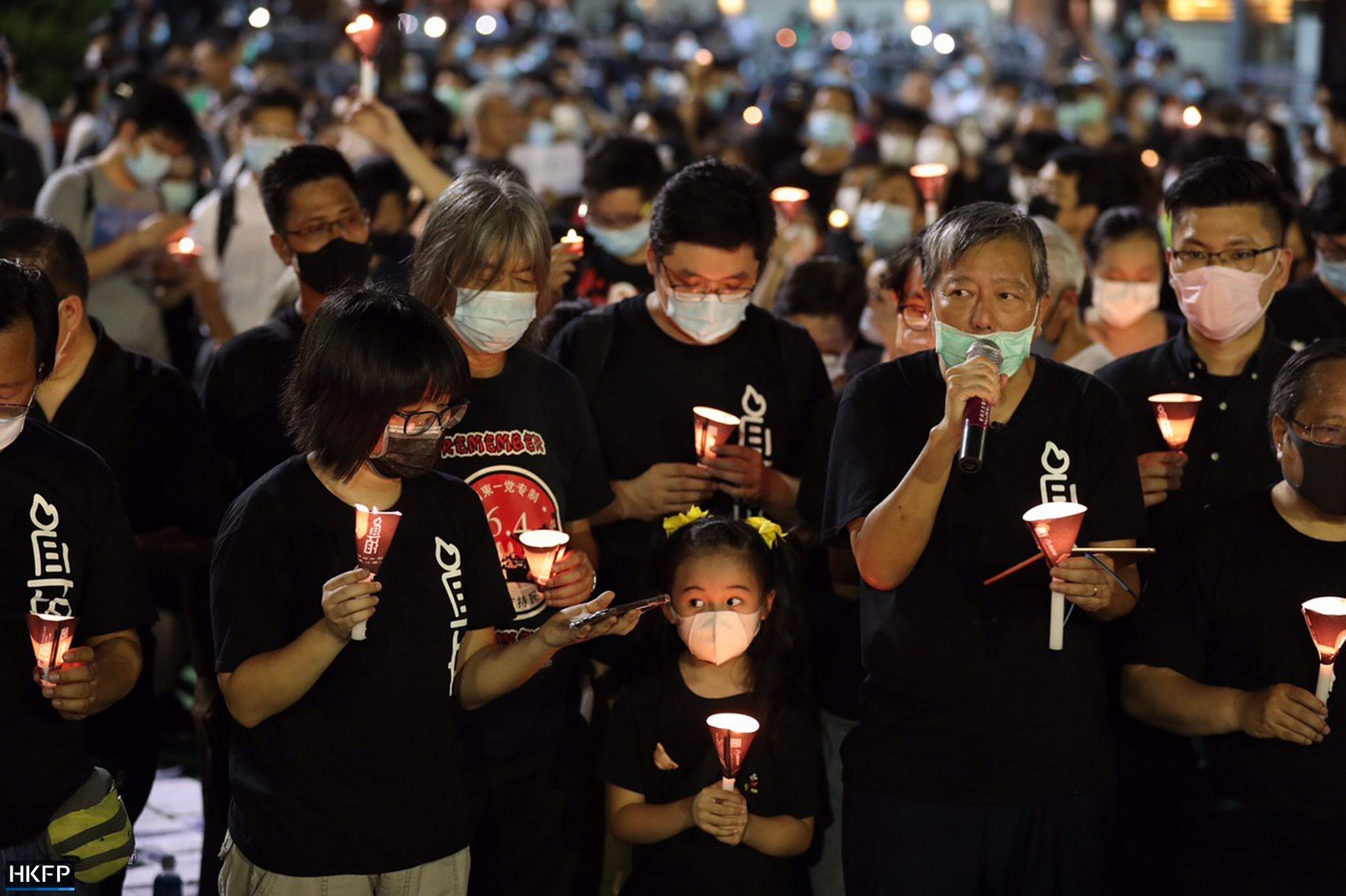
The Hong Kong Alliance, established in 1989 in the immediate aftermath of the crackdown, played a pivotal role in organizing these gatherings. Its mission extended beyond commemoration to advocating for democratic reforms and human rights in mainland China. However, following the imposition of the Beijing-imposed National Security Law in June 2020, the landscape for civil society organizations dramatically shifted. The law, designed to quell secession, subversion, terrorism, and collusion with foreign forces, has been widely criticized by international observers as a tool to dismantle Hong Kong’s autonomy and silence political opposition.
The Alliance itself was forced to disband in September 2021 after its assets were frozen and its leaders faced charges under the national security law. The prosecution argued that the Alliance’s long-standing calls for accountability for the Tiananmen crackdown and its advocacy for democratic change in China constituted "inciting subversion of state power." This interpretation criminalizes core tenets of democratic activism that were once openly expressed in Hong Kong.
International Condemnation and Government Response
The ruling has been met with widespread international condemnation. Human rights organizations such as Amnesty International and Human Rights Watch have decried the verdict, highlighting the erosion of freedom of expression and assembly in Hong Kong. The United Nations Office of the High Commissioner for Human Rights also expressed concern, urging Hong Kong authorities to uphold their obligations under international human rights law.

Conversely, the Hong Kong government has staunchly defended the ruling. A government spokesperson stated that the convictions were a necessary outcome of the judicial process and reinforced the government’s commitment to safeguarding national security and upholding the rule of law. They reiterated that the National Security Law is essential for maintaining the city’s stability and prosperity, and that acts deemed to undermine national security will be prosecuted without exception. This stark divergence in perspectives underscores the profound ideological divide surrounding the application of the national security law and its impact on civil liberties.
Broader Implications for Freedoms
The conviction of prominent Tiananmen vigil organizers sends a chilling message to anyone engaging in political activism or dissent in Hong Kong. It suggests that even acts of remembrance and advocacy for democratic principles, previously considered legitimate forms of expression, are now viewed as threats to national security under the current legal framework. This development has significant implications for the future of civil society, freedom of speech, and political participation in the city.
The attempts by the judiciary to curtail Chow Hang-tung’s mitigation statement, particularly her impassioned defense of democratic pursuit, further illustrate the perceived constraints on speech within the national security regime. Her assertion that "pursuing democracy is a crime" encapsulates the grim reality for many activists and observers who fear that Hong Kong is steadily losing its distinct freedoms and aligning more closely with the authoritarian model of mainland China. The ongoing trials and convictions under the National Security Law continue to reshape the political and social fabric of Hong Kong, leaving a profound impact on its international standing and the aspirations of its citizens. The sentencing of Chow Hang-tung, Lee Cheuk-yan, and Albert Ho will be a crucial indicator of the severity with which the Hong Kong judiciary, under the influence of the national security law, intends to punish acts deemed subversive, even those rooted in historical remembrance and calls for democratic reform.

 Raul Delapena Setiawan
 Suro Senen