Lina Irawan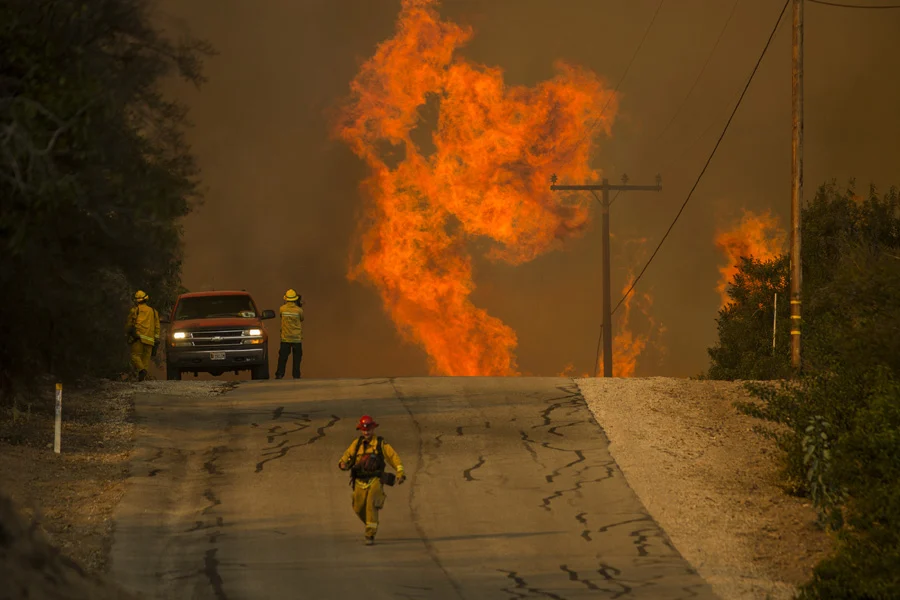
California’s Governor Jerry Brown declared that climate change has propelled weather patterns to their most extreme, asserting that the western United States state must enhance its preparedness for the persistent threat of wildfires, which he characterized as a "new normal." Brown articulated these sentiments during a press conference held following his visit to the sites of a colossal wildfire in Ventura County, located approximately 110 kilometers northwest of Los Angeles. The governor’s stark assessment underscores a growing concern among state officials and residents about the escalating frequency and intensity of wildfires, a trend many attribute to a warming planet.
The Escalating Wildfire Crisis in Southern California
The series of devastating wildfires that swept through Southern California in early December 2017 served as a grim testament to Governor Brown’s pronouncements. Six major blazes, stretching from Santa Barbara County in the north to San Diego County in the south, had, by the time of the governor’s remarks, incinerated over 708.2 square kilometers of land. This inferno was accompanied by the destruction of 793 structures, leaving a trail of devastation and displacing tens of thousands of residents. The fires, fueled by a confluence of meteorological conditions, underscored the vulnerability of a region long accustomed to dry spells but now facing unprecedented fire behavior.
Meteorological Drivers of the Devastation
Central to the ferocity of these fires were the unusually strong and sustained Santa Ana winds. These powerful, hot, and exceptionally dry downslope winds originate from inland deserts and sweep towards the Southern California coast, particularly during the autumn and winter months. Historically known as "devil winds" due to their propensity to fan regional wildfires, their intensity and duration in this particular instance were significantly amplified. The winds, which abruptly commenced the preceding Monday, ignited and rapidly propelled six distinct wildfires across Santa Barbara, Ventura, Los Angeles, and San Diego counties. This rapid escalation prompted Governor Brown to declare a state of emergency just five days prior to his press conference.

The fire season itself had also been unusually extended and severe. A hot, dry summer had left vegetation parched and highly susceptible to ignition. The fact that significant wildfire activity was occurring well into December, even approaching Christmas, was a clear deviation from historical patterns and a worrying indicator of shifting climate dynamics. This prolonged dry spell, coupled with the volatile Santa Ana winds, created a perfect storm for catastrophic fire events.
A Timeline of the December 2017 Southern California Wildfires
- Early December 2017: Unusually strong and persistent Santa Ana winds begin to impact Southern California.
- December 4, 2017 (Monday): The first major wildfire ignites, marking the beginning of a rapid escalation of fire activity.
- December 5, 2017 (Tuesday): The number of active wildfires grows, and their spread becomes increasingly alarming due to the relentless winds. Thousands of residents begin to be evacuated.
- December 6, 2017 (Wednesday): Governor Jerry Brown declares a state of emergency for the affected counties, mobilizing state resources to combat the escalating crisis. The scale of destruction becomes increasingly apparent, with hundreds of homes reported lost.
- December 7-9, 2017 (Thursday-Saturday): Firefighting efforts intensify, but containment remains a significant challenge. The fires continue to burn, impacting multiple counties and straining emergency services. The total acreage burned and the number of destroyed structures continue to rise.
- December 10, 2017 (Sunday): Governor Brown visits Ventura County to assess the damage and speak with victims, delivering his "new normal" assessment of the wildfire situation.
- December 11, 2017 (Monday): Governor Brown’s remarks are widely reported, highlighting the link between climate change and the increased wildfire threat.
Official Responses and Future Strategies
Governor Brown’s declaration of a state of emergency was a critical step in mobilizing resources. This action unlocked additional funding, personnel, and equipment to support the efforts of local fire departments and emergency responders. The declaration also facilitated mutual aid agreements, allowing for the deployment of firefighting crews and resources from other parts of California and potentially from neighboring states.

Beyond immediate disaster response, Governor Brown articulated a forward-looking vision. He stated his intention to spend the subsequent months developing a comprehensive plan to mitigate the effects of climate change. This plan, he indicated, would encompass not only enhancing the state’s capacity to combat fires but also investing in proactive measures such as improved vegetation and forest management. The focus would be on adapting to the changing environmental conditions and ensuring that communities are better equipped to coexist with the inherent risks of living in a "very wonderful place, but a place that’s getting hotter."
Brown’s call for collective action extended to the federal level, where he criticized Washington’s response to climate change. He emphasized that the escalating environmental challenges, including fires, floods, and earthquakes, demand a more robust and proactive approach. "It’s a time to do more, not less," he urged, underscoring the urgency of the situation and the need for greater investment in climate resilience and mitigation efforts.

Broader Implications and Analysis
The "new normal" described by Governor Brown is not an isolated phenomenon in California; it reflects a global trend of increasing climate volatility and its cascading impacts. The wildfires of December 2017 serve as a potent illustration of how climate change can exacerbate existing vulnerabilities. California’s Mediterranean climate, characterized by dry summers and wet winters, has historically made it prone to wildfires. However, rising global temperatures are intensifying these conditions, leading to longer and more severe fire seasons.
The economic implications of such devastating wildfires are substantial. Beyond the immediate costs of firefighting and emergency response, there are long-term economic consequences, including the loss of property, infrastructure damage, disruption to businesses, and the impact on tourism and agriculture. The rebuilding process is often lengthy and expensive, placing a significant burden on individuals, communities, and government budgets.

Furthermore, the environmental toll is profound. Wildfires release vast amounts of greenhouse gases into the atmosphere, contributing to further climate change. They also destroy ecosystems, displace wildlife, and can lead to long-term soil erosion and water quality degradation. The smoke plumes from these fires can also have significant public health impacts, affecting air quality across large areas and exacerbating respiratory conditions.
The statement by Governor Brown also highlights the increasing politicization of climate change. While California, under his leadership, has positioned itself as a leader in climate action, federal policy has often diverged. This divergence creates challenges for coordinated and effective responses to issues like climate-driven wildfires, which transcend state and national boundaries. The governor’s critique of Washington’s response underscores the tension between state-level efforts and federal policy in addressing this critical global challenge.

The concept of a "new normal" suggests that the extreme weather events witnessed are not aberrations but rather indicative of a fundamental shift in our planet’s climate system. This necessitates a paradigm shift in how we approach disaster preparedness, urban planning, and resource management. It calls for greater investment in climate adaptation strategies, including the development of more fire-resistant infrastructure, improved land-use planning in fire-prone areas, and enhanced early warning systems. It also underscores the critical need for global cooperation and ambitious action to reduce greenhouse gas emissions and mitigate the root causes of climate change. The fires in California are a stark reminder that the consequences of inaction are increasingly severe and far-reaching.


 Nana Wu
 Suro Senen