Reynand Wu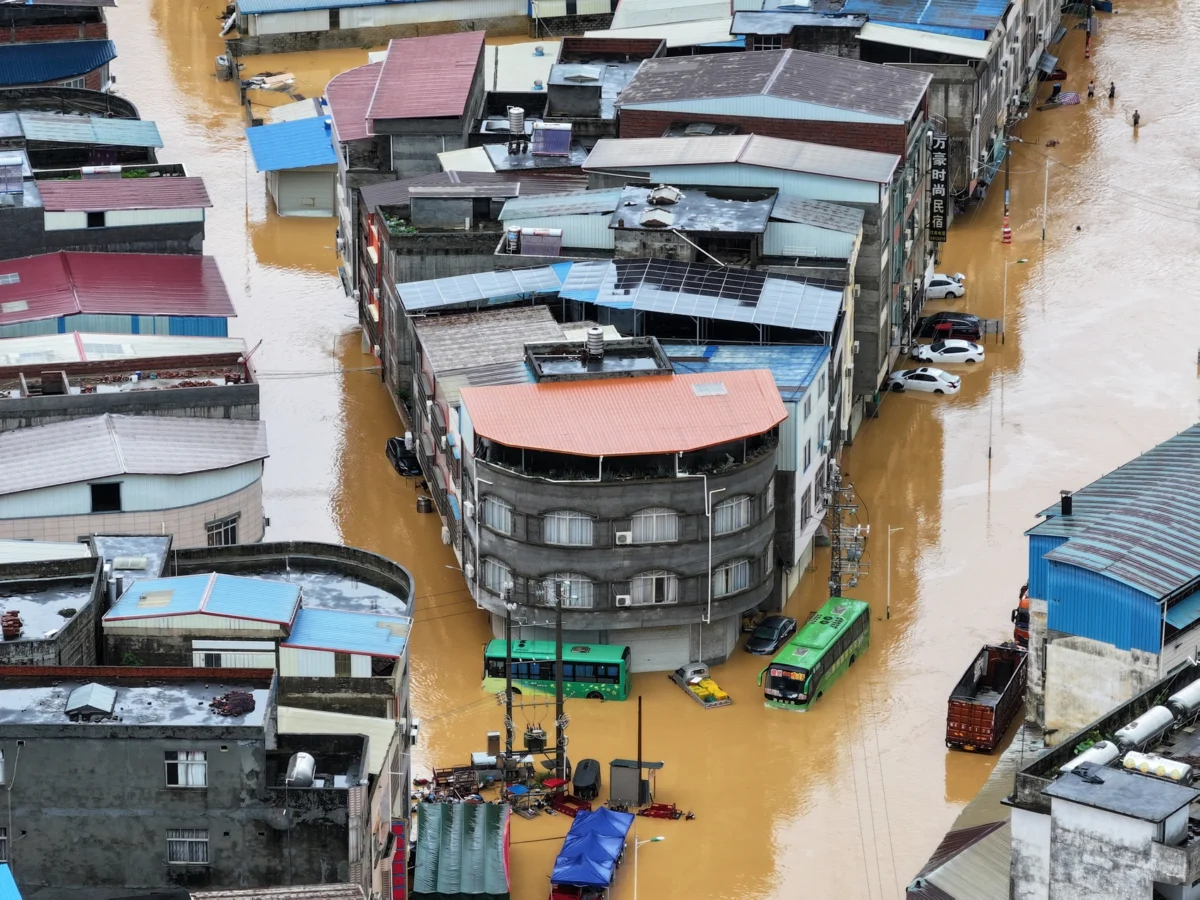
Beijing, China – China is currently grappling with a cascade of natural disasters, as a series of devastating storms, torrential rainfall, and a significant landslide have claimed at least 15 lives and left hundreds injured across several provinces. The widespread devastation, reported on Tuesday, has forced tens of thousands to evacuate their homes and prompted President Xi Jinping to call for an "all out" national response to rescue efforts and disaster relief. The incidents underscore China’s increasing vulnerability to extreme weather events, which scientists link to the escalating impacts of climate change.
The initial reports from state media painted a grim picture of the unfolding crisis, detailing severe weather phenomena ranging from thunderstorms and gale-force winds to tornadoes and relentless flooding. The central province of Hubei and the southern region of Guangxi bore the brunt of the meteorological onslaught, while a separate, critical incident involving a landslide unfolded in the northwestern province of Gansu, further straining national emergency response capabilities.
The Unfolding Crisis: Regional Impacts

Hubei Province: Convective Storms and Tornadoes Unleash Fury
In Hubei, a province situated in the heart of China and known for its major waterways including the Yangtze River, "severe convective weather" swept through cities late on Monday, leaving a trail of destruction. State news agency Xinhua reported that at least 11 people were killed, and a staggering 331 individuals sustained injuries. The intensity of the storms was particularly notable for its "sudden onset and intense, short-duration winds," leading to the rare occurrence of tornadoes in several areas. While less common in central China compared to coastal regions, tornadoes have been observed, and their increased frequency and intensity are a subject of ongoing meteorological study, often linked to shifting global weather patterns.
The human toll was compounded by significant structural damage: 4,800 houses were reported damaged, with 22 completely collapsing under the force of the winds and rain. One person remains missing in Hubei, sparking intensive search and rescue operations by local emergency services, often hampered by persistent adverse weather conditions and debris. The economic impact on Hubei’s agricultural sector and local infrastructure, including power grids and transportation networks, is expected to be substantial, affecting thousands of livelihoods in an already economically sensitive region.
Guangxi Region: Typhoon Maysak Triggers Catastrophic Flooding and Dam Breach

Further south, the autonomous region of Guangxi experienced severe flooding and heavy rains attributed to the passage of Typhoon Maysak. The powerful typhoon, which had traversed parts of the western Pacific, brought sustained deluges that overwhelmed river systems and drainage infrastructure. This led to the deaths of at least four people, with eight others still unaccounted for as of Tuesday. The situation was so dire that officials in Nanning, the capital of Guangxi, elevated the flood control emergency response to its highest possible level, indicating an imminent and widespread threat.
The gravity of the situation was dramatically illustrated by video footage circulated by state broadcaster CCTV, which depicted a torrent of muddy water surging through the crumbled concrete walls of a reservoir dam that had burst. This dam breach amplified the floodwaters, engulfing villages and agricultural lands, and forcing the evacuation of at least 50,000 residents from their homes. The sheer volume of water released posed significant challenges for rescue teams, who utilized inflatable boats to navigate submerged areas and search for trapped individuals. The breach highlights critical questions regarding infrastructure resilience in the face of increasingly extreme weather events, particularly in regions prone to typhoons and monsoon rains. Engineers and disaster management experts will undoubtedly conduct thorough investigations into the dam’s structural integrity and the protocols followed during the typhoon’s approach.
Gansu Province: Landslide Buries Dozens in Remote Village
Adding to the nation’s woes, a separate and equally perilous incident occurred in the northwestern province of Gansu. On Tuesday morning, a landslide struck a village, burying 33 people. Immediate rescue efforts managed to successfully extract 17 individuals from the debris, but the search continues for the remaining 16. Gansu, characterized by its mountainous terrain and loess plateaus, is inherently susceptible to landslides, especially after periods of heavy rainfall which saturate the soil and destabilize slopes. The remoteness of many villages in such regions often complicates rescue operations, requiring specialized teams and equipment to navigate difficult terrain. Local authorities have mobilized "every effort" to locate those still trapped, emphasizing the critical need to relocate and settle affected residents and to vigilantly guard against potential secondary disasters, such as further landslides or flash floods. The psychological impact on communities living in such vulnerable areas is profound, often leading to long-term displacement and rebuilding challenges.

Government Response and Emergency Directives
In response to the escalating crisis, President Xi Jinping issued clear directives on Tuesday, emphasizing the paramount importance of saving lives and mitigating further damage. As reported by CCTV, Xi urged rescue operations to "go all out," underscoring the urgency and comprehensive nature required for the national response. His instructions extended beyond immediate rescue, highlighting the critical need for "treating the injured, resettling affected residents, and carrying out disaster prevention and relief work effectively." This comprehensive approach signals a recognition of the multi-faceted challenges posed by such widespread natural calamities, from immediate medical care to long-term recovery and future preparedness.
Across the affected regions, emergency services, including military personnel, local police, fire departments, and civilian volunteers, have been deployed en masse. Rescue workers, equipped with life vests, helmets, and various tools, have been seen navigating treacherous waters and debris-strewn landscapes. The logistical challenges are immense, involving coordinating resources, establishing temporary shelters, and ensuring the provision of food, water, and medical supplies to displaced populations. The national disaster relief apparatus, under the leadership of the Ministry of Emergency Management, is working to synchronize efforts across different provincial and regional administrations, ensuring a unified and efficient response.
A Broader Context: China’s Vulnerability to Extreme Weather

These recent events are not isolated incidents but rather part of a discernible pattern of increasingly frequent and intense natural disasters in China. The country, with its vast and diverse geography, is inherently susceptible to a range of natural hazards. Summer, in particular, often brings a dichotomy of weather extremes, with some regions experiencing intense, often record-breaking, rainfall and flooding, while others endure scorching heatwaves and droughts.
Historical records indicate that China has a long history of battling devastating floods, particularly along its major river systems like the Yangtze and Yellow Rivers. These rivers, vital for agriculture and transportation, have also been sources of immense destruction. Over the past few decades, significant investments have been made in flood control infrastructure, including dams, levees, and early warning systems. However, the scale and intensity of recent events suggest that even these extensive measures are being tested by the changing climate. For instance, the deadly floods in May, which claimed at least 22 lives in central and southern regions due to "record-breaking rainfall," serve as a stark precursor to the current crisis, indicating a worrying trend of heightened meteorological severity.
Climate Change: A Global and Local Challenge
Scientists worldwide have increasingly linked the rising intensity and frequency of extreme weather events, such as the storms and floods currently ravaging China, to anthropogenic climate change. The Intergovernmental Panel on Climate Change (IPCC) reports consistently highlight that a warming planet leads to more energetic weather systems, capable of holding more moisture, thus increasing the potential for heavy precipitation, flash floods, and severe convective storms. The specific mechanisms include increased atmospheric moisture content, changes in atmospheric circulation patterns, and warmer ocean temperatures that fuel tropical cyclones like Typhoon Maysak.

China, as the world’s largest emitter of greenhouse gases, plays a pivotal role in global climate dynamics. Its rapid industrialization and reliance on fossil fuels have significantly contributed to historical and ongoing emissions. However, China is also a global leader in renewable energy, investing heavily in solar, wind, and hydropower, and has set ambitious targets to achieve carbon neutrality by 2060. This dual identity places China at the forefront of both the problem and potential solutions for climate change. The current disasters serve as a potent reminder that even as mitigation efforts proceed, adaptation strategies are critically needed to protect populations from the immediate and future impacts of a changing climate. These adaptation measures include enhancing early warning systems, building more resilient infrastructure, improving urban drainage systems, and developing climate-smart agricultural practices.
Economic and Social Repercussions
The immediate economic repercussions of these disasters are significant. Damage to housing, infrastructure (roads, bridges, power lines), and agricultural land represents substantial financial losses. Crop destruction will affect food security and local economies, particularly in rural areas heavily reliant on agriculture. The cost of emergency response, temporary housing, and long-term reconstruction will place considerable strain on provincial and national budgets. Small businesses and industries in affected towns will face prolonged disruptions, impacting employment and economic stability.
Beyond the quantifiable economic losses, the social repercussions are profound. Tens of thousands of evacuated residents face uncertainty, displacement, and the trauma of losing their homes and livelihoods. The psychological impact on survivors, particularly those who have lost loved ones or witnessed severe destruction, can be long-lasting. The disruption to education, healthcare, and community services further exacerbates the challenges faced by affected populations. Ensuring adequate support for these communities, including mental health services, will be a critical component of the recovery process.

Looking Ahead: Preparedness and Resilience
The recurring nature and increasing severity of these natural disasters necessitate a continuous re-evaluation and strengthening of China’s disaster preparedness and resilience strategies. This includes investing in cutting-edge meteorological forecasting technologies to provide more accurate and timely warnings, enhancing the structural integrity of critical infrastructure, particularly dams and flood defenses, and developing comprehensive urban planning that integrates climate resilience. Furthermore, public awareness campaigns and community-level disaster drills are essential to ensure that residents are well-informed and prepared to act swiftly and effectively when disaster strikes.
The integration of scientific research on climate change impacts into national development planning will be crucial. This involves understanding regional vulnerabilities, projecting future climate scenarios, and designing infrastructure and policies that can withstand anticipated extremes. China’s commitment to carbon neutrality by 2060, while ambitious, reflects a long-term vision that, if successfully implemented, could mitigate the future severity of such events. However, in the interim, the nation must remain vigilant and proactive in safeguarding its population against the immediate and growing threats posed by a rapidly changing global climate. The ongoing rescue and relief efforts in Hubei, Guangxi, and Gansu are not just about recovering from the immediate devastation but also about learning lessons that will inform China’s future strategies for living with, and adapting to, a more unpredictable world.


 Sagoh
Sagoh
 Asro
Asro