Suro Senen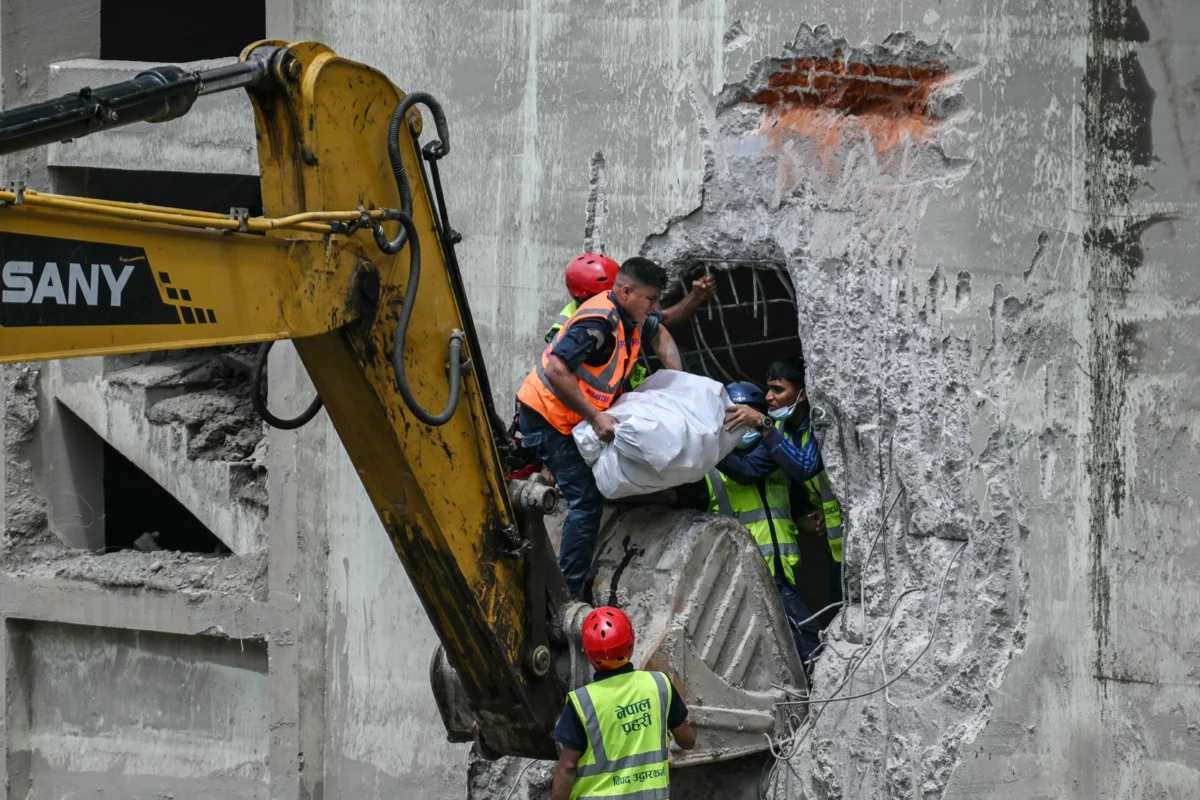
Rescuers in Nepal and China battled Sunday through leg-sucking mud and the threat of rising rivers and a newly formed lake to search for thousands missing after a deadly wall of water and debris swept through the Himalayas, engulfing entire villages. Latest figures from both countries put the number of missing at 3,044, with a further 750 confirmed deaths – and reports of some bodies possibly swept downstream as far away as India. The disaster, which struck the China-Nepal border Wednesday morning, was caused by a glacial collapse, sending a wall of water and debris downstream, the US Geological Survey said. Chinese rescuers near the Tibet border port that was hit by a deadly mudslide were "moved to a safe location" Sunday, after a new lake was formed by a landslide, state media reported.
The Cataclysmic Event and Its Immediate Aftermath
The catastrophic event unfolded on Wednesday morning when a significant glacial lake outburst flood (GLOF) occurred in the Nepalese Himalayas. Preliminary assessments by the U.S. Geological Survey indicate that a dramatic ice-rock avalanche, originating from a fractured glacier on the southern slope of Lirung Peak in Nepal, triggered the deluge. This colossal torrent of water, ice, and debris, estimated to have traveled over 20 kilometers, slammed into Gyirong Port, a vital border crossing in Tibet, China. The sheer force of the mudslide and subsequent floodwaters obliterated settlements, infrastructure, and livelihoods in its destructive path.

The immediate aftermath has been characterized by an immense and multi-faceted rescue operation. In Nepal, amidst the treacherous terrain of mud and debris, Nepalese army troops and engineers have been working tirelessly. A critical focus has been the Trishuli 3A hydroelectric site, where engineers have been attempting to rescue workers believed to be trapped within a tunnel. A significant breakthrough was achieved when a pipe was successfully inserted into the passage, allowing for the initial supply of air. However, overnight rainfall and rising river levels initially hampered these efforts, inundating excavation areas before conditions eased, allowing teams to resume their critical work.
In Tibet, Chinese rescuers faced similar, if not more perilous, conditions. The formation of a new lake due to a landslide near the Gyirong Port forced the temporary relocation of rescue teams to a safe zone, highlighting the volatile and unpredictable nature of the disaster zone. State media reported that by late Saturday, the lake had begun to discharge naturally and was "essentially drained," according to China’s Ministry of Water Resources, allowing rescue operations to potentially resume with renewed urgency.
The Human Toll: A Skyrocketing Casualty Count and Desperate Search
The human cost of this disaster is staggering and continues to climb. As of Sunday, the combined missing figures from Nepal and China stood at 3,044. The confirmed death toll has reached 750, a number that is tragically expected to rise as search efforts continue. The scale of the destruction is so immense that bodies have reportedly been swept downstream as far as India, adding another layer of complexity to identification and recovery efforts.

Survivors are grappling with unimaginable loss and an agonizing wait for news of their missing loved ones. In Nepal’s Nuwakot district, the devastation is stark. "All the settlements near the river were swept away," Buddhi Ram Dangol told AFP, his voice heavy with despair. "There is nothing left." At an army base in Bidur, serving as a central rescue hub, desperate relatives are poring over lists of rescued individuals posted on walls, their faces etched with anxiety and hope. "I have come here looking for my son," Kalka Sharda shared, scanning the names with a desperate intensity.
The disaster has also impacted foreign nationals. Nepal’s disaster authority reported on Sunday that 589 foreigners, including trekkers and Hindu pilgrims en route to Tibet’s sacred Mount Kailash, are unaccounted for. The Isha Foundation, led by Indian guru Sadhguru, confirmed that 80 of its members were on a group trip in the affected region. Their Instagram post on Saturday conveyed a somber assessment: "At this time, there seems to be no encouraging indications of survivors at the immigration office area."
Geopolitical Dimensions and International Response
The cross-border nature of the disaster has necessitated close cooperation between Nepal and China. The foreign ministers of both nations spoke on Saturday, agreeing to share vital satellite and hydrological data to aid in rescue and monitoring efforts. China reported a total of 16 deaths and 546 missing individuals in Tibet, with authorities evacuating 555 stranded tourists and 499 Chinese residents from the region. In India, officials confirmed the recovery of seven bodies from rivers flowing from Nepal, believed to be victims of the flood.

The international community has begun to mobilize in response to the unfolding humanitarian crisis. The United States and Canada have pledged $3.6 million each in humanitarian aid to Nepal. The United Kingdom has offered $6.8 million, while the United Nations has released $2.5 million in emergency funding. The European Union committed $2.3 million on Friday, and the International Federation of Red Cross and Red Crescent Societies (IFRC) has allocated over $1 million and launched an emergency appeal for $31 million. Malaysia has announced the deployment of search and rescue specialists and a contribution of US$1 million to Nepal’s recovery efforts.
Nepal’s Foreign Minister, Shisir Khanal, has highlighted the immense economic challenge facing the nation, stating that reconstruction costs could run into "billions of dollars." The country’s economy is already under strain, and its limited resources are being stretched to their breaking point by a disaster of this magnitude. Minister Khanal has specifically appealed for specialized assistance, including heavy-lift drones and advanced technology to help locate trapped individuals. He has also called for the provision of forensic testing kits for body identification and freezer units for their storage, acknowledging the accelerated decomposition rates of bodies exposed to water.
The Fragility of Mountain Environments and Future Risks
The disaster serves as a stark and devastating reminder of the inherent vulnerability of high-altitude environments. The UN climate chief, Simon Steill, commented, "The sudden glacial collapse and flash flood is a devastating reminder of how fragile these mountain environments can be." The dramatic reshaping of the landscape has led to the formation of numerous large lakes, with one particular formation posing a significant risk of further flooding downstream.

Experts have pointed to the specific geological conditions that contributed to the event. According to China’s Xinhua news agency, the glacier on the southern slope of Lirung Peak fractured, initiating an ice-rock avalanche. This cascade of ice and rock, propelled by gravity and water, formed a massive debris flow that inundated the border region.
The immediate focus remains on the search for survivors and the stabilization of the affected areas. However, the long-term implications of this disaster are profound. The destruction of infrastructure, including energy projects like the Trishuli 3A hydroelectric plant, will have significant economic repercussions. The loss of life and the displacement of communities will necessitate extensive rebuilding and humanitarian support. Furthermore, the event underscores the growing threat posed by climate change-induced glacial melt and the increased frequency and intensity of GLOFs in the Himalayan region, demanding urgent global attention and proactive mitigation strategies. The resilience of the affected communities will be tested as they begin the arduous process of recovery and strive to rebuild their lives from the devastation.


 Reynand Wu
 Evan Lee Salim