Basiran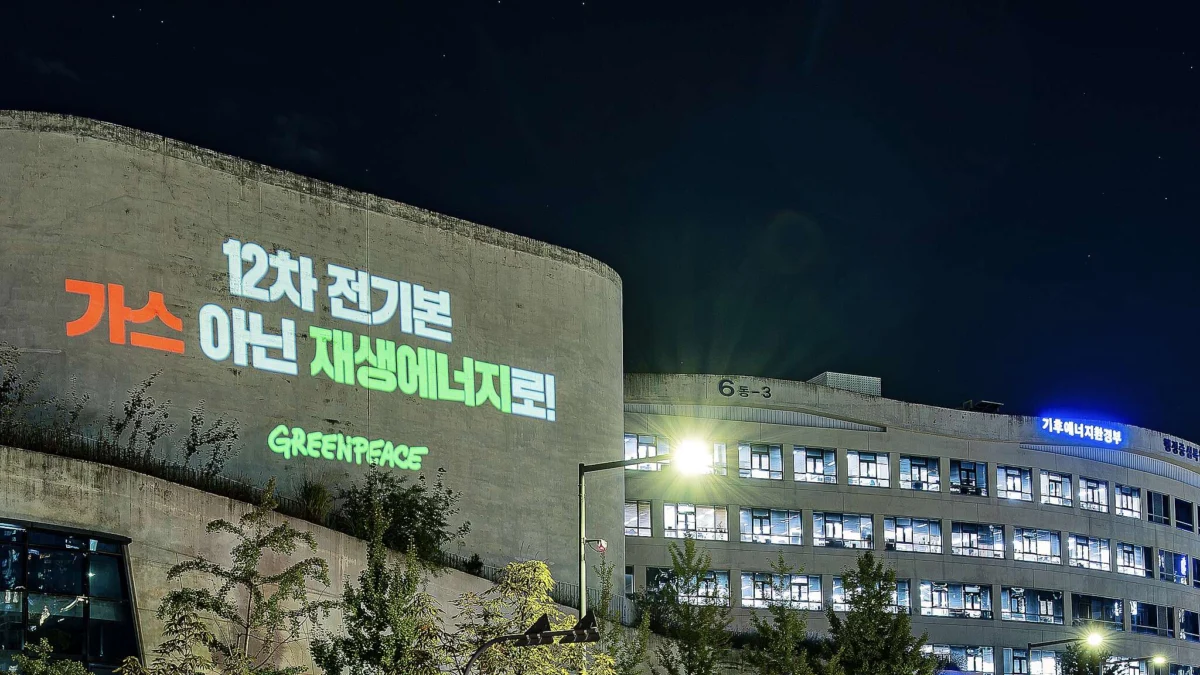
Seoul, South Korea – South Korea’s strategic push to significantly expand its renewable energy capacity to 220 gigawatts (GW) by 2040 is facing a formidable challenge, with a new report suggesting that the inclusion of power demands from upcoming industrial mega-projects into the nation’s 12th Basic Plan for Electricity Supply and Demand will make achieving critical Nationally Determined Contribution (NDC) carbon reduction goals virtually impossible. The analysis, conducted by the energy research institute PLANIT and released by Greenpeace East Asia and the civil society network Korea Beyond Fossil Fuels (KBF), paints a stark picture of potential policy divergence and environmental setbacks.
The study, titled Alternative Scenarios for Power Sector Decarbonization, utilized the open-source Python for Power System Analysis (PyPSA) model to meticulously examine various power sector pathways. By basing its analysis on the framework of the 11th Basic Plan and optimizing grid operations and buildout costs, the research aimed to quantify the emissions impacts of different energy scenarios. The findings reveal a concerning trend: the projected energy consumption from large-scale industrial developments could dramatically inflate power sector emissions, even under optimistic assumptions of a complete phase-out of coal-fired power plants.
The Growing Shadow of Mega-Projects
At the heart of the report’s concern lies the anticipated surge in electricity demand from a series of major industrial undertakings. The 12th Basic Plan Committee’s August announcement projected an increase in electricity demand ranging from 26.6 to 26.8 GW above prior baselines. The PLANIT study specifically modeled two scenarios for this additional demand: an increase of 20 GW and another of 30 GW.
The analysis indicates that to meet this escalating demand, particularly after coal power is retired, South Korea would significantly expand its reliance on gas power generation. This expansion is crucial for bridging the gap left by retiring coal plants and for supplying the substantial additional load anticipated from the mega-projects.
Key Findings: A Collision Course with Climate Targets
The report’s core findings are alarming. In a scenario where coal power is phased out entirely and gas utilization is capped at 15% of its capacity, with no additional mega-project demand, South Korea could achieve a renewable energy capacity of 249 GW, generating 359 terawatt-hours (TWh) of electricity. Under these ideal conditions, emissions would stand at approximately 37 MtCO2e, representing roughly two-thirds of the NDC target.
However, the introduction of mega-project demand drastically alters this outlook. When an additional 20 GW of demand is factored in, the report forecasts that gas capacity would remain at 33 GW, but gas generation would skyrocket to 208 TWh – a staggering increase of approximately 164 TWh compared to the coal phase-out baseline. Despite a modest increase in renewable capacity to 280 GW and generation to 363 TWh, the overall emissions would surge to 84 MtCO2e. This figure represents 1.5 times the NDC target cap of 56 MtCO2e.
The situation becomes even more precarious under the 30 GW mega-project demand scenario. In this case, gas power generation would surge nearly fivefold to 224 TWh (an increase of 180 TWh from the baseline), and renewable capacity would expand to 344 GW, generating 441 TWh. Yet, the emissions would reach approximately 90 MtCO2e, exceeding the NDC target by a substantial 1.6 times. This outcome is predicated on lifting the 15% capacity factor restriction on gas power plants to accommodate the heavy demand, highlighting the critical role gas would play in the nation’s energy mix.
The table below illustrates these dramatic shifts:
| Scenario | Gas Capacity | Gas Generation | Renewable Capacity | Renewable Generation | Emissions (vs. NDC Target) |
|---|---|---|---|---|---|
| Coal Phaseout (No mega demand, 15% gas cap) | 33 GW | 44 TWh | 249 GW | 359 TWh | 37 MtCO2e (2/3 of target) |
| + 20GW Mega Demand | 33 GW | 208 TWh (+164 TWh) | 280 GW | 363 TWh (+4 TWh) | 84 MtCO2e (1.5x target) |
| + 30GW Mega Demand | 33 GW | 224 TWh (+180 TWh) | 344 GW | 441 TWh (+82 TWh) | 90 MtCO2e (1.6x target) |
Note: Increases in Gas and Renewable Generation are relative to the "Coal Phaseout" baseline scenario. MtCO2e stands for Million tonnes of carbon dioxide equivalent.
Expert Analysis: A Call for Policy Reorientation
Jahyeon Kim, Energy Transition Team Lead at PLANIT, emphasized the critical juncture South Korea faces. "The finding that additional mega-project demand is met primarily by gas power demonstrates that expanding renewables alone won’t deliver real carbon reductions without strict regulations on gas generation," Kim stated. "To prevent the phase-out of aging coal plants from simply leading to reliance on gas—another fossil fuel—a decisive policy shift is urgently required, such as halting the construction of new gas-fired power plants and capping gas utilization rates to redefine gas power strictly as a peaking resource."
The report’s findings challenge the prevailing narrative that simply increasing renewable energy capacity will automatically lead to decarbonization. It underscores the necessity of robust regulatory frameworks to manage the integration of new energy demands and to prevent a "lock-in" effect with fossil fuels like natural gas, which, while cleaner than coal, remains a significant source of greenhouse gas emissions.
Greenpeace and Civil Society Voice Concerns

Minju Shin, Climate and Energy Campaigner at Greenpeace East Asia, voiced strong criticism of the government’s apparent direction. "Despite the government’s target of expanding 220GW of renewables by 2040, mega-project demand has flashed a red light for carbon reduction goals," Shin declared. She specifically pointed to remarks made by Climate, Energy and Environment Minister Kim Sung-hwan, who reportedly claimed that gas expansion is "unavoidable." Shin argued that this stance contradicts both the 11th Basic Plan’s decision to reduce reliance on Liquefied Natural Gas (LNG) from 26.8% to 10.6% and the very essence of the NDC commitments.
Shin further stressed the urgency of a thorough reassessment of the 12th Basic Plan. "To prevent the upcoming 12th Basic Plan from deteriorating into a blueprint for megaproject-driven carbon emissions, it is imperative to rigorously examine whether the projected demand for these megaprojects has been overstated," she urged. "Expanding gas power must not be accepted as a foregone conclusion without verifying demand forecasts and assessing alternative scenarios utilizing renewables and energy storage systems (ESS). The 12th Basic Plan must be thoroughly grounded in actionable pathways for renewable energy expansion and carbon neutrality to ensure the NDC targets are achieved."
Broader Implications for South Korea’s Energy Future
The report’s implications extend beyond immediate carbon targets. The potential over-reliance on gas power could have long-term consequences for South Korea’s energy security and its commitment to global climate action. As a signatory to the Paris Agreement, the nation is obligated to reduce its greenhouse gas emissions significantly. Failure to meet these targets could damage its international reputation and potentially lead to economic repercussions.
The projected increase in gas generation also raises questions about South Korea’s long-term energy strategy. While natural gas is often viewed as a transitional fuel, a substantial increase in its utilization could hinder the transition to a fully renewable energy system and delay the achievement of net-zero emissions. The report implicitly calls for a more integrated approach, where demand-side management, energy efficiency, and advanced energy storage solutions are prioritized alongside renewable energy deployment.
The controversy surrounding the 12th Basic Plan highlights a critical tension between industrial development and environmental sustainability. The government faces the complex task of balancing economic growth with its climate commitments. The Greenpeace and KBF report serves as a potent reminder that the energy choices made today will have profound and lasting impacts on the nation’s environmental future.
Background and Context
South Korea has been actively pursuing renewable energy expansion as part of its broader climate strategy. The country’s NDC target, revised in 2021, aims to reduce greenhouse gas emissions by 40% below the 2018 level by 2030. The 11th Basic Plan for Electricity Supply and Demand (2020-2034) set ambitious goals for renewable energy integration and a reduction in coal power. However, the emergence of new industrial mega-projects, often driven by economic development imperatives and the need to secure energy for future manufacturing hubs, has introduced unforeseen challenges to these plans.
The Ministry of Trade, Industry and Energy (MOTIE), responsible for energy policy, is currently in the process of developing the 12th Basic Plan for Electricity Supply and Demand, which will cover the period up to 2036. This plan is crucial for setting the direction of South Korea’s energy infrastructure for the next decade and beyond. The inclusion of mega-project power demand has become a focal point of debate, with various stakeholders presenting different perspectives on the feasibility and desirability of meeting this demand through gas power.
The Greenpeace projection onto the Ministry of Climate, Energy and Environment building visually underscores the urgency of the situation and the public’s demand for stronger climate action. The report’s methodology, utilizing sophisticated modeling tools, lends credibility to its findings and provides a data-driven basis for policy discussions.
Moving Forward: The Path to True Decarbonization
The path forward for South Korea’s energy sector requires a delicate balancing act. The demand from mega-projects is a reality that needs to be addressed, but not at the expense of climate goals. The PLANIT study suggests that alternative pathways exist, emphasizing the need for:
- Rigorous Demand Verification: A thorough and transparent assessment of the projected electricity needs of mega-projects is crucial to avoid overestimation and unnecessary investment in generation capacity.
- Enhanced Renewable Energy and ESS Integration: Exploring and accelerating the deployment of renewable energy sources, coupled with advanced energy storage systems (ESS), can provide a cleaner and more sustainable solution to meet growing demand.
- Strict Regulation of Gas Power: Implementing clear policies to limit the role of gas power to that of a flexible peaking resource, rather than a baseload or intermediate load generator, is essential. This could involve halting new gas plant construction and imposing stricter utilization caps.
- Policy Alignment: Ensuring that the 12th Basic Plan is fully aligned with South Korea’s NDC targets and its long-term vision for carbon neutrality is paramount.
As South Korea navigates the complexities of its energy transition, the findings of the Alternative Scenarios for Power Sector Decarbonization report serve as a critical call to action. The nation’s commitment to a sustainable future hinges on its ability to make informed, data-driven decisions that prioritize both economic development and environmental stewardship. The decisions made in shaping the 12th Basic Plan will be a defining moment in this ongoing journey.
Media Inquiries:
Euihyun Choi, Communications Officer, Greenpeace Korea, [email protected] , +82 10-5950-0369

 Lina Hope
 Raul Delapena Setiawan