Evan Lee Salim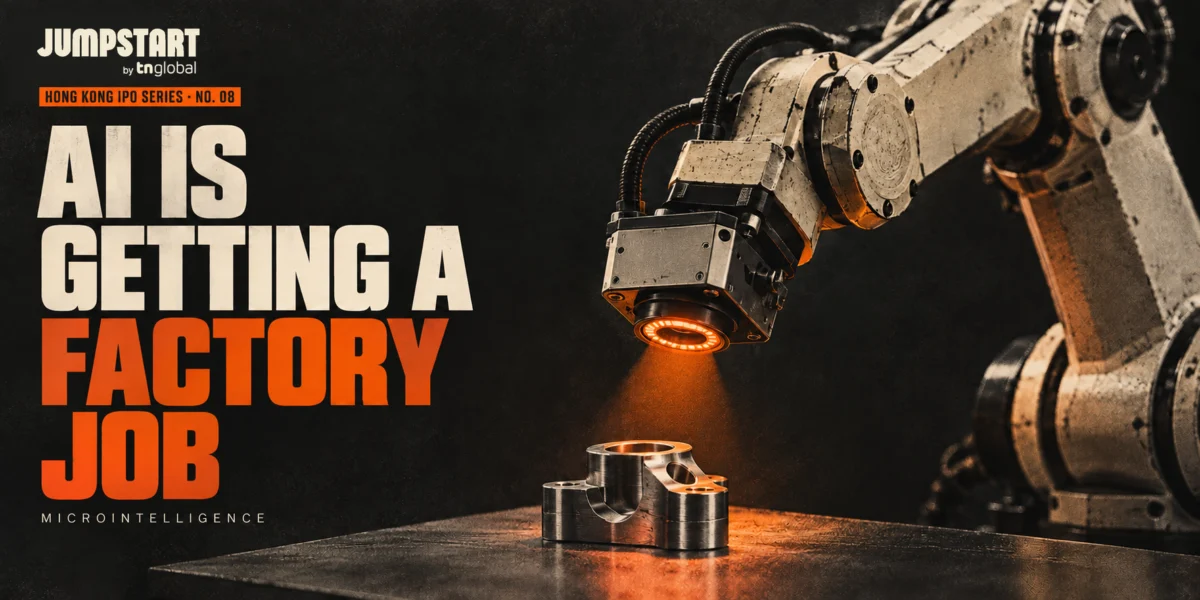
The manufacturing floor of the 21st century demands not just speed and precision, but also adaptability – a quality traditionally reserved for human workers. Microintelligence, a Chinese innovator in industrial artificial intelligence, has emerged as a frontrunner in bridging this gap, transforming from a specialized AI inspection firm into a developer of "embodied intelligence" industrial robots capable of both perceiving and acting on manufacturing anomalies. This strategic evolution, punctuated by a significant Hong Kong listing process, positions the company at the forefront of the global smart manufacturing revolution.
The Genesis of Smart Manufacturing: Addressing Human-Machine Disparity
The core challenge Microintelligence set out to solve highlights a fundamental limitation of early industrial automation: robots could meticulously follow pre-programmed routes, but lacked the cognitive flexibility of a human operator who could intuitively identify and address unexpected deviations. This disparity was starkly illuminated around 2022 when Microintelligence was tasked with a demanding project: inspecting and grinding a massive die-cast component, over two meters long, requiring nearly 3,000 imaging positions. The customer stipulated a completion time of under ten minutes.
According to Zhang Zhiqi, chairman and chief executive of Microintelligence, a conventional robot rigidly adhering to a fixed grinding path would labor for an hour. In stark contrast, a skilled human worker could complete the intricate process in a mere seven or eight minutes. The problem wasn’t merely one of speed; it was about intelligent discernment. A human worker would scan for imperfections, prioritizing and focusing attention on areas requiring immediate intervention. A programmed machine, however, would dutifully execute its pre-defined route, regardless of real-time needs. This highlighted the critical need for machines that could not only "see" defects but also "understand" them and adapt their actions accordingly.
This pivotal assignment pushed Microintelligence’s inspection business toward a more ambitious goal: making a machine’s visual perception directly dictate its subsequent physical actions. Zhang detailed this project in a published interview, though the customer remained unnamed, and the timing figures were presented as his account rather than independently verified benchmarks. This distinction – between merely identifying a problem and intelligently acting upon it – has become the defining characteristic of the company’s development trajectory.
The broader context for this innovation is the accelerating global trend toward Industry 4.0, characterized by automation, data exchange, and smart factories. Manufacturers worldwide are grappling with rising labor costs, skilled worker shortages, and increasing demands for product quality and customization. The global market for industrial robots, for instance, has been experiencing robust growth, projected to reach hundreds of billions of dollars within the next decade, with a significant portion dedicated to AI-driven applications like quality inspection and precision finishing. China, in particular, has been a major driver of this growth, propelled by national strategic initiatives like "Made in China 2025," which emphasizes intelligent manufacturing and advanced robotics.
Chronological Development: From Vision to Adaptive Action
Microintelligence was founded in 2018 in Changzhou, a bustling manufacturing hub in eastern China known for its industrial prowess. Its initial foray into the market focused on AI-powered quality inspection, a niche that, while repetitive, presented significant technical complexities. The task was far from simple; defects could be minuscule, their appearance highly variable, and the surfaces they appeared on often challenging to photograph or scan. A reliable system demanded sophisticated lighting configurations, high-fidelity image capture, and advanced algorithms capable of accurately interpreting the results.
Early on, Microintelligence established itself by helping manufacturers ensure their products met stringent quality standards before shipment. A case study published by technology partner Baidu illustrated Microintelligence’s surface-inspection equipment for small manufactured products. This equipment leveraged machine vision and deep learning to precisely locate and classify defects, employing multiple cameras to cover all sides of an object. Baidu identified the mastery of lighting techniques and the development of robust algorithms as two central difficulties overcome in building such a system. This period provided Microintelligence with invaluable practical experience, teaching them not just to recognize flaws, but to develop the integrated hardware and software solutions necessary to make that ability useful under real-world production conditions. Outputs had to seamlessly integrate with factory quality requirements, and the entire system had to operate reliably.
The year 2022 marked a significant turning point with the aforementioned large casting project. Die casting, a common manufacturing process, involves forcing molten metal into a mold to create components. While efficient, these parts often require post-production inspection and finishing, such as the removal of excess material like burrs. Crucially, the precise location and extent of this finishing work can vary considerably from one part to the next. For Microintelligence, identifying the imperfection was therefore only half the assignment; the system needed to translate that inspection data into a specific, actionable plan for working on that particular component.
This challenge necessitated the integration of capabilities the company had been meticulously developing: capturing high-resolution images while a robotic arm remained in motion, accurately locating defects, and dynamically generating precise positions and movement paths through advanced software. Instead of treating inspection and grinding as disconnected operations, Microintelligence pioneered a methodology that intimately connected the information derived from one with the physical action of the other. A 2024 report from the China Electronics Standardization Institute documented this crucial link within Microintelligence’s systems: inspection software recorded and analyzed defects, then immediately generated specific positions and paths for a grinding robot to efficiently repair the affected products. The profound significance lay not in the ability to repair every detected defect, but in the machine’s newfound capacity to make its subsequent actions directly contingent on what its inspection revealed. This elevated Microintelligence’s role in the factory, moving beyond merely providing an answer about a part to actively facilitating an operation on it.
Strategic Expansion and Leadership Evolution
As this technical direction matured, the organizational structure of Microintelligence also underwent a significant transformation. In December 2022, the company strategically acquired Jiangsu Zhiyun Tiangong, an acquisition detailed in its listing document as a pivotal moment. This transaction marked a shift from a company primarily driven by AI-enabled inspection equipment to one strategically expanding into the domain of "embodied-intelligence industrial robots." This move signaled a conscious effort to broaden its capabilities and market reach.
The acquisition also converged two distinct leadership paths. Pan Zhengyi, a veteran who had been with Microintelligence since its inception, assumed the role of Chief Operating Officer in December 2022. Zhang Zhiqi, who had founded Zhiyun Tiangong in 2021, became Microintelligence’s chairman in January 2023, subsequently serving as chairman and chief executive. Zhang’s prior career experience, including significant roles at SAP and Baidu’s intelligent cloud business, brought a wealth of enterprise software and AI expertise to the merged entity. While the listing document does not attribute every subsequent product advancement solely to the acquisition, it unequivocally states that the transaction played a crucial role in reshaping the business and diversifying its product portfolio. This indicated that Microintelligence’s growth was not merely an organic expansion of its founding team’s capabilities, but a deliberate assembly of a broader organization designed to propel its transition from specialized inspection equipment to comprehensive robot systems.
Architecting Embodied Intelligence: The TRON Ecosystem
Today, the culmination of this strategic evolution is clearly visible in Microintelligence’s TRON product range. The company now offers a comprehensive suite of solutions, including industrial inspection robots, composite robots (integrating multiple functions), and sophisticated systems that seamlessly combine inspection with precision grinding. These advanced offerings complement its foundational AI-enabled equipment and specialized sensing modules. The applications span critical sectors such as electronics, automotive manufacturing, energy-related industries, and semiconductors, underscoring the versatility and specialized nature of their technological prowess.
The integrated inspection-grinding system, in particular, provides a clear and direct connection to the company’s origins. While inspection remains an indispensable component, its output is no longer a mere report; it is dynamically translated into a precise instruction set for subsequent physical work. This illustrates the essence of "embodied intelligence" as Microintelligence applies it. Their industrial machines do not need to anthropomorphize or resemble humans; rather, they need to effectively connect perception (via AI vision and sensors) with a useful, adaptive physical operation (via robotic manipulation).
This sophisticated integration requires significant technological leaps, including real-time data processing, advanced robotic kinematics, adaptive path generation algorithms, and multi-sensor fusion. For instance, the system might employ high-speed 3D vision to map a component’s surface, AI algorithms to identify and classify defects, and then instantly compute the optimal robotic arm movements and tool parameters for grinding, polishing, or deburring. The challenge lies in extending these capabilities across related manufacturing tasks while meticulously meeting the highly specific requirements of each. The diverse product portfolio is a testament to this progression: the original problem of detecting flaws has evolved into the foundation for a much wider array of intelligent machines that perform complex operations.
Market Dynamics, Competitive Landscape, and Broader Implications
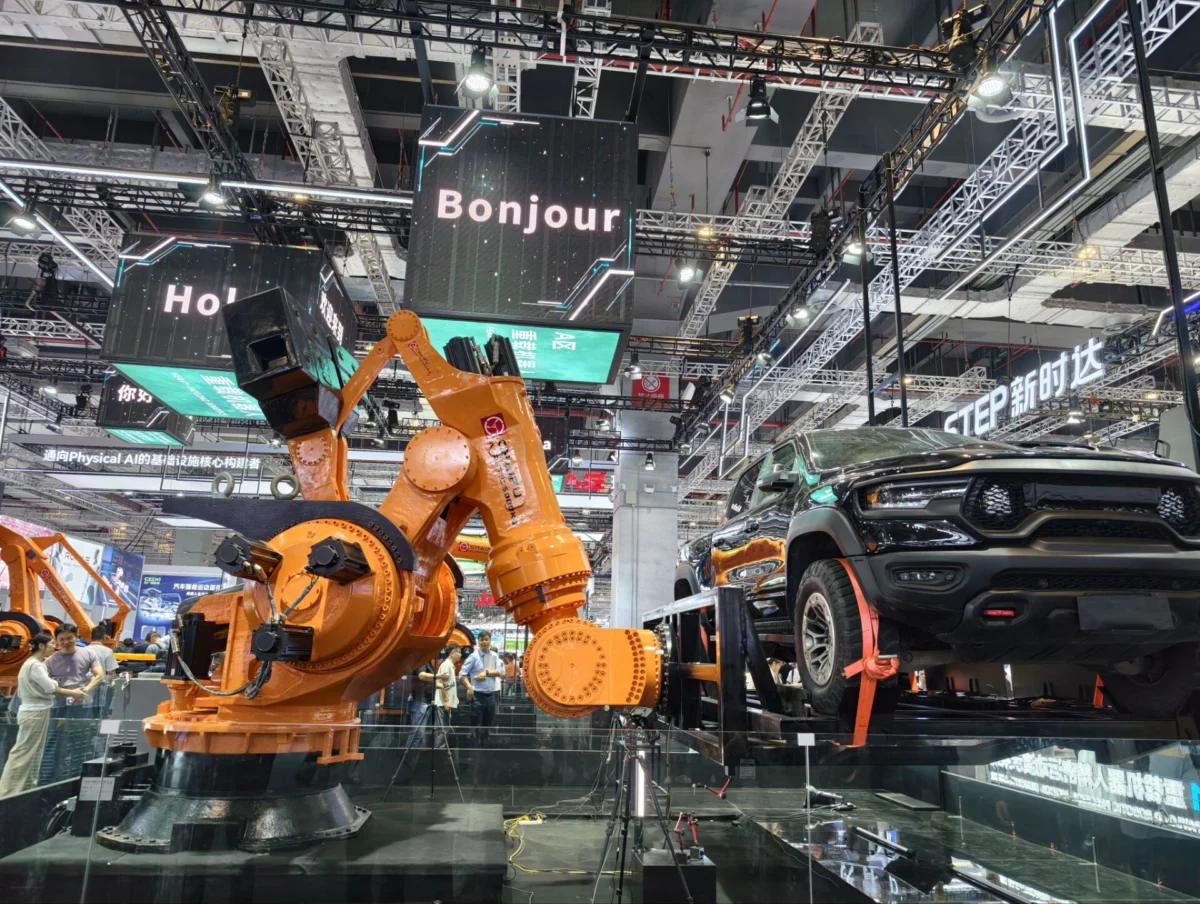
Microintelligence operates within a fiercely competitive global landscape for industrial automation and AI robotics. Major international players like Fanuc, KUKA, ABB, and Yaskawa dominate segments of the industrial robot market, while numerous specialized AI vision and automation companies vie for market share. Microintelligence’s differentiation lies in its integrated approach – offering not just vision systems or robots, but cohesive, adaptive solutions that fuse perception with action. This end-to-end capability, particularly in high-precision finishing tasks, gives it a distinct advantage.
Industry analysts often highlight the increasing demand for "smart" robots that can perform complex tasks autonomously, reducing human intervention and improving consistency. A spokesperson from a leading industrial automation consultancy, for example, might logically infer, "Companies like Microintelligence are pivotal in the next phase of industrial automation. Their ability to deliver integrated solutions that move beyond static programming to adaptive, perception-driven action addresses critical bottlenecks in modern manufacturing, especially in sectors demanding high precision and customization." Such statements underscore the market’s appreciation for truly intelligent, flexible automation.
The Hong Kong listing process, with its post-hearing information pack published on October 9, represents a significant milestone for Microintelligence. It provides access to vital capital for further research and development, market expansion, and potential future acquisitions. It also enhances the company’s visibility and credibility on an international stage, attracting potential partners and customers globally.
Financially, Microintelligence has demonstrated substantial growth. Its embodied-intelligence industrial robot products, which represented a mere 26.3% of revenue in 2023, dramatically surged to account for 57% by 2025, solidifying their position as the company’s largest revenue category. Over the same period, total revenue increased from RMB 434 million to RMB 795.5 million. However, the financial picture also reveals the complexities of rapid expansion and innovation. After reporting a net loss in 2023, the company achieved profits of RMB 15.7 million in 2024 and RMB 5.1 million in 2025. This fluctuation in profitability is not uncommon for high-growth tech companies investing heavily in R&D and scaling their operations. It suggests a strategic focus on market penetration and capability development, with profitability stabilizing as market share and operational efficiencies improve. The listing, while a commercial validation, is a step in a longer journey towards sustained, substantial profitability.
The broader implications of Microintelligence’s approach are profound for the future of industrial automation. Their work contributes to the vision of truly smart factories where machines can dynamically respond to changing production requirements, handle greater product variability, and operate with minimal human oversight. This leads to enhanced efficiency, superior quality control, reduced waste, and the potential for entirely new manufacturing paradigms, such as mass customization. While concerns about the impact on the human workforce are valid, the trend generally points towards humans collaborating with advanced robots, performing higher-level supervisory, maintenance, and design tasks.
In conclusion, Microintelligence’s journey, encapsulated by the seemingly simple yet profoundly complex casting assignment, exemplifies the evolution of industrial AI. It began by empowering factories to merely find flaws. Increasingly, it is building the sophisticated machines that intelligently decide where and how to work next, transforming the industrial landscape one adaptive robotic action at a time. The Hong Kong listing marks not the conclusion, but a new chapter in its mission to redefine the capabilities of automated manufacturing.

 Iffa Jayyana
 Lina Irawan